
A licensed driver who meets your state’s age and experience rules can teach you how to drive. That person is usually a parent, guardian, relative, or friend, and most states require them to hold a valid license for a set number of years before they can supervise you. Some states also let certified professional instructors teach you, which costs money but follows a structured curriculum.
Who is allowed to supervise you
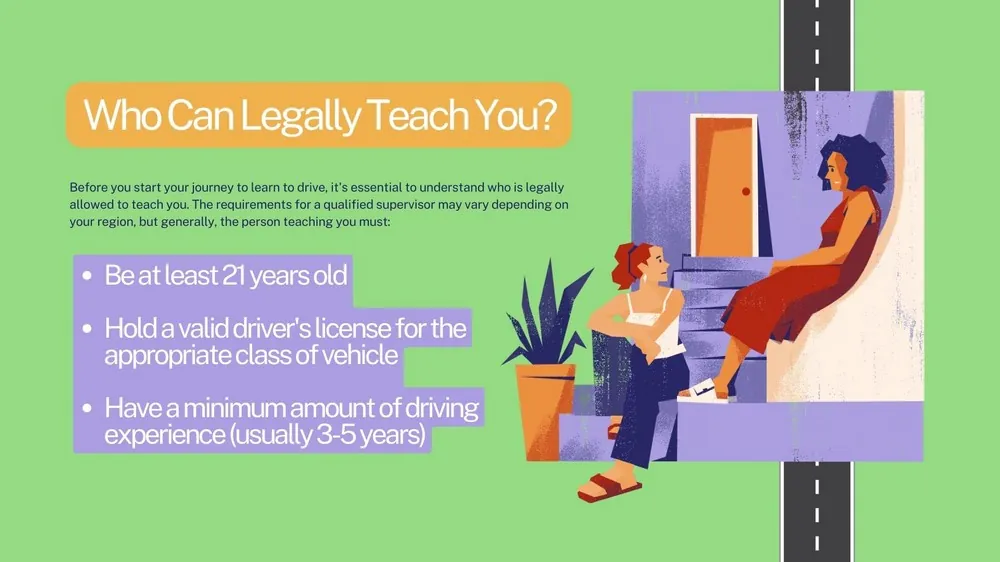
Most states let any licensed adult supervise a learner, but they set conditions. The supervisor typically must be at least 21 years old, hold a valid driver’s license, and have been licensed for a certain number of years. A few states require the supervisor to be a parent, legal guardian, or certified driving instructor instead of any adult. Your state’s DMV publishes the exact rules, including whether the supervisor must sit in the front passenger seat at all times.
Professional instructors versus family and friends
A professional driving instructor charges by the lesson and knows the test routes and scoring rules. A parent or friend teaches for free but may pass on bad habits or skip skills the road test checks. You can mix both: use a pro for tricky maneuvers and family for everyday practice hours.
If your supervisor doesn’t qualify
Check the back of your supervisor’s license for the issue date. If your state mandates three years of driving experience, count back exactly 36 months from today. If the date falls short, that person doesn’t meet the legal requirements to supervise you; you’re effectively driving alone, which risks a suspended permit and a hefty fine.
Many novices assume that having a licensed friend in the passenger seat is enough. This is a costly mistake. If the law requires a parent or a certified instructor, your friend’s presence provides zero legal protection during a traffic stop. You’ll be cited for driving without a valid supervisor.
If you’re unsure about your supervisor’s status, check the state’s official driver handbook. If the manual lists specific age or relationship requirements, follow them strictly. If your state is silent on the matter, you’re likely safe with any licensed adult.
| Situation | What changes | What to do instead |
|---|---|---|
| Supervisor is under 21 | Not allowed in many states | Find an older licensed driver |
| Supervisor’s license expired | Supervision is invalid | Wait until they renew it |
| You hold only a permit | You can’t supervise others | Get a licensed driver to ride with you |
| Supervisor has too little experience | Some states require years licensed | Choose someone with more years licensed |
| State requires a certified instructor | Family teaching isn’t enough | Book lessons with a driving school |
| Supervisor sits in the back seat | Most states require front passenger seat | Move the supervisor to the front |
Steps to start learning with a qualified teacher
-
Check your state’s DMV website for the minimum supervisor age and years-licensed requirement. Most states mandate that a supervisor be at least 21 years old and hold a valid license for at least three years.
-
Ask a parent, guardian, relative, or friend who meets those rules to supervise you. Ensure they aren’t merely legally qualified but also possess the patience to remain calm during your first few stalls or sharp turns.
-
Confirm the supervisor’s license is current and valid. If they have an expired permit or a suspended status, your practice hours won’t count toward your state’s mandatory total.
-
Sit the supervisor in the front passenger seat before you start the engine. This placement is mandatory in most states to ensure the supervisor can monitor traffic and assist in an emergency.
-
Log your practice hours if your state requires a written record. Use a digital app or a physical notebook to track nighttime versus daytime driving, as many states require a specific split between the two.
-
Add a few professional lessons for highway driving, parallel parking, and test routes. Instructors know the exact maneuvers examiners look for, saving you from failing due to minor technical errors.
-
Schedule your road test once you meet your state’s hours and holding-period rules. Don’t book the appointment until you have completed the full duration of your learner’s permit, even if you finish your driving hours early.
Mistakes that cost you time and money

Assuming any licensed driver can supervise you is risky. Some states set a minimum age or years-licensed rule for supervisors. Breaking this requirement can invalidate your entire practice history. Check your specific state handbook before the first drive.
Letting the supervisor sit in the back seat violates most state laws. They must occupy the front passenger seat to intervene safely. A police officer can issue a ticket for improper supervision. The examiner may also fail you immediately for this seating error.
Skipping the logbook creates unnecessary delays if your state requires documented hours. Missing entries often force applicants to restart the mandatory waiting period. Keep the physical book in the glove compartment and update it after every single session. Digital photos are rarely accepted as valid proof during scheduling.
Relying only on a nervous family member limits your skill development. They frequently avoid complex maneuvers that examiners specifically check during testing. You might pass neighborhood drives but fail the actual road test. This mistake costs you the retest fee and weeks of additional waiting time. Hire a certified instructor for at least two evaluation sessions to identify these critical gaps before your official examination date arrives.
Related guides
- Who Invented Foosball? The Real Answer and History in 2026
- LiftMaster vs Genie Garage Door Openers: The Best Drive Types
- Bidet Toilet Seat Electrical Requirements: A Safety Guide in 2026
Frequently asked questions
Can a friend with a new license teach me to drive?
No, not in most states. Supervisors usually need to be at least 21 and licensed for several years, so a newly licensed friend likely doesn’t qualify. Check your state’s DMV rules before you count on them.
How many hours of supervised driving do I need?
It depends on your state and your age. Teen drivers often need 40 to 50 hours, including night driving, while adults may need fewer or none. Your state’s DMV lists the exact number and whether you must log them.
Is it safe to learn only from a parent?
It can be safe if your parent knows current traffic laws and test requirements. The risk is that they teach outdated habits or skip skills like highway merging. A few professional lessons fill those gaps.
What happens if my supervisor isn’t qualified?
Your practice hours may not count, and you could both receive a ticket. In some states, an unqualified supervisor can also invalidate your learner permit. Verify eligibility before your first lesson.
Does a professional instructor cost more than a parent?
Yes. Instructors charge per lesson, while a parent or friend teaches for free. The trade-off is structure: an instructor knows the test, while family offers more practice time at no cost.
What age must a driving supervisor be?
Most states require 21 or older, but some set the bar at 18 or 25. Your state’s DMV publishes the exact age, so look it up before you begin.
Conclusion
The right teacher is whoever your state allows and whoever gives you calm, consistent practice. A qualified family member covers most hours, and a few lessons with a certified instructor sharpen the skills the road test actually checks.
