
The true answer to who invented foosball is that no single person holds the patent or title.
Quick facts about the game’s origin
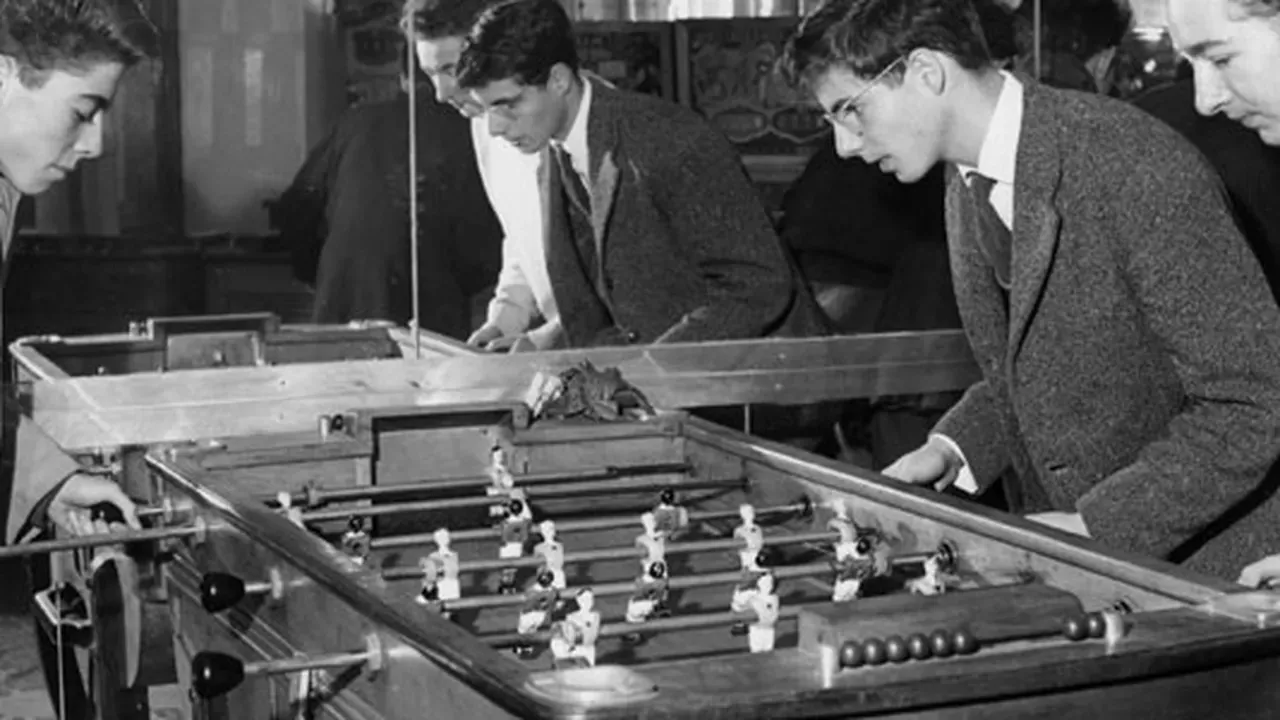
The origins of table football are often simplified to a single moment of invention, but the reality is a messy evolution across continents. Early versions appeared in Europe during the late 1800s as rudimentary desk games played with pencils and paper cutouts. These weren’t standardized sports but casual diversions for office workers seeking relief from monotonous tasks. The mechanics were crude, relying on simple pivots that offered little control over the ball’s trajectory.
French players in Paris bars transformed this hobby into a serious pastime by refining the rod mechanism around the early 1900s. They introduced geared systems that allowed for precise spinning shots, turning chaotic play into strategic competition. This innovation spread quickly through European cafes, establishing a distinct culture of skilled manipulation rather than mere luck. The rods became longer and more durable, accommodating heavier balls designed for faster movement.
In the United States, Harold S. Thornton patented a specific wooden design in 1926, focusing on stability and ease of assembly for home use. His work laid the groundwork for commercial production, though mass adoption waited until Lionel Corporation began manufacturing these games for American households in the 1940s. This era marked the transition from niche bar game to mainstream family entertainment. Today, competitive play follows strict rules set by international governing bodies, ensuring consistency across global tournaments.
Who invented foosball and why it’s tricky
People often want a clear name to credit, but foosball’s history is messy because it grew organically. The core idea came from children playing with pencils on desks in Europe. They used erasers as balls and pencils as players. This simple setup proved addictive and led to more complex versions. By the 1890s, makers in England and France were selling wooden tables with rods. These early models lacked goals and had fixed players.
The game moved to South America, where it became a cultural staple. In countries like Brazil and Argentina, the style of play changed. Players focused on speed and trick shots rather than just knocking the ball into a net. This regional variation influenced how the game looked globally. When it reached the US, it was seen as a foreign novelty. Americans wanted a version they could buy and own.
Harold S. Thornton saw this opportunity. He didn’t invent the game, but he patented a specific improvement. His design allowed for better control and included goals. This made it suitable for home use. Later, Lionel Corporation took Thornton’s design and marketed it heavily. Their advertising campaign made the game famous in American households. So, while Thornton gets the patent, the real invention belongs to many unnamed creators over decades.
Thornton’s 1927 patent specifically covered the detachable rod system. This mechanical change let users replace broken parts without buying a new table. Before that, a snapped rod meant discarding the entire unit. Lionel capitalized on this durability by selling replacement kits alongside full sets. This business model shifted the product from a fragile toy to durable furniture.
The term “foosball” itself is a linguistic accident. It derives from the German word Fußball, meaning football. American marketers shortened it to fit English phonetics. This branding choice obscured the game’s European roots for decades. Consumers associated the name solely with the Americanized version sold in department stores.
Recognizing the true origin requires distinguishing between mechanical innovation and cultural adaptation. If you find a table with fixed, non-rotating figures, it likely predates the modern era. Those are historical artifacts, not functional sports equipment. If the rods spin freely and feature detachable components, you’re looking at post-1927 technology.
The confusion persists because patents protect mechanisms, not concepts. Thornton owned the rights to the rod assembly, not the idea of table soccer. Legal ownership doesn’t equate to creative authorship. Understanding this distinction prevents misattribution of cultural milestones to single individuals.
When the answer changes
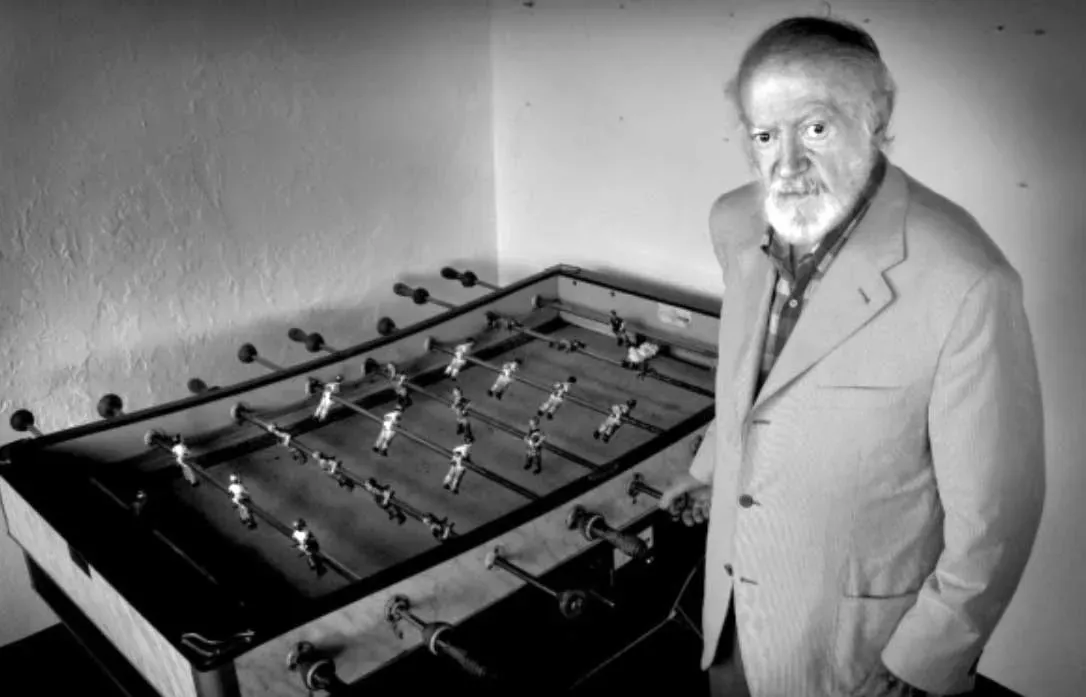
The confusion stems from treating invention as a single event rather than a layered process. When you search for the origin of foosball, you aren’t looking for one person. You’re looking for three distinct milestones that happened decades apart.
First, there’s the mechanical concept. The earliest known patent for a table football game was filed by Edwin H. Carmichael in 1926. He called it “Table Football.” This document proves who first legally claimed the mechanism of rotating rods with player figures. If your goal is legal history or intellectual property research, this is your starting point. It’s a cold fact found in government archives.
Second, there’s the cultural birth. In Paris during the late 1800s and early 1900s, men played a version using books and pencils on dining tables. They didn’t call it foosball. They called it baby-foot. This practice spread through cafes without patents or corporations. It was an organic social ritual. If you want to understand the soul of the game, look here. The players were unknown bartenders and students.
Third, there’s the commercial explosion. Lionel Corporation took the European concept and mass-produced it for American homes in the 1940s. They added rules, standardized sizes, and marketed it aggressively. This version became the global standard for casual play. If you care about how the game reached millions of living rooms, this is the critical era.
You must decide which layer matters to you. Don’t mix them up. A patent doesn’t prove cultural popularity. Marketing doesn’t prove originality. Each context requires a different source. Choose your lens before you begin your search.
How to trace the real history
Start with Harold S. Thornton’s 1926 patent document. You can find the full text on the US Patent and Trademark Office website. Don’t skim the abstract. Read the claims section line by line. Note what he actually invented versus what he copied.
Thornton claimed a mechanism for rotating rods. He didn’t invent the table itself. Many sources confuse his specific gear design with the entire concept. If you miss this distinction, your history becomes fiction. Write down the exact patent number: 1,584,370. This anchors your research in legal fact, not legend.
Search for early photographs of table football in Paris bars. Look for images from before 1920. The Bibliothèque nationale de France has a digital archive. Use keywords like “jeu de barres” or “football sur table.” Avoid post-1930 photos. They show evolved designs that hide the original simplicity.
Compare the rod mechanisms to modern tables. Early versions used simple wooden dowels. Modern tables use metal axles with bearings. This shift happened gradually. Spotting the difference tells you when a table was made. A wooden rod suggests pre-war craftsmanship. Metal implies mass production after World War II.
Talk to older players in South America. Focus on Argentina and Uruguay. Ask about their childhood games. Listen for stories about desk toys and pencil players. These anecdotes reveal how the game spread through informal channels. Official records often ignore these grassroots origins.
Visit a museum with a sports collection. The Deutsches Museum in Munich holds significant artifacts. Look for early foosball tables. Check the labels for dates and manufacturers. German tables often bear different markings than American ones. Lionel Corporation’s marketing campaigns shifted the focus to family entertainment. Read their brochures. See how they positioned the game for American homes. Note the price points. High prices indicated luxury. Low prices signaled mass appeal.
Compare current international rules with old ones. Identify which rules are new and which are traditional. The International Table Soccer Federation updated rules in 2010. Older rules allowed more physical contact. New rules prioritize safety and speed. This shows the game’s evolution from rough play to sport.
Mistakes people make about the origin
Thornton didn’t invent the game. He patented a specific design in 1901. This distinction matters because it separates creation from commercialization. Many assume his patent means he created the concept. It does not. The game existed as informal play before that date. Thornton’s contribution was standardizing the equipment for mass production. Without this step, table tennis might have remained a parlor trick.
South American influence is often overlooked. Players there developed unique styles. These styles emphasized speed and spin. This approach shaped the global appeal of the sport. Ignoring this history creates an incomplete picture. You miss how regional variations drove innovation. The game evolved through cross-cultural exchange. Brazil and Argentina played key roles. Their players pushed the boundaries of what was possible.
The origin story frequently points to the US. This is incorrect. The game arrived from Europe. England is widely credited with formalizing the rules. Victorian-era dining tables served as courts. Booksellers sold early sets. The US adopted the game later. Confusing these timelines leads to wrong conclusions about its spread. You must trace the path from British drawing rooms to international stadiums.
Table tennis is often confused with table football. These are distinct games. Table football uses rods and figures. Table tennis uses paddles and balls. The mechanics are entirely different. One requires hand-eye coordination with a moving object. The other involves manipulating levers. Mixing them up shows a lack of basic knowledge. Always check the equipment. If you see rods, it’s foosball. If you see paddles, it’s ping pong.
Related guides
- Best Foosball Tables Under 500: Top 5 Picks in 2026
- Foosball Resources: Where to Find Tactics and Gear in 2026
- Why Do People Wrap Baked Potatoes in Foil: The Real Reason in 2026
Frequently asked questions
Can anyone claim to have invented foosball?
No single person can claim full invention. The game evolved over time. Thornton patented a design. Lionel marketed it. Many others improved it. You can’t own the idea. You can only own a specific version.
Why is the inventor unclear?
Because it grew from street play. Children made desk versions first. Makers in Europe sold kits. No one filed a master patent. The game spread too fast. Legal records show improvements, not creation.
How long did it take to become popular?
It took about thirty years. The game started in the 1890s. Thornton got his patent in 1926. Lionel pushed sales in the 1940s. By the 1950s, it was common in homes. Popularity grew steadily after that.
Is it safe for kids to play?
Yes, modern tables are very safe. They use plastic balls and smooth rods. Old wooden tables might splinter. Always check for sharp edges. Supervise young children near heavy wood.
What happens if I play without goals?
The game becomes harder to score. Goals add structure to play. Without them, you just hit the ball back. Goals encourage strategy. They also make matches fairer. Everyone aims for the same target.
Does it matter where I play?
Style changes by region. South America favors speed. Europe favors tactics. US play is often casual. Rules vary slightly everywhere. Pick a style you enjoy. Adapt your game to locals.
Who governs the sport today?
Several groups manage competitive play. The IFTF sets international standards. Local clubs run tournaments. National associations follow IFTF rules. Check their websites for events. Joining a club helps you learn.
Conclusion
Since no single inventor claims the game, you can enjoy foosball anywhere without worrying about rules or origins. Grab a few friends and set up a table today. The joy is in playing together, not knowing who started it all.