
An analog meter is a measurement device that displays quantitative data using a continuous physical scale, typically represented by a needle moving across a calibrated dial. Unlike digital instruments that rely on discrete binary code and numerical screens, analog devices translate electrical or mechanical input directly into proportional movement. These tools remain essential in fields where observing trends, fluctuations, or rate-of-change is more critical than reading a static number.
Key Takeaways

- Analog meters provide real-time visual feedback that helps identify signal trends faster than fluctuating digital digits.
- They function without the need for internal batteries in many basic configurations, relying solely on the measured current.
- The D’Arsonval movement is the gold standard mechanism for converting electrical current into circular needle deflection.
- Parallax error occurs when viewing the meter from an angle, which can be mitigated by using a mirrored scale.
- Proper maintenance requires keeping the device away from strong magnetic fields to prevent permanent needle calibration drift.
How An Analog Meter Works
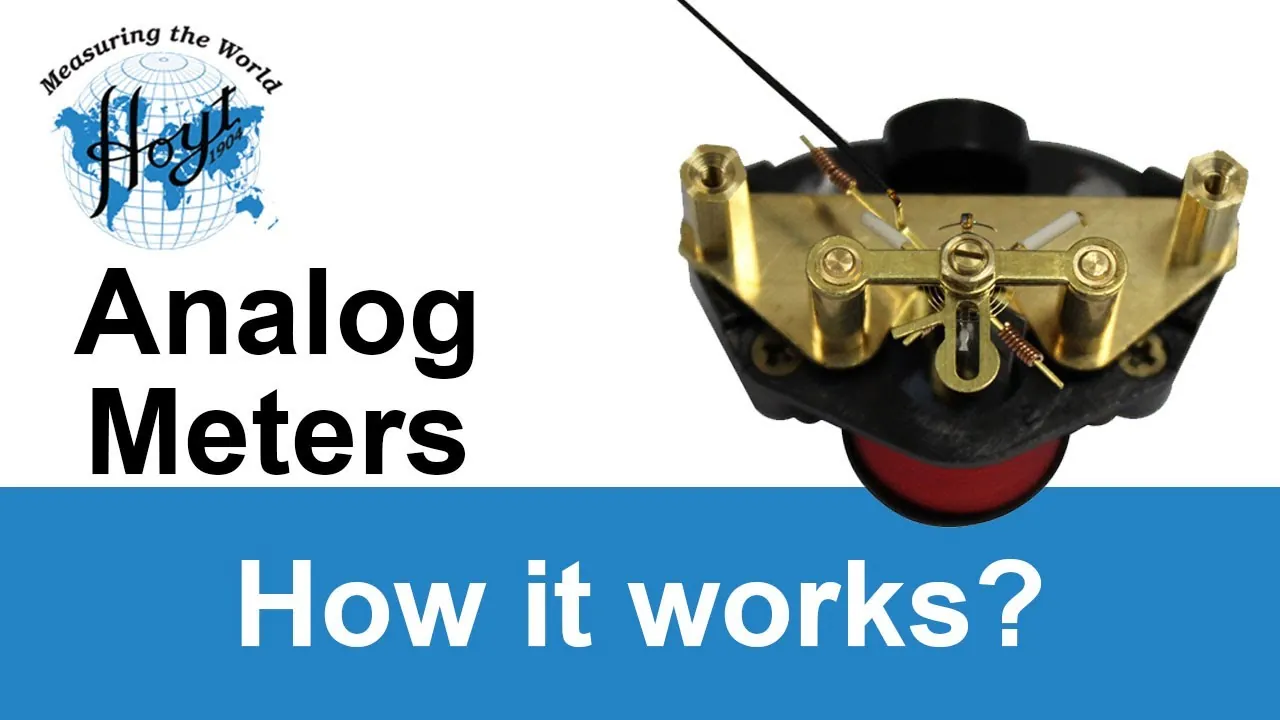
At the heart of most traditional analog meters sits a sensitive electromechanical system known as a galvanometer. When current flows through a wire coil placed within a permanent magnetic field, it creates a magnetic force that causes the coil to rotate.
A small spring exerts a counter-torque, ensuring the needle returns to zero when no current is applied. The physical displacement of the needle is directly proportional to the intensity of the electrical flow, allowing for an accurate visual representation of the circuit’s status.
Because these meters rely on physical mass and magnetic damping, they’re less prone to the “flickering” of digits seen in digital multimeters during rapid signal changes. This makes them highly effective for monitoring circuits with varying loads.
Components Of Analog Meters
Understanding the anatomy of the device helps in long-term troubleshooting. The system is comprised of several distinct parts that work in unison to produce a reading.
- Permanent Magnet: Provides the constant magnetic flux required for the coil to react to current.
- Moving Coil: A fine copper wire winding that reacts to the magnetic field.
- Control Springs: These provide the restoring force that brings the needle back to the rest position.
- Scale Plate: The printed surface containing the units, such as Volts, Amps, or Ohms.
- Needle or Pointer: The physical indicator that traverses the scale to show the measured value.
Comparing Digital And Analog Meters
Choosing between these two technologies often depends on the environment and the specific task at hand. While digital meters offer high-precision numerical readouts, analog meters excel in diagnostic tasks where the “behavior” of the signal matters.
| Feature | Analog Meter | Digital Meter |
|---|---|---|
| Display Type | Moving needle on dial | Numerical LCD/LED screen |
| Response | Continuous, smooth movement | Discrete steps/refresh rate |
| Power Need | Often passive (no battery) | Requires internal power source |
| Primary Use | Trend observation/fluctuation | Precise numerical measurement |
What Is An Analog Meter Used For?
These devices are frequently employed in settings where operators must monitor systems at a glance without needing to interpret complex digits. Common applications include:
- Automotive Gauges: Monitoring oil pressure, engine temperature, or fuel levels in older or specialized machinery.
- Audio Equipment: VU meters on recording consoles show signal levels to prevent audio clipping.
- Industrial Control: Pressure gauges and flow meters in chemical plants provide immediate status updates.
- Educational Labs: Teaching the fundamentals of electromagnetism and circuit theory in physics classrooms.
- Power Distribution: Monitoring line voltage fluctuations on electrical grids where rapid response is vital.
Addressing Calibration And Accuracy
Accuracy in an analog meter is highly dependent on the mechanical alignment of the needle and the tension of the control springs. Over time, physical shocks or exposure to extreme temperatures can cause the needle to drift away from the zero point. Most quality meters feature a small, accessible screw on the front face of the housing, which allows the user to manually adjust the needle back to zero while the device is disconnected from any circuit.
Pro Tip: Always ensure the meter is placed on a flat, level surface before performing a zero-adjustment, as internal balancing weights are designed to operate optimally in a horizontal or vertical orientation as specified by the manufacturer.
Troubleshooting Common Meter Issues
When a meter fails to provide a reading or the needle behaves erratically, you can usually diagnose the issue by checking for physical obstructions or electrical faults.
| Symptom | Probable Cause | Corrective Action |
|---|---|---|
| Needle sticks mid-scale | Dust or debris in pivot | Clean housing/check for damage |
| Needle won’t reach zero | Calibration drift | Adjust zero-screw on the face |
| Needle hits the stop | Overload/Excess current | Remove probe immediately |
| Erratic, jerky movement | Internal spring damage | Replace the meter movement |
Factors Affecting Meter Performance
Environment plays a significant role in how these devices perform. Because they utilize magnetic fields, external interference can cause significant reading errors.
- Magnetic Interference: Large motors, transformers, or strong magnets nearby can pull the needle away from its true position.
- Temperature Sensitivity: Extreme heat or cold can expand or contract the internal springs, altering the sensitivity of the movement.
- Physical Vibration: Constant vibration in industrial machinery can wear down the delicate pivots of the needle assembly.
- Parallax Error: Viewing the scale from an angle rather than head-on results in reading the wrong value on the dial.
Why Choose Analog Over Digital?
While digital technology is dominant, analog meters aren’t obsolete. They possess unique advantages in specific engineering contexts. For example, when tuning an antenna or adjusting a variable power supply, the dynamic movement of the needle provides an intuitive sense of “reaching a peak” that’s often lost when staring at rapidly changing numerical digits. Furthermore, in high-EMI environments, the lack of complex microchips makes analog meters significantly more robust against signal noise and electromagnetic pulses.
Maintenance And Care Practices

To ensure your meter lasts for years, follow a strict maintenance routine. Avoid dropping the device, as the pivot points holding the needle are extremely fragile and can shatter upon impact.
Always store the meter in a dust-free environment, as microscopic particles inside the casing can create friction, causing the needle to stick. If the device has a range selection knob, ensure it’s set to the highest setting before testing an unknown circuit to prevent needle damage caused by sudden, high-voltage spikes.
Warning: Never attempt to open the main sealed housing of a precision analog meter unless you have the specific tools and training, as the internal magnets and fine copper coils are highly susceptible to contamination and irreversible damage.
Frequently Asked Questions
Why does my needle not return to zero?
The needle may not return to zero due to mechanical friction, a bent pointer, or a weakened control spring. First, try using the zero-adjustment screw located on the front of the meter face. If the needle remains stuck or refuses to move, the internal pivot mechanism may be damaged or obstructed by debris, requiring professional repair or replacement of the movement assembly.
Can I use an analog meter for digital signals?
You can use an analog meter to observe digital signals, but it won’t show the discrete binary data. Instead, it will provide an average voltage reading or show the duty cycle of a pulse-width modulated signal. The needle will essentially “smooth out” the rapid transitions, showing you a steady value based on the signal’s average intensity over time.
What is the purpose of the mirror on the scale?
The mirror behind the needle is designed to eliminate parallax error. When taking a reading, you should align your eye so that the needle’s reflection in the mirror is hidden directly behind the needle itself. This ensures that you’re viewing the scale from the exact perpendicular angle required for an accurate reading, preventing errors caused by looking at the dial from the side.
How do I protect the meter from electrical surges?
Protecting an analog meter involves selecting the correct range before making contact with a circuit. If the voltage is unknown, always start at the highest range setting and work your way down. Many modern analog multimeters include internal fuses or diodes that act as a safety buffer to prevent excessive current from burning out the delicate coil inside the meter movement.
Are analog meters still manufactured?
Yes, analog meters are still widely manufactured and used in specialized industries. While they have been replaced by digital devices in general consumer electronics, they remain the preferred choice for industrial control panels, high-end audio equipment, and specialized laboratory environments where visual trend monitoring is superior to numerical data. They remain a staple component for engineers who value durability and simplicity.
Conclusion
Understanding the mechanics of an analog meter provides a foundation for better diagnostic work in any electrical project. By recognizing how current induces physical motion and how to maintain the sensitivity of the internal assembly, you can rely on these devices for years of consistent service. To keep your equipment in top shape, verify your meter’s zero-point before every critical measurement session to ensure maximum accuracy.
