
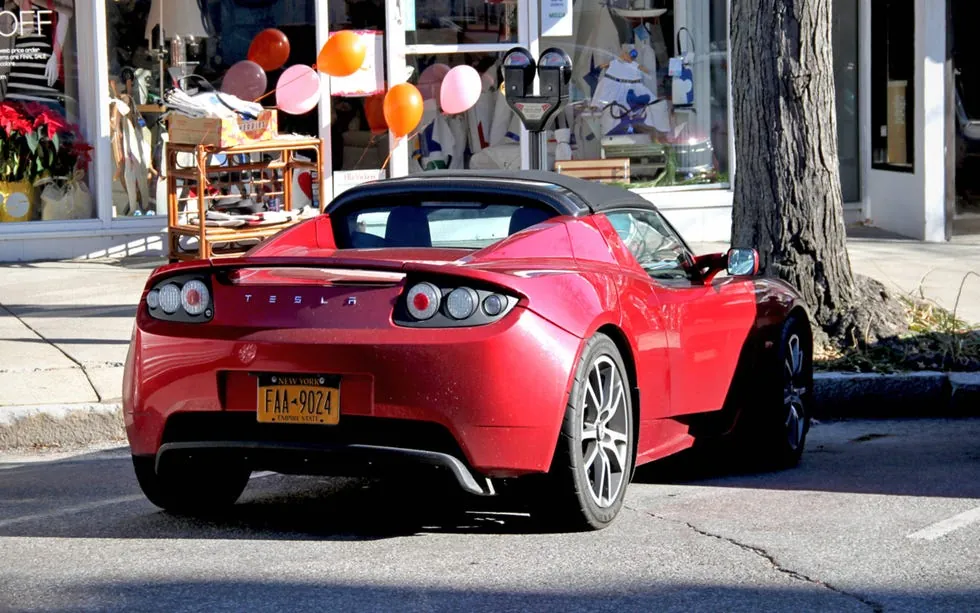
The first Tesla car was the original Roadster, a high-performance electric sports car that officially entered production in 2008, though the company’s journey began in 2003. While many associate the brand with the modern Model S or Model 3, the company was founded in San Carlos, California, by Martin Eberhard and Marc Tarpenning, with the goal of proving that electric vehicles could be superior to gasoline-powered cars. The original Roadster, which cost between $98,000 and $120,000 at the time of its release, served as the essential prototype for the entire industry.
Key Takeaways
- Tesla was incorporated in 2003, but it didn’t release its first production vehicle until 2008.
- The original Roadster was built on a modified chassis from the Lotus Elise to accelerate development.
- The company’s early strategy focused on high-end luxury sports cars to fund future mass-market models.
- Understanding the Roadster’s history helps clarify why Tesla prioritized battery efficiency over early volume sales.
- The 2003 founding team intended to prove that electric propulsion was viable for high-performance driving.
Looking Back to 2003 Origins
The year 2003 marked the beginning of a shift in the automotive landscape. When Eberhard and Tarpenning founded the company, they weren’t looking to build a golf cart; they wanted to build a car that enthusiasts would actually want to drive.
Elon Musk joined shortly after as the primary investor and chairman, bringing the vision of using a “secret master plan” that would lead to affordable electric cars for the masses. This long-term strategy required the company to first establish credibility through a high-performance halo vehicle.
The Original Roadster Prototype
The first vehicle, known internally as the “White Star” or simply the Roadster, was a pivotal piece of engineering. By utilizing a modified Lotus Elise chassis, the team avoided the immense cost of designing a vehicle frame from scratch.
This decision allowed the engineers to focus entirely on the powertrain architecture, specifically the lithium-ion battery pack and the induction motor. This approach was crucial because it allowed the startup to reach the market years faster than if they had pursued a clean-sheet design.
Why the Lotus Partnership Mattered
Many people wonder why an American electric car company worked with a British sports car manufacturer. The partnership was purely pragmatic. Lotus had a reputation for lightweight, agile handling, which perfectly complemented the heavy weight of the batteries.
By integrating their electric drivetrain into a proven frame, the team managed to create a car that could accelerate from zero to 60 miles per hour in under four seconds. This performance metric shattered the public perception that electric cars were slow, utilitarian, or boring.
| Feature | Original 2008 Roadster | Modern Electric Sedan |
|---|---|---|
| Range (EPA) | 244 miles | 350–405 miles |
| 0-60 MPH | 3.7–3.9 seconds | 1.9–3.1 seconds |
| Chassis Base | Lotus Elise | Proprietary Platform |
| Primary Goal | Proving Viability | Mass Market Adoption |
The First Tesla Car Specifications
The technical specifications of the 2008 Roadster were revolutionary for their time. The car featured an 185-kilowatt electric motor and a 53-kilowatt-hour battery pack. This combination allowed for a range that was previously unthinkable for a consumer electric vehicle.
According to the United States Department of Energy, electric vehicles rely on large battery packs that store energy to power the motor, and the Roadster was the first to successfully implement this on a scale that enabled highway-speed driving for extended periods.
Battery and Charging Technology
The battery pack was the heart of the car. It consisted of thousands of small, commodity-grade lithium-ion cells wired together. This was a radical departure from the industry standard, which favored larger, more complex cells. By using mass-produced cells, the company could leverage economies of scale that helped lower the high costs associated with early electric vehicle production.
Challenges in Early Development
Development wasn’t without significant hurdles. The team struggled with the transmission, as they initially attempted a two-speed gearbox that couldn’t handle the high torque of the electric motor. They eventually settled on a single-speed gearbox, which proved to be much more reliable. Additionally, the thermal management of the battery pack was a constant concern; the engineers had to develop a sophisticated liquid cooling system to prevent the batteries from overheating during intense driving or fast charging sessions.
| Development Phase | Key Focus Area | Outcome |
|---|---|---|
| 2003-2004 | Concept and Funding | Secured initial capital |
| 2005-2006 | Prototype Testing | Refined motor efficiency |
| 2007-2008 | Production Scaling | First deliveries completed |
The Master Plan Revealed
In 2006, Elon Musk published “The Secret Tesla Motors Master Plan,” which outlined the path from the Roadster to more affordable vehicles. The plan was clear: build a sports car, use that money to build an affordable car, and use that money to build an even more affordable car.
This step-by-step approach was essential because the development costs for electric vehicle technology were prohibitively expensive for a startup. By selling the Roadster to wealthy early adopters, the company generated the capital needed to research and develop the Model S platform, which eventually brought electric vehicles into the mainstream.
Legacy of the 2008 Roadster
The 2008 Roadster is now considered a collector’s item. Its influence on the automotive industry is undeniable, as it forced legacy manufacturers to take electric vehicles seriously. Before the Roadster, most major automakers viewed electric cars as compliance vehicles or niche experiments. After the Roadster, the focus shifted toward high-performance electric platforms. The car proved that sustainable transport didn’t mean sacrificing the joy of driving, a lesson that now defines the modern automotive market.
Was the Tesla Roadster Reliable?
Pro Tip: If you’re looking to purchase a vintage Roadster today, be prepared for high maintenance costs, as many original components are no longer in active production.
Reliability was a mixed bag for the earliest models. While the electric motor itself was incredibly durable, the auxiliary systems—such as the power electronics and early infotainment modules—often required servicing. The company provided several software updates over the years to manage battery health and charging efficiency, which helped extend the life of the original fleet. Many of these vehicles are still on the road today, which speaks to the high quality of the initial engineering.
Comparison of Early Electric Vehicles
| Vehicle Model | Release Year | Performance Level | Market Target |
|---|---|---|---|
| Tesla Roadster | 2008 | High | Luxury Sports |
| Nissan Leaf | 2010 | Low/Medium | Daily Commuter |
| Mitsubishi i-MiEV | 2009 | Low | Urban Transport |
| Chevrolet Volt | 2010 | Medium | Hybrid Commuter |
Related guides
- Best Camping Mattress for Bad Back in 2026
- 5 Best Car Camping Heaters for Winter: Our Top Picks
- What Does Mustard Algae Look Like: Identification Signs in 2026
Frequently Asked Questions
Was the 2003 Roadster a mass-market car?
No, the 2008 Roadster was a low-volume, high-end sports car. It was designed specifically to prove that electric vehicles could be fast and desirable. The company only produced about 2,450 units between 2008 and 2012, making it a very exclusive vehicle intended for early adopters who could afford the premium price tag.
Did Tesla invent the electric car?
Tesla didn’t invent the electric car. Electric vehicles have existed since the 19th century. However, the company was the first to successfully commercialize a long-range, highway-capable electric car using lithium-ion battery technology. Their innovation was in the integration of battery management systems and power electronics that made electric propulsion practical for everyday use.
Why is 2003 significant for Tesla?
2003 is the year the company was officially incorporated. It represents the starting point of the business venture. While the first car didn’t arrive for another five years, the 2003 founding date marks the moment the team began securing the intellectual property, the engineering talent, and the initial venture capital funding required to launch the electric vehicle revolution.
Can you still buy an original Roadster?
Yes, you can find the original Roadster on the pre-owned market. However, because production was limited to only a few thousand units, they’re now considered rare collector items. Prices fluctuate significantly depending on the condition, mileage, and battery health of the vehicle. You’ll typically find them listed at auctions or through specialized luxury car dealerships.
How did the Roadster change the industry?
The Roadster changed the industry by demonstrating that an electric car could be more powerful and fun to drive than a traditional gasoline car. It forced major automotive manufacturers to abandon their skepticism and invest heavily in their own electrification programs. By proving the viability of the technology, the Roadster effectively accelerated the global transition toward sustainable energy in transportation.
Conclusion
If you’re interested in the evolution of these vehicles, the best next step is to visit the official Tesla website to review their current lineup and see how their technology has matured since those early days in California. Understanding this history provides the necessary context to appreciate the rapid advancements in battery density, charging speeds, and software integration that define the electric cars of the present day.
