
Most common speed queen washer problems relate to water levels, drainage issues, or the lid switch failing to engage. If your machine stops mid-cycle, it’s often because the internal sensors detect an imbalance or a door lock error. You can usually clear these by checking the load size or ensuring the lid is fully closed. For specific error codes, consult the official Speed Queen technical documentation to see the exact status of your unit.
Troubleshooting common Speed Queen washer problems
Machines from this brand are built for heavy use, but they can still experience mechanical failures. The most common cause is overloading the drum, which triggers the suspension system to stop the spin cycle to prevent damage. When you put too many heavy items in at once, the drum can’t balance itself. This isn’t a broken part, but a safety limit designed to protect the motor.
Another frequent cause is poor drainage. If the machine leaves clothes soaking wet, the drain hose might be kinked or blocked by debris. The pump works hard to clear water, but if the hose sits too low or too high relative to the drain pipe, the water may siphon back into the tub. Always check that the hose is positioned according to the installation manual.
Finally, electrical issues often stem from a loose lid switch. If the control board doesn’t receive a signal that the door is locked, it won’t start the cycle. This is common in older units where the latch pin has worn down. If the latch is physically broken, the machine will remain in a standby state regardless of your button presses.
Adjusting the load for better cycles
If your machine stops during the spin cycle, you need to redistribute the items inside. Take out one or two heavy towels or blankets and restart the cycle on a drain and spin setting. This allows the suspension springs to stabilize the drum properly. If the machine still shakes violently, it’s likely that the leveling feet aren’t touching the floor evenly.
To check the leveling, place a bubble level on the top of the machine. If the bubble isn’t centered, rotate the bottom feet until the unit sits flat against the floor. You should tighten the locking nut on each foot once the machine is stable. A machine that isn’t level will vibrate, which eventually loosens internal components and causes premature wear on the drive belt.
If you’re comfortable with basic tools, you can check for blockages in the drain hose. Turn off the power and water supply before you remove the hose from the wall drain. If you find a clog, clear it with a plumbing snake or high-pressure water. If you suspect a motor or main board failure, don’t attempt to open the cabinet yourself. High-voltage capacitors inside can hold a lethal charge even when the power cord is unplugged.
Fixing drainage and pump blockages
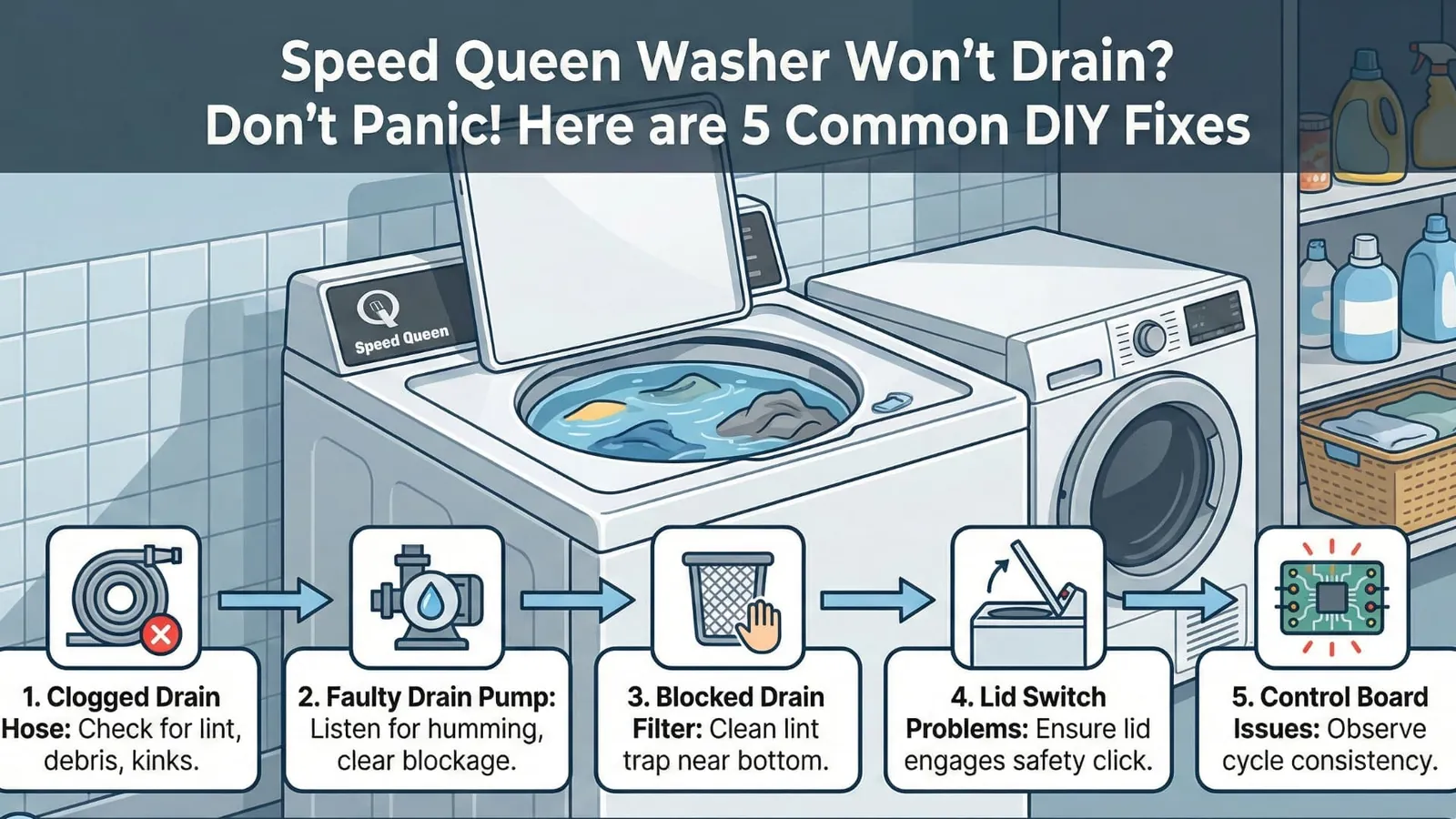
When water stays in the tub, the pump filter or the drain hose is the first place to look. You should first check the drain pipe in your wall to ensure it isn’t backed up. If the sink or floor drain near the washer is slow, the washer can’t empty itself correctly. This is a house-plumbing issue rather than a machine fault.
If the house drain is clear, inspect the drain hose for any sharp bends. The hose should have a clear path to the drain. If the hose is pushed too far into the standpipe, it can create a siphon effect that pulls water back into the drum. Pull the hose out until there’s a small air gap between the hose and the standpipe.
If you hear a loud grinding noise while the pump is running, there may be a foreign object like a coin or a button stuck in the pump impeller. You can check the pump area by removing the front access panel. If you aren’t confident in your ability to remove the panel or handle the pump assembly, contact a certified technician to avoid voiding your warranty.
Resolving lid and door switch errors
A machine that refuses to start often has a faulty lid switch or a door lock that has lost its connection. First, check the door latch for any visible debris or lint buildup that might stop it from clicking shut. If the latch looks clean but still fails to engage, the internal switch may have lost its spring tension.
You can test the switch by pressing the button manually while the door is open to see if it makes an audible click. If there’s no click, the mechanism is likely worn out. If the machine shows a specific error code on the digital display, note the code before you call for service. This code tells the technician exactly which sensor isn’t sending a signal.
Many users mistakenly attempt to bypass the switch by taping it down or jumping the wires. This creates a severe fire hazard and disables the emergency stop function, which can lead to injury during high-speed spin cycles. If the machine runs with the door open, you have bypassed a safety feature that protects your hands from moving parts.
Replacement parts for these switches are specific to the model number of your washer. You can find the model number on the serial tag, usually located on the inside of the door or the back of the cabinet. Don’t use generic parts from other brands, as they may not meet the safety requirements for the electrical load of this machine. Always disconnect the power before attempting any repair to avoid a dangerous electrical shock.
Avoiding common maintenance mistakes
Many people try to force the machine to work by bypassing safety sensors, which is dangerous and usually causes more damage. You should never tape down a lid switch or bridge a connection to trick the control board.
These sensors prevent the machine from operating in an unsafe state, such as when the lid is open during a high-speed spin. Bypassing them forces the motor to fight against its own safety logic, often frying the main control board, a repair that costs nearly half the price of a new unit.
Using too much detergent creates excess suds that clog the pump and pressure sensors. If you see suds remaining after the final rinse, you have used too much. Cut your detergent volume by 25 percent for the next load to prevent the buildup that leads to permanent sensor failure.
Washing only one heavy item like a rug causes an unbalance that triggers the safety stop. If the machine shakes violently, stop the cycle immediately and add a heavy towel to distribute the weight. Ignoring small leaks leads to rusted internal frames which are nearly impossible to repair. If you spot a puddle, pull the machine out and check the drain pump filter first.
Adding heavy items to a delicate cycle can damage the agitator or the drum seals. Always sort by weight, not just color. If the load feels significantly heavier when wet than when dry, move it to a bulky or heavy-duty setting.
Preventing future washer issues
The best way to keep your machine running is to follow a regular cleaning schedule and check your load habits. If you wash heavy items, do so in smaller loads to prevent the machine from working beyond its capacity. A well-maintained machine should last for many years if it’s kept clean and level.
| If you’re doing this | Do this instead | Why |
|---|---|---|
| Overloading the tub | Use smaller, balanced loads | Prevents suspension and spin errors |
| Using extra detergent | Use the marked fill line | Prevents suds from clogging sensors |
| Ignoring vibrations | Level the machine feet | Prevents loose parts and frame damage |
| Washing single heavy items | Add smaller items to balance | Keeps the drum steady during spin |
Check your user manual for the specific weight capacity of your model. Most standard residential machines cap out at 15 to 20 pounds of dry laundry. If you’re unsure if your load is too heavy, compare the weight of your dry items against the manufacturer’s suggested limit for the cycle you’re using.
Many owners mistakenly assume that if a load fits inside the drum, it’s safe to wash. This is a costly error. Excess weight during the high-speed spin cycle places immense stress on the drum bearings and the spider arm assembly.
If your machine makes a loud, grinding noise during the spin cycle, stop immediately. This sound indicates that the bearings are already failing. If the machine still spins quietly, you can save it by reducing your load volume by 25 percent. Adjusting your habits now will save you from expensive repairs later.
Frequently asked questions
How long should a wash cycle take?
A standard cycle typically takes 35 to 45 minutes, depending on the cycle settings and water pressure. If your machine takes significantly longer, it may be struggling to fill or drain properly. Check your water inlet hoses for kinks or low flow, as a slow water supply will force the machine to pause and wait for the tub to reach the correct level.
Why is my washer making a loud banging noise?
Banging is almost always caused by an unbalanced load or the machine being out of level on the floor. If you have already leveled the feet and the load is balanced, there may be an issue with the internal suspension springs. If the noise persists even when the machine is empty, it’s time to have a technician inspect the drive components.
Is it safe to leave the washer running when I am not home?
No, it isn’t safe to leave any washing machine running unattended, as a sudden leak or electrical fault could cause water damage or a fire hazard. Always ensure you’re nearby to monitor the machine during its cycle. If you notice a strange burning smell or hear a loud grinding sound, shut off the power immediately at the circuit breaker.
How do I clear an error code on the display?
You can usually clear an error code by turning the cycle selector to the off position and unplugging the machine for at least 60 seconds. This allows the control board to reset its memory. If the code returns immediately after you plug the unit back in, the error indicates a persistent mechanical fault that requires a professional repair service.
Can I wash waterproof items like raincoats?
No, you shouldn’t wash waterproof items because they trap water and air, which causes the drum to become severely unbalanced during the spin cycle. This can lead to the machine shaking violently and potentially damaging the internal suspension. Always check the care label on your garments to ensure they’re suitable for a standard agitator or impeller washer.
Conclusion
If your machine still doesn’t run smoothly, don’t hesitate to contact a certified technician. They’ve got the right tools to diagnose hidden mechanical faults quickly. Keeping your appliance in top shape ensures it’ll serve your household for years to come, so it’s worth getting expert help when you’re truly stuck.
