
As an Amazon Associate, we earn from qualifying purchases. This post contains affiliate links – if you buy through them, we may earn a commission at no extra cost to you.
Finding the best algaecides for yellow algae depends on how fast you need results versus how much time you want to spend on maintenance. Some products act as heavy-duty shock treatments to clear visible blooms, while others serve as long-term preventatives to keep spores from taking hold. Your choice hinges on whether you’re currently fighting an active infestation or trying to stop one before it starts. If you need an immediate fix for a yellow algae bloom, United Chemical Yellow Treat is often the first choice, while those focused on long-term prevention may prefer a concentrated formula like Polyquat 60 Algaecide.
1. United Chemical’s Yellow Treat Mustard Algaecide

Best for: Someone needing a powerful, quick-acting solution for active yellow algae blooms.
This product is designed to target stubborn mustard and yellow algae quickly. Because it dissolves directly in the pool water, it’s built to restore clarity without requiring overly complex preparation steps. It’s suitable for all pool types, including those using saltwater, chlorine, and freshwater.
The main trade-off is that it’s a specialized treatment rather than a preventative. It’s intended for those who already have a visible bloom that needs clearing. If you’re looking for a set-it-and-forget-it weekly maintenance chemical, this may not be your primary choice.
The decision rule is simple: if you see yellow or mustard algae, use this treatment. You only need 5 ounces for every 10,000 gallons of water. A common mistake is skipping the brushing step. You must pour, brush, and shock the pool to ensure the formula reaches the algae and clears the water effectively. Skipping the brush means the algae may return, requiring you to repeat the entire treatment process.
Good if:
- You’re currently dealing with a visible yellow algae bloom.
- You have a large inground pool or a smaller backyard setup.
- You want a treatment that works with saltwater, chlorine, and freshwater.
Skip it if:
- You’re only looking for a weekly preventative.
- You prefer a formula that doesn’t require brushing or shocking the pool.
Yellow Treat delivers professional-grade results at home. It breaks down organic debris while enhancing clarity, helping you win the fight against stubborn blooms. Whether you’re a homeowner or a professional, this formula is designed to restore your pool to a sparkling state throughout the entire season.
2. Yellow Out Treatment
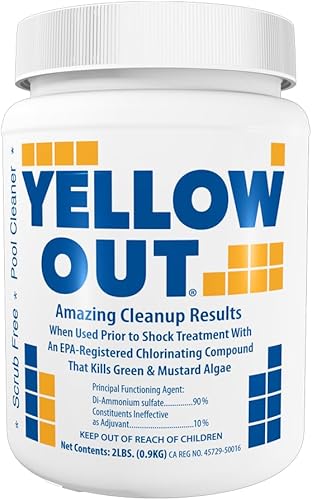
Best for: Pool owners using chlorine generators who need a gentle algae treatment.
This treatment is designed for compatibility with chlorine generators and works alongside standard pool shock. It’s specifically formulated to be non-toxic and is safe for use on all pool surfaces, including vinyl liners.
One of the standout features is that it doesn’t require vigorous brushing, which simplifies the cleanup process compared to more aggressive treatments. You simply add the 2-lb container to your pool to address the issue.
However, because it relies on being used in conjunction with shock, you must have your regular sanitizer routine ready to go. The decision rule is simple: if you have a chlorine generator and need to clear green, yellow, brown, or pink algae, this product acts as a booster.
Good if:
- You operate a pool with a chlorine generator.
- You want a non-toxic option that’s gentle on vinyl liners.
- You prefer a treatment process that skips manual brushing.
- You need to clear green, yellow, brown, or pink algae.
Skip it if:
- You don’t have chlorine shock on hand.
- You’re looking for a standalone chemical that doesn’t require additional products.
A common mistake is assuming this product replaces your primary sanitizer. Using this treatment alone without the required shock will fail to clear the algae. Always confirm you have enough shock available before starting the process to ensure the treatment works as intended.
3. Applied Biochemists Pool 408622A Yellowtrine Swimming Pool Algaecide Cleanser

Best for: A user who needs a specialized cleanser that allows for a quick return to swimming.
This cleanser is built to destroy mustard algae deposits without leaving behind any residue. It’s highly versatile, as it’s compatible with bromine, chlorine, salt water, ozone, and mineral-based sanitizing systems.
The primary convenience here is the short wait time before you can use the pool again after treatment. You can resume swimming just several hours after applying the formula.
It’s a focused, 3-lb container meant for specific mustard algae outbreaks. If you have a very large pool, you may need to ensure you have enough on hand for the full treatment. The decision rule is simple: if you’re facing a mustard algae outbreak, this product is designed for the task. If you’re looking for general maintenance for other algae types, look elsewhere.
A common mistake is assuming this is a general-purpose algaecide for all varieties. It’s specifically formulated for mustard algae. Using it for other purposes will fail to resolve the underlying issue.
Good if: * You want to get back into the water as soon as possible. * You use alternative sanitizers like ozone or minerals. * You want a cleanser that leaves no residue behind.
Skip it if: * You have a massive pool that requires a high volume of product. * You’re looking for a long-term preventative rather than a cleanup tool. * You’re dealing with an algae type other than mustard.
4. In The Swim Algaecide

Best for: Owners of pools using well water who struggle with mineral-related stains.
This formula provides both prevention and control for green and yellow algae. Its non-foaming and non-clouding design is meant to keep the water clear without adding residue, which is helpful for regular maintenance.
Since it’s specifically recommended for well water, it addresses the common issue of mineral content causing stains. If you notice persistent discoloration, this algaecide acts as a preventative measure against the mineral buildup that leads to pool staining.
Note that the dosage requirements differ for initial treatment versus maintenance. You must track your total pool volume carefully to ensure you’re using the right amount. Use 26 oz. per 10,000 gallons for your initial treatment to gain control. For ongoing maintenance, apply 16 oz. every other week to keep the water clear.
The 10% Quaternary compound allows you to swim immediately after application. This makes it a convenient choice for busy households that can’t afford pool downtime.
Good if:
- You rely on well water and deal with mineral staining.
- You want a non-foaming formula for regular maintenance.
- You need a solution that allows for immediate swimming after application.
Skip it if:
- You’re looking for a heavy-duty shock treatment for a severe, advanced bloom.
- You don’t want to measure out specific doses every other week.
The decision rule is simple: if you’re starting a new season or fighting a fresh breakout, use the higher initial dose. If you’re simply maintaining a clear pool, switch to the 16 oz. bi-weekly schedule to prevent new growth. Failure to follow this schedule often results in recurring algae blooms that require more intensive, repeated treatments later.
5. AquaDoc Copper Algaecide

Best for: Someone wanting a long-lasting, preventative solution that reduces chlorine demand.
This copper-based algaecide provides protection for up to three months. It targets blue-green, green, yellow, mustard, and black algae. It serves to support your existing sanitizer rather than replace it, helping to lower overall chlorine demand.
Because it’s a copper-based product, you must follow label instructions regarding filtration and pH balance. If you have a plaster finish, you must dilute the product in a bucket of pool water before adding it to the pool to prevent staining.
The decision rule for dosing is simple: use 16 fl oz per 10,000 gallons for prevention. If you’re currently dealing with severe algae, use 32 fl oz per 10,000 gallons. For severe cases, you must also brush the pool, shock the water, and adjust the pH to 7.2 for the best results.
Good if:
- You want to reduce your overall chlorine demand.
- You prefer a preventative that lasts up to 90 days.
- You want a non-foaming, non-staining formula.
Skip it if:
- You aren’t willing to monitor or adjust your pH levels.
- You expect this to replace your primary sanitizer.
- You need an immediate, high-strength shock for a massive infestation without performing the necessary manual labor like brushing and balancing the water.
6. Polyquat 60 Algaecide for Swimming Pool

Best for: Owners who want a concentrated, non-metallic preventative for regular pool maintenance.
This is a highly concentrated formula designed to be non-metallic and non-foaming. It’s effective for both preventing algae and knocking down existing blooms, making it a versatile tool for opening or closing a pool. Because the formula contains no copper or metal, it won’t stain vinyl, fiberglass, gunite, or plaster surfaces.
The decision rule for dosage is simple: one quart treats up to 40,000 gallons. If your pool is smaller, you must scale the dose down to avoid unnecessary chemical buildup. Because it’s so concentrated, you must be precise with your measurements. Over-treating can be a mistake, even if the formula doesn’t cloud the water or disrupt existing chlorine, bromine, or saltwater chemistry.
You can tell if this is right for you by your maintenance routine. If you need a single product for weekly care, summer protection, or winterizing, this works across all pool types, from small plunge pools to large commercial layouts.
Good if:
- You want a non-metallic, non-staining preventative.
- You need a versatile product for pool opening and closing.
- You prefer a concentrated formula that goes a long way.
Skip it if:
- You’re uncomfortable with precise chemical dosing.
- You require a specific copper-based algaecide for your current water chemistry.
- You need a product that requires pH adjustment before application, as this formula works within your existing pool chemistry without requiring those extra steps.
7. HTH Algae Guard Ultra

Best for: Someone looking for a multi-action, long-lasting formula that kills and prevents.
This is marketed as a strong, multi-action control that kills and protects against all types of algae for up to three months. It’s non-foaming and works well with shock products to manage extreme algae conditions.
It’s compatible with all pool types, including vinyl liners and saltwater, chlorine, and freshwater systems. The main advantage is the extended protection interval. Because the formula is non-staining, it’s safe for varied surfaces. Like other long-lasting formulas, it works best when your pool water is already balanced.
Good if:
- You want a single product that both kills and prevents regrowth.
- You want protection that lasts for an entire season.
- You use other HTH shock products.
- You need a fast-acting solution that allows you to swim immediately after application.
Skip it if:
- You’re looking for a specialized, single-purpose cleanser.
- You have a very specific or sensitive water chemistry requirement.
Decision Rule: If you’re dealing with a heavy bloom of green, black, or mustard algae, apply this product directly to the water. If you’re performing routine maintenance, use it every three months to ensure continuous protection. If you’re currently shocking your pool, use this in tandem with HTH shock products to achieve the best results. Relying on this as your sole maintenance step without balancing your water first will limit its effectiveness against regrowth.
Choosing the Best Yellow Algae Algaecides
Many of these algaecides serve the same primary goal: keeping your pool clear and free of yellow algae. Products like Polyquat 60 Algaecide and In The Swim Algaecide are both high-quality, non-foaming preventatives that work well for routine maintenance. The choice between them often comes down to the specific concentration you prefer or the brand you already trust.
Meanwhile, United Chemical Yellow Treat and Yellow Out Treatment are more focused on the immediate “knockdown” of an existing bloom. These are functionally different from the long-lasting preventatives like AquaDoc Copper Algaecide, which are meant for sustained defense. If you’re choosing, consider your current situation: if the algae is already there, go for the specialized treatment; if you’re just starting your season or trying to keep the pool clean, the preventative formulas are more appropriate. There’s no need to over-complicate your setup by mixing too many different chemical types.
Still Not Sure?
How often will I really use it?
United Chemical Yellow Treat is a powerful mustard and yellow algae killer that targets blooms fast. You only use it when a problem appears, making it a reliable backup. However, if you want to avoid the problem entirely through a set routine, a preventative like AquaDoc Copper Algaecide is designed for regular, scheduled application every few months.
What do I already own that this has to work with?
Your current sanitation system is the biggest factor here. If you use a chlorine generator, ensure your chosen algaecide is compatible, as some formulas are specifically tested for that environment. Always check your pool liner type, too; while many products are non-staining, those with plaster finishes may have specific requirements. If you use well water, look for a product like In The Swim Algaecide, which is formulated to handle the mineral content often found in that water source.
What am I most likely to regret choosing?
The most common regret comes from choosing a high-strength, concentrated product without being ready to measure it accurately, or picking a copper-based product when your pool chemistry isn’t balanced. Always read the label to ensure you have the correct testing gear to keep your levels in the safe zone.
Maintaining your pool chemistry is the most important step for any algaecide to be effective. Keep your pH and alkalinity levels in the recommended range before adding any chemical treatments. For your next step, check your filtration system to ensure it is clean and functioning properly before applying your chosen algaecide.
Related guides