
Seeing a digital display flash a warning code can be stressful, but encountering a whirlpool washer f8 e1 error is a common experience for many homeowners. This specific fault code indicates a long fill condition, meaning the washing machine isn’t detecting enough water in the tub within the expected timeframe. While it might seem like a complex mechanical failure, the issue often stems from simple plumbing obstructions or faulty components in the water supply system. Understanding the root cause allows you to troubleshoot the machine effectively and avoid unnecessary service calls.
Key Takeaways

- The F8 E1 code specifically signals that the washer detects a lack of water or a slow fill rate.
- Most repairs involve checking your home’s water supply valves and the inlet hoses for kinks or clogs.
- Hard water buildup can obstruct the inlet screens, preventing water from reaching the drum.
- If the hoses and valves are functional, the pressure sensor or the water inlet valve itself may require professional testing.
- Always unplug the machine and turn off the water supply before attempting any physical inspections or repairs.
Understanding the Whirlpool Washer F8 E1 Fault Code
The F8 E1 error is a diagnostic alert from the machine’s control board. When you select a cycle, the control board opens the water inlet valves. It then monitors the water level through a pressure sensor (often called a pressure transducer or switch).
If the sensor doesn’t register that the water level has reached the required height within a programmed amount of time—usually around 8 to 10 minutes—the system halts the operation and displays the code to prevent the heating element from burning out or the pump from running dry.
System diagnostics rely on this timing to protect your appliance from damage. When the machine can’t fulfill its request for water, it enters a protective state. This isn’t necessarily a sign of a “dead” machine; rather, it’s a sign that the communication between the water source and the internal tub is being interrupted by a physical blockage, a mechanical failure, or an electrical signal error.
Checking Your Water Supply Valves
Before diving into the machine’s internal components, you must verify the external supply. It’s surprisingly common for a household water valve to be partially closed or for a sediment buildup to occur at the faucet connection.
- Ensure both the hot and cold water taps are turned fully counter-clockwise to the “on” position.
- Check if the water pressure in the rest of your home is normal; if other faucets have low pressure, the issue is likely with your home’s main plumbing rather than the washer.
- Inspect the hoses for sharp bends or kinks that may have occurred if the machine was recently moved or vibrated during a heavy spin cycle.
Water pressure is the lifeblood of your laundry cycle. If your home uses a well system, check the pressure tank gauge to ensure it’s within the normal operating range, usually between 40 and 60 PSI.
Inspecting Inlet Hoses and Screens
If the valves are fully open and the pressure is normal, the next step involves checking the inlet hoses. Over time, mineral deposits or debris from the water lines can accumulate in the small mesh screens located inside the inlet valve ports.
| Component | Potential Issue | Inspection Method |
|---|---|---|
| Inlet Hoses | Kinks or blockages | Straighten and check for internal debris |
| Inlet Screens | Mineral buildup | Remove hose and inspect the mesh filter |
| Water Valve | Mechanical failure | Listen for a “click” or humming sound |
| Pressure Tube | Air leak or clog | Check for moisture or debris in the tube |
Mineral deposits are the primary culprit in areas with “hard” water. If you notice a white, chalky substance on your faucet aerators throughout the house, it’s highly likely that this same sediment is coating the mesh screens on your washer. To clean these, turn off the water, unscrew the hoses from the back of the washer, and use a soft brush or a toothpick to gently dislodge the gunk from the mesh.
What Causes the F8 E1 Error?
Several factors can trigger this specific error. While some are user-serviceable, others require a degree of technical proficiency. The following list details the most common culprits:
- Inlet Valve Solenoids: These electrical components open the water flow. If the solenoid coil burns out, the valve stays closed, resulting in no water entering the drum.
- Pressure Sensor Failure: If the sensor that measures water level is faulty, it may fail to report the water level to the control board, even if the tub is full.
- Control Board Glitch: Occasionally, the main electronic control unit experiences a software hiccup. A hard reset of the machine can sometimes clear the error.
- Pressure Tube Obstruction: A small plastic tube connects the drum to the sensor. If this tube is pinched, disconnected, or blocked by soap scum, the sensor won’t receive an accurate reading.
Electronic components are sensitive to voltage fluctuations. If you have experienced a recent power surge, it’s possible that the control board sustained minor damage, though this is less common than mechanical failures.
How to Perform a Hard Reset
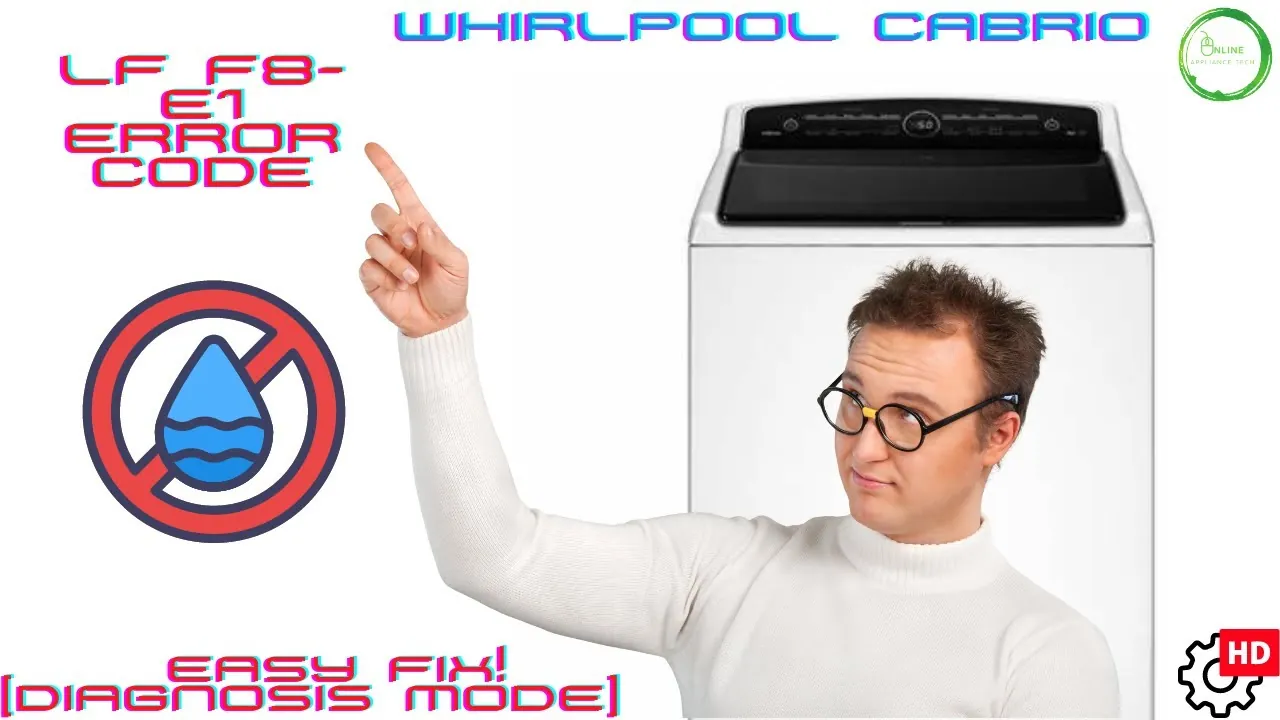
Before replacing parts, try resetting the control board. This clears temporary memory errors and can often resolve a false F8 E1 reading.
- Unplug the washing machine from the wall outlet for at least 5 to 10 minutes.
- Plug the machine back in.
- Turn the cycle selector knob to a different setting, then back to your desired cycle.
- Press the “Start/Pause” button to see if the error persists.
If the error returns immediately after the reset, the issue is almost certainly a physical problem with the water delivery system or the sensors.
Testing the Water Inlet Valve
If you’re comfortable using a multimeter, you can test the water inlet valve. This component is usually located at the rear of the machine where the hoses attach.
- Set your multimeter to the Ohms (Ω) setting.
- Disconnect the wiring harness from the valve.
- Place the multimeter probes on the two terminals of the solenoid.
- A functional solenoid will typically show a reading between 500 and 1,500 ohms, though this varies by specific model.
Multimeter testing requires safety precautions. If you don’t have experience working with electrical components, it’s safer to consult a professional technician. A reading of “OL” or infinity indicates an open circuit, meaning the solenoid is burnt out and the entire valve assembly must be replaced.
Inspecting the Pressure Sensor Tube
The pressure sensor tube is a thin, clear hose that runs from the bottom of the tub to the pressure switch at the top of the machine. It works by trapping air; as the water level rises, the air pressure in the tube increases, which the sensor then translates into a depth measurement.
If this tube is cracked, it will leak air, and the machine will never “feel” the pressure increase. If it’s clogged with detergent buildup, the air can’t move freely. Carefully detach the tube and blow through it to ensure there are no blockages. If it feels brittle or shows signs of cracking, replace it immediately, as a tiny pinhole leak will prevent the sensor from working correctly.
Can You Replace the Valve Yourself?
Replacing a water inlet valve is a straightforward repair for many DIY enthusiasts. The part is generally inexpensive, costing between $30 and $90 depending on the model and whether you purchase an OEM (Original Equipment Manufacturer) part or an aftermarket alternative.
- Turn off the water supply and unplug the machine.
- Remove the top or back panel of the washer to access the valve.
- Take a photo of the wire connections before removing them so you can reattach them correctly.
- Unscrew the old valve, slide the new one into place, and reconnect the water hoses and wires.
OEM parts are almost always recommended over generic alternatives. While generic valves may fit, they often lack the precise calibration required for modern high-efficiency machines, which can lead to recurring error codes or premature failure.
Troubleshooting Schedule
If you’re systematically working through these issues, use this timeline to organize your efforts.
| Phase | Task | Expected Duration |
|---|---|---|
| Phase 1 | Check hoses and supply valves | 15–20 minutes |
| Phase 2 | Clean inlet screens and filters | 20–30 minutes |
| Phase 3 | Perform hard reset | 10–15 minutes |
| Phase 4 | Multimeter testing of valves | 30–45 minutes |
| Phase 5 | Inspecting pressure tube | 20–30 minutes |
Maintenance schedules should include cleaning these inlet screens at least once every twelve months to prevent buildup from becoming a permanent obstruction.
When to Call a Professional

Sometimes, the F8 E1 error points to a deeper issue that exceeds the scope of basic troubleshooting. If you have replaced the inlet valve, cleaned the screens, checked the pressure tube, and performed a hard reset, but the error persists, the issue may lie with the main control board or a faulty wiring harness.
Signs that you need a professional:
- The machine has visible signs of water damage on internal electrical components.
- You smell burning plastic or electrical ozone near the control panel.
- The machine makes an irregular, grinding, or loud clicking noise when it attempts to fill.
- The error code changes to a different number after you attempt a repair, suggesting a more complex system failure.
Related guides
- Toilet Flapper vs Fill Valve: How to Diagnose Your Leak in 2026
- Pentair Globrite Problems: Top 10 Issues and Complaints in 2026
- Endless Pool Complaints: How to Fix the Most Common Issues in 2026
Frequently Asked Questions
Is it safe to keep using the washer with this error?
No, you shouldn’t continue to use the machine if it displays an F8 E1 error. Attempting to force the machine to run can cause the internal heating elements to activate without sufficient water, leading to a fire hazard or severe damage to the drum and gaskets. Address the water supply issue before attempting to run another wash cycle.
Does the F8 E1 error mean my pump is broken?
Usually, no. The F8 E1 code is specifically related to the water inlet process, not the draining process. If your machine were having trouble draining, you would likely see an F2 or E1 error related to the pump system. If you hear the pump running constantly, it may be an attempt by the machine to clear a false reading, but focus on the water fill components first.
Why does the error happen only on the hot water cycle?
If the error occurs only when selecting hot water, it strongly suggests that the hot water inlet valve or the hot water supply line is the source of the problem. Check the hot water shut-off valve behind the machine and ensure the hose isn’t kinked. If the valve is open, the hot water solenoid on the inlet valve assembly is likely faulty.
Can low water pressure in my house trigger this?
Yes, absolutely. If your home’s water pressure is below the threshold required by the washer’s computer, the machine will time out before the tub reaches the necessary level. This is common in homes with aging pipes, shared water lines, or well systems that haven’t been serviced recently. Check your household faucets to see if the water flow is weak throughout the entire house.
Is the F8 E1 error a sign of a faulty control board?
It can be, but it’s rarely the first thing to check. Control boards are expensive, and they’re usually the last component to fail. Always rule out the water supply, the inlet hoses, the screens, the valve solenoids, and the pressure sensor tube before assuming the main computer has failed. Most F8 E1 issues are solved by cleaning a screen or replacing a simple valve.
Conclusion
Regular maintenance of your appliance will extend its lifespan significantly. Start by inspecting the water inlet screens for debris today, as this is the most common cause of the F8 E1 error. If you find the screens are clean and the hoses are clear, follow the steps provided to test the inlet valve. Taking these proactive measures will keep your laundry routine running smoothly and help you avoid the high costs of professional repair services.

1 thought on “Whirlpool Washer F8 E1 Error: How to Fix Long Fill Issues”