
Wind turbines generate electricity by capturing the kinetic energy of moving air and converting it into rotational mechanical power, which is then transformed into electrical current through an internal generator. This process relies on aerodynamic principles similar to those used in aviation, where the shape of the blades creates pressure differences that force the turbine to rotate. By harnessing these natural forces, wind energy provides a clean and renewable power source that integrates directly into the electrical grid through complex mechanical and electrical systems.
Key Takeaways
- Turbines use aerodynamic lift, not just wind pressure, to rotate their blades efficiently at high speeds.
- The internal gearbox increases the slow rotation of the blades to the high speed required for electricity generation.
- Yaw systems automatically rotate the entire nacelle to ensure the blades always face directly into the wind.
- Modern wind turbines are designed to automatically shut down during extreme wind speeds to prevent structural failure.
- Energy output scales significantly with wind speed, meaning a small increase in wind velocity leads to a large jump in power.
How Do Wind Turbines Work: The Mechanics Explained
At its simplest, a wind turbine acts as a reverse fan. While a fan uses electricity to create wind, a turbine uses wind to create electricity. The process begins when moving air passes over the blades, which are engineered with a specialized airfoil design.
This shape causes air to move faster over the top of the blade than the bottom, creating a pressure difference that generates lift. This lift forces the rotor to spin, effectively capturing the kinetic energy from the moving air stream and turning it into mechanical energy at the main shaft.
The Anatomy of a Turbine
Understanding the internal components is vital to grasping how energy moves from the air to the grid. The nacelle is the large housing located at the top of the tower that contains the primary mechanical equipment.
Inside, the rotor blades are connected to a hub, which attaches to the main shaft. Because the blades rotate at relatively low speeds, the main shaft connects to a gearbox that increases the rotational speed significantly before feeding it into the generator. This high-speed rotation is the key to producing a consistent electrical current.
| Component | Function | Material |
|---|---|---|
| Rotor Blades | Capture wind energy | Fiberglass/Carbon fiber |
| Main Shaft | Transmits rotational force | Forged steel |
| Gearbox | Increases rotational speed | Steel alloy |
| Generator | Converts motion to electricity | Copper/Iron/Magnets |
| Yaw Drive | Rotates nacelle into wind | Steel/Hydraulics |
How Does the Yaw System Function?
For a turbine to function at peak efficiency, the rotor must remain perpendicular to the wind direction. The yaw system is the mechanism responsible for this alignment. It consists of a large bearing and motors located at the base of the nacelle.
Sensors mounted on the top of the turbine constantly monitor wind direction. When the wind shifts, the yaw motors engage, rotating the entire nacelle until the blades are once again facing the wind. This ensures the turbine captures the maximum possible kinetic energy throughout the day.
What Is the Role of the Gearbox?
The gearbox is often considered the heart of the turbine’s mechanical system. Most wind turbines rotate at roughly 10 to 20 revolutions per minute (RPM). However, the electrical generator requires speeds closer to 1,500 to 1,800 RPM to produce a standard 60-hertz frequency for the grid.
The gearbox uses a series of high-precision gears to bridge this gap, multiplying the speed of the main shaft by a factor of nearly 100. Some modern designs, known as direct-drive turbines, bypass the gearbox entirely by using larger, permanent-magnet generators that operate efficiently at lower speeds.
How Is Electricity Actually Generated?
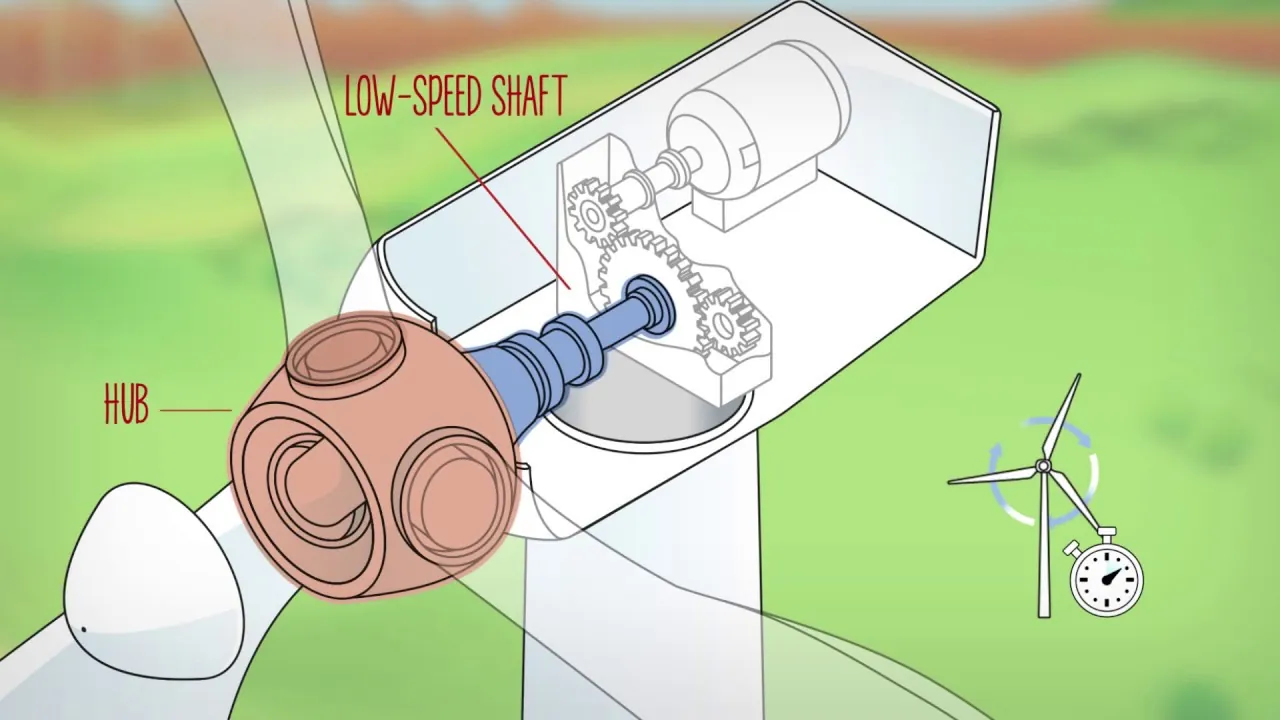
Once the gearbox spins the high-speed shaft, the mechanical energy is transferred to the generator. Inside the generator, powerful magnets rotate within coils of copper wire. According to the principles of electromagnetic induction, this movement forces electrons through the wire, creating an alternating current (AC).
The electricity then travels down the tower through cables to a transformer at the base. This transformer steps up the voltage, allowing the electricity to be transmitted long distances across the power grid with minimal energy loss.
Can Turbines Operate in All Winds?
Wind turbines have specific operating envelopes defined by their design parameters. They require a “cut-in” speed, usually around 7 to 9 miles per hour, to begin rotating. As wind speeds increase, the power output rises until it hits the “rated wind speed,” where the turbine produces its maximum design capacity.
If wind speeds become too high, typically exceeding 55 to 60 miles per hour, the turbine initiates a braking sequence to prevent mechanical damage. This involves feathering the blades, which changes their angle to reduce lift and stop the rotation safely.
| Operational Phase | Wind Speed Range | Mechanical Status |
|---|---|---|
| Cut-in Speed | 7–9 mph | Blades begin turning |
| Rated Output | 25–35 mph | Maximum power generated |
| Cut-out Speed | 55–60 mph | Emergency braking engaged |
Why Is Blade Pitch So Important?
Blade pitch control is a sophisticated mechanism that adjusts the angle of the blades relative to the oncoming wind. By rotating the blades along their long axis, the control system can optimize the amount of lift generated. During low wind, the blades are pitched for maximum surface area exposure.
During high wind, the pitch is adjusted to reduce the aerodynamic load, preventing the rotor from spinning too fast. This active pitch regulation is essential for protecting the turbine components from excessive stress and ensuring consistent power production.
Maintenance and Operational Safety
Warning: Never attempt to approach or climb a wind turbine structure, as these are high-voltage industrial sites with heavy moving parts that pose extreme risks to unauthorized personnel.
Regular maintenance is critical for turbine longevity. Technicians perform routine inspections on the gearbox lubricant, blade surface integrity, and electrical connections. Because turbines are often located in remote or offshore environments, remote monitoring systems are used to track performance data in real-time.
If a vibration sensor detects an anomaly, the system can automatically shut down to allow for a scheduled inspection before a catastrophic failure occurs. The United States Department of Energy provides extensive documentation on the engineering standards required for these mechanical systems.
How Much Power Can One Turbine Produce?

The power output of a wind turbine is determined by the length of its blades and the average wind speed in its location. A standard utility-scale turbine found in modern wind farms typically has a capacity between 2 and 5 megawatts.
To put this in perspective, a single 3-megawatt turbine can provide enough electricity to power roughly 1,000 to 1,500 average households annually. The efficiency of this generation depends heavily on the swept area of the blades; doubling the length of the blades can increase the potential energy capture by a factor of four.
Frequently Asked Questions
Do wind turbines work at night?
Yes, wind turbines function perfectly well at night. While solar panels rely on sunlight, wind turbines rely on atmospheric pressure differences caused by the heating and cooling of the earth’s surface. These pressure differentials persist regardless of the presence of the sun, often resulting in stronger and more consistent wind patterns during the nighttime hours compared to the middle of the day.
How loud are wind turbines during operation?
Modern wind turbines are engineered to minimize noise. At a distance of 300 to 500 yards, the sound of a turbine is typically comparable to the ambient noise of a quiet rural environment or a refrigerator running in another room. Most of the sound comes from the aerodynamic “swish” of the blade tips rather than the mechanical equipment housed inside the nacelle.
How long do wind turbines last?
The standard design life for a utility-scale wind turbine is approximately 20 to 25 years. With proper maintenance and the replacement of key components like bearings or electronic controllers, many turbines can continue to operate beyond this initial window. Eventually, the structural fatigue of the tower or the degradation of the composite blade materials necessitates decommissioning and recycling.
Do wind turbines kill many birds?
While bird collisions are a known concern, wind turbines account for a very small fraction of human-related bird deaths compared to other factors like building collisions, domestic cats, and vehicle strikes. Modern turbine placement strategies and radar-based shutdown systems are continuously being improved to mitigate these impacts on local wildlife populations and migratory bird paths.
Why are wind turbine blades so long?
Longer blades increase the swept area, which is the circular path the blades trace through the air. Since the power captured by a turbine is directly proportional to this area, longer blades allow the turbine to harvest energy from lower-speed winds. This increased surface area is essential for making wind power economically viable in regions where wind speeds are moderate rather than consistently high.
Conclusion
The next step in understanding wind energy technology is to investigate the specific grid integration methods used by your local utility provider. You can check your regional energy dashboard or official utility website to see what percentage of your local power mix is currently supplied by wind farms, providing a clearer picture of how these mechanical giants contribute to your personal energy consumption.
