
Dealing with a whirlpool cabrio dryer not drying your clothes can be an incredibly frustrating experience, especially when you have a mountain of laundry waiting to be folded. These high-capacity machines are designed for efficiency, but they rely on a delicate balance of airflow, heat, and sensors to perform correctly. When that balance is disrupted, you often end up with damp, heavy fabrics even after a full cycle. Understanding the root cause of this performance drop is the first step toward restoring your appliance to its optimal state.
Key Takeaways
- Check your exterior vent hood for blockages like lint or bird nests to ensure proper airflow.
- Clean the moisture sensor bars inside the drum with rubbing alcohol to improve cycle accuracy.
- Verify that your dryer is set to a heat-producing cycle rather than “Air Fluff” or “Timed Dry.”
- Listen for a rattling or squeaking sound that might indicate a worn-out heating element or belt.
- Ensure your home’s electrical breaker hasn’t tripped, as a partial power failure can prevent heating.
Understanding Airflow and Ventilation
The most common culprit behind a machine failing to dry is restricted airflow. Your dryer requires a steady stream of air to carry moisture away from your clothes and out of your home. If the path is blocked, the moisture remains trapped in the drum, resulting in a damp load.
Checking the Exterior Vent
The exterior vent is the final point of exit for hot, moist air. Over time, lint accumulates in the ducting, creating a significant fire hazard and preventing the unit from exhausting air. You should inspect the exterior hood to ensure the flaps open freely when the machine is running. If you find a thick buildup of lint, the entire duct run may need to be cleared out.
Internal Ductwork Obstructions
Even if the outside vent looks clear, internal buildup can occur. If the accordion-style hose behind the dryer is crushed or kinked, airflow will be severely restricted. Ensure the vent hose is as straight as possible and free of any sharp bends.
| Potential Airflow Issues | Frequency of Occurrence | Impact Level |
|---|---|---|
| Clogged exterior vent hood | High | Severe |
| Kinked or crushed duct hose | Medium | High |
| Excessive lint in blower wheel | Low | High |
| Blocked internal lint screen | High | Moderate |
Are the Sensors Working Correctly?
Whirlpool Cabrio models use sophisticated moisture sensors to determine when clothes are dry. These sensors are located inside the drum, usually as two metal strips near the lint filter housing. If these strips become coated with residue from fabric softeners or dryer sheets, they can’t accurately detect moisture, causing the machine to terminate the cycle prematurely.
Pro Tip: Clean the sensor bars periodically with a cotton ball dipped in isopropyl alcohol to remove hidden chemical film.
Troubleshooting Whirlpool Cabrio Dryer Not Drying Issues
If your dryer is spinning but producing no heat, you likely have a failure in the heating system. This is a common mechanical issue that occurs as components age.
The Heating Element
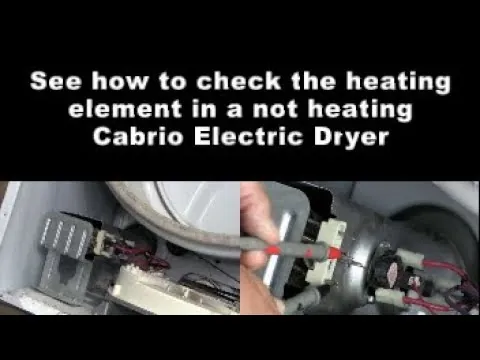
The heating element is a coil that warms the air passing into the drum. When this part burns out, the dryer continues to tumble, but it effectively acts as a large fan, blowing cold air over wet laundry. You can test the continuity of the element using a multimeter to see if the circuit is broken.
Thermal Fuse Failure
The thermal fuse is a critical safety device designed to shut off the heating element if the dryer overheats. If your dryer stopped heating suddenly, the fuse may have blown due to restricted airflow.
Is the Control Board Malfunctioning?
Modern machines are managed by complex electronic control boards. If the board experiences a glitch, it may fail to send the “heat on” signal to the heating element or may incorrectly interpret sensor data. A simple power reset—unplugging the machine for ten minutes—can often resolve minor software errors. If the issue persists, the main control board may require replacement.
How to Test the Dryer Cycle
To determine if your dryer is failing across all modes, try running a “Timed Dry” cycle on high heat. Unlike “Sensor Dry” cycles, which rely on moisture readings, “Timed Dry” ignores the sensors and runs the heat for a set duration. If the clothes are warm and dry after this test, your problem is likely related to the sensors or the control software rather than the heating element.
| Component | Function | Failure Symptom |
|---|---|---|
| Heating element | Generates heat | Cold air only |
| Moisture sensors | Detects dampness | Cycle ends too early |
| Thermal fuse | Prevents fire | No heat / No start |
| Control board | Manages cycles | Erratic behavior |
Identifying Mechanical Wear and Tear
Sometimes, the issue isn’t the heat, but the mechanical movement of the drum. If the dryer belt is loose or the drum rollers are seized, the drum may not spin at the correct speed. This prevents the clothes from tumbling through the heated air, leading to uneven drying.
Signs of Mechanical Failure
- Squeaking or grinding noises during operation.
- The dryer hums but the drum doesn’t rotate.
- Clothes are bunched up in one corner at the end of the cycle.
- The motor feels excessively hot to the touch.
When to Call a Professional
While many maintenance tasks are DIY-friendly, some repairs require specialized tools and safety training. If you’re uncomfortable working with high-voltage electrical components, it’s best to contact a certified technician.
Warning: Always disconnect the power supply before removing any panels or attempting to inspect internal electrical components to avoid the risk of severe shock.
Troubleshooting Your Power Supply

A dryer requires a 240-volt power source to function correctly. If one of the two legs of the power circuit fails, your dryer might still turn on and spin, but it won’t have enough power to heat the element. Check your home’s electrical panel to ensure both breakers associated with the dryer are in the “on” position. If they seem fine, a technician can test the wall outlet for proper voltage.
Related guides
- Best Compact Dryer for Small Apartments in 2026
- Best Dryer Under 600: Top 10 Picks for Every Need in 2026
Frequently Asked Questions
Why does my sensor cycle stop early?
This usually happens because the moisture sensor bars are dirty or the dryer is overloaded. When the clothing is packed too tightly, the sensors only touch the outer layer of wet fabric, or conversely, the dry exterior triggers the sensor to stop the cycle. Clean the bars with alcohol and try smaller, balanced loads to see if the cycle length improves.
How do I know if the vent is clogged?
The most reliable sign is the “vent check” light on your dashboard, if equipped, or a significant increase in drying time. If a load that used to take 45 minutes now takes two hours, your vent is likely restricted. You can also hold your hand near the exterior vent hood while the dryer is running; if you feel little to no air, the path is obstructed.
Can fabric softener cause drying issues?
Yes, frequent use of liquid fabric softeners or dryer sheets can leave a waxy, invisible residue on the moisture sensor bars. This film acts as an insulator, preventing the sensors from detecting the electrical conductivity of damp clothes. Because the sensors cannot “feel” the moisture, the machine assumes the load is dry and shuts off prematurely, leaving your items damp.
Is it the heating element or the fuse?
These two parts often fail together. If your dryer overheated due to a clogged vent, the thermal fuse will blow to prevent a fire. Once the fuse blows, the heating element will no longer receive power. You should test both with a multimeter. If the fuse shows no continuity, replace it and ensure you clean your venting system to prevent the new fuse from blowing.
Does a long dry time mean the dryer is broken?
Not necessarily. A long dry time is most often caused by external factors like a clogged vent, a kinked hose, or high humidity in your laundry room. Before assuming a mechanical failure, deep clean your vent ducting and the lint trap. These machines are highly efficient, but they’re extremely sensitive to airflow resistance, which is the root cause in the vast majority of cases.
Conclusion
If your dryer still fails to perform after you have cleared the vents, cleaned the sensors, and verified the electrical supply, you likely have a faulty heating element or a blown thermal fuse. These parts are generally inexpensive and widely available. Order the specific replacement part for your model number and consult a repair diagram to complete the installation safely or schedule a professional service call.
