
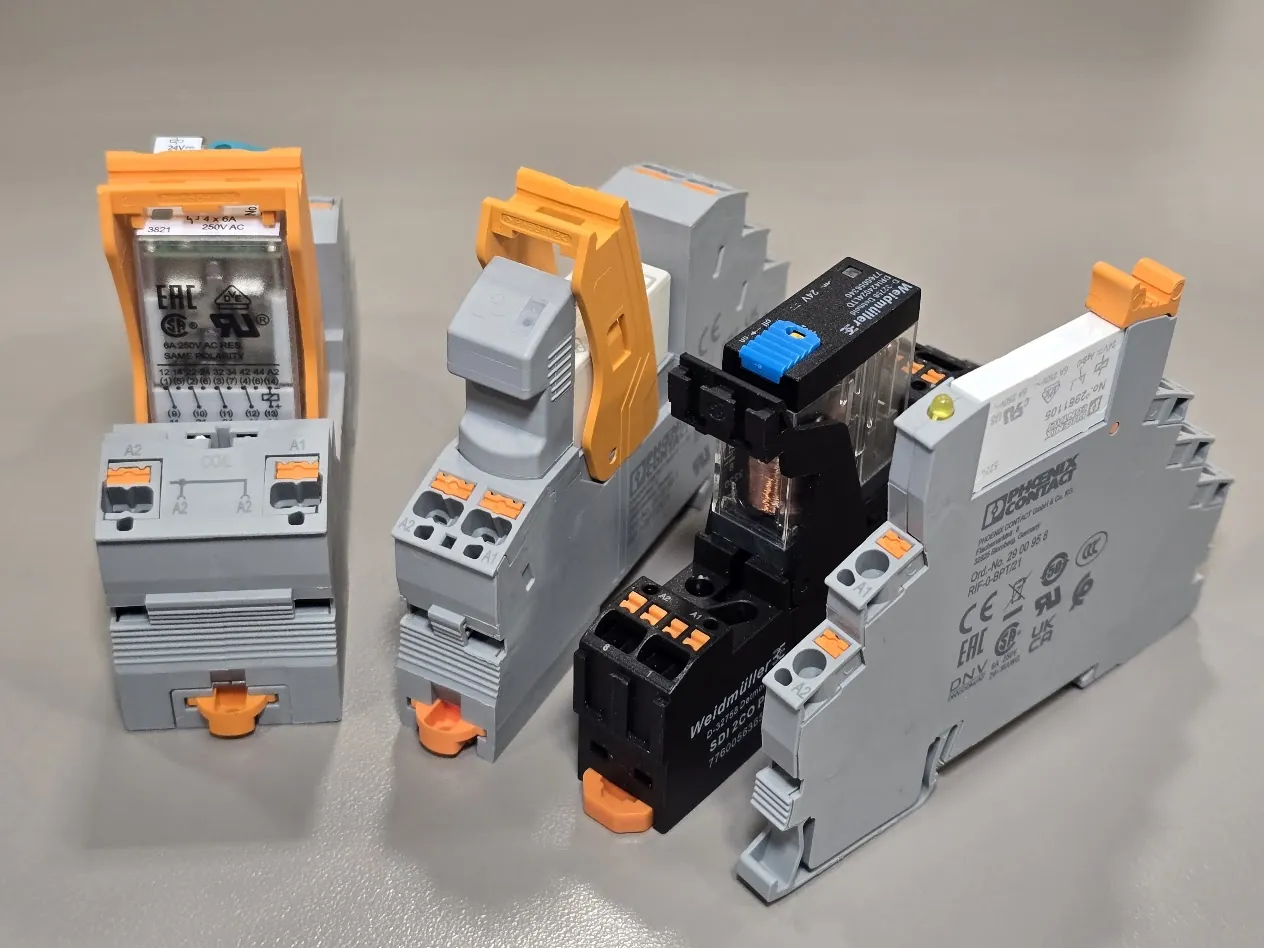
Relays are used wherever a low-power signal needs to control a high-power circuit or where a single control signal must manage multiple independent outputs simultaneously. By utilizing an electromagnetic coil to physically move a set of metal contacts, these devices provide essential electrical isolation between the control system and the load. This mechanism prevents surges or faults in high-voltage equipment from damaging sensitive logic controllers or microprocessors.
Key Takeaways
- Relays act as remote-controlled switches, allowing low-voltage signals to toggle high-voltage loads.
- They provide critical galvanic isolation, protecting delicate electronics from power spikes and noise.
- You can use them for logic operations, such as creating self-latching circuits or signal multiplication.
- Choose between electromechanical and solid-state versions based on your switching speed and noise requirements.
- Always verify the current and voltage ratings of the relay contacts before connecting your load.
Where Are Relays Used?
Relays are ubiquitous in modern technology, serving as the bridge between the digital world of microcontrollers and the physical world of heavy machinery. In residential settings, you’ll find them inside your thermostat, where they trigger the furnace or air conditioning unit.
In automotive applications, they handle high-current tasks like starting the engine, activating headlights, or powering the cooling fan. Industrial environments rely on them for safety interlocks, motor starters, and complex automation sequences that require robust, reliable switching over millions of cycles.
Automotive Systems and Relays
The modern vehicle is essentially a massive collection of relays managed by a central computer. Because car batteries provide significant current, running that power through small dashboard switches would melt the wires. Instead, the dashboard switch sends a tiny current to a relay, which then closes the heavy-duty contacts to power the device.
| Component | Relay Function | Typical Current Load |
|---|---|---|
| Headlights | High-beam/Low-beam switching | 10A – 20A |
| Starter Solenoid | Engaging the starter motor | 50A – 200A |
| Fuel Pump | Powering the fuel delivery | 5A – 15A |
| Cooling Fan | Turning on the radiator motor | 20A – 40A |
Industrial Automation and Control
In factories, relays are the workhorses of PLC (Programmable Logic Controller) systems. They allow a 24V DC control signal to start a 480V AC industrial motor. This electrical isolation is mandatory for safety; if the motor experiences a short circuit, the relay acts as a buffer to keep the high voltage away from the main control panel.
How Do Relays Work?
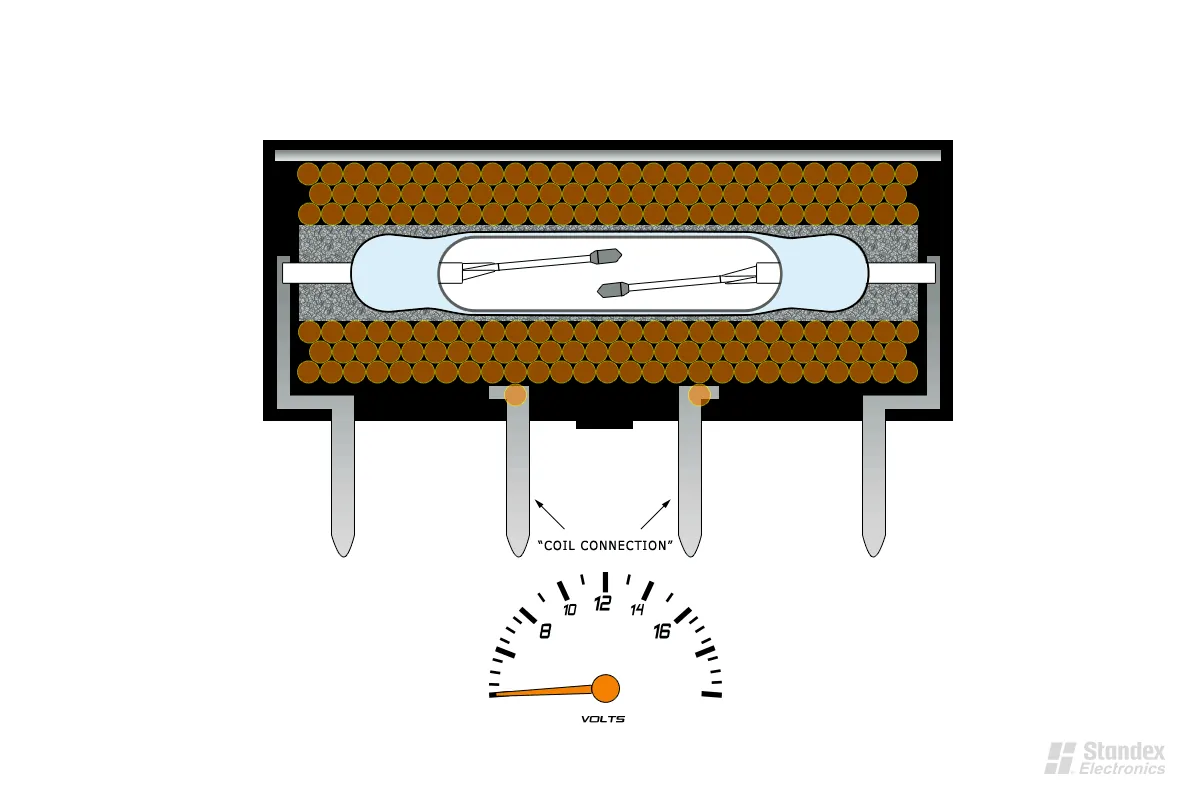
At their core, electromechanical relays consist of an iron core wrapped in a copper coil. When you apply voltage to the coil, it creates a magnetic field that pulls a metal armature toward it. This movement closes the internal contacts, completing the circuit for the load. When the power to the coil is removed, a spring pulls the armature back, breaking the connection. This simple electromechanical action is what makes them so reliable and easy to troubleshoot.
Types of Relays Available
Choosing the right relay depends on your specific application requirements, such as switching speed, noise sensitivity, and current capacity.
Electromechanical Relays
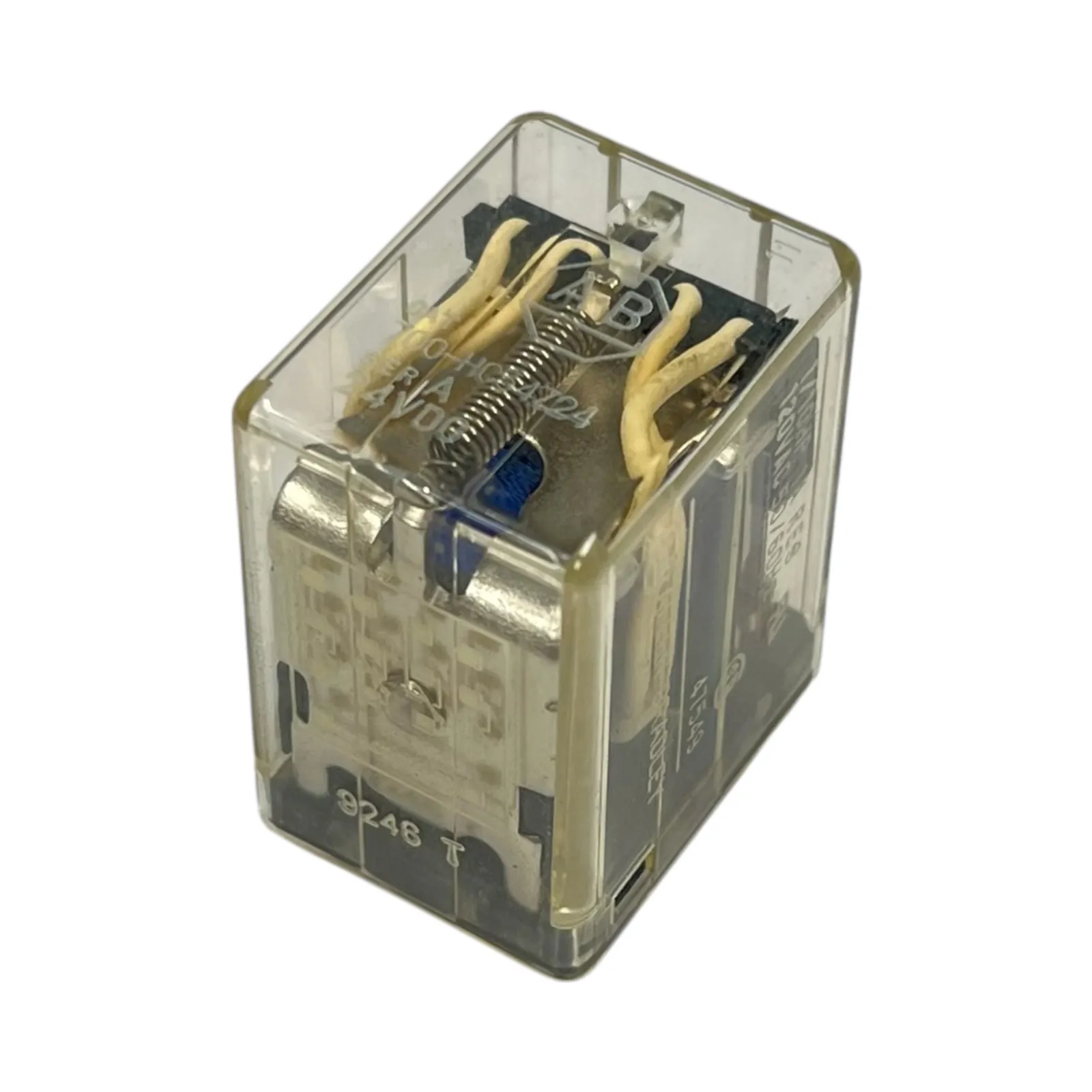
These are the most common type. They’re affordable, rugged, and can handle high surge currents without complaining. However, they contain moving parts that eventually wear out and produce an audible “click” during operation.
Solid-State Relays
These use semiconductors instead of physical contacts. They’re silent, switch near-instantaneously, and have no moving parts to wear out. They’re excellent for high-frequency switching but generate heat and require proper heat sinking for high-current applications.
Reed Relays
These consist of a small glass tube with flexible metal reeds inside. They’re incredibly fast and sensitive, often used in low-power signal switching applications like telecommunications or sensitive test equipment.
Troubleshooting Your Relay
When a relay fails, it usually manifests in one of three ways: the coil burns out, the contacts weld together, or the contacts become pitted and fail to make a connection.
- Check the Coil: Use a multimeter to measure the resistance across the coil pins. If you get an “open” reading, the internal wire is broken.
- Inspect the Contacts: If the relay clicks but the load doesn’t turn on, the internal contacts are likely carbonized or pitted.
- Verify the Signal: Ensure the control circuit is actually providing the required voltage to the coil pins.
- Listen for Noise: A buzzing sound often indicates a loose connection or an inadequate voltage supply to the coil.
Why Use Relays Over Transistors?
You might wonder why we use relays when transistors can also switch power. While transistors are faster and smaller, relays offer distinct advantages in specific scenarios. Relays provide true physical separation between circuits, meaning there’s no leakage current when the switch is off. They’re also much more forgiving of over-voltage spikes and transient surges that would instantly destroy a semiconductor. For high-voltage AC switching, a relay is almost always the safer and more cost-effective choice.
Safety Considerations and Best Practices
Warning: Always disconnect the main power source before working on any relay circuit, especially when dealing with high-voltage AC loads.
Pro Tip: Use a “flyback diode” across the coil of a DC relay to prevent high-voltage kickback from damaging your control electronics.
When designing a circuit, always verify the contact voltage rating. Using a 12V automotive relay on a 120V AC wall circuit is dangerous because the relay’s internal insulation isn’t designed to prevent an arc between the contacts at higher voltages. Always check the datasheet provided by the manufacturer to ensure your load falls within the rated current and voltage limits for both AC and DC operation.
Relay Selection Guide
| Factor | Electromechanical | Solid-State |
|---|---|---|
| Switching Speed | Slow (5-20ms) | Very Fast (<1ms) |
| Audible Noise | Yes (Clicking) | Silent |
| Lifespan | Finite (Mechanical wear) | Extremely Long |
| Surge Tolerance | High | Sensitive |
Frequently Asked Questions
Can I use a relay to dim lights?
No, standard relays are binary switches; they’re either fully on or fully off. Trying to pulse a relay rapidly to dim a light will cause the contacts to weld together or wear out in seconds. You should use a dimmer switch or a pulse-width modulation (PWM) controller with a power transistor or MOSFET for dimming applications.
What does “Normally Open” mean?
A “Normally Open” (NO) relay is a switch that remains open, or disconnected, while the coil is de-energized. The circuit only completes when you apply power to the relay coil. This is the most common configuration for safety systems and standard equipment startup switches, as it ensures that the device stays off if the control system loses power.
Why do my relay contacts stick?
Contacts usually stick because of “arcing,” which happens when high current jumps the gap between contacts as they open or close. This creates extreme heat that melts the metal, fusing the contacts together. This is often caused by inductive loads, such as large motors or solenoids, which create a power spike when turned off. Using a snubber circuit can help prevent this.
How do I size a relay correctly?
Always choose a relay with a contact current rating at least 25% higher than the maximum current your load will draw. For inductive loads like motors or pumps, you should go even higher, sometimes doubling the rating, because these devices draw a massive “inrush” current when they first start up. Always consult the manufacturer’s datasheet for the specific “inrush” or “inductive” load ratings.
Can I replace a 12V relay with a 24V relay?
You can’t simply swap a 12V coil relay for a 24V coil relay if your control circuit only provides 12V. The 24V coil won’t receive enough power to pull the armature in, and the relay will likely fail to switch. Conversely, using a 12V coil on a 24V source will cause the coil to overheat and burn out almost immediately.
Conclusion
Relays remain the most reliable way to bridge the gap between low-voltage control signals and high-power electrical loads. By understanding the specific needs of your project—whether it’s silent switching, long-term durability, or simple power isolation—you can select the appropriate component to keep your systems running safely. Start by checking the current and voltage requirements of your specific load today.
