
Common issues with the Maytag MVWC565FW1 include failure to drain water, error codes indicating an unbalanced load, and problems with the lid lock mechanism. These maytag mvwc565fw1 problems usually stem from sensor errors, clogged hoses, or a faulty lid switch that prevents the machine from starting a cycle. While some of these failures are simple to clear by resetting the control board, others require checking mechanical components or replacing specific parts if the internal sensors detect a persistent fault that prevents safe operation.
Frequent Maytag MVWC565FW1 problems

Most owners encounter these faults during the spin cycle or when the machine fails to fill. The table below lists the primary symptoms, their common causes, and typical hardware examples.
| Symptom | Primary Cause | Example Component |
|---|---|---|
| Won’t spin | Unbalanced load | Basket drive block |
| Won’t drain | Blocked pump | Drain hose debris |
| Lid locked | Switch failure | Lid lock assembly |
| Won’t start | Sensor error | Control board |
| Water leaks | Damaged seal | Tub gasket |
If your machine vibrates violently before stopping, check the leveling feet first. A machine tilted by even half an inch will trigger a safety imbalance error. If the drain pump hums but water remains, disconnect the hose to clear internal clogs.
Most users mistakenly replace the pump when a simple coin or sock is the culprit. If the lid stays locked after a cycle, unplug the unit to allow the capacitors to discharge and reset the control board. If the error persists, the latch solenoid has likely failed.
Lid lock failure
The lid lock is a safety device that prevents the door from opening while the drum is spinning at high speeds. If the lock mechanism fails, the washer will display an error code and refuse to start any cycle to prevent potential injury. You can often tell the lock has failed if the light flashes or stays solid red when the lid is closed.
- The lid must be fully closed and latched for the sensor to signal the controller.
- Debris caught in the latch area can prevent the lock from engaging correctly.
- Electrical connection issues between the lock assembly and the main board may cause intermittent errors.
If you suspect a mechanical failure, check the Maytag laundry appliance support page for specific error code definitions. If the lock is physically broken or the internal solenoid has burned out, it requires a full replacement of the assembly. Don’t attempt to bypass the lock, as this overrides a critical safety feature designed to keep the drum from moving while the lid is open.
Drain and pump blockages
A failure to drain often results from physical obstructions in the pump or the drain hose. This prevents the machine from finishing the spin cycle, which leaves clothes soaking wet. You should inspect the drain hose for kinks or blockages before assuming the pump itself is broken.
- Check the drain hose for bends that stop water from flowing out freely.
- Remove the front panel to see if small items like coins or fabric are stuck in the pump filter.
- Listen for a humming sound when the machine should be draining; a silent pump may indicate a motor failure.
If the pump is clear but the water remains in the tub, the pump motor may have reached the end of its life. If you have experience with electrical appliances, you can test the pump for continuity with a multimeter. If you aren’t comfortable handling electrical components or working with water-filled machines, contact a certified technician to perform the repair to avoid damaging the internal wiring.
Unbalanced load errors
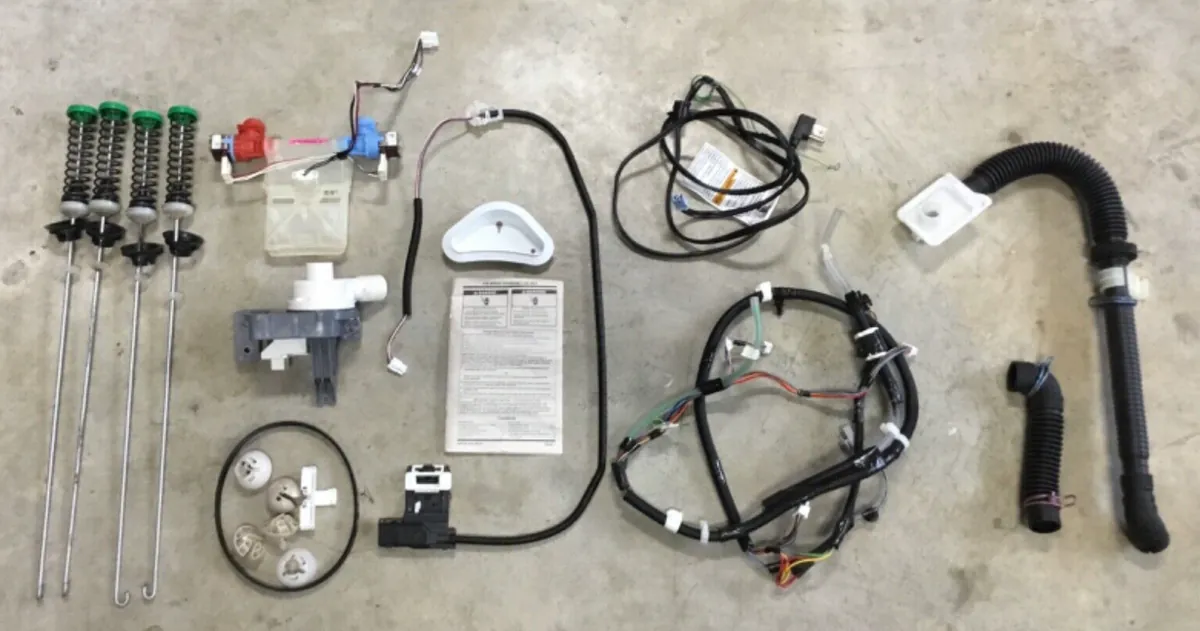
The machine uses internal sensors to detect when the weight of the laundry is unevenly distributed. If the load is too heavy on one side, the drum will wobble excessively, triggering a safety stop. This error is common when washing heavy items like blankets or rugs that absorb a large amount of water.
- Redistribute the clothes evenly around the agitator to balance the weight.
- Ensure the machine is level on the floor by adjusting the feet at the bottom.
- Reduce the load size if you’re washing bulky items that shift during the spin cycle.
If the washer continues to show an imbalance error even with a small, balanced load, the suspension rods may be worn out. These rods support the weight of the tub and dampen movement. If the rods have lost their spring tension, the tub will hit the sides of the cabinet, causing the sensor to stop the cycle. You can read the suspension status by observing if the tub bounces excessively when you push down on it.
Control board malfunctions
The control board acts as the brain of the washer, managing every cycle and sensor input. When this board experiences a power surge or internal short, the machine may become unresponsive or display erratic error lights. A hard reset is the first step to take before considering a board replacement.
Unplug the machine from the wall outlet for 5 minutes to clear the memory. Plug the unit back in and attempt to run a calibration cycle to reset the sensors. If the machine enters a cycle but fails to agitate, the issue is likely a faulty motor relay on the board rather than the board itself.
Check for burnt components or a sharp, acrid smell of ozone near the control panel. If you see charred traces on the circuit board, don’t attempt a reset. Replace the board immediately to prevent a potential fire hazard.
Replacing a control board is a precise task that requires matching the exact model number to the new part. If the board is faulty, the machine will often fail to enter any cycle or will stop randomly in the middle of a wash.
If you have verified the power supply is stable and the reset doesn’t resolve the issue, the board likely needs professional testing or replacement. Always wear an anti-static wrist strap when handling the new board to avoid damaging sensitive microchips.
Other potential mechanical faults
-
Drive belt issues: A stretched or broken belt prevents the drum from rotating even when the motor is running. You’ll hear the motor hum, but the basket will remain stationary. If the drum spins freely by hand while the machine is off, the belt has likely snapped entirely.
-
Water inlet valve failure: If the machine takes an excessive amount of time to fill, or doesn’t fill at all, the inlet valve may be clogged with sediment from your home plumbing. Check the mesh screens inside the hose connections first. If these are clear but water pressure remains sluggish, the internal solenoid has failed and requires a full valve replacement.
-
Agitator wear: If the agitator spins freely in both directions, the internal plastic teeth are likely stripped. You should feel firm resistance in one direction. If you can rotate it easily both ways, the agitator is failing to scrub your clothes.
How to identify your specific fault

Choosing the right fix depends on the specific behavior of the machine. If the unit makes a loud grinding noise during the spin, it’s usually a mechanical issue with the bearings or the drive block. If the unit remains completely silent and dark, the problem is almost always electrical, starting with the power cord or the main control board.
If you see an error code, note the specific letters and numbers, as these indicate which sensor is reporting a fault. Most repairs involve either cleaning a blockage or replacing a singular electronic part. These components can’t be combined into a single fix; you must address the specific part causing the error.
Whether you choose to repair the machine yourself or hire a technician, you must first confirm if the part is physically damaged or if the issue is a simple sensor error that a reset can resolve. To test this, disconnect the power for several minutes.
If the code returns immediately upon restart, the component has failed and requires a physical replacement. If the code stays cleared for at least three cycles, the fault was likely a temporary data glitch. Never replace a control board before checking the wire harness for loose connections first.
Related guides
Frequently asked questions
How long does a typical wash cycle last?
A standard cycle lasts between 45 and 60 minutes, depending on the load size and the cycle settings selected. If your machine takes significantly longer, it’s often due to the sensors detecting an unbalanced load, which causes the washer to pause and attempt to redistribute the weight multiple times.
Is it safe to use the washer if it leaks?
It isn’t safe to use a leaking washer, as water can damage the internal wiring and cause a short circuit. You should stop using the machine immediately, turn off the water supply valves, and unplug the unit from the power source to prevent any risk of electrical shock or further damage to your floor.
What does a flashing light on the control panel mean?
A flashing light usually signals an error code that the control board has logged during a cycle. You should consult the user manual for the specific blink pattern, as each sequence corresponds to a different fault, such as a lid lock issue or a water level sensor failure.
How do I reset the control board?
You can reset the control board by unplugging the machine from the power outlet for at least 5 minutes. This allows the capacitors on the board to discharge completely, which clears temporary software errors that might be preventing the washer from starting or completing a cycle.
Why does the machine stop in the middle of a cycle?
The machine stops mid-cycle primarily because the sensors detect a safety issue, such as an unbalanced load or a failed lid lock. If the drum is off-center, the machine pauses to prevent damage to the suspension system; if the lid lock fails, it stops to prevent the drum from spinning while open.
Can I replace the lid lock myself?
You can replace the lid lock yourself if you have basic tools and are comfortable working with internal appliance components. You must ensure the machine is unplugged from the power source before starting, and you should use the exact replacement part designed for your specific model to ensure compatibility with the control board.
Conclusion
Start by checking the power supply and clearing any error codes using the reset method mentioned above. If the machine begins a cycle but stops shortly after, watch the drum to see if it wobbles, which indicates a balance issue. If you hear a grinding noise or smell burning plastic, stop the machine immediately and contact a qualified appliance repair technician, as these signs point to internal motor or electrical failures that require professional tools to fix.

1 thought on “Maytag MVWC565FW1 Problems: How to Fix Common Washer Issues”