
Modulating control refers to a system’s ability to adjust its output continuously across a wide range of values rather than simply toggling between full power and zero power. Instead of functioning like a standard light switch that’s either on or off, a modulating system acts like a dimmer, precisely matching the energy supply to the current demand. This approach is essential for maintaining stability in HVAC systems, industrial manufacturing, and precision automation, as it prevents the extreme swings associated with traditional binary controls.
Key Takeaways
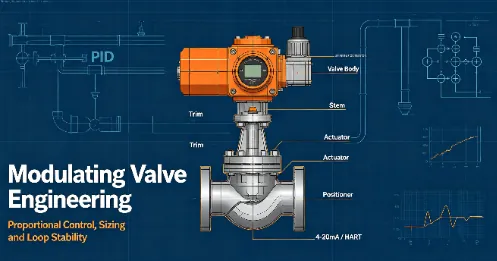
- Efficiency gains: Modulating systems significantly reduce energy waste by preventing frequent cycling of equipment.
- Constant comfort: These controls maintain a steady setpoint, avoiding the hot and cold spikes typical of on-off systems.
- Extended lifespan: By avoiding the mechanical stress of constant startups, equipment lasts longer and requires less maintenance.
- Precise regulation: Modulating controllers allow for granular adjustments in temperature, pressure, flow, and speed.
- Investment value: While initial costs are higher, the long-term reduction in utility bills often justifies the expense.
Understanding What Is Modulating Control
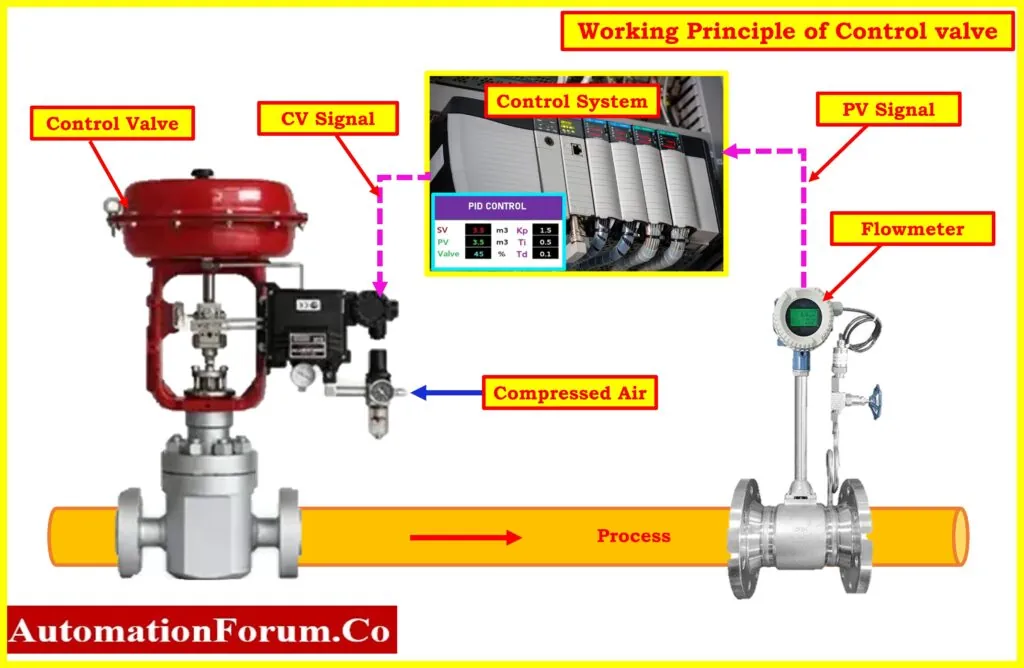
At its core, the mechanism behind this technology relies on a feedback loop known as a PID loop, which stands for Proportional, Integral, and Derivative control. A sensor continuously monitors the environment—such as the temperature in a room or the pressure in a pipe—and sends this data back to a controller. The controller compares the actual reading to the desired target, or setpoint, and calculates exactly how much power is needed to close the gap.
If the difference between the current state and the setpoint is large, the controller signals the equipment to run at a higher output. As the system nears the target, the controller gradually throttles back the power, eventually settling at a very low, efficient level to maintain the status quo.
This is a massive departure from traditional “bang-bang” control, where a furnace or compressor would run at 100% capacity until the target was hit, then shut down completely until the temperature drifted away again.
How the Mechanism Works
The primary hardware components involved in this process include sensors, a controller, and an actuator. The sensor acts as the “eyes,” the controller serves as the “brain,” and the actuator is the “muscle” that physically opens a valve, adjusts a damper, or changes a motor’s frequency.
The Signal Types
Modern systems communicate using specific signal standards to ensure the controller and actuator understand one another. You’ll typically encounter these three types of signals in professional installations:
| Signal Type | Range | Common Application |
|---|---|---|
| Analog Voltage | 0-10V DC | Simple HVAC dampers |
| Analog Current | 4-20mA | Industrial process valves |
| Digital/Bus | Binary/Serial | Intelligent building management |
Pro Tip: Always verify that your controller output matches the input requirements of your valve or motor actuator, as a 4-20mA signal won’t work on a 0-10V input device without a dedicated converter module.
Benefits of Modulating Systems
The primary advantage of choosing a modulating control is the elimination of “overshoot.” In an on-off system, the heat or cooling often continues to push past the desired temperature even after the unit shuts off because the system was running at maximum capacity. Modulating controls prevent this by slowing down as they approach the target, ensuring the environment remains stable and comfortable.
Another benefit is the reduction in noise and mechanical wear. An air handler that runs at a constant, low speed is significantly quieter than one that blasts at full volume for twenty minutes and then goes silent.
Comparing Control Methods
To understand why modulating control is superior in many applications, it helps to compare it against the alternatives.
| Feature | On-Off Control | Modulating Control |
|---|---|---|
| Precision | Low | Very High |
| Energy Usage | High (Cycling) | Low (Steady State) |
| System Life | Reduced (Stress) | Extended (Smooth) |
| Cost | Low | High |
Implementation in Modern HVAC
In residential and commercial heating and cooling, modulating control is often found in variable-speed furnaces and heat pumps. These units use an inverter-driven compressor that can adjust its speed based on the load. On a mild day, the system might run at 30% capacity, using very little electricity.
On a record-breaking heat wave, it ramps up to 100% to keep up with the demand. This is far more efficient than a standard single-stage unit that must run at full speed regardless of whether it is 75 degrees or 95 degrees outside.
Key Components Used
- Variable Frequency Drives (VFDs): These adjust the speed of motors by changing the frequency and voltage supplied to them.
- Electronic Expansion Valves (EEVs): These replace traditional fixed-orifice devices to control refrigerant flow with extreme accuracy.
- Smart Thermostats: Modern units like those from Ecobee, Honeywell, or Nest often support multi-stage or modulating equipment through digital communications.
Troubleshooting Common Issues
If you suspect your modulating system isn’t performing correctly, start by checking the feedback loop. Most failures occur because the sensor is providing inaccurate data or the actuator is stuck.
Warning: Never attempt to bypass a safety limit switch while troubleshooting a modulating valve or motor, as this can lead to equipment damage or hazardous pressure buildups.
- Sensor Drift: Check if the temperature or pressure sensor is reading correctly. If it’s off by a few degrees, the controller will never reach the true setpoint.
- Actuator Calibration: Ensure the actuator is calibrated to the full range of the valve. If it stops at 80% when it should be at 100%, the system will never reach full capacity.
- Wiring Integrity: Check for loose connections or electromagnetic interference on the control wires, especially if you’re using sensitive analog signals like 4-20mA.
Where Modulating Control Is Essential
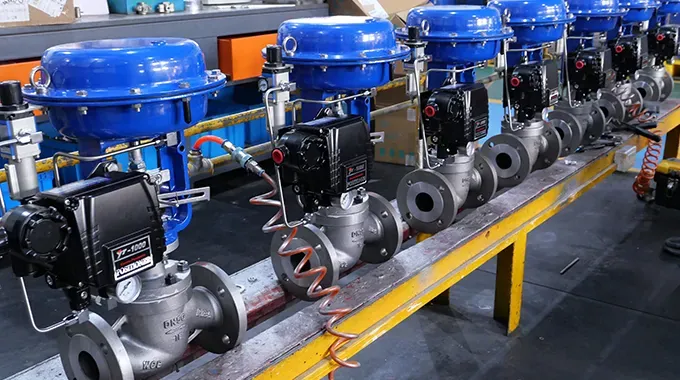
While you might find modulating controls in high-end home furnaces, they’re standard in industrial environments. Precision is non-negotiable in sectors where temperature or chemical concentrations must remain within tight tolerances.
- Pharmaceutical Manufacturing: Maintaining exact temperatures for chemical reactions.
- Data Centers: Managing airflow to prevent servers from overheating while saving energy.
- Food Processing: Controlling the flow of steam or coolant to ensure consistent product pasteurization.
- Greenhouse Management: Adjusting humidity and CO2 levels to optimize plant growth cycles.
Frequently Asked Questions
Is modulating control worth the extra cost?
In most cases, yes. While the initial equipment cost is generally 20% to 50% higher than standard units, the energy savings often pay for the difference within three to seven years. Furthermore, the increased longevity of the equipment and the improved comfort level provided by a steady, consistent output make it a better long-term investment for both residential and commercial property owners.
Can I upgrade a standard system to modulating?
Typically, no. A modulating system requires a matching controller, a variable-speed motor or valve, and specific sensors that talk to each other. You can’t simply install a modulating thermostat on a standard single-stage furnace. To move to modulating control, you must replace the primary HVAC equipment with a unit designed to support variable-speed operation and digital communication protocols.
Does modulating mean the system never turns off?
Not necessarily, but it aims to stay on as long as possible at a very low output. By running at 10% or 20% capacity, the system avoids the “start-stop” energy spikes that consume the most power. A modulating system will only turn off completely if the demand drops below its lowest possible operating speed, which is quite rare in well-designed systems.
How do I know if my system is modulating?
Check the model number of your furnace, heat pump, or chiller and search for “variable capacity” or “inverter technology.” You can also look at your thermostat wiring; if you see complex digital communication wires (often labeled A, B, C, or D) rather than just standard low-voltage wires (R, W, Y, G), your system is likely a modern, communicating modulating unit.
What is the difference between multi-stage and modulating?
Multi-stage systems have fixed “steps,” such as 50% and 100% capacity. Modulating systems provide a seamless, infinite range of operation between their minimum and maximum limits. While multi-stage is better than single-stage, modulating control provides the highest level of precision, energy efficiency, and temperature stability by constantly adjusting to the exact load required at any given moment.
Conclusion
To take the next step in optimizing your system, check your current thermostat’s documentation to see if it supports advanced staging or variable-speed communication protocols. If your equipment is older, consider scheduling a consultation with a licensed HVAC technician to discuss a high-efficiency replacement that utilizes modern modulating technology to lower your long-term energy consumption and improve your indoor climate stability.
