
The most important items you need to verify are the material of the inner chamber, the presence of an automatic shut-off mechanism, and the total wattage of the heating element.
These three factors directly influence how fast your water reaches a boil and how safely the unit operates in your kitchen. Other elements, such as temperature control or external material, change the user experience but remain secondary to these core requirements.
Kettle Selection Criteria
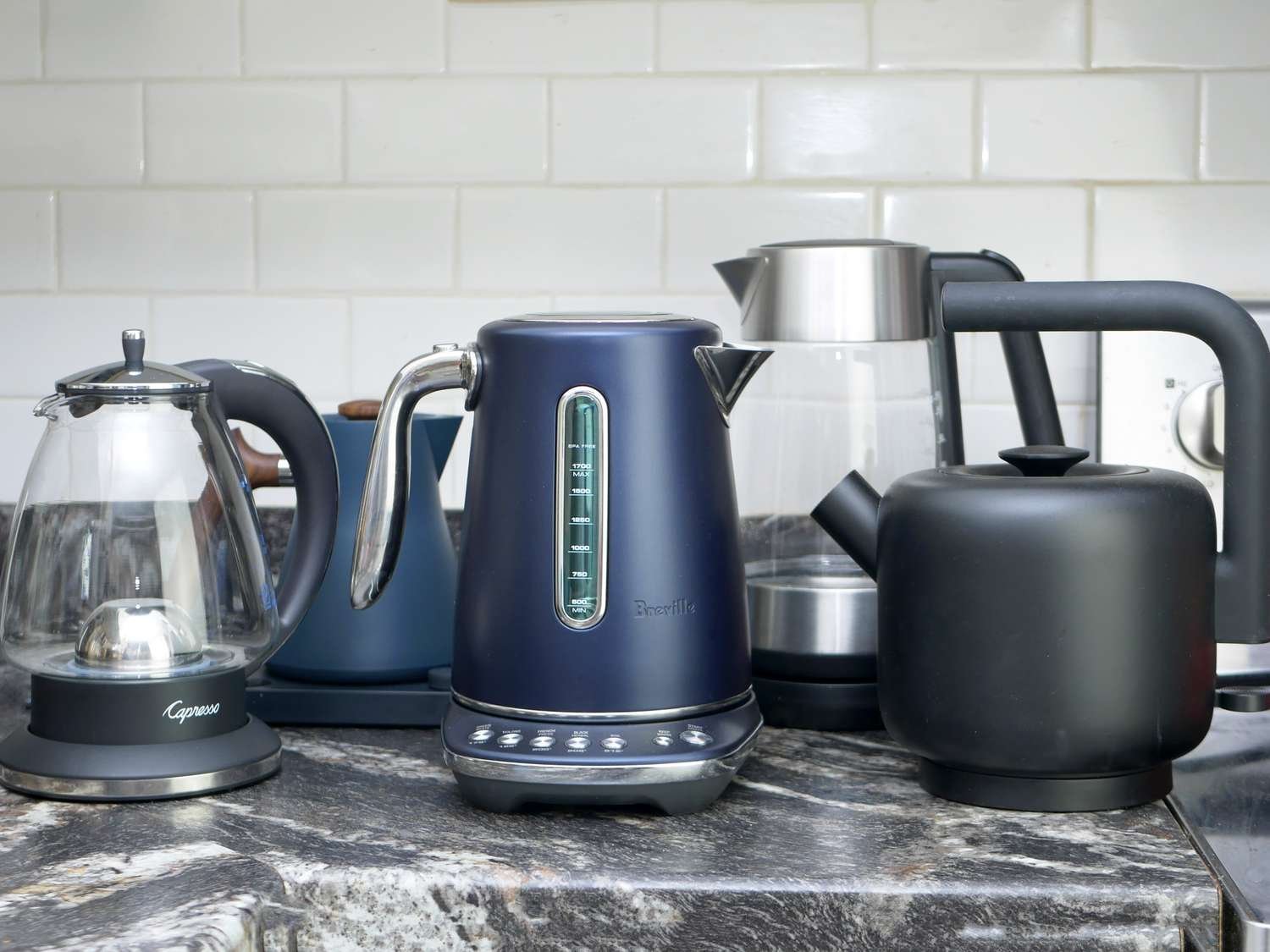
Choosing the right equipment depends on whether you value speed, precision, or durability in your daily routine. A busy professional might prioritize a high-wattage model to minimize wait times, while a tea enthusiast often requires precise temperature settings to prevent scorching delicate leaves. If you’re replacing a stovetop kettle, you must decide if you want the simplicity of a single-switch device or the complexity of a digital interface.
This page assumes you’re looking for a standard household kettle for boiling water. It doesn’t cover specialized industrial equipment or travel-sized units with different safety standards. If you’re choosing for a shared office space, you must prioritize models with robust auto-shutoff features to prevent dry-boiling if the unit is left unattended.
Core Performance Factors
The power of the heating element is the primary variable for speed. Most standard household kettles range from 1,000 to 1,500 watts. A 1,500-watt model will boil a liter of water significantly faster than a 1,000-watt unit. If you live in a region with older electrical wiring, check the circuit capacity before choosing a high-wattage model to avoid tripping your breaker.
The material of the water reservoir is the second factor that impacts both safety and taste. Stainless steel or glass interiors are generally preferred over plastic, as they don’t leach chemicals when heated repeatedly. You can find detailed information on materials and safety standards through the Consumer Product Safety Commission guidelines regarding household appliance safety.
Safety mechanisms are the third critical factor. Every modern electric kettle must include an automatic shut-off feature that triggers when the water reaches boiling point or if the kettle is empty. This prevents the heating element from overheating and causing a fire hazard. Never purchase a model that lacks this feature, regardless of its other capabilities.
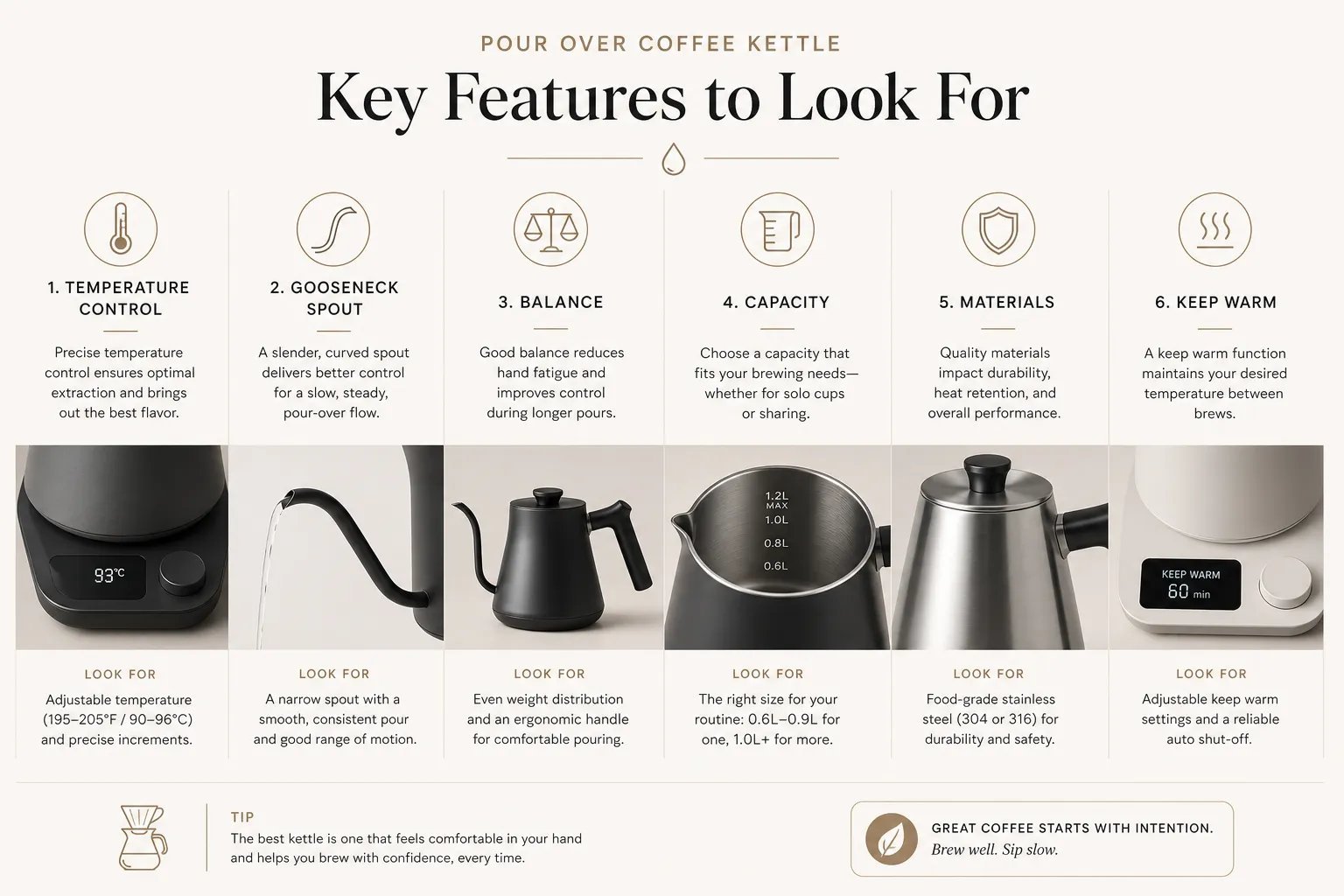
The physical design of the spout and handle is the final factor. A well-designed spout prevents splashing when pouring, while a heat-resistant handle ensures you don’t burn your hand. You should physically hold the handle if possible; if it feels off-balance when empty, it will be difficult to manage when filled to the maximum capacity line.
Kettle Functionality Comparison
| Feature | Best For | Why It Matters | What to Watch For |
|---|---|---|---|
| Variable Temp | Tea lovers | Prevents leaf burning | Complex digital buttons |
| Cordless Base | Convenience | Easy pouring | Loose power pins |
| Rapid Boil | Busy mornings | Saves time | High power draw |
| Glass Body | Aesthetics | Seeing water level | Fragility and scaling |
| Stainless Steel | Durability | Longevity | Exterior heat levels |
Variable temperature kettles are essential if you brew delicate green or white teas. Water above 175°F scorches these leaves, turning a nuanced cup bitter. If your kettle lacks a digital interface, you can estimate temperature by waiting three minutes after a boil, but this is imprecise.
Cordless bases offer freedom of movement, yet they rely on a central contact pin. If you notice the kettle wobbling or failing to heat, inspect the base for bent pins. A quick cleaning with a dry cloth often restores the connection.
Rapid boil models typically pull 1500 watts or more. Before purchasing, verify your kitchen circuit can handle this load alongside a toaster or coffee maker. If your lights flicker when the kettle engages, you’re likely overloading the breaker.
Glass bodies look modern, but they require frequent descaling to remain clear. Hard water deposits accumulate quickly, turning the vessel cloudy within weeks. Use a vinegar solution regularly to maintain clarity.
Stainless steel units are the most resilient, but they often lack insulation. If the exterior is single-walled, it will become hot enough to burn skin upon contact. Look for double-walled vacuum insulation if you have children in the house.
The decision rule is simple: prioritize speed if you’re a daily coffee drinker, but prioritize material quality if you brew tea. If you live in a hard water area, avoid glass to save yourself from constant scrubbing. If you value longevity, choose stainless steel with a hidden heating element to prevent mineral buildup on the coils. Finally, always check the wattage rating against your kitchen’s capacity to avoid tripped breakers during the morning rush.
Quality Differences
The Importance of Interior Design
Experienced users know that scale buildup is inevitable in hard-water areas. A wide-mouth opening allows you to reach inside with a brush to clean mineral deposits regularly. If you choose a model with a narrow opening, you’ll struggle to remove the calcium buildup that eventually impacts the heating efficiency and the taste of your water.
Evaluating External Build Quality
The exterior should remain cool to the touch during operation to prevent accidental burns. Plastic housings often provide better insulation than metal, but they may degrade or discolor over several years of use. If you opt for a metal exterior, ensure it has a double-wall construction; this design traps heat inside, keeping the water hot longer while keeping the outer surface safe for your hands.
Troubleshooting Common Issues
| What you notice | What it usually means | What to do first | How to stop it happening again |
|---|---|---|---|
| Kettle won’t start | Power failure | Check the wall outlet | Ensure base is dry |
| Slow boiling | Scale buildup | Descale with vinegar | Use filtered water |
| Leaking base | Seal failure | Unplug immediately | Replace the unit |
| Auto-shutoff fails | Sensor error | Unplug and clean | Never overfill |
| Strange taste | Plastic residue | Boil and discard | Choose steel interior |
When the kettle fails to start, verify the connection by plugging another small appliance into the same outlet. If that device works, check the kettle’s base for moisture. Even a few drops of condensation can trigger a safety cutout, preventing the electrical contacts from engaging.
Slow boiling is almost always caused by mineral deposits on the heating element. If you live in a hard-water region, you should descale every four to six weeks. If you ignore this, the buildup acts as an insulator, forcing the element to work longer to reach the same temperature. This leads to premature component failure.
A leaking base is a critical safety hazard. If you see water pooling beneath the unit, stop using it immediately to avoid a short circuit. Don’t attempt to repair the internal seal yourself. Most modern kettles are sealed at the factory for safety, and opening the casing voids your warranty.
If the auto-shutoff fails, you likely have a buildup of grime on the steam sensor located near the handle. Wipe the sensor with a damp cloth to restore sensitivity. Always respect the “Max” fill line. Overfilling causes boiling water to surge into the sensor housing, which can permanently damage the electronics.
Finally, a persistent plastic taste often indicates that the heating element is scorching residue from the manufacturing process. If you have already boiled and discarded three full cycles of water and the taste remains, the internal plastic components are likely leaching chemicals. Switch to a model with a stainless steel interior to eliminate this issue entirely.
Safety and Standards
Electrical appliances must meet specific safety standards to be sold legally in your market. In the United States, look for the Underwriters Laboratories (UL) or similar certification mark on the bottom of the base. This mark confirms that the device has passed rigorous testing for electrical insulation and fire resistance.
Check the label for a file number alongside the logo. You can verify this number in the UL online database to ensure the certification is current and not a counterfeit stamp. A genuine mark protects you against short circuits that can melt internal wiring or cause catastrophic failure during operation.
If you’re purchasing from a marketplace that ships from overseas, verify that the plug type matches your local outlets. Using an adapter for a high-wattage appliance like a kettle is a fire risk because the adapter may not be rated for the heavy current draw. These cheap plastic adapters often lack the internal copper thickness required to handle sustained heat.
Only use the appliance with a wall outlet that matches the manufacturer’s specified voltage and frequency. If your appliance is rated for 220V but you plug it into a 110V outlet, it will likely fail to heat properly. Conversely, forcing a 110V device into a 220V circuit will cause an immediate, violent surge that destroys the internal components.
A common mistake is assuming that a “universal” plug adapter functions as a voltage converter. It does not. If your device lacks a dual-voltage switch, you must use a heavy-duty step-down transformer. Without one, you risk a fire or permanent damage to the motor.
Always inspect the power cord for fraying or exposed copper before the first use. If the insulation feels brittle or the plug pins are loose, don’t connect it to power. A loose connection creates an arc, which generates intense heat at the contact point. This heat can melt the outlet faceplate and ignite nearby wall materials within minutes.
The True Cost of Ownership
The initial purchase price is merely the entry fee. A budget model that fails quickly will inevitably cost more than a premium unit engineered to last a long time. When calculating value, divide the total purchase price by the expected lifespan. A cheap part that dies quickly costs more per month than a premium kettle lasting many years.
Energy consumption remains negligible for a few daily boils, but the time saved by a 1,500-watt element is a tangible asset for a busy household. High-wattage models reach the boiling point faster than their lower-powered counterparts. If your time is worth more than minimum wage, the faster element pays for itself within the first quarter.
Maintenance costs are minimal but mandatory. You must budget for descaling solution or white vinegar as part of your usual clean to preserve internal integrity. If you live in an area with “hard” water, you must increase this frequency whenever you notice it. You can identify your water hardness by checking for white, chalky residue on your faucet aerators; if that residue exists, it’s actively coating your heating element.
Ignoring this buildup is the most common mistake owners make. Scale acts as an insulator, forcing the heating element to work significantly harder to transfer heat into the water. This leads to thermal fatigue. When the element finally burns out, the repair cost almost always exceeds the value of the unit. If the kettle takes noticeably longer to reach a boil than it did when new, the scale has already begun to compromise the internal components. Use the descaling process as a preventative measure rather than a reactive fix to extend the life of the unit.
Maintenance for Longevity
To keep your kettle in top condition, empty it after every use. Stagnant water encourages mineral buildup and can lead to a metallic or stale taste in your next cup. If you notice white flakes in your water, perform a descaling cycle by boiling a mixture of equal parts white vinegar and water. Let it sit for one hour, then rinse the interior thoroughly with fresh water at least three times.
Always ensure the base remains dry. If water spills onto the electrical pins, wipe it off immediately with a dry cloth before docking the kettle. Never submerge the kettle or its base in water, as this will destroy the electrical components and void your warranty.
When to Avoid Electric Kettles
If you have extremely limited counter space, a stovetop model might be more practical because it can be stored in a cupboard. Electric kettles demand a permanent footprint near an outlet, which often clutters small kitchens. If your workspace is less than two feet wide, a stovetop kettle allows you to reclaim that surface area between uses.
If you need to boil very large quantities of water for cooking, such as for pasta, a stovetop pot on a high-BTU gas burner is faster than any electric appliance. Electric kettles are typically capped at 1,500 watts to prevent household circuit trips. A standard gas range burner delivers significantly more thermal energy, bringing four quarts of water to a rolling boil minutes sooner than a cordless unit.
Don’t attempt to modify or repair the base or heating element yourself. These components are sealed for safety. If the unit fails, contact the manufacturer for a warranty claim or recycle it through a local electronics facility.
Home repair is a common mistake that carries a high cost. Opening the sealed base often breaks the thermal fuse or compromises the waterproof seal, creating a serious electrocution hazard. If you notice the kettle leaking from the bottom or failing to shut off after reaching a boil, stop using it immediately. These symptoms indicate a failure of the internal thermostat or the pressure-sensitive switch.
Use this simple decision rule to determine your path: If the kettle is under warranty, prioritize a replacement from the manufacturer. If the warranty has expired and the base is damaged, recycle the unit entirely. Never attempt to bypass a faulty thermostat by soldering internal wires. The cost of a new appliance is negligible compared to the risk of a kitchen fire caused by a compromised heating element.
Frequently asked questions
Can I use my electric kettle to boil milk?
No, you should never boil milk in an electric kettle. Milk solids will burn onto the heating element, creating a difficult residue to clean and potentially damaging the sensor that controls the automatic shut-off.
How long does a good electric kettle last?
A high-quality electric kettle typically lasts for many years with daily use. The lifespan depends on how often you descale the unit and whether you keep the base pins dry and free of corrosion.
Is it safe to leave water in the kettle?
No, it’s best to empty the kettle after each use to prevent mineral buildup and bacterial growth. Leaving water inside contributes to scale accumulation on the heating element, which reduces efficiency over time.
Why does my water taste like plastic?
The plastic components inside the kettle may be leaching chemicals or residue into the water. If the taste persists after several boils, you should stop using the kettle and choose a model with a full stainless steel interior.
Does wattage affect the final water temperature?
No, wattage only affects the speed at which the water reaches the boiling point. The final temperature is determined by the internal thermostat or the boiling point of water, which is 212°F at sea level.
What happens if I boil the kettle dry?
Boiling the kettle dry can trigger the safety cut-off, but repeated dry-boiling will eventually damage the heating element permanently. Always ensure the water level is above the minimum line before you switch the device on.
Features look, in short
Start by checking the interior material and the wattage rating on the box before you make a purchase. You should expect the unit to boil a full load in under four minutes if you choose a 1,500-watt model. If the unit makes loud clicking noises or fails to shut off after the water boils, stop using it immediately and contact the manufacturer.
Related guides