
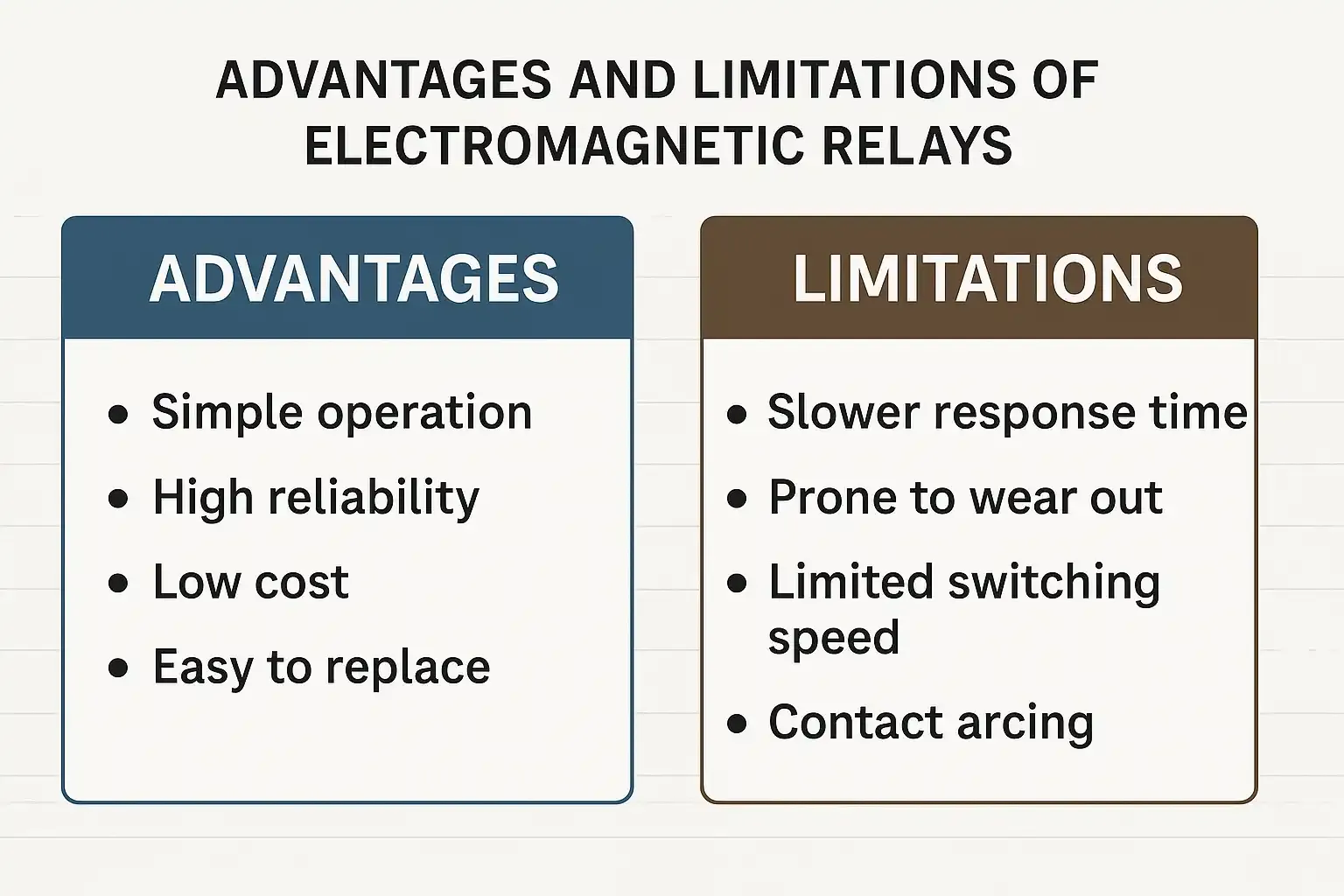
Electromechanical devices are the best way to isolate control circuits from high-power loads, and weighing the pros and cons of relays helps you select the right component. While solid-state options offer faster switching, traditional relays remain the standard for high-voltage isolation.
Comparing switching control methods

When you design a circuit, you must decide between mechanical parts and electronic switches. Each type serves a different purpose based on your power requirements and the speed of your application.
| Method | How long | Effort | Cost | Best for |
|---|---|---|---|---|
| Electromechanical Relay | Long life | Low | Low | High power |
| Solid-State Relay | Long | Medium | High | Fast switching |
| Transistor Switch | Instant | High | Low | Small signals |
The table above shows that electromechanical types are best when you need to handle large currents at a low cost. If you need to switch thousands of times per minute, you must choose a solid-state option instead. The main trade-off is between the physical durability of mechanical contacts and the silent, rapid speed of electronic switching.
Using electromechanical relays
These devices use a coil to create a magnetic field, which pulls a metal arm to close or open a circuit. This physical movement provides a clear gap between the control signal and the load.
- Connect your control voltage to the coil terminals, usually rated for 5V, 12V, or 24V DC.
- Ensure your load power matches the contact rating, such as 10A at 120V AC.
- Wire the load circuit through the common and normally open pins.
- Add a flyback diode across the coil to prevent voltage spikes when the relay turns off.
These are excellent for simple on/off tasks where you need total electrical isolation. Their main weakness is that the internal contacts will eventually wear out after a certain number of operations, which varies by load current according to the Underwriters Laboratories relay testing standards.
Benefits of solid-state relays
Solid-state relays use semiconductors instead of moving parts to switch power. Because there are no physical parts to strike each other, they don’t wear out from mechanical fatigue.
Mount the device on a heat sink if your load exceeds 5A, as they generate significant heat. Without proper thermal management, the internal junction temperature spikes, leading to premature failure.
Confirm your control signal is compatible, as some require specific DC trigger voltages. If your controller outputs 3.3V but the relay requires a 5V minimum, the device will fail to switch reliably.
Check the output type, ensuring you match AC loads with AC-rated relays. Using a DC-rated relay on an AC circuit creates a short circuit that destroys the semiconductor instantly.
Verify that the leakage current in the off-state is low enough for your specific load. Even when off, these relays allow a small trickle of current that can keep low-power LED indicators glowing or prevent small solenoids from fully de-energizing.
They’re perfect for applications requiring silent operation and high switching frequency. However, they’re sensitive to voltage surges and can fail permanently if you exceed their peak voltage rating.
Selecting transistor switches
Transistors act as electronic gates for lower power circuits. They’re tiny, silent, and can switch millions of times per second without any degradation.
- Identify the base, collector, and emitter pins on your transistor.
- Connect the control signal through a resistor to the base to limit current.
- Place the load between the power source and the collector.
- Connect the emitter directly to the ground of the circuit.
Transistors are ideal for small components like LEDs or sensors. A major limitation is that they don’t provide the physical air gap that mechanical relays offer, making them less safe for high-voltage isolation. If you’re building a circuit for high-voltage mains, always use a mechanical relay or an opto-isolated solid-state component.
Choosing the right switching method
When you’re in a hurry, use an electromechanical relay because it’s easy to wire and doesn’t require complex cooling calculations. If you’re doing this for the first time, start with a modular relay board that connects directly to your controller. When you want the best possible result whatever it takes, choose a solid-state relay to eliminate mechanical wear and noise.
The choice depends on your load and duty cycle. If your load pulls high current, use a mechanical relay; if your system needs to switch rapidly, use a solid-state relay. Remember that mechanical relays aren’t for high-speed pulse applications, while solid-state relays aren’t for circuits where you can’t manage the heat output.
Calculate your duty cycle to decide. In that case, the solid-state option is mandatory. If you’re switching high-voltage DC, stick to mechanical relays to avoid the leakage current that often destroys delicate sensors in solid-state designs.
Rules for safe circuit switching
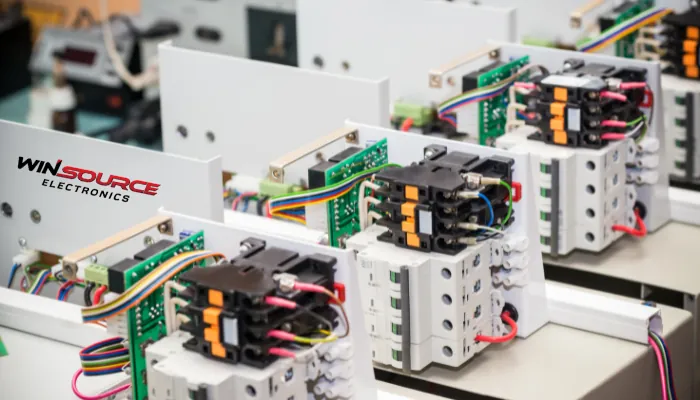
Regardless of the method you choose, you must always verify the contact ratings before connecting any load. The National Electrical Code provides guidelines on how to safely route high-voltage wiring away from low-voltage control signals to prevent interference or dangerous arcs.
Always prepare your circuit by adding a fuse to the load line, which protects your equipment if the relay contacts weld shut.
Check your connections partway through the build to ensure no wires have loosened due to vibration. If you see exposed copper strands at the terminal block, trim them immediately; these stray filaments often cause short circuits that destroy sensitive microcontrollers.
At the end, test the switching logic with a low-voltage dummy load before you connect your final high-power device. If you’re working with voltages above 50V, consult a licensed electrician to ensure your installation meets local safety codes. Always treat the circuit as live until you have physically verified the absence of voltage with a calibrated multimeter.
Related guides
- Environmental Impacts of Burning Coal: A Detailed Breakdown
- What Is Ninja NeverStick Coating Made Of: The Material Breakdown
- How Much Does Stove Cost to Run: Electric vs Gas Breakdown in 2026
Frequently asked questions
Can I use a relay for high-speed switching?
No, electromechanical relays are limited by the physical mass of the internal arm. They typically handle only a few operations per second, whereas solid-state relays can handle much higher frequencies. If your project requires faster switching, you must use a transistor or a solid-state relay to avoid mechanical failure.
Is it safe to switch AC loads with a DC relay?
Yes, provided the relay contacts are rated for the voltage and current of your AC load. You must check the manufacturer’s datasheet for the specific AC voltage limit, as DC ratings are often lower than AC ratings for the same device. Never assume a relay can handle mains voltage without verifying the label.
What happens if I exceed the relay current rating?
The contacts will likely weld together or melt, causing the relay to stay permanently closed. This failure mode can be dangerous if the connected device continues to run without control. Always choose a relay with a current rating at least 20% higher than your maximum expected load to prevent this.
How long do electromechanical relays last?
They typically last between 100,000 and 1,000,000 cycles, depending on the electrical load. The actual lifespan varies based on the current and the type of load, such as inductive motors versus resistive heaters. You can find the exact cycle rating for your specific model in the manufacturer’s technical documentation.
Why do I need a flyback diode?
A flyback diode prevents a large voltage spike from damaging your controller when the relay coil turns off. The magnetic field in the coil collapses rapidly, creating a surge that can destroy sensitive electronics. You must place this diode in parallel with the coil to safely dissipate the stored energy.
How do I know if my relay is failing?
A buzzing sound or the device remaining powered despite a removed signal indicates a faulty relay. Use a multimeter to check for continuity across the contacts while the unit is unpowered. If you measure low resistance when the circuit should be open, replace the relay immediately to prevent further damage.
Conclusion
Choosing the right component depends on your specific power needs and the environment where your system operates. If you’re unsure which type fits your project, it’s a good idea to test a small prototype first. You’ll find that a bit of hands-on experimentation makes the final decision much easier to reach.
