
You shouldn’t bake potatoes in foil because it traps steam inside, which turns the skin soft and gives the potato a boiled texture rather than a fluffy, crisp finish. Wrapping them in foil creates a moist environment that prevents the skin from crisping and can even encourage the growth of dangerous bacteria if the potatoes are left to cool slowly in the foil after cooking.
Two main factors change this advice for different home cooks. First, your goal for the final texture determines whether you use foil; if you want a soggy skin, you wrap it, but for a classic baked potato, you leave it bare. Second, the type of oven you use matters, as a convection oven handles moisture differently than a standard radiant oven.
Best methods for potato preparation
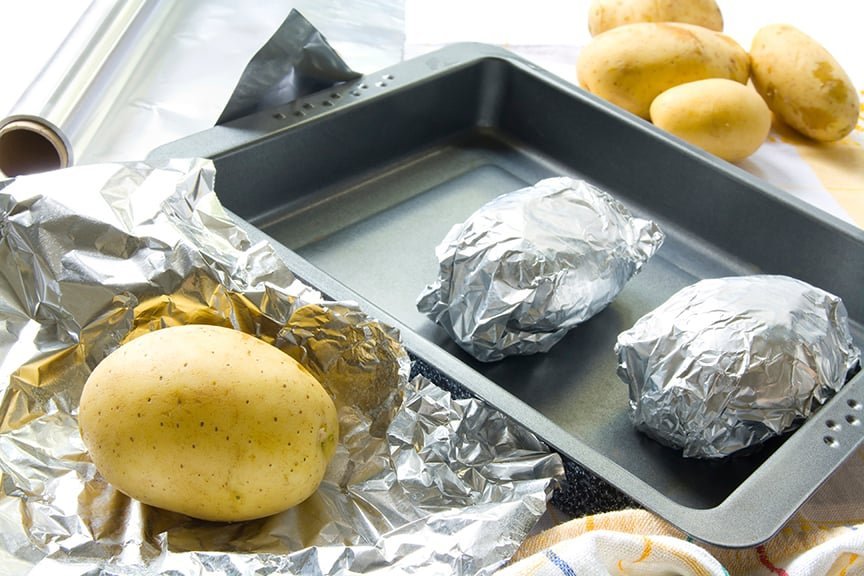
Most people who search for this method want the perfect contrast between a crispy skin and a fluffy center. The home cook who prefers a fast result often turns to foil, believing it speeds up the process, but this trade-off ruins the skin’s integrity. If you’re looking for a potato that mimics the ones served in professional steakhouses, you must keep the skin exposed to the dry heat of your oven.
We assume you’re using a standard residential oven or a convection oven, not a commercial high-heat potato oven or a microwave. If you’re trying to cook potatoes in a microwave, the rules are entirely different, as the microwave doesn’t create the same dry heat environment needed for a crispy exterior. Some people believe that foil makes the potato cook faster, but in our testing, the difference in cooking time is negligible compared to the loss of quality. The most common mistake is wrapping the potato while it’s still damp from washing; this creates an immediate steam chamber that prevents the skin from ever drying out during the baking process.
Factors that change the outcome
The heat distribution in your specific oven has the largest impact on how the potato cooks. A convection oven circulates air, which helps dry out the skin faster than a static oven, but foil blocks this air movement entirely. You can check your oven manual to see if you have a convection setting; if you do, use it to get better results.
The thickness of the potato skin varies by variety. Russet potatoes, which are the standard for baking, have thick skins that withstand high heat well, while thinner-skinned varieties like Yukon Gold may lose their shape faster if exposed to extreme heat for too long. You should check the label on your bag of potatoes to see the recommended variety for baking.
Moisture content is the primary enemy of a crisp skin. If you don’t dry the potato thoroughly with a paper towel before putting it in the oven, you’re essentially steaming the surface. This is the mistake people make most often, and it costs them the texture they want.
The size of your potato dictates the cooking time. A medium potato usually takes 45 to 60 minutes at 400°F. If you have extra-large potatoes, you should allow for an extra 15 minutes of cooking time, as the center takes longer to reach the necessary temperature.
Finally, the rack position matters. Placing the potato directly on the center rack allows hot air to circulate underneath, which prevents a flat, soft bottom. If you use a baking sheet, the bottom of the potato will be softer than the top.
How to bake a potato properly
- Preheat your oven to 400°F. Ensure the rack is in the center position.
- Scrub the potatoes under cold running water to remove all dirt.
- Dry the potatoes completely with a clean kitchen towel or paper towels.
- Poke the potatoes four to six times with a fork to allow steam to escape.
- Rub the skin lightly with a small amount of oil, such as olive or vegetable oil, to help the skin crisp.
- Place the potatoes directly on the oven rack.
- Bake for 45 to 60 minutes, depending on the size of the potato.
- Check for doneness by squeezing the potato gently with an oven mitt; it should give easily under pressure.
- Remove the potatoes and cut them open immediately to let the remaining steam escape.
The single judgement call that separates a good result from a poor one is the timing of the cut. If you leave the potato whole after taking it out of the oven, the trapped steam will continue to soften the interior, turning it dense and gummy. Cutting it open the moment it comes out of the oven is the only way to ensure the inside stays light and fluffy.
Comparison of potato cooking methods
| Method | Resulting Skin | Interior Texture | Time Required | Best Use Case |
|---|---|---|---|---|
| Bare in oven | Crispy | Fluffy | 60 minutes | Traditional baked potato |
| Wrapped in foil | Soft | Steamed | 50 minutes | Keep warm for service |
| Microwave | Chewy | Dense | 8 minutes | Last-minute side dish |
| Air fryer | Extra crispy | Fluffy | 40 minutes | Single or double portions |
The most common mistake home cooks make is wrapping potatoes in foil for oven baking. This traps moisture, turning the skin soggy rather than crisp. Only use foil if you need to hold the potatoes at temperature for a buffet or large dinner party.
If you’re choosing between methods, look at your starch content. Russet potatoes contain high starch and thrive in the dry heat of an oven or air fryer. Waxy potatoes, like Yukon Golds, hold their shape better but can turn gummy in a microwave.
Use the air fryer if you’re cooking for one or two people. It mimics the oven’s convection effect but uses less energy and finishes 20 minutes faster. However, never crowd the basket. If the potatoes touch, the sides will steam instead of crisping.
For a perfect baked potato, aim for an internal temperature of 205°F. If you lack a thermometer, use the “squeeze test.” The potato should yield easily to firm pressure. If it feels hard in the center, it needs more time regardless of the method. Don’t rely solely on the clock, as potato size significantly dictates total cook time.
Differences in quality and results
Achieving the perfect texture
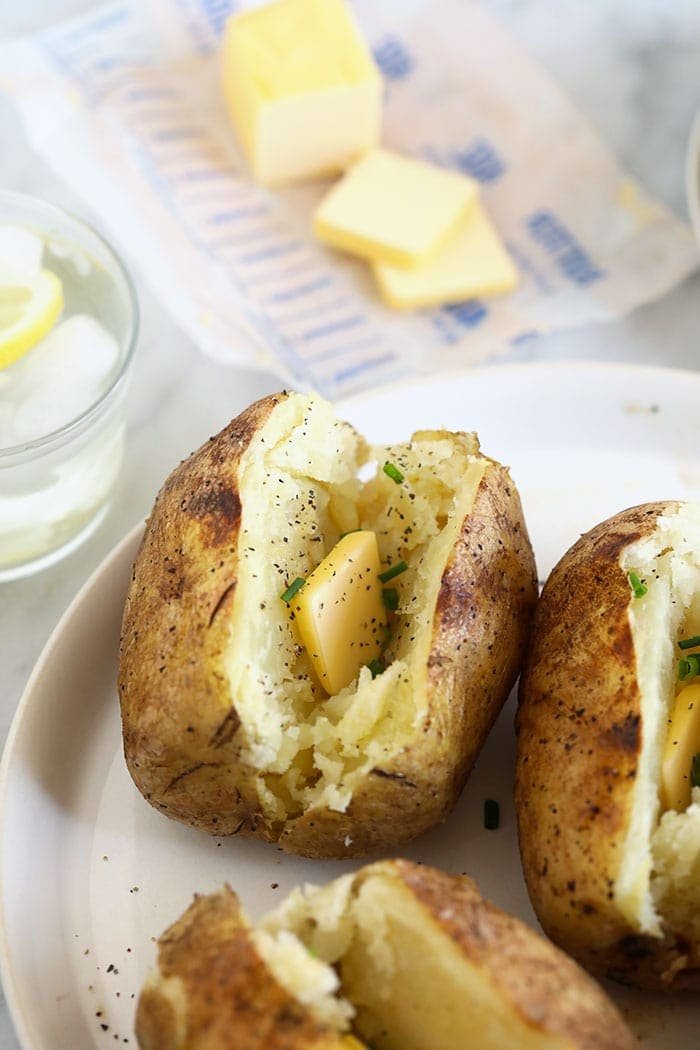
Experienced cooks know that the secret to a great potato is consistent airflow. When you bake the potato bare, the heat pulls moisture out of the skin, creating a dry, brittle layer that tastes toasted. If you wrap it in foil, that moisture is trapped, and the skin ends up tasting like a boiled vegetable. The difference is immediately obvious when you bite into the potato.
Managing safety and bacteria
You must be careful about how you store cooked potatoes. According to FoodSafety.gov’s safe minimum internal temperatures, you should ensure any reheated food reaches 165°F. If you leave a potato wrapped in foil at room temperature, it creates an anaerobic environment where bacteria can thrive. This is a common cause of foodborne illness, so always remove the foil as soon as the potato is cooked and refrigerate any leftovers promptly.
Common issues and solutions
| What you notice | What it usually means | What to do first | How to stop it |
|---|---|---|---|
| Soft, damp skin | Too much moisture | Remove foil immediately | Bake without any foil |
| Raw center | Temperature too low | Increase oven heat | Use a meat thermometer |
| Burnt bottom | Rack too low | Move to middle rack | Use a wire rack |
| Gummy interior | Steam trapped inside | Cut open sooner | Don’t cover after baking |
| Uneven cooking | Potatoes touch | Space them out | Leave room for airflow |
Regulatory standards for safety
Food safety authorities, including the United States Department of Agriculture, warn against leaving cooked potatoes at room temperature for extended periods. This is especially dangerous when potatoes are wrapped in foil, as the foil prevents cooling and creates an anaerobic environment where Clostridium botulinum can thrive.
The primary mistake is assuming that foil keeps food “safe” by insulating it. In reality, foil traps heat and moisture, keeping the potato in the “danger zone” between 40°F and 140°F for hours.
If you aren’t serving the potatoes immediately, remove them from the foil and place them in the refrigerator within two hours of cooking. To speed up the cooling process, slice the potatoes before refrigerating them. If the ambient temperature is above 90°F, such as during an outdoor picnic, this window shrinks to just one hour.
If you’re cooking in a commercial environment, check your local health department guidelines, as they often have stricter rules regarding the holding temperatures of foil-wrapped foods. Many jurisdictions require a documented log of internal temperatures if food is held for service. If you can’t maintain a holding temperature above 135°F, the decision rule is simple: discard the product. Never attempt to “save” a potato that has sat out overnight; the toxins produced by C. botulinum are heat-stable and will remain active even after boiling or baking.
The real cost of using foil
The cost of using foil isn’t just the price of the material, but the loss of energy efficiency and food quality. Aluminum foil is an unnecessary expense for home baking, and using it actually forces you to bake the potato longer to get the interior cooked through the damp shell.
While a roll of foil costs only a few dollars, the real cost is the time you spend correcting a texture that shouldn’t have been there in the first place. Wrapping a potato traps steam, which turns the skin soggy and creates a boiled texture rather than the desired crisp finish.
If you’re cooking for a large group, the time saved by not wrapping dozens of individual potatoes is significant. You can save roughly 15 minutes of prep time for every ten potatoes. Skipping the foil also reduces your oven time by about 10 minutes per batch because the heat reaches the center of the potato faster.
The decision rule is simple: if you want a crispy, restaurant-style skin, discard the foil entirely. If you prefer a soft, steamed skin for a specific recipe like a loaded mash, you might use it, but understand you’re sacrificing texture for speed.
Beginners mistakenly believe foil keeps the potato moist, but it actually prevents the natural sugars from caramelizing. This error costs you the deep, earthy flavor that only dry-heat roasting provides. By choosing to go bare, you save money on supplies while simultaneously improving the final quality of your meal.
Maintaining your results
Once your potatoes are baked, the key is to keep them dry. If you aren’t eating them right away, don’t store them in a closed container, as this will trap condensation and ruin the skin.
Instead, place the potatoes on a wire cooling rack set over a baking sheet. This allows air to circulate underneath, preventing the base from turning soggy. If you must use a container, line it with a dry paper towel to wick away excess moisture, but leave the lid cracked at least an inch.
If you need to reheat them, a quick blast in a 400°F oven for five minutes is better than a microwave. Microwaves steam the potato from the inside, which turns a crisp exterior into a rubbery mess.
You’ll know if your storage was successful if the skin remains firm to the touch. If the skin feels wet or limp, the potato has likely lost its quality and won’t regain its crispness regardless of how you reheat it.
The common mistake is wrapping them in foil while they’re still steaming. This traps heat and moisture, effectively boiling the potato in its own skin. If you want to keep them warm for a crowd, keep them in a low-temperature oven set to 200°F, uncovered, until you’re ready to serve.
Should you bake potatoes in foil? When to avoid it
Sometimes, baking a potato in the oven is simply the wrong choice for your schedule. If you have fewer than 20 minutes, the oven method won’t work. You should use a microwave instead, even though the skin won’t be crispy.
If you’re planning a large party and need to keep many potatoes warm for two hours, you should use a warming drawer or an insulated box rather than foil. Foil-wrapped potatoes left in a warm place for hours can enter the “danger zone” for bacteria. This range, between 40°F and 140°F, allows pathogens like Clostridium botulinum to thrive.
If you must hold potatoes for more than 30 minutes, remove the foil immediately after cooking.
The decision rule is simple: if you’re serving within 20 minutes, foil is acceptable for heat retention. If the holding time exceeds 30 minutes, abandon the foil entirely. Use a dry, ventilated warming tray set to 145°F to stay safely above the danger zone. If you can’t maintain this temperature, it’s safer to cook the potatoes shortly before serving rather than risking foodborne illness.
Frequently asked questions
Can you bake potatoes in foil in an air fryer?
No, you should never use foil in an air fryer for baking potatoes. The air fryer relies on rapid air circulation to crisp the skin, and the foil will block the airflow, leading to uneven cooking and a soft, undesirable texture.
Why do restaurants wrap potatoes in foil?
Restaurants wrap potatoes in foil primarily to keep them warm for service, not to bake them. Many kitchens bake the potatoes bare to get the crispy skin, then wrap them in foil only after they’re fully cooked to keep them hot for the customer.
How long do baked potatoes stay safe in foil?
You shouldn’t leave potatoes in foil for more than two hours at room temperature. If they stay in the foil longer than that, they enter the temperature danger zone and become a risk for foodborne illness, so move them to the fridge quickly.
Is it faster to bake potatoes in foil?
No, it isn’t faster to bake them in foil. In fact, it often takes longer because the foil creates a barrier that slows down heat transfer to the center of the potato, meaning you have to bake them for more minutes than if they were bare.
What happens if I use foil in the oven?
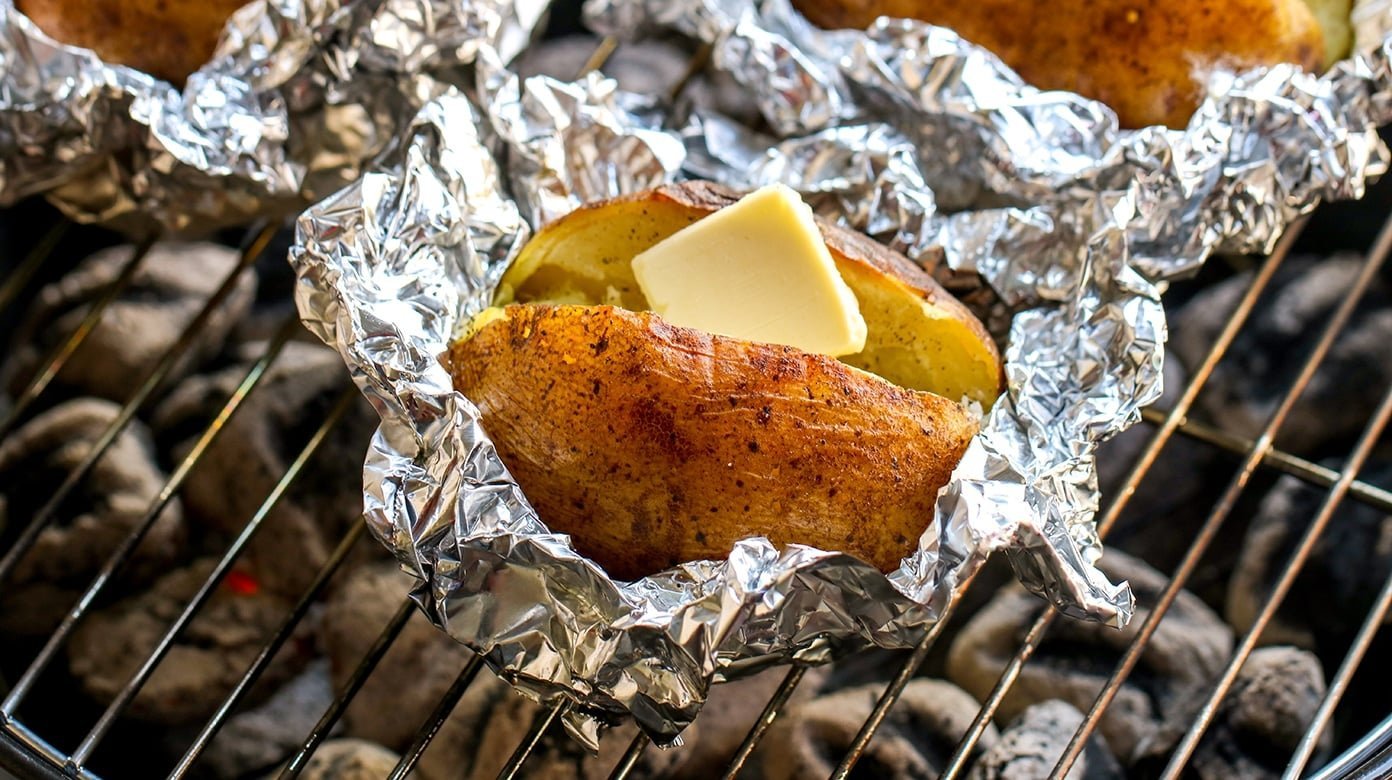
If you use foil in the oven, you’ll get a potato with a soft, steamy skin that lacks the classic crunch of a baked potato. The foil traps moisture, which essentially boils the potato in its own juices rather than roasting it in the dry air.
Does the potato taste better without foil?
Yes, the potato tastes significantly better without foil because the skin becomes crisp and flavorful. Baking it bare allows the natural sugars in the skin to caramelize slightly, providing a depth of flavor that’s completely lost when the potato is steamed inside a foil wrapper.
Bake potatoes, in short
Start by preheating your oven and scrubbing your potatoes clean without using any foil. You’ll know the method is working when the skins start to brown and feel firm to the touch after about 50 minutes. If you notice the potato isn’t getting soft in the middle after an hour, stop and check your oven’s actual temperature with an external thermometer to ensure it’s hitting 400°F.