
Protecting a veneer table top surface comes down to applying a thin coat of paste wax over a clean, dry factory finish. The job takes about 45 minutes, costs very little for basic supplies, and rates as needs care because real wood veneer is paper-thin. You must have clean microfiber cloths on hand before starting. If your table’s existing finish is peeling or flaking off, this process won’t fix it—check the maker’s care tag underneath the tabletop first.
What you need
 Photo: flowyline.com on Google
| Item | How much | Why it’s needed | A substitute |
|---|---|---|---|
| Paste wax | 2 tablespoons | Creates a thin barrier against moisture | Liquid furniture wax |
| Microfiber cloths | 3 cloths | Applies wax and buffs clean without scratching | 100% soft cotton rag |
| Mild dish soap | 2 drops | Cuts surface body oils and grease | none — don’t swap this |
| Warm water | 2 cups | Dilutes dish soap safely for cleaning | none — don’t swap this |
| Coasters with cork bases | 4 to 6 pieces | Prevents heat and liquid ring damage | Felt-backed coasters |
| Clean small bowl | 1 bowl | Holds warm water and soap mixture | Clean plastic bucket |
Before you start
- Unplug any nearby lamps and move all items off the tabletop.
- Clear a two-foot space around the entire table so you can walk freely.
- Mix two drops of dish soap into two cups of warm water.
- Wring your cloth until it’s barely damp, because using a soaking cloth is the preparation error people skip that causes veneer to swell and ruin its glue bond.
- This guide isn’t for damaged veneer with loose edges or cracked sheets; stop immediately and call a professional furniture restorer if the veneer lifts from its core.
Step by step
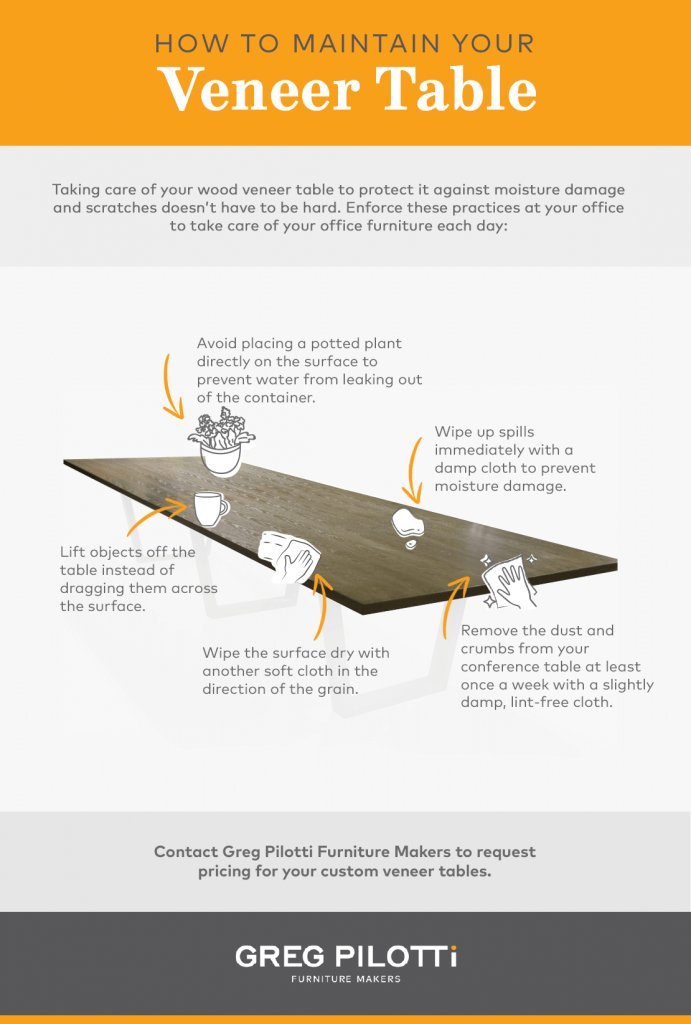 Photo: gpfurnituremakers.com on Google
- Dip your first cloth into the soapy water and squeeze out all dripping moisture completely.
- Wipe the tabletop along the direction of the wood grain to lift dust and skin oils. The surface should look clean and show no standing water lines behind your stroke.
- Take your second dry cloth and immediately wipe away any moisture left on the wood. The table is ready when you touch it and feel no damp patches anywhere.
- Let the wood rest for 10 minutes at room temperature until the surface dries completely. You know it’s ready when the veneer looks dull and feels bone-dry to the hand.
- Scoop about one tablespoon of paste wax onto the center of your third clean cloth. Fold the cloth once so the wax spreads through the cloth fibers evenly.
- Rub the wax over the veneer in small, overlapping circles across a two-foot section. The wood will look slightly cloudy and hazy as the thin layer coats the surface.
- Allow the wax to dry on the table for 15 minutes until it loses all stickiness. It’s dry when you drag a dry finger lightly across it without smearing paste.
- Buff the dried wax firmly along the grain using a clean, fresh corner of the cloth. The wood should turn from a hazy film into a smooth, clear sheen.
- Place cork-backed coasters in your common seating spots before returning any decorative items.
How to know it worked
The table should feel smooth and slick when you run your palm across it. You’ll see a soft, even sheen across the surface under a bright overhead room light without any sticky spots. Water drops will form round beads on top instead of soaking into the grain immediately.
If you see cloudy streaks or dull fingerprints after buffing, you left excess paste on the wood. This requires a second buffing round with a clean cloth. If liquids still flatten out and soak the wood within three seconds, apply a second thin coat of wax after two hours.
If something goes wrong
| What happened | Why | What to do |
|---|---|---|
| Surface feels sticky | Applied too much wax paste | Buff hard with a clean cloth |
| Veneer bubbles up | Water got under the glue | Call a professional furniture repairer |
| Cloudy white film stays | Buffed before the wax dried | Wait ten minutes and rebuff |
| White heat rings appear | Hot mug placed without coaster | Rub lightly with baking soda paste |
| Dark grease spot remains | Soap mix was too weak | Wash spot again with soapy rag |
| Scratches show through | Cloth had trapped hard grit | Strip wax and reapply carefully |
How often to do this
 Photo: www.reddit.com on Google
Wax a veneer table top regularly under normal home conditions. The main trade-off of paste wax is that it protects well against light spills, but it can’t stop deep scratches or boiling heat. Two factors change how often you must reapply it: daily use and direct sunlight.
If the table serves as your primary dining spot, wax it more frequently; if it sits unused in a guest room, doing so occasionally is plenty. Sunlight breaks down finishes quickly. The Forest Products Laboratory wood handbook explains how moisture and sunlight degrade clear surface coats over time, so keep your table away from bright windows.
Frequently asked questions
Can you put hot food plates directly on veneer?
No. High heat softens the clear finish and can melt the glue layer beneath the veneer. Always put hot serving pans, plates, and mugs on thick trivets or insulated pads to avoid white heat marks.
Why does my veneer table look cloudy after cleaning?
The table looks cloudy because you used a damp cloth without drying it immediately. Water trapped inside the wax film causes white haze. Buffing the spot firmly with a dry microfiber cloth usually clears it up.
Is it safe to use commercial furniture spray on veneer?
No. Sprays containing silicone leave a slick film that attracts dust and makes future finish repairs impossible. Stick to mild soap, plain water, and standard paste wax for long-term care.
Does a glass top damage wood veneer?
Yes, if placed directly on the wood without soft pads. Trapped moisture between glass and wood ruins the veneer, and dirt under the glass can scratch it. Always use thin silicone bumper dots to keep the glass elevated.
What happens if water sits on veneer overnight?
The water seeps into the wood layer, dissolves the adhesive, and causes the veneer to buckle or peel permanently. Dry spills within 30 seconds using a soft towel to prevent permanent swelling.
How long does wax take to cure completely?
About 30 minutes at standard room temperature. You can touch the table after 15 minutes, but keep heavy objects, hot items, and liquids off the tabletop for at least one full hour.
To keep that warm shine going forward, make it a habit to wipe spills right away with a barely damp cloth. You’ll also want to use felt-bottomed coasters under hot mugs. If water stops beading on the surface months from now, that’s your friendly reminder to reapply another gentle coat.