
Gas chromatography with flame ionization detection (GC-FID) works by vaporizing a sample and transporting it through a capillary column using an inert carrier gas, where components separate based on their chemical properties before being burned in a hydrogen-air flame to generate an electrical signal. This method serves as the industry standard for analyzing organic compounds, including hydrocarbons, alcohols, and fatty acids, because it offers exceptional sensitivity and a wide linear dynamic range. By measuring the ions produced during combustion, the system provides precise quantitative data for complex chemical mixtures.
Key Takeaways
- Ensure your carrier gas purity is 99.999% or higher to prevent column degradation and baseline noise.
- Optimize your hydrogen-to-air ratio to maintain a stable flame, as improper flow rates significantly reduce sensitivity.
- Use a high-quality fused silica capillary column matched to your analyte’s polarity for effective compound separation.
- Perform routine leak checks on all gas fittings to avoid safety hazards and inconsistent detector response.
- Calibrate your FID using certified reference standards to ensure accurate quantification of unknown samples.
How Gas Chromatography With Flame Ionization Detection Works
The process begins in the inlet, where a liquid sample is injected and instantly converted into a gas phase. A carrier gas—typically helium, nitrogen, or hydrogen—pushes this vapor through a long, thin capillary column coated with a stationary phase. As the mixture travels, the individual components interact with the stationary phase at different rates. These interactions cause compounds to migrate at varying speeds, resulting in temporal separation by the time they reach the detector end of the column.
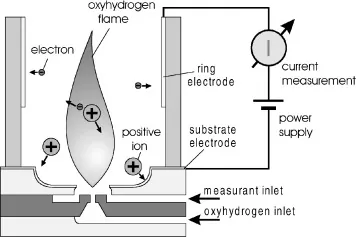
Upon exiting the column, the separated analytes enter the FID. The effluent from the column is mixed with hydrogen gas and air, which are then ignited to create a small, stable flame. When organic molecules enter this flame, they undergo combustion and produce ions.
A biased electrode system collects these ions, generating a tiny current that’s directly proportional to the number of carbon atoms in the analyte. This current is then amplified and converted into a digital signal, forming the peaks you see on your chromatogram.
Essential Components Of The System
The hardware required for a functional GC-FID setup must be maintained with strict adherence to manufacturer specifications. Reliability depends on the stability of the gas flows and the integrity of the thermal environment.
| Component | Primary Function | Typical Maintenance |
|---|---|---|
| Inlet | Vaporizes liquid sample | Septum replacement |
| Column | Separates mixture components | Trim column ends |
| Detector | Ionizes organic compounds | Clean FID jet |
| Gas Supplies | Provides carrier and flame gases | Monitor pressure levels |
Common Carrier Gases For GC-FID
Selecting the right carrier gas affects both the resolution of your peaks and the speed of your analysis. While helium is the historical standard, many laboratories are shifting toward alternative gases due to supply constraints.
- Hydrogen: Offers the fastest analysis times and high efficiency, though it requires careful safety management.
- Helium: Provides excellent separation efficiency and is chemically inert, making it ideal for standard methods.
- Nitrogen: The most cost-effective option, though it typically results in slower analysis speeds compared to hydrogen.
Understanding The Ionization Process
The core of the FID is the flame. This flame is fueled by a precise mixture of hydrogen and air, creating a high-energy environment. When a carbon-containing molecule enters this zone, it breaks down and ionizes. The presence of a high-voltage bias, often around 300 volts, creates an electrostatic field that draws the positively charged ions toward a collector electrode. This movement of charge creates the electromigration current that the instrument’s electrometer measures.
Pro Tip: Always verify your detector temperature is set at least 20 degrees Celsius higher than your maximum oven temperature to prevent condensation of high-boiling compounds inside the detector jet.
Interpreting Your Chromatogram Data

The output of a GC-FID analysis is a chromatogram, a graph showing the detector response over time. Each peak represents a specific chemical compound.
The position of the peak on the horizontal axis, known as the retention time, helps identify the substance, while the area under the peak is used to calculate the concentration of that substance in your sample. Because the detector is highly sensitive to hydrocarbons, it’s essential to run blank injections to ensure no residual contaminants are inflating your results.
Factors Influencing Detector Sensitivity
Several variables dictate how well your FID detects specific compounds. Sensitivity is generally highest for hydrocarbons and decreases for compounds containing oxygen, nitrogen, or halogen atoms.
- Flame Temperature: Higher temperatures generally increase ionization efficiency but may cause baseline instability.
- Gas Ratios: The hydrogen-to-air ratio must be optimized to ensure complete oxidation of the carbon atoms.
- Detector Geometry: The distance between the jet and the collector electrode affects the collection efficiency of the ions.
Troubleshooting Common FID Issues
When your system fails to produce reliable results, start by inspecting the most frequent points of failure. Most issues with the United States Environmental Protection Agency standard methods often stem from simple gas flow irregularities or contaminated hardware.
- Baseline Noise: Often caused by column bleed, dirty FID jets, or contaminated carrier gas.
- Peak Tailing: Typically results from active sites in the inlet or column that interact strongly with your analyte.
- No Flame Ignition: Check your hydrogen and air supply lines for leaks or blockages.
- Ghost Peaks: Usually originate from carryover in the syringe or impurities in the solvent.
| Symptom | Potential Cause | Recommended Action |
|---|---|---|
| High Baseline | Column Bleed | Replace or condition column |
| Erratic Peaks | Septum Leak | Replace the inlet septum |
| Low Sensitivity | Dirty FID Jet | Clean or replace the jet |
| Baseline Drift | Flow Instability | Recalibrate gas controllers |
Safety Considerations For Hydrogen Use
Because FID systems require hydrogen gas for the flame, safety protocols are paramount. Hydrogen is highly flammable and can form explosive mixtures with air. Ensure your laboratory is equipped with proper ventilation and that your GC system includes electronic flow sensors that shut off gas supplies in the event of a detected leak. Always store cylinders in an upright position and use dedicated gas regulators designed specifically for high-purity hydrogen service.
Warning: Never attempt to ignite the FID flame if you suspect a gas leak within the detector housing, as this can lead to an internal explosion or damage to the sensitive electronic components.
How To Optimize Column Selection
The column is the heart of your separation. For most FID applications, you’ll use a wall-coated open tubular (WCOT) column. Choosing the correct film thickness is critical; a thicker film is better for volatile compounds, while a thinner film is preferred for high-boiling samples. Always check the manufacturer’s data sheet to ensure your column’s temperature limits are compatible with your intended application.
Routine Maintenance For Long-Term Success

To keep your FID running accurately, establish a recurring maintenance schedule. Cleaning the detector jet is the most effective way to restore sensitivity after extended use. Additionally, replacing the inlet liner regularly will prevent the accumulation of non-volatile sample residues that can degrade your sample quality and cause inconsistent peak shapes. Keeping a log of all maintenance activities helps in troubleshooting long-term trends in instrument performance.
Frequently Asked Questions
Why does the FID require hydrogen and air?
The FID requires hydrogen and air to generate a combustion flame at the detector tip. The hydrogen acts as the fuel, while the air provides the necessary oxygen for combustion. This specific flame environment is essential for the thermal ionization of organic compounds, which allows the detector to generate the electrical signal necessary for quantifying the amount of carbon-containing material present in the sample.
How do I know if my FID jet is dirty?
A dirty FID jet often manifests as high baseline noise, erratic signal spikes, or a significant loss of sensitivity over time. If you notice that your detection limits are rising or that your baseline is no longer flat even after conditioning the column, it’s likely that carbon or silica deposits have accumulated inside the jet, obstructing the flow and interfering with ion collection.
Can I detect inorganic compounds with an FID?
Generally, no. The flame ionization detector is specifically designed to be responsive to organic compounds, particularly hydrocarbons. It has very low or zero response to inorganic molecules like water, carbon dioxide, carbon monoxide, or nitrogen gas. This selectivity is actually a major benefit, as it allows you to analyze organic analytes in matrices that contain these non-responsive inorganic components without interference.
What is the linear dynamic range of an FID?
The FID is known for a very wide linear dynamic range, typically spanning about seven orders of magnitude. This means that the instrument can accurately quantify compounds at concentrations ranging from parts per billion up to high percentage levels without the need for frequent dilution of the sample. This robustness makes the FID an incredibly versatile tool for both trace analysis and bulk composition measurements in chemical laboratories.
How often should I perform a leak check?
You should perform a leak check whenever you change a gas cylinder, disconnect any gas lines, or replace the column. Even a microscopic leak can introduce oxygen into the system, which will cause the stationary phase to degrade rapidly and increase baseline noise. Regular, proactive leak checks are the single most effective way to ensure the longevity of your column and the accuracy of your quantitative data.
Conclusion
Begin your work by checking the gas pressure regulators on your current setup, ensuring they’re set to the manufacturer’s recommended flow rates for your specific column diameter. Proper preparation of your gas lines and inlet components creates the foundation for reproducible chromatography. Consult your specific instrument manual for the precise sequence to ignite your flame and initiate your first calibration run.
