
You can perform a frigidaire refrigerator control panel board reset procedure by disconnecting the unit from its power source for at least 10 minutes. This simple power cycle often clears temporary electronic glitches that cause unresponsive displays or incorrect temperature readings. If the panel remains blank or shows an error code after this, the board itself may require professional inspection. This guide focuses on standard reset methods for common models and how to identify when the issue requires a technician.
How the Frigidaire refrigerator control panel works
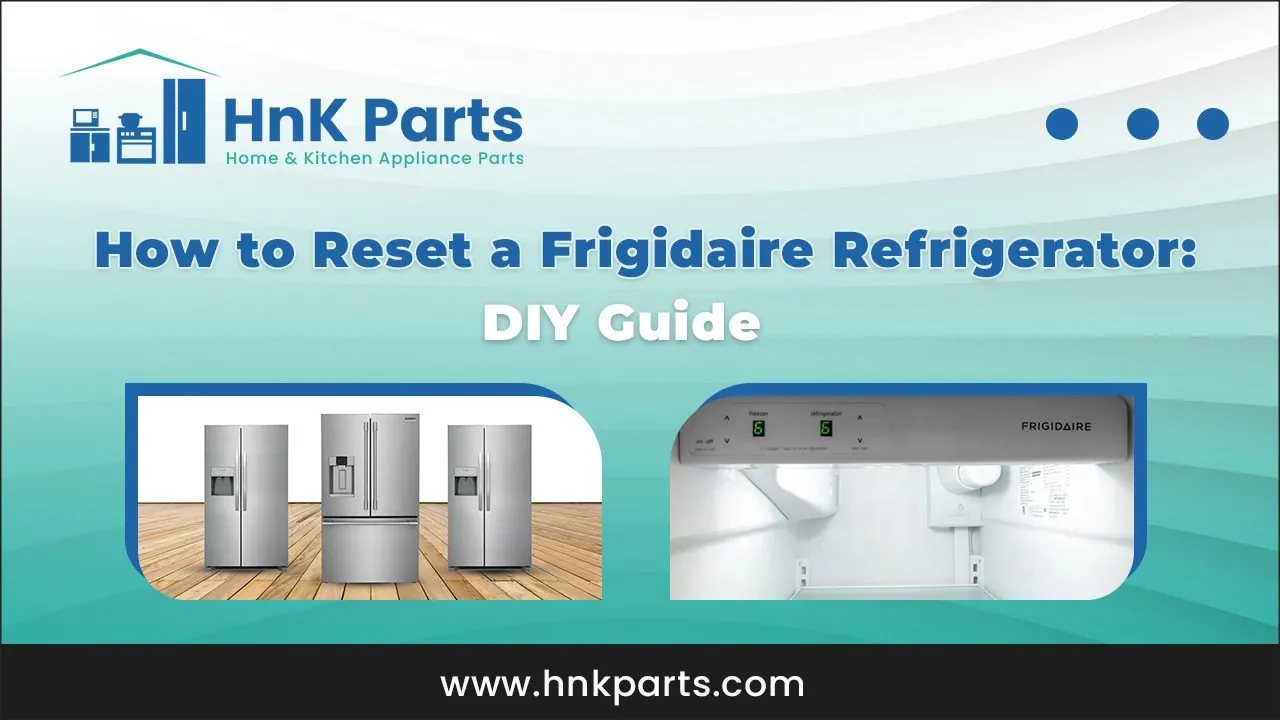
The control board acts as the brain of your refrigerator, managing cooling cycles, defrosting, and the user interface. When you use the control panel, you’re sending signals to this board to adjust settings or activate features like ice makers. It’s designed for standard residential use and relies on a steady electrical connection to maintain its internal memory and software operations.
A common misconception is that the control panel is an independent computer that can be reset through button combinations alone. In reality, most electronic control systems require a hard reset by cutting the power supply. This process forces the board to reboot its firmware and re-scan the sensors inside the fridge. If you hear clicking sounds or see flickering lights, it’s often a sign of power instability, which you can verify by checking the wall outlet for proper voltage.
If your appliance displays a persistent error code, don’t simply unplug it for a few seconds. Leave the unit disconnected from the power source for at least ten minutes. This delay ensures the capacitors on the board fully discharge, clearing corrupted memory registers that a quick power cycle leaves intact.
Distinguish between a software glitch and a hardware failure by observing the display. If the screen remains blank despite a hard reset, the power supply transformer on the board has likely failed. If the screen lights up but the compressor fails to start, the issue is usually a faulty relay switch. Replace the board only if these specific diagnostic steps fail to restore normal operation.
Steps for the Frigidaire Refrigerator Control Board Reset
Follow these steps to safely cycle the power to your refrigerator and attempt a reset of the control board.
- Locate the power cord behind the refrigerator or the dedicated circuit breaker in your home’s electrical panel.
- Unplug the refrigerator from the wall outlet or flip the circuit breaker to the “off” position to cut all electricity.
- Leave the refrigerator disconnected for a few minutes to ensure the system has fully powered down.
- Plug the refrigerator back in or switch the circuit breaker to the “on” position.
- Wait for the display to light up and allow the system to run for 24 hours to stabilize the internal temperatures.
- Check the display for any persistent error codes that indicate a hardware fault rather than a software glitch.
If the display fails to illuminate after this process, the issue may be a blown thermal fuse or a failed control board. You should never attempt to open the control board housing yourself, as internal components like capacitors can hold a lethal electrical charge even when the unit is unplugged. For repairs involving electrical components, contact the official Frigidaire support to schedule a service visit from a qualified technician.
Essential Reset Figures and Settings
The table below outlines common scenarios for resetting your appliance and what you should expect during the process.
| Situation | What to use | How long | What to watch for |
|---|---|---|---|
| Unresponsive display | Power cycle | 10 minutes | Screen lighting up |
| Persistent error code | Power cycle | 10 minutes | Code reappearing |
| Temperature fluctuation | Door seal check | 24 hours | Stable sensor readings |
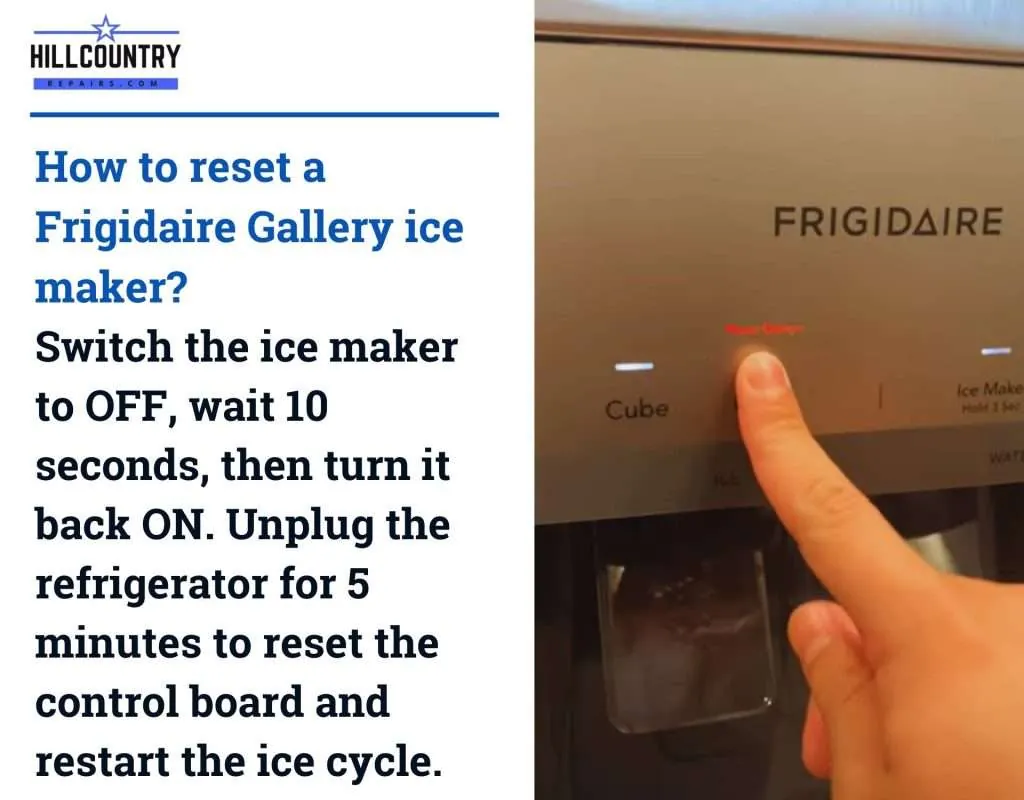
| Ice maker failure | Power cycle | 10 minutes | Audible cycle start |
These figures assume a standard 120V household outlet. If your home uses a different voltage or a smart-home power monitor, ensure the power is fully interrupted at the main breaker box to avoid damage to the board.
A power cycle requires a complete break in the circuit. If you simply turn the unit off via the control panel, the logic board remains energized in standby mode. You must physically pull the plug or flip the dedicated breaker to clear the volatile memory. If the appliance is hardwired, use the breaker box.
Most users make the mistake of reconnecting power too quickly. Wait a few minutes to ensure the system has fully powered down. If the display remains blank after this interval, check the GFCI outlet for a tripped reset button before assuming the board has failed.
When addressing temperature fluctuations, the 24-hour rule is essential for accuracy. Refrigeration systems rely on thermal mass to regulate cycles. If you adjust the thermostat and check it in an hour, you’re measuring the ambient air, not the internal temperature of your stored food.
If the error code persists after a hard reset, note the specific sequence of blinking lights. A steady blink usually indicates a sensor fault, while a rapid pulse points to a communication error between the main board and the display. If the code returns, contact a technician rather than attempting a second reset, as repeated cycling can trigger a permanent lockout.
Achieving Success With Your Control Board
Experienced users know that the order of operations is vital when dealing with electronic appliances. Before you start the reset, ensure the refrigerator doors are fully closed and the unit isn’t currently in a defrost cycle. If you interrupt a defrost cycle, the board may take longer to calibrate once power returns. Always wait a few minutes to ensure the system has fully powered down.
Another detail that separates a good result from a bad one is avoiding the “reset loop.” If you reset the board repeatedly without waiting 24 hours for the temperatures to normalize, you may confuse the adaptive defrost logic. Patience is required here.
If the board continues to show an error after the first reset, don’t attempt a second one immediately. Instead, observe the cooling performance and note any specific numbers displayed on the screen, as these are critical for a technician to diagnose the fault.
Troubleshooting Common Panel Issues
Use this table to identify if your issue is a simple glitch or a sign of a deeper hardware problem.
| What you notice | What it usually means | What to do first |
|---|---|---|
| Blank screen | No power or dead board | Check the wall outlet |
| “SY EF” error code | Evaporator fan failure | Check for ice buildup |
| Flashing temperature | Sensor communication loss | Perform power cycle |
| Buttons not working | Sticky panel or moisture | Clean the display surface |
If you see a “SY EF” code, it often points to a mechanical obstruction near the fan. Before calling for service, check that food items aren’t blocking the air vents, as this can mimic a control board failure.
Most users mistakenly assume a blank screen means the control board has fried. In reality, the issue is usually a tripped GFCI outlet in the kitchen. Test your outlet with a lamp before assuming the panel is dead. If the lamp works, the issue is internal.
If your buttons fail to register touch, check for a thin layer of grease or condensation. Moisture creates a bridge across the capacitive sensors, effectively locking the panel. Wipe the surface with a dry microfiber cloth before trying again.
If you encounter a flashing temperature, perform a hard reset by unplugging the unit for exactly 60 seconds. This clears the volatile memory in the controller. If the code returns, the communication ribbon cable may be damaged, requiring a professional inspection. Never attempt to bypass the sensor, as this can cause the compressor to run continuously until it burns out.
Rules for Electrical Safety

The Consumer Product Safety Commission provides clear guidance on the safe handling of major home appliances, emphasizing that all repairs involving internal wiring should be performed by authorized professionals.
Never attempt to bypass a safety switch or modify the wiring of the control panel, as this creates a significant fire hazard and voids your manufacturer warranty. If you suspect the board is faulty, your role is limited to the power cycle; all internal diagnostics must be handled by someone with the proper tools and training.
Always perform a hard reset by unplugging the unit for at least sixty seconds before calling for service. If the appliance displays an error code after you restore power, record the exact sequence of blinking lights or the alphanumeric string shown.
Avoid the common mistake of using a standard household extension cord to reach a wall outlet. These cords often lack the necessary gauge to handle high-amperage appliances, leading to rapid overheating and potential insulation melt. If your outlet is more than six feet from the machine, install a dedicated circuit rather than relying on temporary cabling.
If you smell ozone or notice a persistent buzzing sound, kill the power at the main breaker box immediately. Don’t rely on the appliance’s own power button, as a shorted relay may keep the component energized even when it appears to be off.
Maintenance After the Reset
Once your control panel is functioning again, keep the area around the refrigerator vents clear to ensure the board stays cool during operation. Airflow is the primary defense against premature electronic failure. If you crowd the back of the unit with boxes or cleaning supplies, heat traps will accelerate the degradation of the solder joints.
Dust buildup on the condenser coils can cause the unit to run hotter than necessary, which increases the stress on the control board and its components. Clean these coils based on your specific usage environment, referring to the owner’s manual for the recommended frequency. If you have pets that shed, perform this cleaning more often to prevent heavy matting that forces the compressor to cycle continuously.
If the display begins to dim or behave erratically again within a few weeks, it’s a sign that the board’s internal voltage regulator is failing and needs replacement. Don’t attempt a second reset in this scenario. Repeated power cycling on a failing regulator risks a short circuit that can fry the compressor relay.
Always monitor the internal temperature with a secondary thermometer to ensure the fridge is holding at or below 40°F, which is the standard safety threshold for food storage. If the thermometer reads above 42°F despite the panel showing a normal setting, the board is likely failing to send the correct signal to the cooling system. In this case, professional diagnostics are required to prevent food spoilage and potential motor burnout.
Related guides
