
Foosball table dimensions vary by type, but a standard full-size table measures 56 inches long, 30 inches wide, and 27 inches high. These specs ensure proper play for adults in homes or bars. Smaller versions exist for kids or tight spaces. This guide covers the exact sizes, spacing rules, and space you need around the table to play without hitting walls.
What this actually is
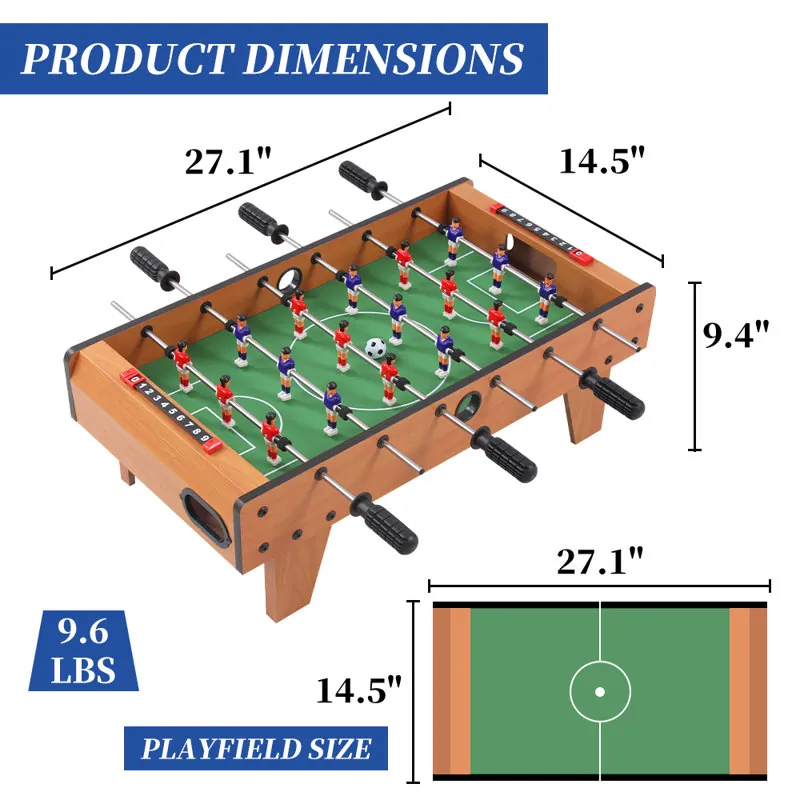
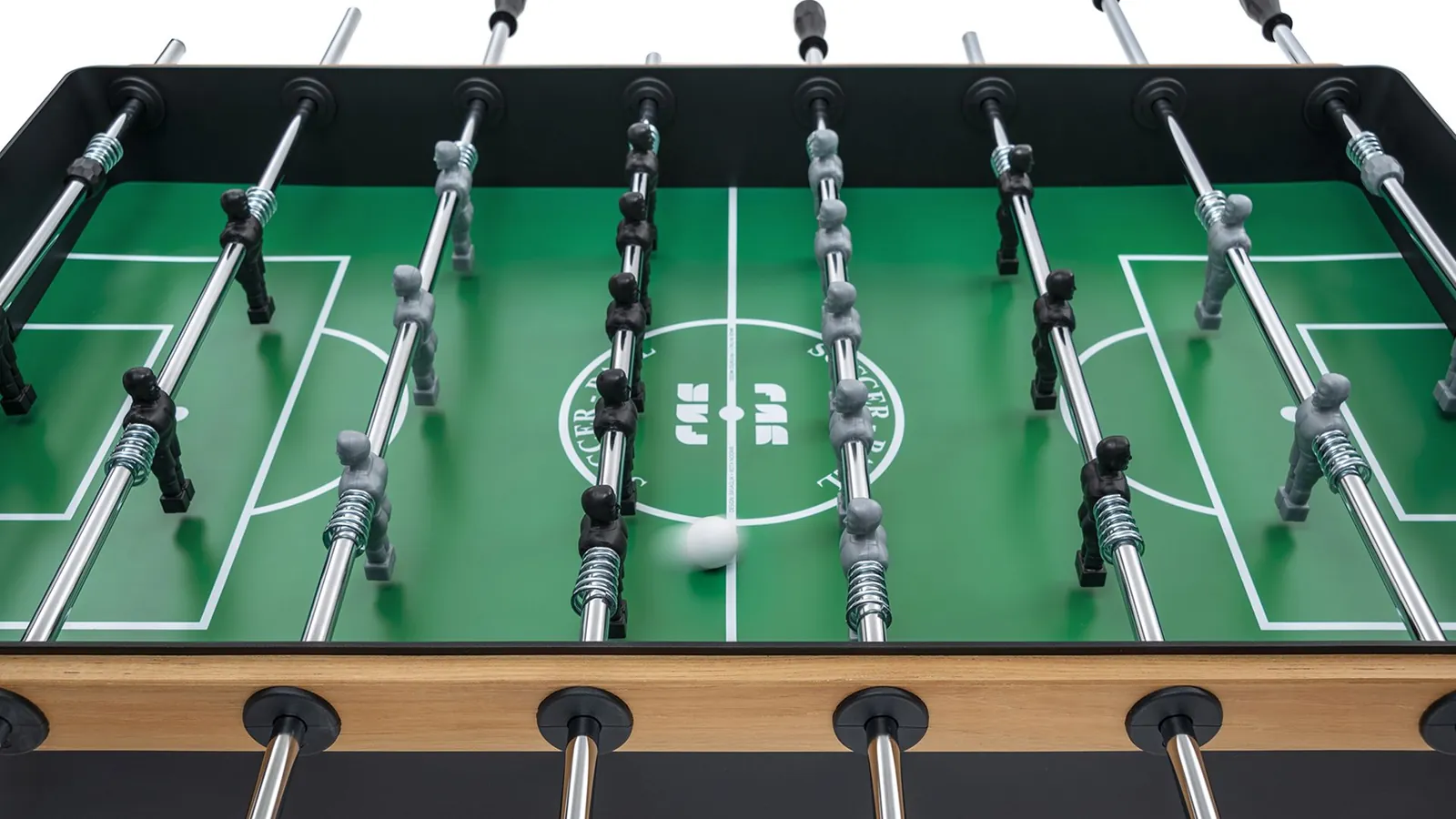
A foosball table is a mechanical game where players rotate rods to kick a small ball into an opponent’s goal. It blends skill with luck, making it popular in bars, man caves, and family rooms. Many people think any table works for casual play, but official tournaments require strict size limits. The International Table Soccer Federation (ITSF) sets these rules to keep games fair.
If you buy a cheap toy version, the rods might be too close or the ball too big. That changes how fast the game feels. Real tables use specific wood or metal builds to handle heavy use. Knowing the difference helps you pick a table that lasts. You want smooth rod movement and a flat playing surface. Cheap tables often warp or stick after a few months.
Standard tournament tables measure 52 inches long by 30 inches wide. This size ensures consistent ball trajectory across all matches. Home versions vary wildly. Some are only 40 inches long. Others stretch to 60 inches. The length dictates the speed of play. Longer tables allow for more precise passing shots. Shorter tables favor rapid, chaotic scoring. Check the product specifications before buying. Don’t assume all rectangular tables are equal.
Rod spacing matters just as much as overall dimensions. Professional tables space men every two inches. Budget models crowd them together. Crowded men cause collisions. Players can’t rotate freely. This leads to jammed rods and broken gears. Look for tables with at least one inch of clearance between figures. This gap allows for clean kicks without interference.
Material quality determines longevity. Cheap plastic rods snap under pressure. Metal rods bend but rarely break. Solid wood tops resist warping better than particle board. Particle board absorbs moisture from spilled drinks. It swells and creates an uneven surface. An uneven surface makes the ball bounce unpredictably. Always choose a solid core top if you plan to host regular games.
The basic method
- Measure your room width and length carefully. Leave at least 3 feet on all sides for player movement.
- Choose between full-size (56x30x27 inches) or mid-size (48x25x23 inches) based on your space.
- Check rod spacing. Standard tables have 9-11 rods per side. Closer spacing means faster play.
- Verify the ball size. Official balls are 28mm diameter. Larger balls make the game slower.
- Assemble the table on a level floor. Uneven legs cause the ball to roll off course constantly.
- Tighten all bolts before first use. Loose hardware leads to wobbling rods and poor control during matches.
- Test the goalie mechanism. It should snap back quickly after each shot. Slow return ruins rhythm.
The single biggest mistake buyers make is ignoring clearance space. A table might fit in the room, but if you can’t stand back comfortably, you’ll hit the wall every time you swing. Always measure twice before ordering.
Foosball table dimensions at a glance
| Situation | What to use | How long | What to watch for |
|---|---|---|---|
| Home Bar Setup | Full-size (56″) | 56″ L x 30″ W | Needs 6ft total width including seating |
| Small Apartment | Mid-size (48″) | 48″ L x 25″ W | Rods may feel cramped for large hands |
| Kids’ Room | Mini-table (36″) | 36″ L x 20″ W | Lower height prevents strain on young arms |
| Tournament Play | ITSF Approved | 56″ L x 30″ W | Strict 27″ height rule for fairness |
| Outdoor Use | Weather-resistant | Varies | Wood warps; choose plastic or coated steel |
These numbers help you match the table to your actual space. Don’t guess. Measure your doorway too. Some full-size tables won’t fit through standard hallways if assembled. Disassemble if needed.
What separates good results from bad ones
Experienced players check the rod alignment before every session. Misaligned rods cause the ball to bounce unpredictably. This isn’t just about fun—it affects scoring accuracy. Beginners often ignore this step until they’re frustrated. Good tables have sealed bearings. Bad ones use open bushings that collect dust and dirt. Dust slows down the rods. You’ll notice sticky movement within weeks. Clean them monthly with a dry cloth. Never use oil unless the manufacturer says so. Oil attracts more grime.
Another detail is the ball grip. High-quality tables use textured balls that stay on the surface longer. Cheap ones use smooth plastic balls that slide off easily. This changes how much control you have. Also, check the goal depth. Shallow goals let the ball pop out too easily. Deep goals make saves harder. Look for tables with reinforced corners. Weak corners crack under impact. A solid build lasts decades. A flimsy one breaks in a year.
Common problems and quick fixes
| What you notice | What it usually means | What to do first |
|---|---|---|
| Ball rolls sideways | Table not level | Adjust leg levelers until ball stays put |
| Rods stick when spun | Dirt in bearings | Clean rods with dry cloth; avoid oil |
| Goal posts wobble | Loose mounting bolts | Tighten bolts with hex key provided |
| Ball pops out often | Shallow goal depth | Accept as design trait; adjust shooting style |
| Noisy clicking sound | Loose screws on frame | Inspect and tighten all visible screws |
Most issues come from neglect or poor assembly. Fixing them takes minutes. Ignoring them ruins the experience. Keep a hex key handy. It’s usually stored in the box. Lose it, and you’re stuck.
The rules that apply
Official play follows ITSF standards. These define exact measurements for competitive tables. International Table Soccer Federation publishes the current rulebook online. Home tables don’t need to meet these rules, but they help understand quality. For example, rod spacing must be consistent. Random spacing creates unfair advantages. Height matters too.
Taller tables change the angle of shots. Local laws rarely regulate foosball tables directly. But safety codes apply if sold commercially. Ensure no sharp edges. Secure heavy tops to prevent tipping. Check local building codes if installing in a public venue. Always verify with your city’s website for specific regulations.
The ITSF mandates that table height sits between thirty-two and thirty-four inches. This range ensures uniform shot trajectories across all professional venues. Deviations above this threshold alter physics significantly. Players must adjust their stance and power output. Consistent rod spacing prevents ball deflection anomalies. Manufacturers often cut corners here to save material costs. Inspect the gap between each rod before purchasing. Uneven gaps cause unpredictable bounces during high-speed rallies. This defect ruins gameplay fairness entirely.
Commercial sales trigger stricter liability requirements. You can’t ignore structural integrity when selling to others. Secure the playing surface firmly to the base frame. Loose connections lead to catastrophic failures during intense matches. A tipping table can injure players or damage property. Sharp edges on metal rods pose laceration risks. Sand down any rough welds or casting flaws. Treat all exposed metal surfaces with protective coatings. This step reduces corrosion and improves grip.
Public installations require additional scrutiny. Municipalities often classify these as amusement devices. Verify zoning ordinances before placement. Some cities prohibit vending machines in certain districts. Others demand specific accessibility features. Consult your local building department early in the planning process. They provide checklists for commercial entertainment equipment. Ignoring these steps results in fines or forced removal. Never assume general business licenses cover recreational gaming hardware. Specific permits are usually necessary for operation.
Keeping it working afterwards
Wipe down the playing surface after each game. Dust and crumbs accumulate there. They scratch the finish over time. Use a microfiber cloth dampened with mild soap. Avoid harsh chemicals that strip the coating. Store the table indoors away from direct sunlight. UV rays fade colors and weaken wood glue. If humidity fluctuates, place silica packs nearby. Moisture warps the frame faster than light does.
If you move it, lift by the base, not the rods. Pulling rods bends them permanently. The metal fatigues at the joints. You’ll feel wobble before you see damage. Re-tighten bolts every six months. Vibration from play loosens them slowly. Use a torque wrench if available. Overtightening cracks the mounting holes. Undertightening causes misalignment during matches. Check the corner brackets first. They bear the most stress.
Replace worn balls only with official sizes. Different sizes ruin balance. A half-millimeter difference changes bounce height significantly. Test new balls on a flat surface first. Roll them to check for straightness. Discard any that wobble or skid unevenly. Inspect the net tension monthly. Loose nets alter shot trajectories unpredictably. Tighten clips until the mesh snaps taut. Don’t stretch it beyond recovery. With care, a good table lasts 10+ years. Neglect kills it in two.
When to use a different approach

If your room width is under 8 feet, skip the full-size table. The standard 9-foot model requires clearance on all sides for a proper stroke. Hitting walls ruins focus and damages cues. A mini-version fits tighter spaces without sacrificing playability. Measure twice before buying.
If you plan to host serious tournaments, invest in an ITSF-approved model. Cheaper tables fail speed tests during high-level play. The cloth tension matters more than looks. Players need consistent roll. Check the certification label inside the frame. This ensures fair competition standards are met.
If you live in a humid climate, avoid wood tables. Moisture causes warping that affects ball trajectory. Plastic or metal resists warping better in these conditions. Look for sealed surfaces if you must use wood. Monitor humidity levels closely regardless of material choice.
Consider electronic tables if you want auto-scoring. Manual tables require paper tracking which slows down games. Electronic systems update scores instantly. They reduce disputes between players. Weigh the cost against convenience. Choose wisely based on your space and goals.
Related guides
Frequently asked questions
How big is a standard foosball table?
A standard table is 56 inches long, 30 inches wide, and 27 inches high. These dimensions allow comfortable standing play. Smaller tables exist for limited spaces. Always check clearance before buying.
Can I use a foosball table outdoors?
Yes, but only if it’s made for outdoor use. Wood warps in rain. Metal rusts. Look for weather-resistant materials like polyethylene. Indoor tables will degrade quickly outside.
Is it safe for kids to play?
Yes, if the table height matches their age. Mini-tables are safer for children under 10. Ensure no pinch points on rods. Supervise younger kids to prevent finger injuries.
How much space do I need around the table?
Leave at least 3 feet on all sides. This allows players to swing rods freely. Less space causes collisions with walls or furniture. Measure your room accurately first.
What happens if the table is uneven?
The ball will roll off course constantly. This makes scoring impossible. Adjust the leg levelers until the ball sits still. Use a spirit level for precision. An uneven table wastes money.
Conclusion
So, check your room layout before buying. You need space to move freely around the table. Measure twice to avoid a tight squeeze during games. Once you find the right fit, you can start playing with friends and family right away. Enjoy the match!