
shocking a hot tub for the first time happens with the cover off and jets running until test strips read 3 to 5 parts per million before anyone enters. The whole process takes between 30 minutes and several hours depending on the chemical you choose.
The exact amount you need changes based on your tub’s total gallon capacity, whether you pick chlorine or non-chlorine shock, and how hard your fill water is. Your owner’s manual lists the precise volume, and that number decides everything else on this page.
Who needs to shock a new hot tub
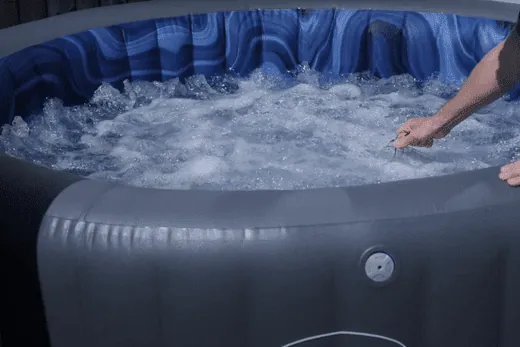
Someone who just filled a brand-new tub with fresh tap water needs this page. They’ve got clean plumbing but no sanitizer history, and they want to know the safe starting dose before the first soak. They don’t need advice about cloudy water from heavy weekend use or fixing a neglected spa that sat empty all winter.
A second person typing this owns a used hot tub they just bought or inherited. Their real problem isn’t a first-time shock; it’s stripping out whatever chemicals the previous owner left behind. That job requires draining, wiping down the shell, and refilling before any shock goes in. This page won’t solve their problem.
A third reader has been using their tub for months but never shocked it, and now the water smells wrong. They’re looking for a rescue treatment, which uses different doses than an initial one. They should look for guides specifically about clearing cloudy spa water instead.
This page serves the first reader: someone with a freshly filled, newly installed hot tub who needs the baseline procedure. It assumes you’ve already balanced your pH and alkalinity, because shocking water that hasn’t been balanced wastes the chemical. If your water chemistry isn’t set yet, fix that first.
What changes your shock dose
Your tub’s total water volume is the single biggest factor. A 300-gallon portable spa needs roughly half the chemical a 600-gallon model does. Check the specifications page in your owner’s manual for the exact gallon count, since guessing here means you’ll either under-treat the water or burn through sanitizer too fast.
The type of shock you buy dictates both the dose and the waiting time. Dichlor (chlorine) shock works fast and raises your actual sanitizer level, but you can’t soak until the reading drops back to 3–5 ppm.
Non-chlorine shock (potassium monopersulfate, or MPS) oxidizes waste without spiking chlorine levels, letting you get in after about 30 minutes. However, MPS doesn’t sanitize on its own, so you still need a separate chlorine or bromine feeder running. If you want to soak tonight, use MPS; if you want to build a true sanitizer baseline, use dichlor.
Water temperature shifts how quickly the chemical dissolves and burns off. At a standard 100°F to 104°F, dichlor dissipates faster than it would in cold water. If you’re filling the tub with unheated tap water and shocking it before turning the heater on, expect the process to take longer. Turn the heater on while the jets run so the water reaches operating temperature during the shock.
Source water quality matters more than people realize. Well water often carries dissolved metals like iron or manganese. Hitting metal-heavy water with a strong chlorine shock can turn the tub brown or green instantly. If you’re filling from a well, test for metals first or run the water through a pre-filter hose attachment before it enters the tub. Municipal tap water usually skips this step safely.
The factor people get wrong most often is confusing total volume with physical size. A six-person tub doesn’t always hold twice what a two-person tub holds. Always use the printed gallon figure, not the seating capacity.
Steps to shock a new hot tub
Follow these actions in order. Each step relies on the one before it being finished.
- Fill the tub completely. Use a garden hose with a pre-filter attached if you’re on well water. Fill it to the line marked inside the skimmer well, which ensures the pump doesn’t pull air.
- Turn on the power and run the jets. Set the pump to high speed. You need the water moving fast enough to pull the chemical from the surface down through the entire plumbing loop. Leave the cover off.
- Test and balance the water. Dip a test strip in the water. Adjust the pH to sit between 7.2 and 7.6 using a pH increaser or decreaser. If your pH is above 7.8, the shock you add next will lose most of its strength immediately.
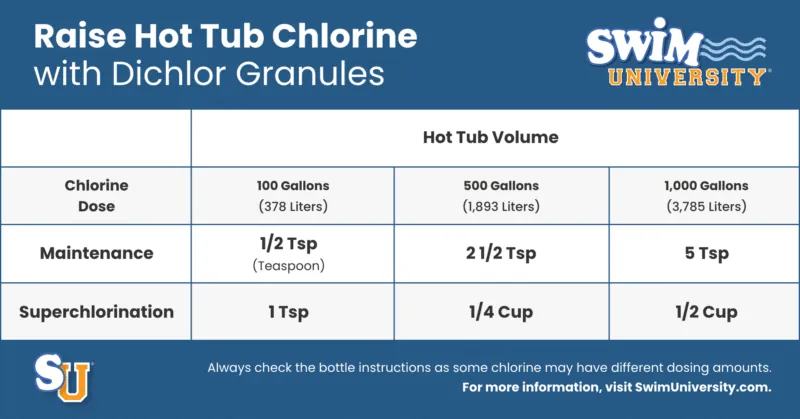
- Measure the shock. For dichlor granules, measure exactly 2 ounces (about 4 tablespoons) for every 500 gallons of water your manual says the tub holds. Pour the powder into a dry plastic cup—never guess by pouring straight from the bottle.
- Broadcast the granules. Sprinkle the measured shock evenly across the surface of the moving water. Don’t dump it in one pile near the skimmer, as concentrated chlorine can bleach the acrylic shell.
- Let the jets run uncovered. Keep the pump on high for at least 20 minutes. Leaving the cover off allows the chemical gases (chloramines) to escape into the air instead of collecting under the lid and degrading your pillows or vinyl.
- Test the sanitizer level. After 20 minutes, dip a fresh test strip. For dichlor, you’re looking for a reading above 5 ppm. If it’s below 3 ppm, your water had more organic demand than expected, and you’ll need to add another half-dose.
- Wait for the level to drop. Don’t get in until your test strip reads between 3 and 5 ppm. With the jets running and the cover off at 100°F, this usually takes 2 to 4 hours.
- Close the cover. Once the water tests safe, turn the jets off and put the cover back on to hold the heat.
The judgment call that separates a proper first shock from a rushed one happens at step 7. If your test strip shows zero free chlorine after the first dose, the water consumed it all fighting unseen contaminants. Add another half-dose and wait again. Don’t assume the first scoop did the job just because the water looks clear.
If handling pool chemicals causes skin irritation or breathing issues, stop and hire a local pool service company to handle the startup.
Situations and shock choices
Different water conditions call for different products and timelines. Match your setup to the row below to see what you actually need to buy and how long you’ll be waiting.
| Your situation | Product to use | Time until you can soak | Watch out for |
|---|---|---|---|
| Fresh municipal tap water | Dichlor granules | 2 to 4 hours | High pH blocking the shock |
| Fresh well water | Dichlor (with metal sequester) or MPS + Sanitizer | Varies | Metals turning water brown |
| Prefilled dealer delivery | Dichlor granules | 2 to 4 hours | Unknown prior chemical mix |
| Saltwater system tub | MPS (non-chlorine) | 30 minutes | Cell damage from extra chlorine |
| Bromine-fed tub | Dichlor granules | 2 to 4 hours | Mixing bromine tabs directly |
| Indoor enclosed room | MPS (non-chlorine) | 30 minutes | Chlorine gas buildup indoors |
Dichlor is the standard choice for outdoor tubs filled with city water because it establishes a true chlorine baseline. MPS is the safer bet for indoor setups where ventilation is poor, or for saltwater systems where overloading the cell with extra chlorine shortens its life. If your water comes from a well, the trade-off is clear: MPS avoids metal staining, but you’ll have to rely entirely on your primary sanitizer to keep bacteria away since MPS only oxidizes.
Getting the details right

Preparing the water first
Adding shock to unbalanced water wastes the chemical. Chlorine becomes drastically less effective as pH rises. At a pH of 8.0, only about 20% of your chlorine is actively sanitizing. Drop the pH to 7.4 before you open the shock bottle. Test strips are fine for daily checks, but a liquid drop test kit gives you tighter numbers for this first setup. Read the color block against a white background in natural light.
Don’t pour shock into cold, stagnant water. The pump must be running on high speed. If your tub has a two-speed pump, switch it manually to high. Low speed won’t push the granules through the return jets fast enough, leaving concentrated pockets that can etch the floor of the shell.
What to leave alone
Keep the ozonator or UV-C bulb running if your tub has one, but don’t rely on them to replace the shock. They kill pathogens as water passes through the pipe, but they leave no residual protection in the main basin.
Never mix shock types in the same bucket. Scooping dichlor into a container that held MPS residue can cause a chemical reaction. Use a dedicated, dry measuring cup for each product, or wash and dry it completely between uses.
Don’t add clarifiers, defoamers, or scented oils during the first shock. Let the sanitizer work on plain water. Introducing other chemicals creates competing reactions that make your test strips unreadable. Wait at least 24 hours after the shock clears before adding secondary treatments.
Hot tub shock problems and fixes
Things go wrong when measurements are guessed or steps are skipped. Here is what you’ll actually see, why it happens, and how to correct it.
| What you notice | What it usually means | What to do first | How to stop it happening again |
|---|---|---|---|
| Water turns cloudy white | Too much shock added | Run jets uncovered for 2 hours | Measure with a cup, don’t pour |
| Brown or rust-colored water | Metals reacting with chlorine | Add a sequestering agent | Filter well water before filling |
| Strong bleach smell lingering | Chloramines trapped under cover | Remove cover, run jets high | Always shock with the cover off |
| Test strip stays yellow | pH was too high during shock | Lower pH to 7.4, retest | Balance pH before adding shock |
| Skin feels slimy after soaking | Bacteria survived low shock dose | Drain, wipe shell, refill | Verify 3-5 ppm before entering |
| Acrylic floor looks dull | Granules sank without dissolving | Stop using, polish gently | Broadcast evenly over moving water |
If the water turns brown, don’t panic and drain it immediately. Iron in the water oxidized when it hit the chlorine. A sequestering agent binds the metal so the filter can catch it. But if the water smells like rotten eggs or turns black, stop. That points to bacterial contamination or severe mineral issues that require a full drain and professional inspection. Don’t try to chemically fix black water yourself.
Chemical safety rules
Handling concentrated spa chemicals falls under basic hazardous material guidelines. The US Consumer Product Safety Commission (CPSC) warns against storing pool and spa chemicals near flammable materials or mixing different products together, as doing so can release toxic gases or cause fires.
Always read the specific label on your shock container. The manufacturer prints the legal handling requirements there, including whether gloves or eye protection are needed. Never store dichlor granules in a damp shed where moisture can reach the bucket; wet chlorine powder can spontaneously combust or release chlorine gas.
Local regulations dictate how you dispose of heavily chlorinated water. You generally can’t drain a freshly shocked tub directly into a storm drain or a street gutter, as the high chlorine concentration harms local waterways. Check your municipal water authority’s website for their specific discharge limits before draining anything stronger than normal tap water.
If you spill a large amount of shock powder, don’t sweep it, as this creates hazardous airborne dust; carefully scoop it up with a plastic shovel or dampen it slightly with water to suppress dust before disposal according to local regulations. If you feel unsure about handling a spill safely, contact your local fire department’s non-emergency line for disposal instructions.
What shocking actually costs
The financial cost of shocking a hot tub is small compared to the time it takes. A standard bucket of dichlor granules is inexpensive relative to the alternative and will last a typical tub for many treatments. For a single first-time shock, you’re spending very little in chemical.
Time is your real currency here. Measuring, balancing, broadcasting, and waiting takes about 30 minutes of active work, followed by 2 to 4 hours of passive waiting if you use chlorine. If you choose non-chlorine MPS shock, the chemical itself costs slightly more per ounce, but you cut the waiting time down to 30 minutes.
The hidden cost is wasted chemical from bad preparation. If you skip testing the pH and shock water sitting at 8.2, the chlorine burns off doing nothing useful. You’ll then have to buy more shock and start over. A pack of test strips is inexpensive relative to the alternative. Using one before you pour saves you from dumping expensive powder into dead water.
Energy costs rise slightly because you must run the pump on high speed with the heater on while the cover is off. You’re losing heat to the air while paying to circulate the water. Doing this in the evening when the outside air is cooler will cost more in heating than doing it on a warm afternoon.
Keeping the water clear after
Once that first shock clears and you’ve taken your first soak, the tub needs a steady, lower level of sanitizer to stay clean. Shocking is a reset button, not a daily routine. Maintain a constant free chlorine level of 3 to 5 ppm (or 4 to 6 ppm for bromine) using a floating dispenser or an automatic feeder.
You’ll need to shock again on a schedule. For a tub used two or three times a week by a couple, shocking once every seven days keeps organic waste from building up. If four or more people use it on a weekend, shock it immediately after the last person gets out. The sign that you’ve waited too long is water that looks slightly dull or loses its sparkle even when the sanitizer level tests fine.
Keep your filters clean. Pull the cartridge out regularly and rinse it with a hose. If the pleats are clogged with body oils, the shock you add won’t circulate properly. Replace the cartridge entirely as needed depending on use, following the authority of the owner’s manual.
Write down the date you shocked the tub and the dose you used in a notebook kept near the equipment panel. When the water acts up later, that log tells you if you under-dosed or forgot a week.
When shocking isn’t the answer
Shocking fixes organic buildup and resets sanitizer levels, but it doesn’t solve mechanical or structural problems. If your water stays cloudy after shocking, filtering, and balancing, the issue might be a failing pump impeller or a cracked filter housing that’s bypassing dirty water back into the tub. No amount of chemical will fix broken hardware.
If the water smells strongly of sulfur or rotten eggs immediately after filling, your source water contains hydrogen sulfide. Shocking it will create a mess. You need a carbon pre-filter on your garden hose before the water ever touches the acrylic shell.
When the tub has sat empty and dry for months, the plumbing lines harbor biofilm that a standard shock won’t penetrate. You need a dedicated line-flush product designed to break down biofilm, run through the jets for 20 minutes, and then drained completely before you refill and shock.
Flushing plumbing lines involves managing contaminated water discharge; if you aren’t sure how to do this without flooding your yard or damaging the pump seals, hire a certified spa technician to perform the flush.
Related guides
- 5 Best Inflatable Hot Tub for Winter Picks for Cold Weather in 2026
- 10 Best Space Heaters for Hot Yoga: Our Expert Picks
- 10 Best Space Heaters Not Hot to Touch for Safe Heating
Frequently asked questions
Can I use household bleach to shock my hot tub?
No, you shouldn’t. Household bleach contains fillers and surfactants not meant for heated spa water, and unlike stabilized dichlor, it lacks cyanuric acid, causing it to dissipate rapidly in sunlight or hot water. It also makes calculating the exact ppm nearly impossible. Stick to spa-grade dichlor or MPS.
How long does it take for shock to work?
Dichlor shock takes 2 to 4 hours to drop back to a safe 3–5 ppm level in a 400-gallon tub running at 100°F with the cover off. MPS non-chlorine shock takes about 30 minutes to fully dissolve and oxidize waste before you can enter. Colder water extends both times.
Why is my water cloudy after shocking?
Cloudiness right after shocking usually means you added too much chemical at once, or your pH was too high when you poured it in. Run the jets on high with the cover off for 2 hours. If it doesn’t clear, check your filter cartridge for clogs.
Is it safe to get in right after adding shock?
No. You must wait until a test strip confirms the sanitizer level has dropped to 3–5 ppm for chlorine, or wait 30 minutes for MPS. Entering water with 10+ ppm of chlorine will irritate your eyes, skin, and lungs. Always test before stepping in.
What happens if I put too much shock in?
Over-shocking spikes the chlorine level dangerously high, which can bleach your swimsuit, irritate your skin, and degrade the rubber seals in your pump over time. Leave the cover off, run the jets on high, and wait. Don’t add neutralizer chemicals unless the level stays above 10 ppm after 6 hours.
Does it matter if the cover is on or off?
Yes, it matters significantly. You must leave the cover off while shocking. The chemical reaction releases chloramine gases. If the cover is closed, those gases collect underneath, degrading the vinyl headrests and creating a harsh breathing hazard when you finally open it.
How often should I shock a brand new tub?
After this very first startup shock, shift to a maintenance schedule of once a week. If the tub is used heavily by multiple people on a single day, shock it again that evening after everyone is done. Light use by one person might stretch to every ten days.
Can I shock the tub while people are inside?
Never add shock while anyone is in the water. Concentrated granules sinking through the water column can cause immediate chemical burns to skin. Everyone must exit the tub before you measure and broadcast the chemical.
Starting your hot tub right
Measure your tub’s exact gallon capacity from the manual, balance the pH to 7.4, and broadcast the correct dose of dichlor over the moving water with the cover off. If the water turns dark or smells like sulfur, stop adding chemicals and call a licensed spa technician immediately.