
To get rid of mold in cabinets, empty them completely and scrub the wood with undiluted distilled white vinegar. Trapped moisture from a hidden pipe leak or high indoor humidity is the most common cause. Let the surface dry completely before putting any items back inside.
Why mold gets into your cabinets
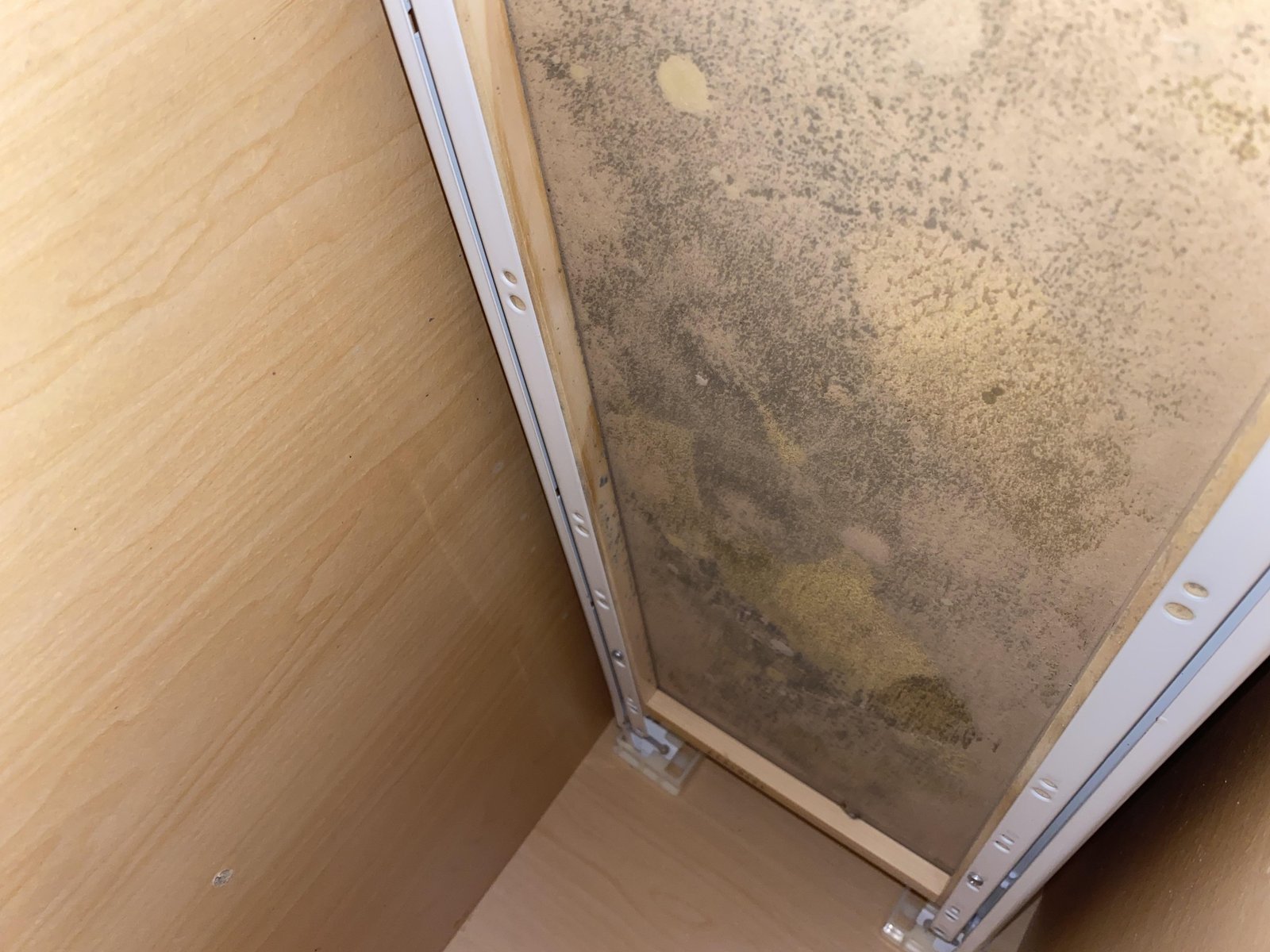 Photo: www.reddit.com on Google
Mold grows inside dark spaces when it finds moisture and organic food. Cabinets offer both because wood, particle board, and dust give mold spores an easy food supply. When cooking steam rises or plumbing leaks under a sink, warm air carries water vapor into the dark corners. Because cabinet doors stay shut most of the day, that moisture can’t escape. High indoor humidity makes the problem spread across shelves quickly. The issue also starts when wet dishes get stacked on wood surfaces before drying. If an exterior wall behind the unit lacks proper insulation, cold spots form condensation along the back panels. Without dry air moving through the space, fungal spores germinate and multiply.
Spray with undiluted white vinegar
This fix is for light surface growth on sealed wood or laminate shelves. Don’t water down the liquid; pour 2 cups of standard 5% white distilled vinegar straight into a clean spray bottle. Spray the cabinet walls, shelf surfaces, and corners until damp. Leave the liquid alone for 60 minutes so the acid breaks down the fungal roots. Next, take a clean microfiber cloth and scrub the spots away. Wipe the whole area with a second cloth rinsed in warm water. Point a box fan directly at the open cabinet for 2 hours to dry the wood completely. You’ll know it worked when the dark spots vanish and the wood feels smooth. For mold cleanup limits, follow the EPA guide for mold cleanup, which recommends hiring a professional if mold covers more than 10 square feet.
Scrub with baking soda and dish soap
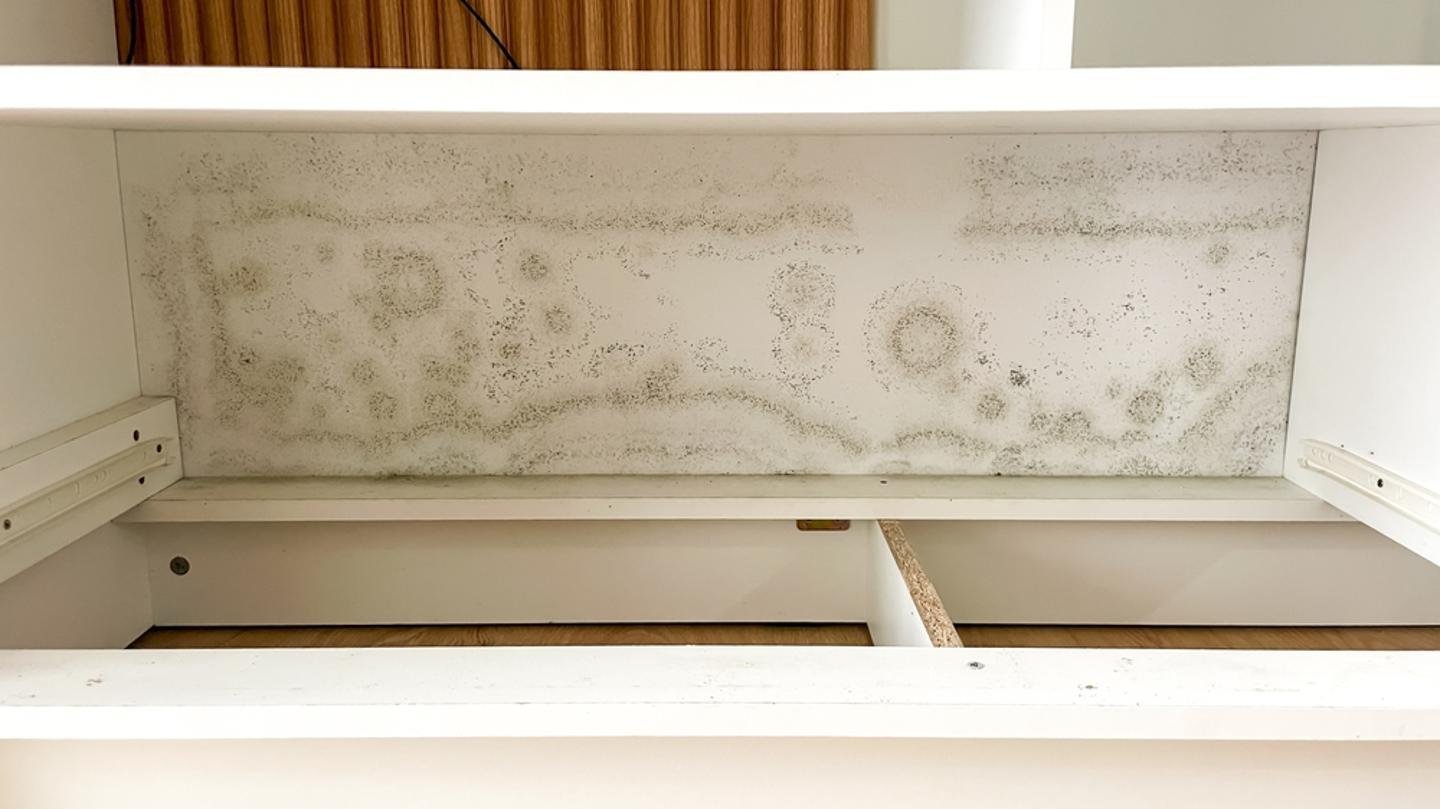 Photo: www.servpro.com on Google
This method is for textured wood, stubborn stains, or cabinets with heavy grease buildup near the stove. The trade-off is that it requires more physical elbow grease than a simple spray, but it removes grime without harsh fumes. Mix 1 tablespoon of mild liquid dish soap, 1 cup of warm water, and 1/2 cup of baking soda in a small bowl until it forms a loose paste. Apply the paste directly to the patches using a medium-bristle nylon brush. Scrub gently in small circles so you lift the spores without scratching the cabinet’s finish. Wipe away the paste using a damp rag. If the growth is light, use Fix 1; if the surface feels sticky or greasy, use this paste instead. Check the wood when dry: it should have no powdery texture left behind.
Sand bare wood and apply mold-killing primer
This fix is for heavy, deep growth on unfinished wood or raw particle board. If the cabinet wood feels soft or squishy when you press it with a thumb, the panel is rotted; stop here and replace the board entirely. For solid wood with deep stains, put on an N95 mask and rubber gloves. Sand the affected area using 120-grit sandpaper to remove the embedded surface fibers. Vacuum up all loose dust with a HEPA vacuum. Brush on 1 even coat of an oil-based, stain-blocking mold-killing primer. Allow it to dry for 24 hours. This job takes serious time and creates dust, so it isn’t worth doing on cheap, warped particle board that costs less to replace. It worked if the primer covers the stains without peeling.
What not to do
- Don’t use chlorine bleach on bare or unsealed wood. Bleach can’t soak into porous wood to kill deep roots, leaving water behind that feeds new growth.
- Never paint directly over active spots without cleaning. The spores will eat through the fresh paint layer within weeks and bubble the surface.
- Don’t close cabinet doors while shelves are still wet. Trapping cleaning moisture inside restarts the growth cycle right away.
- Never leave wet dishcloths or damp sponges inside closed sink bases. That trapped water evaporates and condenses on upper panels.
How to stop it happening again
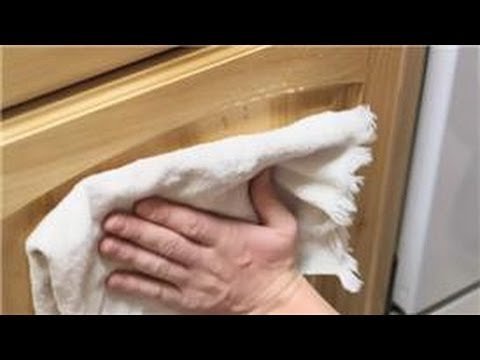 Photo: www.youtube.com on Google
Stop recurring moisture by changing your daily habits around the kitchen and bathroom cabinets.
| If you’re doing this | Do this instead | Why |
|---|---|---|
| Storing damp plates inside cupboards | Air-dry dishes on a counter rack | Trapped water droplets create localized humidity pockets |
| Keeping cabinet doors shut during cooking | Run an exhaust fan and vent the room | Cooking steam migrates inside cooler cabinet frames |
| Ignoring slow under-sink pipe drips | Tighten slip nuts or place an absorbent mat | Small leaks keep the base cabinet floor constantly wet |
| Storing open cleaning liquids inside | Seal every bottle cap tightly | Evaporating liquid chemicals raise base cabinet moisture |
| Pushing dry food boxes tight against back walls | Leave a 1-inch gap along the back panel | Blocked airflow encourages moisture along cold exterior walls |
Frequently asked questions
Can mold in cabinets make you sick?
Yes, it can trigger allergic reactions, sneezing, coughing, or eye irritation in sensitive people. Spores release allergens and irritants into your breathing air whenever you open the doors. People with asthma or weakened immune systems face higher risks and should avoid cleaning large patches themselves.
Why does mold keep returning to the same cabinet?
The hidden water source hasn’t stopped. Even if you clean the visible surface spores completely, any remaining plumbing drip, exterior wall condensation, or high room humidity gives new airborne spores the water they need to grow back in the exact same spot.
Is rubbing alcohol effective against cabinet mold?
Yes, 70% isopropyl alcohol kills surface spores on non-porous cabinets. Spray it straight onto the wood and let it sit for 10 minutes before wiping. However, don’t use it near gas stoves or open flames because the fumes ignite easily.
What happens if you leave mold in kitchen cabinets?
The fungus rots the wood panels over time and spoils unprotected food. It weakens shelf joints, creates sour odors, and spreads to clean dishes. Letting the problem sit also makes the spores spread behind walls, which costs far more to fix later.
How long does vinegar take to kill cabinet mold?
60 minutes is the standard resting time for household vinegar. The mild acetic acid needs that hour to break down the mold membrane and penetrate shallow wood pores. Wiping it off immediately reduces its effectiveness against tough roots.