
You can stop dog chewing by providing appropriate outlets for natural behavior and removing access to forbidden items until your pet learns the difference. This approach relies on consistent redirection and the use of positive reinforcement to reward your dog for interacting with its own toys instead of household goods.
Your success depends on your dog’s age, its current habit levels, and the time you spend on active training daily. These three factors determine how quickly you see results.
Managing Your Dog’s Environment
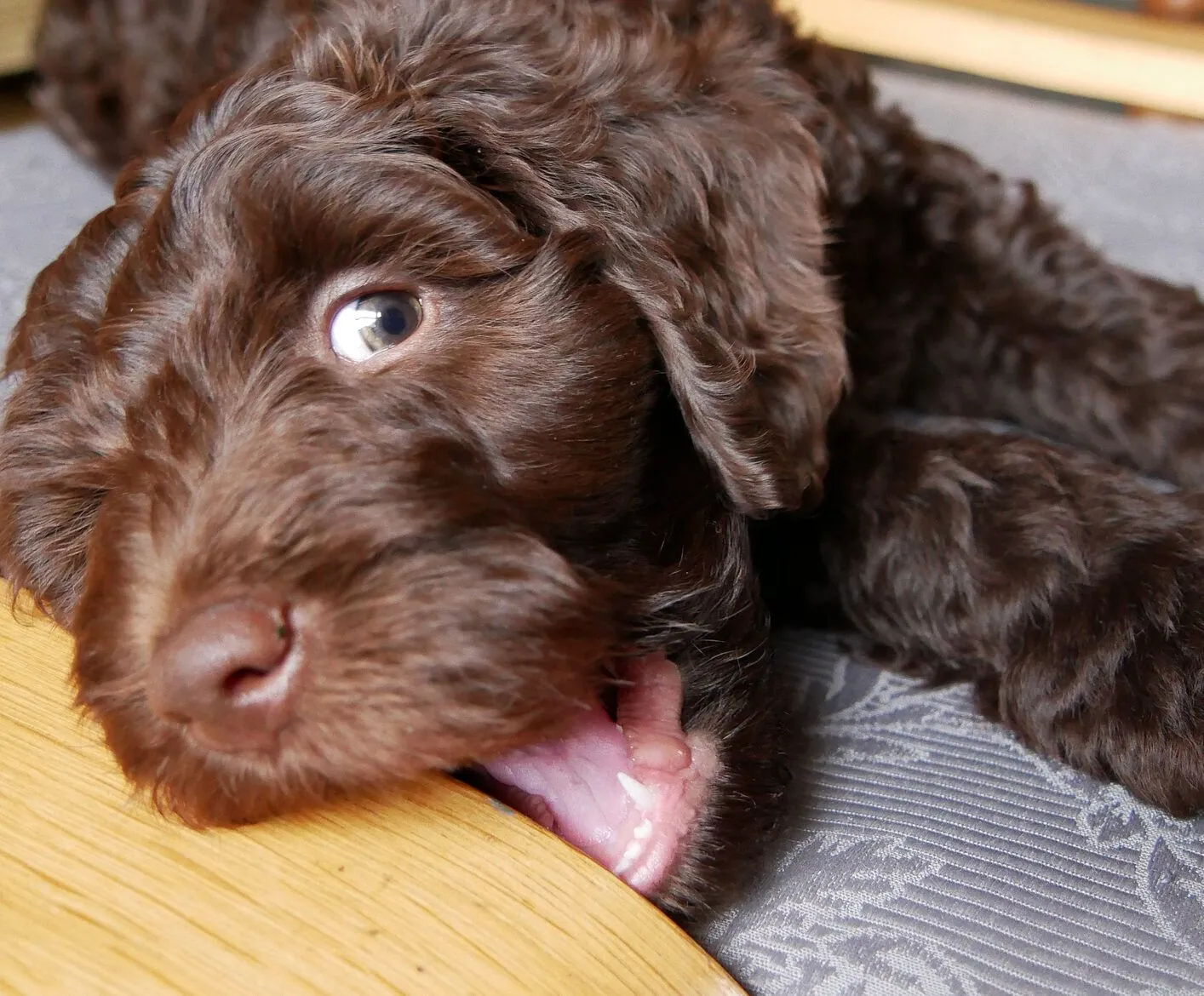
If you want to protect your home, you must manage the space your dog occupies when you aren’t supervising. A common mistake is leaving a young dog free to roam the entire house, which creates endless opportunities for destructive behavior. This choice costs you furniture, baseboards, and potentially the health of your dog if it swallows dangerous materials.
If your dog is still a puppy, you should use a crate or a puppy-proofed playpen during times you can’t watch it directly. If the dog is an adult, you can use baby gates to limit it to a single room with its own toys. This setup prevents the dog from practicing the habit of chewing on your belongings.
You must clear the floor of shoes, socks, and power cords before you leave the area. If the dog can’t reach these items, it will have fewer opportunities to practice the behavior, though you must still provide appropriate outlets to satisfy its natural urge to chew.
Training Steps to Stop Dog Chewing
- Buy at least three different types of durable dog toys, such as rubber rings, rope knots, and treat-dispensing puzzles.
- Watch your dog closely while it’s in a room with access to both toys and furniture.
- If the dog starts to chew a forbidden item, immediately interrupt it with a calm, firm “no” or “leave it.”
- Replace the forbidden item with one of its own toys the moment it drops the first object.
- Offer praise or a small food reward the second the dog begins chewing on the toy.
- Repeat this process every single time you see the dog choose an item that isn’t a toy.
- Increase the amount of physical exercise and mental play if the dog remains restless.
- Check the dog’s mouth for signs of loose teeth or gum redness, as the American Veterinary Medical Association notes that dental discomfort often triggers excessive chewing.
- Keep a record of how many times you have to redirect the dog to track progress over a two-week period.
Consistency is the single judgment call that determines success. If you allow the dog to chew a shoe once, it will continue to try for that shoe again. You must treat every single attempt the same way to ensure the dog learns the rule.
Factors That Change Your Strategy
The breed of your dog often changes its need for physical activity. A high-energy working breed will need more intense exercise, like running or fetch, to tire it out enough to stop destructive chewing. You can check your specific breed’s activity requirements through your local breed club or breeder documentation.
Your dog’s age also dictates its needs. A teething puppy needs soft, soothing items to relieve gum pressure, while an adult dog needs harder, longer-lasting chews to satisfy its jaw strength. If you give a puppy a toy that’s too hard, it may stop playing with it entirely.
Finally, the amount of time you spend on training matters more than the quality of the toys. A dog that’s left alone for eight hours without mental stimulation will find ways to entertain itself. If you can’t provide this time, you must hire a professional dog walker to break up the day.
Comparing Chewing Solutions
| Situation | Action to Take | Investment | What to Watch For |
|---|---|---|---|
| Teething puppy | Offer cold rubber toys | High time | Broken baby teeth |
| Bored adult dog | Increase daily exercise | Moderate effort | Weight gain |
| Separation anxiety | Use calming pheromones | High cost | Excessive barking |
| Destructive habit | Strict supervision | High effort | Damaged furniture |
| Nutritional deficit | Consult your veterinarian | Low cost | Abnormal appetite |
When selecting a solution, prioritize the root cause over the immediate damage. Cold rubber toys work for teething because they soothe inflamed gums, but they fail to address the psychological restlessness of an adult dog. If you offer a toy to a bored dog, they will likely ignore it once the novelty fades.
Exercise serves as a physical release for energy that would otherwise turn into destructive chewing. However, monitor your dog’s weight closely during this transition. If they continue to chew despite increased activity, the issue is likely rooted in anxiety rather than a lack of movement.
Pheromones offer a chemical signal of safety, which is essential for dogs suffering from separation anxiety. These tools are ineffective if the dog is simply bored or under-stimulated. Always observe if the chewing happens while you’re away or only when you’re present.
If a dog begins eating non-food items like drywall or fabric, skip behavioral training and see a vet immediately. This often signals a nutritional deficiency or a medical condition requiring intervention. You can’t train away a biological need, so rule out health issues before assuming the habit is purely behavioral.
Achieving Consistent Results
Maintaining Focus
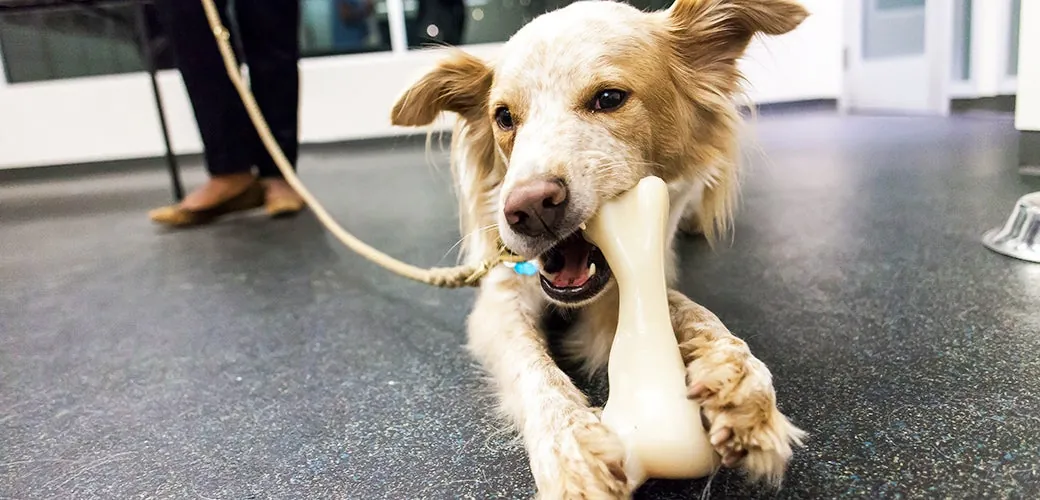
Experienced owners prepare for chewing by rotating toys every few days to keep the dog interested. Beginners often leave all toys out, which makes them boring and encourages the dog to look for “new” items like your furniture. Consider rotating your dog’s toys periodically to maintain interest.
Setting Clear Boundaries
Successful trainers never punish a dog for chewing after the fact. If you find a shoe destroyed an hour later, the dog won’t link your anger to the chewing. You must catch the dog in the act to teach it what is wrong.
Common Chewing Issues
| What you notice | What it usually means | What to do first | How to stop it |
|---|---|---|---|
| Chewing wood | Needs hard chews | Provide nylon bone | Supervise closely |
| Chewing shoes | Seeking your scent | Put shoes away | Increase play time |
| Chewing rugs | Lack of exercise | Add daily walk | Use puzzle toys |
| Chewing walls | Separation stress | Use baby gates | Hire a sitter |
| Chewing own fur | Skin irritation | Check for fleas | Visit your vet |
When your dog targets wood, they’re often mimicking the resistance of a branch. If you ignore this, they will move to baseboards or furniture legs. Providing a nylon bone satisfies this physical need for density without damaging your home.
Shoes carry your pheromones, making them a comfort object when you’re absent. By increasing active play, you burn off the nervous energy that drives this attachment. If the dog is exhausted, the urge to seek out your scent for comfort diminishes significantly.
Rugs often suffer when a dog is bored. They’re investigating textures because they lack mental stimulation. Puzzle toys force them to solve a problem, which tires their brain faster than a walk alone.
Wall chewing is a red flag for severe anxiety. It suggests the dog is trying to create an exit or cope with isolation. Using baby gates provides a smaller, more secure space that feels less overwhelming.
Finally, fur chewing is a medical signal. It’s rarely a behavioral habit. If you see bald patches or redness, don’t attempt training. A vet visit is the only way to rule out allergies or parasites that cause persistent itching.
Rules for Household Safety
You must ensure that all toys you provide are large enough that the dog can’t swallow them. If you’re unsure about the size, follow the “fist rule”: if a toy fits entirely inside your closed hand, it’s likely too small and poses a choking hazard.
If you choose to use bitter sprays to discourage chewing on furniture, check the label to ensure it’s safe for pets. Never apply these sprays to the dog’s face or body. If the chewing persists after you have tried these methods, it’s time to stop DIY attempts and contact a certified professional dog trainer. A professional can identify if the behavior is a sign of a deeper anxiety issue rather than just a habit.
Managing the Costs of Training
You don’t need to spend significant money to stop this behavior, as the cost is mostly in your time and consistency. High-quality rubber toys are inexpensive compared to the cost of replacing damaged furniture. You should expect to replace these periodically if your dog is a heavy chewer.
If you choose to hire a trainer, the cost is modest compared to the expense of replacing furniture. Most behavioral issues improve within several weeks of daily, consistent practice. If you find that the cost of replacing furniture is higher than the cost of a few training sessions, the investment usually pays for itself.
Keeping Your Home Damage-Free
Once the chewing stops, you must maintain the routine to prevent a relapse. If you notice the dog starting to nudge at your shoes again, return to strict supervision for one week. This “refresher” period keeps the boundaries clear.
You should store all forbidden items in closed cabinets or high shelves that the dog can’t reach. If you see the dog interacting with a forbidden item, redirect it to a toy immediately. Never wait to see if it will stop on its own, as this reinforces the behavior.
Physical barriers serve as your first line of defense. By removing the temptation entirely, you eliminate the opportunity for the dog to practice destructive habits. If an item can’t be moved, apply a bitter-tasting deterrent spray designed for pets to the surface. This creates an unpleasant association that discourages future interest.
Consistency matters because dogs often struggle with generalization. A dog might learn that a specific sneaker is off-limits but remain confused about other footwear. Keeping all shoes behind closed doors removes this ambiguity. When the environment remains predictable, the dog spends less time searching for ways to cause damage and more time resting.
When to Seek Other Methods

If your dog is chewing because of extreme separation anxiety, standard redirection won’t work. You’ll notice the dog pacing, whining, or destroying doors when you leave. In this case, you must consult a veterinary behaviorist rather than just using toys. These professionals can identify if your dog’s distress requires medical intervention or a structured desensitization plan that goes beyond basic training.
If your dog is chewing because it’s hungry, you should check with your vet to ensure its diet is balanced. A dog that isn’t getting enough nutrients may look for other things to eat. Always rule out medical issues before you assume it’s a behavioral problem.
Persistent pica, or the compulsive consumption of non-food items like rocks or fabric, often signals an underlying health crisis. If your dog ignores food to target specific household objects, don’t wait for the behavior to resolve on its own.
A physical examination can reveal internal parasites or metabolic imbalances that cause these cravings. When the root cause is biological, no amount of redirection training will stop the cycle. Addressing the physical health of your dog is the only path to safety.
Related guides
- Hisense TV Turns On by Itself: 6 Fixes to Stop the Problem
- Start stop circuit what they are where they are used and how to wire
Frequently asked questions
How long does it take to stop a dog from chewing?
It takes about 3 to 6 weeks of consistent daily training to see a significant change in your dog’s habits. This assumes you’re providing enough exercise and supervising the dog closely during the entire learning period.
Can I use punishment to stop my dog from chewing?
No, punishment is ineffective because dogs can’t connect a past action to a later reaction. You must catch the dog in the act and redirect it to a toy to show it what behavior you want to see.
Is it safe to leave my dog alone with a chew toy?
It’s only safe if you have tested the toy while you were present for several days first. You must ensure the dog can’t break off pieces or swallow the toy before you leave it unsupervised for any amount of time.
How often should I replace my dog’s chew toys?
You should replace toys as soon as they show signs of cracking, fraying, or losing pieces. Replace toys as soon as they show signs of wear, cracking, or fraying, regardless of how long you have owned them.
What happens if my dog swallows a piece of a toy?
You should call your veterinarian immediately if you suspect your dog has swallowed a piece of a toy. The risk of intestinal blockage is high, and your vet can advise you on the next steps based on the material and size.
Does the breed of my dog affect how much it chews?
Yes, high-energy working breeds require more physical exercise and mental stimulation to prevent destructive chewing. You can verify your breed’s specific needs through local kennel club resources or a professional trainer.
Conclusion
Start your training by removing all forbidden items from the dog’s reach today. With consistent redirection, you’ll eventually see the dog focus more on its own toys. If the dog begins to chew on walls or wires, stop your efforts immediately and contact your veterinarian for help.
