
Voltage is the electrical pressure that pushes electrons through a circuit, measured in units called volts. You can think of it like the pressure in a water pipe that forces water to flow from a high point to a low point. When there’s more of this potential difference between two points, the force driving the current becomes stronger.
The most important factor is the difference in electrical potential. If the potential difference is high, more energy is available to move electrons through a conductor. If the difference is zero, no current flows.
The most common mistake people make is confusing voltage with current. They often think that a high-voltage source always means a high-current flow. In reality, a high-voltage source might produce very little current if the resistance of the path is extremely high. Always check your equipment’s label to see what it’s rated for before you plug it in.
Steps for testing voltage
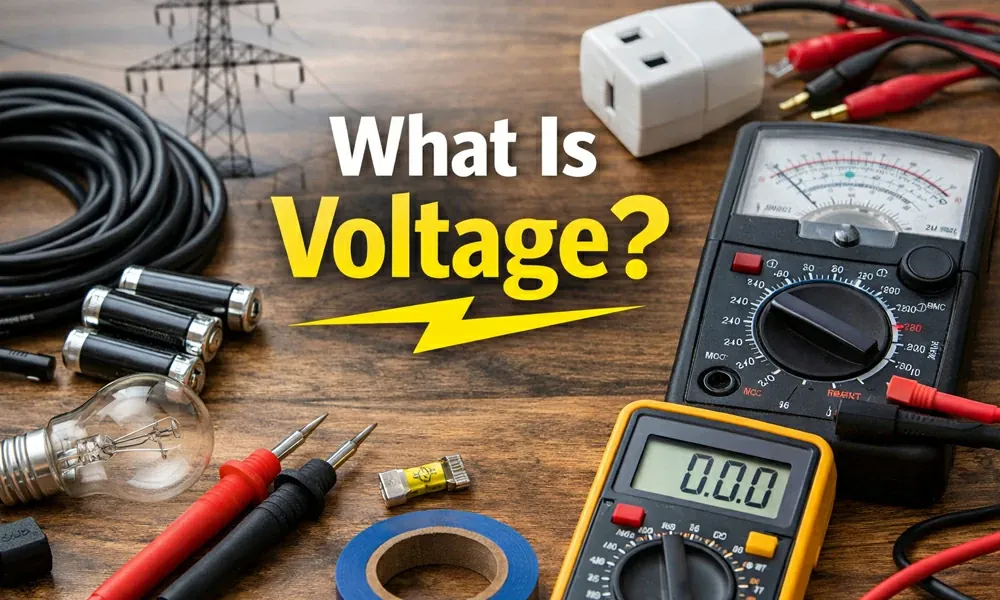
Testing the potential difference in a circuit requires a digital multimeter. This tool measures the energy difference between two points in a system. If you’re working with household outlets, you must use a meter rated for the correct category, such as CAT II or higher, as defined by the International Electrotechnical Commission.
- Set your multimeter dial to the AC voltage setting, which is usually marked with a V and a wavy line.
- Insert the black probe into the port labeled COM and the red probe into the port labeled V.
- Place the black probe into the neutral slot of the outlet and the red probe into the hot slot.
- Read the number on the screen, which should typically be 110V to 120V in North American homes.
- Remove the probes carefully without touching the metal tips or letting them touch each other.
Tip: Always inspect your probes for cracked insulation before use. If the wires are exposed, don’t use them, as you could get a shock.
Measuring electrical potential time
The time it takes to measure electrical potential depends on the circuit type and the stability of your probe contact. A quick test on a wall outlet takes only a few seconds, but troubleshooting a complex board requires patience.
| Situation | Time taken | What changes it | What to watch for |
|---|---|---|---|
| Simple wall outlet | 5 seconds | Stability of probes | Loose connections |
| Battery test | 3 seconds | Battery condition | Corrosion on terminals |
| Circuit board | 30+ seconds | Point accessibility | Short circuits |
If your meter reading jumps around, ensure your probe tips are pressed firmly against the metal contacts. A common mistake is using too little pressure, which creates high contact resistance and erratic, unreliable data. If you’re testing a battery, a reading that takes longer than five seconds to stabilize often indicates internal chemical degradation.
When measuring boards, if the value fluctuates, check for oxidized solder joints or microscopic debris. If the reading remains unstable after cleaning the contact points, the circuit likely contains a failing capacitor or a cold solder joint. In these cases, stop testing to avoid accidental shorts. If the display fails to lock onto a steady number within one minute, treat the component as faulty and move to a continuity test.
How to identify correct levels

You can identify the correct level by checking the label on your device or the manufacturer’s manual. Most home electronics in the United States operate at a standard 120V, but large appliances like dryers often use 240V. When the voltage is too low, devices may run slowly or struggle to start. When it’s too high, you risk damaging sensitive internal electronics or causing a fire hazard.
The best way to verify your reading is to compare it against the expected range provided by the device maker. If your measured value is more than 10% away from the rated value, stop using the device.
If you see a reading of 120V but the device is rated for 240V, don’t plug it in. This mistake will likely result in the device failing to operate correctly or potentially damaging internal components. Conversely, if you see 240V on a 120V outlet, you’re likely dealing with a miswired circuit. You should contact a licensed electrician to inspect your home wiring if the wall outlets consistently show incorrect readings.
Errors that impact your results
- Using the wrong setting: Choosing the DC setting when testing an AC outlet will cause the meter to show a zero or an incorrect value. Always verify the current type before you touch the probes to the circuit.
Wall outlets deliver alternating current, while batteries and solar panels supply direct current. Mixing these up doesn’t just give you a bad number. It can blow the internal fuse inside your multimeter instantly.
- Holding the probes incorrectly: Touching the metal tips of the probes while they’re in a live circuit puts you at risk of a dangerous electric shock. Hold only the insulated plastic handles to keep yourself safe during the entire testing process.
Your body acts as a parallel resistor if your fingers slip past the guard rings. This creates a path for current to flow through your body, resulting in an electric shock. The reading drops, and you get shocked at the same time.
- Testing while the device is off: Some circuits don’t show a reading unless the switch is in the on position. If your meter shows nothing, check that the switch is actually allowing power to flow before assuming the outlet is dead.
A switched outlet often has only one live half controlled by the wall toggle. Test both sockets before you start pulling wires out of the wall box.
- Ignoring the meter rating: Using a meter not designed for high-energy circuits can lead to a meter failure or explosion. Always ensure your tool is rated for the environment where you’re working to avoid injury.
Look for the CAT rating printed near the probe jacks on the back of the case. A CAT II meter works fine for household appliances but will arc violently inside a main breaker panel.
Related guides
- How a Pressure Sensor Diaphragm Works: The Simple Mechanics
- Best Well Pressure Tanks: How to Choose the Right Size in 2026
- 7 Best Drill Bits for Electrical Rough In: Expert Picks in 2026
Frequently asked questions
Can I measure voltage with a screwdriver?
No, you can’t use a screwdriver to measure this force. A screwdriver is a tool for turning screws, not for detecting electrical potential. Using one to test a live circuit is extremely dangerous and could lead to a severe shock or a short circuit that damages your home wiring. Always use a proper multimeter or a non-contact voltage tester designed for that purpose.
Why is my voltage reading fluctuating?
A fluctuating reading often happens because of a poor connection between your probes and the circuit contacts. If the probes are steady and the number still jumps, you may have a loose wire or a failing component in the circuit. If this happens at a wall outlet, it indicates a serious wiring issue that requires a qualified electrician to fix immediately.
How do I know if the voltage is safe?
You know it’s safe by matching your measurement to the label on your electrical device. If the device says 120V and your outlet reads between 114V and 126V, it’s within a normal, safe range. Anything significantly higher or lower than the manufacturer’s specified range can cause the device to overheat, malfunction, or fail completely over time.
Is it safe to touch a battery?
Yes, it’s safe to touch a standard household battery, like an AA or AAA, because the voltage is very low. However, you should never touch the terminals of a car battery or a large power supply. These sources have enough energy to cause a painful shock or severe burns if you create a path for the current through your body.
What happens if the voltage is too high?
When the voltage is too high, it forces more current through your device than the internal parts can handle. This excess energy turns into heat, which can melt plastic components or burn out delicate microchips. In many cases, a surge of high pressure will cause an immediate failure, leaving the device unable to turn on ever again.
How long does a battery keep its voltage?
A battery keeps its rated voltage until the chemical energy inside is nearly exhausted. The time this takes depends on how much current the device pulls from it and how often you use it. You can check the remaining life by using a multimeter to see if the reading has dropped significantly below the level printed on the battery casing.
Conclusion
Testing your circuits regularly helps you stay aware of the energy levels in your home. Always keep your equipment in good repair and never guess if a circuit is safe. If you feel unsure about a reading or a repair, stop and call a professional to handle the work.
