
Potential energy is the hidden, stored capacity of an object to do work based on its position, state, or arrangement within a force field. Unlike kinetic energy, which describes motion, this form of energy remains dormant until an external force triggers a change, releasing the stored power. Whether it’s a compressed spring waiting to snap back or a boulder perched precariously on a cliff edge, this concept defines how systems maintain equilibrium and store fuel for future action.
Key Takeaways

- Recognize that potential energy exists in various forms, including gravitational, elastic, chemical, and electrical.
- Understand that position is the primary driver of gravitational potential energy in everyday objects.
- Identify that energy isn’t created or destroyed; it’s merely converted from potential to kinetic states.
- Apply the concept to mechanical systems, such as springs or stretched rubber bands, to predict behavior.
- Note that height and mass are the two most critical variables when calculating gravitational potential energy.
Understanding What Is Potential Energy
At its core, this energy represents the stored capacity of a physical system. When you lift a heavy box onto a high shelf, you’re doing work against gravity. That energy doesn’t vanish; it’s transferred into the box as gravitational potential energy.
The higher the shelf, the more energy is stored. If you were to knock the box off, that stored energy would rapidly convert into kinetic energy as the object falls. This fundamental principle of physics allows engineers to design everything from hydroelectric dams to complex clockwork mechanisms.
Gravitational Potential Energy Explained
This specific type of energy depends on an object’s height relative to a reference point, such as the ground. The higher an object is placed, the greater its potential to do work once released.
The Physics Classroom at the University of Colorado Boulder explains that this energy is directly proportional to the mass of the object, the acceleration due to gravity, and the vertical height of the object. If you double the mass, you double the potential energy, provided the height remains constant.
Real-World Gravitational Examples
- Water behind a dam: A massive reservoir holds water at a high elevation, storing immense potential to turn turbines.
- A roller coaster at the peak: The train sits at the highest point, ready to accelerate downward due to gravity.
- A heavy wrecking ball: Suspended by a crane, the ball represents a massive amount of stationary, stored energy.
- A diver on a board: The diver’s height above the water dictates the potential energy available for the splash.
What Is Elastic Potential Energy?
Elastic energy is stored in objects that can be stretched or compressed, such as springs, rubber bands, or archery bows. When you deform these materials, the internal molecular structure resists the change, creating a force that wants to return the object to its original state.
The amount of energy stored depends on the stiffness of the material and the distance of the displacement. Once the external force is removed, the material snaps back, converting that stored potential into rapid kinetic energy.
| Material Type | Elasticity Level | Common Application |
|---|---|---|
| Steel Spring | High | Suspension systems |
| Natural Rubber | Medium | Slingshots |
| Synthetic Polymer | Low | Packaging foam |
| Carbon Fiber | Very High | Sports equipment |
Chemical Potential Energy Basics
Chemical potential energy is held within the bonds of atoms and molecules. This is the energy source for almost all biological and combustion processes. When chemical bonds are broken or rearranged during a reaction, this stored energy is released as heat, light, or work. Think of it as a molecular battery that holds energy until a reaction triggers its release. This form of energy is essential for human survival and modern technology, as it powers our cells and our vehicles.
Common Sources of Chemical Energy
- Gasoline: The hydrocarbons contain significant energy released through combustion in an engine.
- Food (Glucose): Your body breaks down carbohydrates to release energy for movement and organ function.
- Lithium-ion Batteries: These store chemical energy that converts into electricity when a circuit is closed.
- Firewood: The cellulose in wood stores solar energy captured during the plant’s growth, released as heat when burned.
Electrical Potential Energy Defined
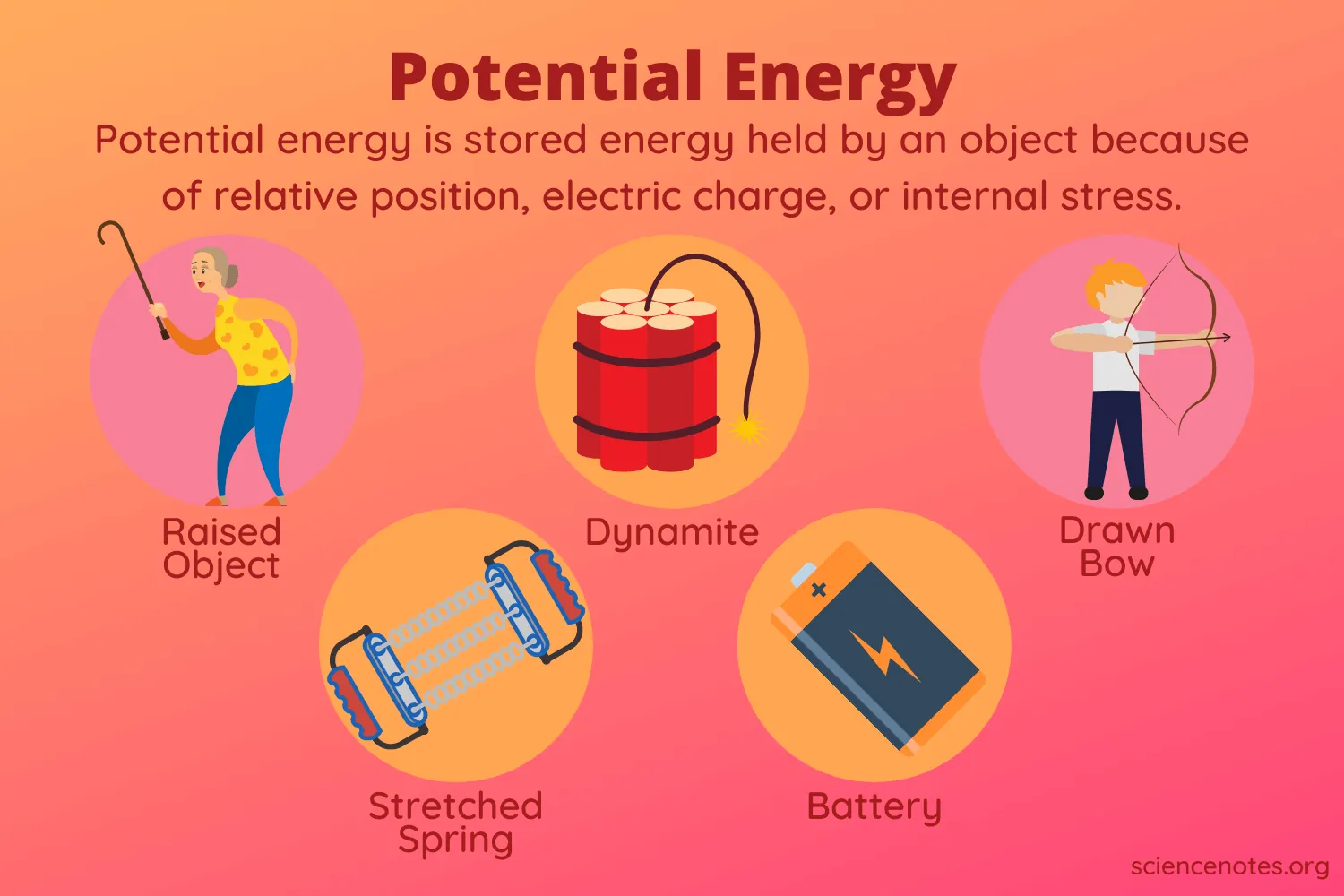
Electrical potential energy is the energy required to move a charge against an electric field. It’s the foundation of modern electronics and power grids. When you place two like charges near each other, they repel; holding them together requires work. That work is stored as potential energy.
In a household circuit, this energy is what drives electrons through your appliances, allowing them to function. Without this storage potential, we would have no way to power the devices that define our daily lives.
How Is Potential Energy Calculated?
Calculating potential energy requires specific formulas based on the type of energy involved. For gravity, the calculation is straightforward, involving mass, gravity, and height. For springs, the formula involves the spring constant and the distance of compression. Using these formulas allows engineers to predict how much work a system can perform.
| Energy Type | Primary Variable | Formula Component |
|---|---|---|
| Gravitational | Height | Mass x Gravity x Height |
| Elastic | Displacement | 0.5 x Constant x Distance^2 |
| Electrical | Charge | Voltage x Charge |
Kinetic Versus Potential Energy
While potential energy is stored, kinetic energy is the energy of motion. These two states are constantly trading places in a closed system. Consider a pendulum: at the highest point of its swing, the pendulum has maximum potential energy and zero kinetic energy. As it swings toward the bottom, the potential energy decreases while the kinetic energy increases. Understanding this energy transformation is key to mastering mechanical physics.
Pro Tip: Always identify your “zero point” when measuring gravitational potential energy, as the height value is relative to the surface you choose as your baseline.
Why Do Objects Store Energy?
Objects store energy because of the forces acting upon them. In a gravitational field, the earth pulls everything toward its center; by lifting an object, you’re creating a “debt” that the object wants to resolve by falling. In elastic systems, the molecular structure of the material is being pushed out of its equilibrium position. Nature generally prefers the lowest energy state, so objects naturally seek to release this stored energy whenever a pathway is provided.
How Does Energy Transformation Work?
Energy transformation is the process of changing one form of energy into another. When a car burns fuel, it converts chemical potential energy into thermal and kinetic energy. When a flashlight turns on, it converts electrical potential energy into light.
This process is governed by the Law of Conservation of Energy, which states that energy can’t be created or destroyed, only transformed. This constant cycle ensures that the total energy in the universe remains constant even as it shifts between forms.
Warning: Never attempt to compress high-tension springs or manipulate high-voltage capacitors without proper safety equipment, as the sudden release of potential energy can be dangerous.
Common Misconceptions About Energy
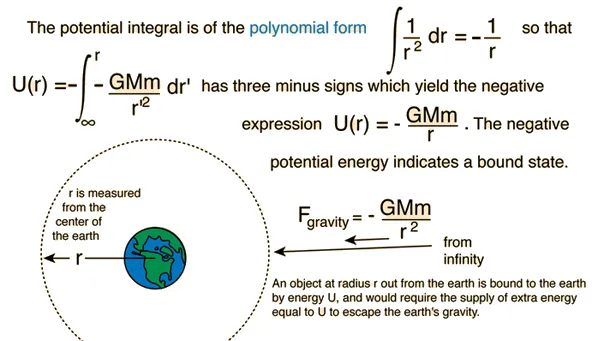
Many people confuse potential energy with power or force. Force is a push or pull, while energy is the capacity to do work. Another common error is assuming that potential energy is only related to height. While height is vital for gravity, the atomic structure of a substance is just as important for chemical or electrical potential energy. Recognizing these distinctions helps in applying physics concepts correctly across different fields of study.
Frequently Asked Questions
Can potential energy be negative?
Yes, potential energy can be negative depending on your chosen reference point. If you define the ground level as zero, an object placed in a hole or a pit would have a negative height, resulting in a negative potential energy value relative to the ground. This simply indicates that the object is in a lower energy state than the chosen reference point.
Is potential energy the same as work?
No, they’re related but distinct. Work is the process of transferring energy through force, while potential energy is the result of that work being stored. You do work to move an object into a position, and that work is then stored within the object as potential energy. Once the object moves, it can perform work on something else, releasing the stored energy.
How does friction affect potential energy?
Friction acts as an energy drain. When an object moves, friction converts some of the potential or kinetic energy into heat, which dissipates into the surroundings. This means that in the real world, you rarely get back exactly the same amount of potential energy you put into a system. Some of the energy is always “lost” to the environment as thermal energy due to resistive forces.
Does potential energy depend on speed?
No, potential energy is independent of speed. It’s a function of position, state, or arrangement. Speed is a variable used exclusively to calculate kinetic energy. An object sitting perfectly still at the top of a hill has maximum potential energy and zero kinetic energy, regardless of how it arrived at that position or how fast it was moving previously.
What is the simplest way to visualize it?
Think of potential energy like money in a savings account. It isn’t being spent, but it’s available to be used whenever you need it. Kinetic energy is like cash in your hand that you’re currently spending. Just as you can deposit cash into a bank to store it, you can perform work on an object to store energy within it as potential.
Conclusion
To further explore these concepts in a practical environment, try calculating the gravitational potential energy of a household object by measuring its mass in kilograms and its height above the floor in meters, then multiplying those values by the standard gravity constant of 9.8 meters per second squared.
