
A stuck impeller or a clogged intake is the most common reason for a sump pump humming but not working, happening in most cases where the motor receives power but can’t move water. You can confirm this by checking for debris around the inlet grate or by verifying the float switch moves freely without catching on the basin wall. If you hear a low, vibrating hum, it’s likely the motor is trying to spin but is physically blocked from turning.
Why your sump pump is humming but not working
| Cause | How common | How to confirm it | Fix it yourself? |
|---|---|---|---|
| Debris in intake | Very common | Check grate for buildup | Yes |
| Stuck float switch | Common | Manually lift the float | Yes |
| Blocked discharge pipe | Frequent | Look for water backing up | Yes |
| Air lock | Occasional | Check for trapped air | Yes |
| Internal motor failure | Rare | Smell for burnt plastic | No |
| Failed check valve | Rare | Listen for water return | Yes |
If your pump hums but moves no water, you likely have an air lock. Drill a 1/8-inch weep hole in the discharge pipe just above the pump housing to release trapped pressure. Do this only if the manufacturer’s manual permits it, as some models require a specific back-pressure to function.
Check the float switch by lifting it manually while the pump is plugged in. If the pump fails to engage, the switch is likely tethered too tightly against the basin wall. Ensure the float has at least three inches of clearance in every direction. If it remains stuck, the internal contacts are likely corroded.
Many users mistake a failed check valve for a pump failure because the basin never empties. If you hear water rushing back into the pit immediately after the pump shuts off, the valve flap is stuck open. Replace the valve immediately to prevent the pump from short-cycling, which burns out the motor within weeks.
If the motor smells like ozone or burnt plastic, disconnect the power immediately. Don’t attempt a restart. This indicates a terminal electrical short that poses a significant fire risk. Professional replacement is the only safe path forward.
Debris blocking the intake grate
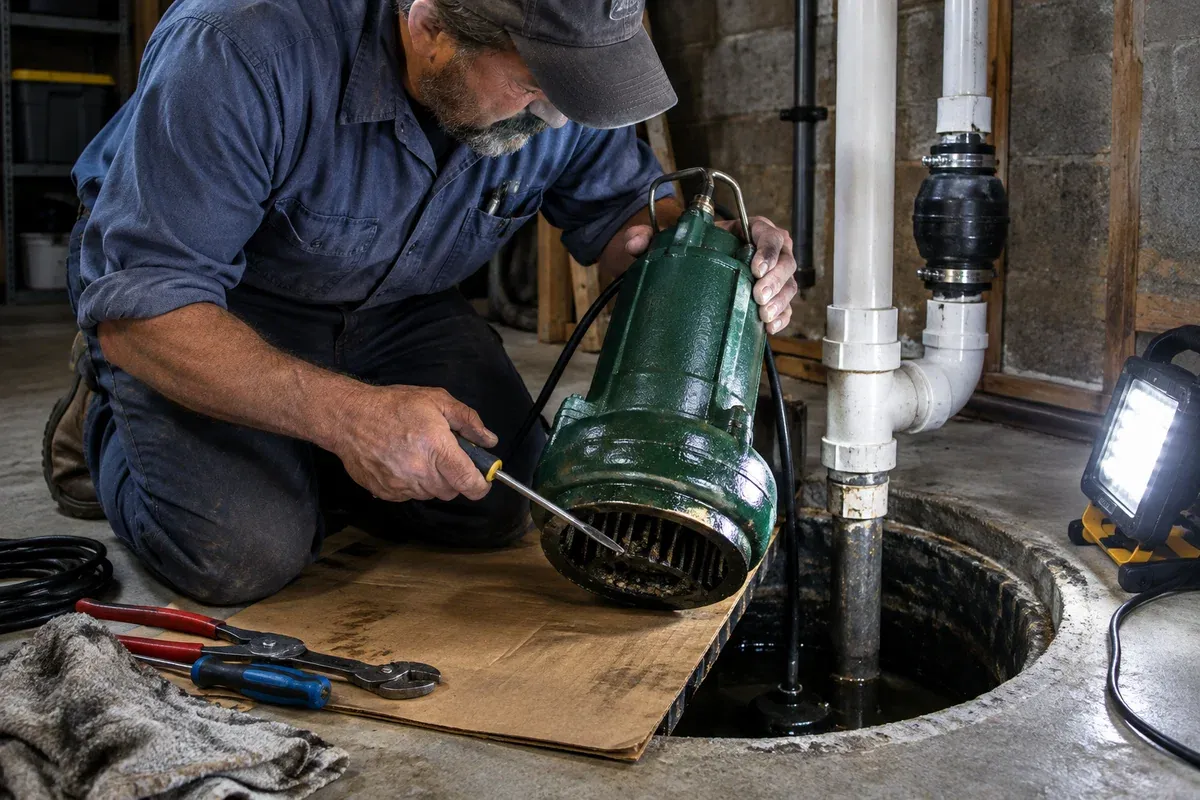
A sump pump humming but not working often happens because the bottom intake screen is covered in mud, rocks, or plastic debris. The motor attempts to start, but the impeller can’t rotate because the intake is physically obstructed. This creates a dull, grinding, or buzzing noise because the electricity is flowing to the motor, yet the mechanical resistance prevents movement.
To confirm this, look into the sump pit to see if the intake holes at the base of the unit are clear. You should see water surrounding the pump, not just thick sludge or debris pressing against the bottom. If the grate is covered, the pump can’t draw water into the housing. This is a common issue after heavy rain when sediment washes into the basin.
Clear the debris by hand or with a small brush while the power is disconnected. Never reach into the pit while the pump is plugged into an electrical outlet to avoid the risk of electric shock. If you clear the area and the pump still hums without pumping, the blockage might be deeper inside the impeller housing.
If you find the intake is clear but the pump remains silent, check if the float switch is stuck against the side of the basin. A switch wedged at a 45-degree angle will fail to trigger the motor, mimicking a mechanical blockage. If the pump runs for five seconds and then shuts off, you’re likely dealing with an airlock rather than debris. In that case, drill a small 1/8-inch relief hole in the discharge pipe to vent the trapped air.
A stuck or obstructed float switch
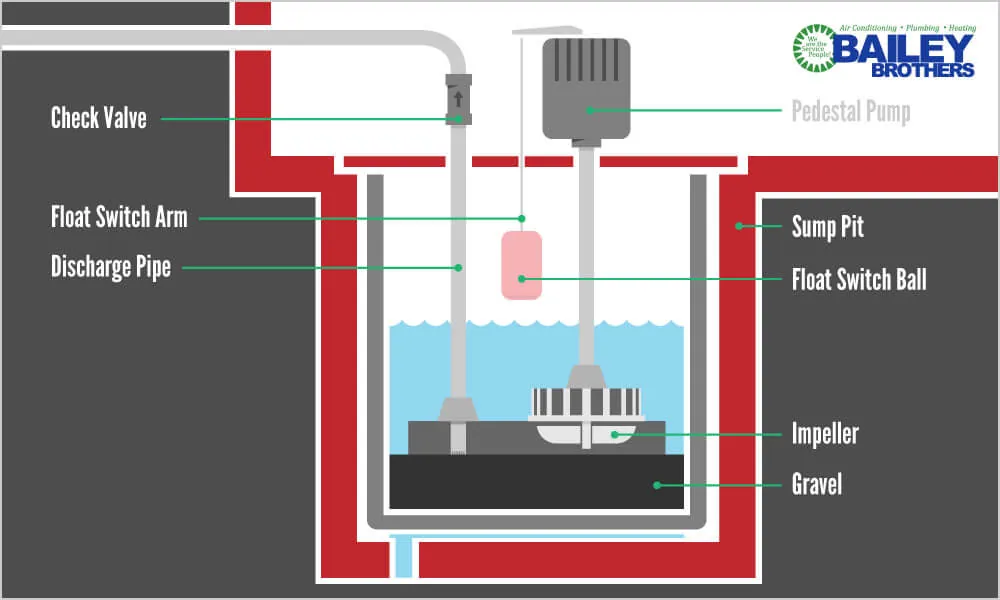
The float switch tells the pump when to turn on by rising with the water level. If the float is wedged against the side of the basin or caught on a power cord, the pump may receive a signal to run but fail to engage the impeller correctly. You can tell this is the issue if the float doesn’t move vertically when you manually lift it.
Look to see if the float is physically hitting the wall of the pit. If the pump is too large for the basin, the float can get trapped against the plastic or concrete wall. This prevents the switch from completing the circuit fully, which can lead to a humming sound as the motor struggles to activate.
Most homeowners make the mistake of ignoring debris buildup around the switch. Even a small piece of gravel or a stray zip tie can create enough friction to hold the float in a downward position. If you see debris, clear it immediately to prevent the motor from burning out due to a dry-run cycle.
Move the pump slightly to create more space or adjust the tether length so the float stays in the center of the basin. If your basin diameter is less than 18 inches, use a vertical action float switch rather than a tethered one.
The vertical design slides up and down a rigid rod, which eliminates the risk of the switch snagging on the basin wall. If the float still doesn’t trigger the pump even when lifted manually, the switch itself might be faulty and requires a full replacement.
Air trapped in the pump housing
An air lock occurs when a pocket of air gets trapped inside the pump housing, preventing water from reaching the impeller. The motor spins, but it can’t move water because it’s only pushing air, which causes a noticeable humming or whining sound. This often happens after a pump has been recently installed or after the pit has run completely dry.
You can identify an air lock by checking if the pump is running but the water level in the pit isn’t dropping. If you have a small hole in the discharge pipe, it should be spraying water back into the pit; if it’s dry, the air lock is likely the cause. This is a specific mechanical state where the pump is “dry-running” despite being submerged in water.
Most professionals drill a 1/8-inch weep hole in the discharge pipe if one is missing. This small opening allows air to escape the housing before the water reaches the check valve. Without this escape route, the air remains trapped against the impeller, preventing the pump from priming.
If the pump is running but the pipe remains silent, verify the check valve orientation. If the valve is installed backward, it will prevent water from being discharged from the pump. You can confirm this by listening for the “clunk” of the valve closing when the pump cycles off. If you hear no sound, the valve is likely stuck or reversed.
To fix a persistent air lock, clear the weep hole with a wire or paperclip to remove mineral buildup. If your system lacks this hole, consult your manual for a manual priming procedure. Never run a submersible pump dry, as the water is required to cool the motor and lubricate the seals.
Rare mechanical and electrical issues
A blocked discharge pipe indicates a frozen or clogged exit line, which you can confirm by checking the pipe outlet outside your home. If you find no debris, inspect the pipe’s pitch; a sag in the line allows standing water to freeze even in mild cold.
A failed check valve prevents water from moving forward, often heard as a loud slamming or clicking sound when the pump cycles. Replace this immediately. If left unaddressed, the backflow forces the pump to cycle constantly, which burns out the motor windings in weeks rather than years.
Internal motor damage or a seized bearing is a permanent failure where the motor humming signifies the end of the unit’s lifespan. If the pump hums but doesn’t spin, try to rotate the impeller manually with a screwdriver. If it resists, the bearings have fused.
Voltage drops from poor wiring connections can cause the motor to hum, but this requires a professional electrician to safely measure and repair. A technician should check the outlet for proper voltage; if the reading is too low under load, your pump is struggling to start, leading to premature electrical burnout.
What a professional repair involves
Fixing a persistent hum usually involves either clearing a simple obstruction or replacing the entire unit. If the issue is a clogged intake or a stuck float, the time required is short, similar to the time spent cleaning a standard household drain. If the motor itself has seized, the fix requires a full pump replacement, which is a much larger task.
The cost depends entirely on whether you need a new pump or just a simple cleaning. You can get an accurate quote by checking the current retail price of a replacement pump that matches your existing horsepower and flow rate.
Always look for the model number on the pump’s nameplate to ensure any replacement part is compatible with your current plumbing setup. If the pump is old, the cost of a professional service call may be close to the price of a new unit.
Related guides
- Best Sump Pumps: How to Choose the Right Type for Your Home in 2026
- Utility Pump vs Sump Pump: Key Differences and Proper Uses in 2026
Frequently Asked Questions
Can I leave the pump humming?
No, you should unplug the pump immediately. A motor that hums but doesn’t turn is drawing electricity and will quickly overheat, which can melt internal plastic parts or cause a fire hazard.
How long does a sump pump last?
Most sump pumps have a limited operational lifespan, depending on how often they run and the amount of debris in your pit. You can check the installation date or serial number on the pump’s label to estimate its remaining life.
Is it safe to unplug it?
Yes, it’s safe to unplug the pump to stop the humming. Always keep your hands dry and ensure you’re standing on a dry surface before touching the electrical cord or the plug.
Does it matter if the water is clear?
Yes, even clear water can contain minerals that build up inside the housing over time. If the pump is humming, the internal impellers may be stuck due to mineral scale, not just physical trash or mud.
What happens if I ignore the noise?
The motor will likely burn out within a few hours of constant humming. Once the motor windings are damaged, the entire pump will require a full replacement rather than a simple cleaning.
Can I repair the motor myself?
No, you should never attempt to open the motor housing or repair electrical components. These parts are sealed at the factory, and opening them voids the warranty and creates a significant risk of electrical injury.
Conclusion
If the unit still won’t pump after you’ve cleared the blockage, the motor might be burnt out. Don’t wait for the next heavy rain to find out for sure. It’s best to call a local plumber today so you’re prepared before any basement flooding happens. They’ll get you back on track.
