
Wheel-type cutters, ratcheting shears, and cable saws are the best pipe cutters for plumbing and electrical projects, as they create clean, square ends. Selecting the right tool depends on material hardness and available space. A ratcheting tool is often necessary in tight crawl spaces, while heavy-duty wheel cutters provide more control on a workbench.
Comparison of standard cutting tools
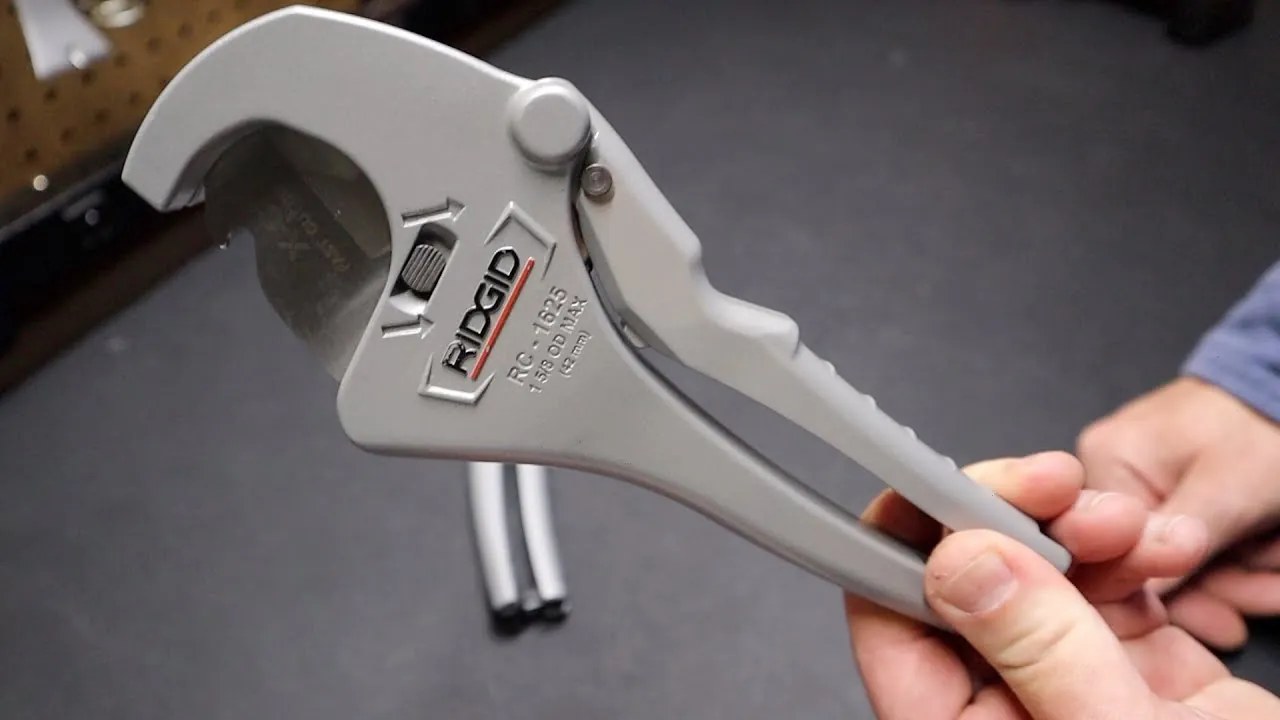
| Tool name | Best use | Typical material |
|---|---|---|
| Wheel cutter | Copper and brass | Rigid metal piping |
| Ratcheting shear | PEX and PVC | Flexible plastic tubing |
| Cable saw | Tight spaces | PVC and ABS |
| Saw guide | Large diameter | Thick-walled plastic |
| Internal cutter | Flush cutting | Pipe inside floor |
Choose a wheel cutter only for rigid pipes where a perfectly square end is mandatory for soldering. If you’re working with soft copper, avoid these tools, as the pressure often deforms the pipe wall, making it impossible to fit a coupling.
Ratcheting shears excel when speed is the priority. Use them for PEX, but never for PVC in temperatures below 50 degrees Fahrenheit. The cold makes plastic brittle, causing the blade to shatter the pipe rather than slice it.
A cable saw is your only option when you have less than two inches of clearance around a pipe. However, these saws leave a jagged edge that requires significant sanding afterward. If you have the space, use a standard saw guide to save time on cleanup.
When cutting thick-walled plastic over three inches in diameter, a saw guide is essential. Without one, the blade will wander, resulting in a slanted cut that prevents a watertight seal.
Use an internal cutter when a pipe protrudes through a concrete slab. Insert the tool into the pipe and spin it with a drill. Stop immediately once you feel the resistance drop, or you’ll score the subfloor beneath the pipe, creating a permanent leak path for moisture.
Wheel pipe cutters
A wheel cutter uses a hardened steel disc to score and eventually separate metal pipes through repeated rotations. It suits professionals and homeowners who need perfectly square, burr-free ends on copper or thin-wall steel lines.
Provides a precise, clean finish that requires minimal filing or deburring after the cut.
Allows for incremental pressure adjustment, which prevents the pipe from crushing during the process.
Handles a wide range of diameters, usually from 1/8 inch up to 2 inches for standard models.
If you’re cutting soft copper, tighten the knob only a quarter-turn per rotation to avoid deforming the tube wall. For hard-drawn copper, you must apply slightly more pressure to bite into the metal. Keeping cutting tools sharp reduces the force required, which prevents slips and improves overall control during the cut.
When you feel the tool drag or hear a screeching sound, the wheel is likely dull. A dull wheel creates a raised ridge on the pipe end rather than a clean score, which will prevent a watertight seal in compression fittings. Replace the wheel immediately if you see a flat spot or a chip on the cutting edge.
Use the rule of thirds for pressure: apply light pressure for the first third of the rotations to establish a deep groove. Increase to moderate pressure for the second third to penetrate the wall. Finish with light pressure on the final rotations to prevent the pipe from snapping off unevenly.
If you’re working in a tight crawl space where you can’t rotate the tool a full 360 degrees, switch to a ratcheting pipe cutter. A standard wheel cutter requires a full swing, but a ratcheting model works with as little as 10 degrees of clearance.
When cutting a 1/2-inch copper water supply line, rotate the tool clockwise around the pipe until the wheel snaps through the metal wall. Always wipe the pipe clean before starting to ensure grit doesn’t damage the cutting wheel.
Ratcheting pipe shears
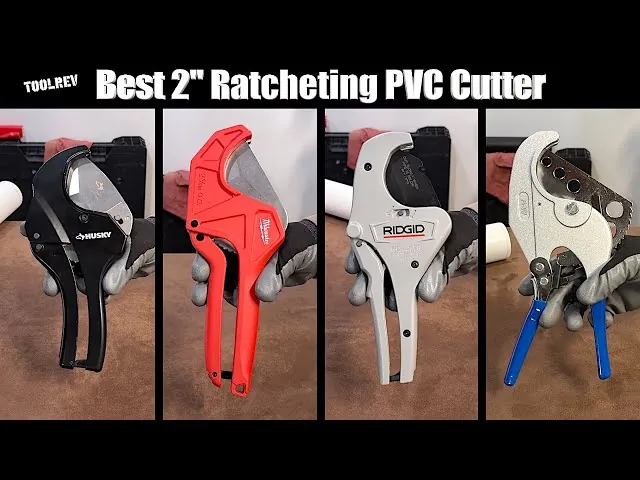
Ratcheting shears use a sharp, V-shaped blade that’s driven through the material by a mechanical lever. These are the preferred choice for PEX, PVC, and CPVC piping because they perform a fast, clean cut without creating plastic shavings that might clog a system.
- Operates with one hand, which is helpful when you’re working on a ladder or in a confined space.
- Features a ratcheting mechanism that multiplies your hand force, allowing you to cut through thick-walled PVC with minimal strain.
- Includes a spring-loaded handle that resets the blade automatically, speeding up repetitive cutting tasks.
If you’re cutting PEX, you can use these tools for a quick, effortless finish; if you’re cutting thick-walled Schedule 80 PVC, you must take your time to ensure the blade stays square to the pipe. A mistake many people make is trying to force the blade through the plastic too quickly, which causes the blade to wander and results in an angled, uneven cut. This costs time because you’ll have to sand the end flat before you can glue it.
You might use these to trim a 1-inch PEX pipe by placing the blade against the mark and squeezing the handles repeatedly until the blade passes through the entire cross-section.
Cable pipe saws
A cable saw consists of a flexible, serrated wire with handles on both ends, designed for cutting pipes in extremely tight areas where a rigid tool can’t rotate. It’s best for thin-walled plastic piping like PVC or ABS that’s located against a wall or between floor joists.
- Fits into gaps as small as 1 inch, making it the only option for pipes sitting flush against framing.
- Uses a sawing motion that relies on friction to abrade through the plastic.
- Requires almost no clearance around the pipe, as the cable wraps around the circumference rather than rotating like a wheel.
This tool requires manual effort and a steady hand to keep the cut straight. If the pipe is larger than 2 inches, you should expect to spend significantly more time sawing to avoid overheating the cable. The main limitation is that the flexible nature of the wire makes it difficult to achieve a perfectly square cut compared to a fixed-blade tool.
You would use this by wrapping the cable around the pipe, gripping the handles firmly, and pulling back and forth in a smooth rhythm until the pipe is severed.
Saw guides and miter boxes
Saw guides are simple plastic or metal cradles that hold a standard hacksaw blade at a fixed 90-degree angle to the pipe. They’re the best choice for people who don’t own specialized cutters but need to cut large-diameter PVC or drain pipes accurately.
Ensures a perfectly square cut by preventing the blade from wandering or tilting during the stroke.
Works with inexpensive, common tools like a standard hacksaw, keeping the initial cost very low.
Supports large pipes up to 4 inches in diameter that would be too bulky for standard hand shears.
Using a guide requires you to secure the pipe firmly in a vice or against a wall so it doesn’t shift while you saw. If you don’t secure the pipe, the guide will move, and your cut will be crooked. This tool isn’t for thin copper or steel, as the teeth of a standard wood or plastic saw blade will dull instantly on metal.
An example is placing a 3-inch PVC drain pipe into the guide channel and using a hacksaw to follow the pre-cut slot for a clean, straight edge.
If you’re cutting pipe for a pressurized water line, a square cut isn’t just for aesthetics; it’s a structural necessity. A beveled or uneven edge prevents the pipe from seating fully into the fitting’s internal stop. This creates a weak point where solvent weld can’t form a proper bond, leading to leaks under pressure.
Always check the blade tension before starting. If the blade flexes or bows in the center, you’ll lose the square edge regardless of the guide. Tighten the blade until it’s taut and doesn’t flex significantly when pressed in the center.
If you’re cutting thin-walled conduit, skip the guide entirely. The teeth of a hacksaw will catch on the thin edges and tear the material, leaving jagged burrs that are difficult to file down. For these projects, use a rotary tube cutter instead.
Apply firm downward pressure only on the forward stroke. Lifting the blade slightly on the return stroke prevents the teeth from clogging with plastic shavings, which can cause the blade to jump out of the guide slot.
Other cutting methods
Internal pipe cutters utilize a specialized diamond-grit or carbide disc that attaches to a standard power drill. These are essential when a pipe is already installed below the surface of a floor or wall, leaving you no room to swing a traditional manual cutter. If you’re cutting PVC or ABS, ensure the drill is set to a low speed to prevent the plastic from melting and clogging the teeth.
Power tube cutters use a motorized wheel to rotate around the pipe automatically. These are for professional installers who need to cut dozens of pipes in a single day to reduce hand fatigue. If you’re working in a tight crawlspace, the motorized version is often too bulky to fit; in that case, revert to a manual ratcheting cutter to maintain control.
Reciprocating saws with a fine-tooth plastic-cutting blade are strictly for demolition work. Use these only when you’re removing old plumbing and don’t need a precise, square end for a new connection. A common mistake is using a wood-cutting blade for this task, which causes the plastic to shatter or crack under the aggressive tooth pattern.
If you must use a saw, wrap a piece of masking tape around the pipe to mark your line and provide a visual guide. This prevents the blade from wandering as you begin the cut. If your project requires a leak-proof seal, avoid saws entirely and use a dedicated pipe cutter to ensure a perfectly perpendicular edge.
Selecting your tool
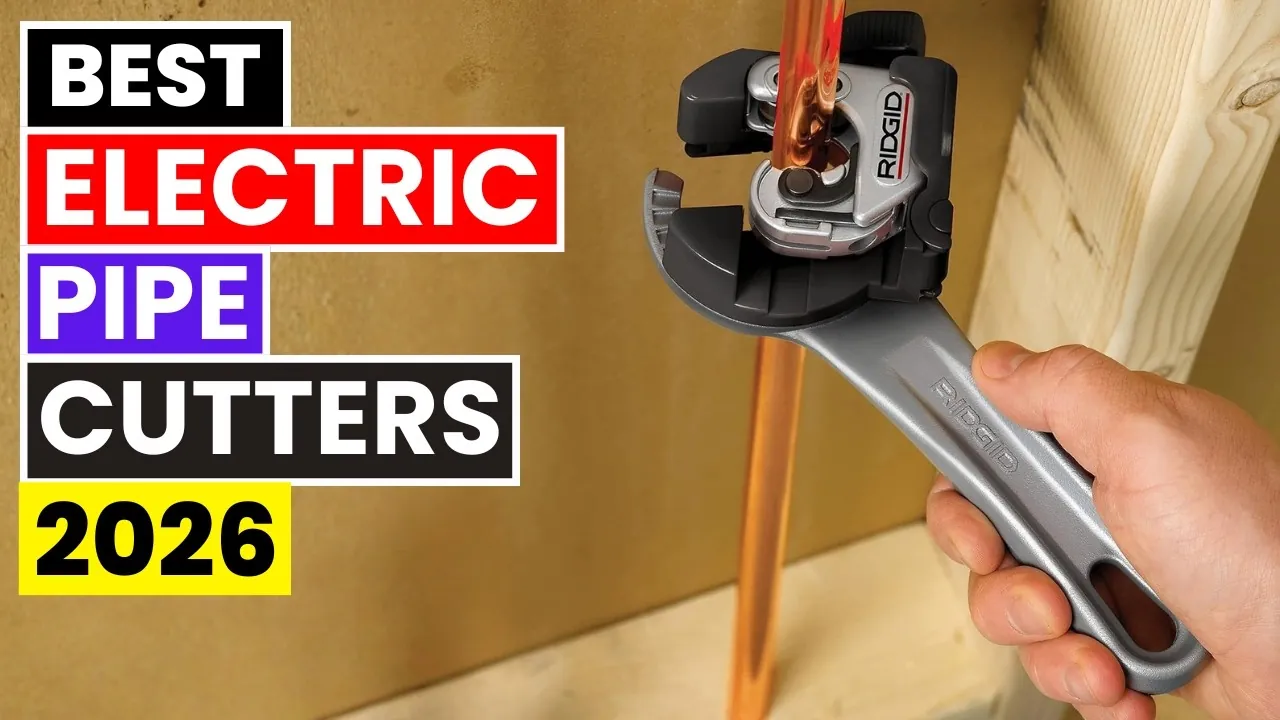
Deciding which tool to use depends on the material of your pipe and the amount of room you have for movement. If you’re working with copper, you must use a wheel-type cutter; if you’re working with PEX or thin PVC, a ratcheting shear is the standard choice. If your project involves pipes that are hidden or tucked against a wall, a cable saw is the only tool that will fit.
For most residential plumbing repairs, you’ll likely need at least two tools: a wheel cutter for metal supply lines and a ratcheting shear for plastic drain or PEX lines. These tools are generally sold separately, and you can’t combine their functions into one device because the cutting mechanics are fundamentally different.
While wheel cutters can be used on galvanized steel, they’re significantly more difficult to use than on copper and may require more frequent wheel replacements. Use a reciprocating saw with a metal-cutting blade for these thick-walled materials.
Measure the distance from the wall to the center of the pipe before you buy. If you have less than four inches of clearance, a standard wheel cutter won’t rotate fully. In these tight quarters, a cable saw allows you to pull the handle back and forth without needing a full circle of space.
Many beginners mistakenly attempt to use a hacksaw for every job. While versatile, a hacksaw leaves behind metal burrs that restrict water flow and damage internal seals. Always pair your cutter with a reaming tool to smooth the interior edge. If the cut feels rough to the touch, your connection will likely leak under pressure.
Related guides
- 10 Best Miter Saw Blades for Precise and Smooth Cuts in 2026
- How to Use Metal Out in a Pool: Dose, Circulate, Clean in 2026
- 10 Best Dado Blades for SawStop: Our Top Picks for Clean Cuts in 2026
Frequently asked questions
Can I use a metal pipe cutter on plastic pipe?
No, you shouldn’t use a metal pipe cutter on plastic pipe because the pressure wheel can crush the plastic walls before cutting. Plastic requires a sharp, shearing blade to cut cleanly. Using a metal cutter on thick-walled PVC often causes the pipe to crack or split.
How long does a pipe cutter wheel last?
The exact lifespan depends on the hardness of the metal and the pressure applied. Most professional-grade cutters allow you to replace just the wheel, which saves you from buying a new tool.
Is it safe to use a hacksaw for plumbing?
Yes, it’s safe to use a hacksaw for plumbing, provided you use a guide to ensure the cut is square and you deburr the edges afterward. A hacksaw is versatile for cutting PVC or ABS, but it creates plastic shavings that must be cleaned out before installing any fittings.
What happens if the pipe cut isn’t square?
If your pipe cut isn’t square, the pipe won’t seat fully into the fitting, creating a weak point where the seal may fail. A crooked cut leaves gaps between the pipe end and the shoulder of the fitting. If the gap is too large, you must cut the pipe again.
How do I know which size cutter I need?
You choose your cutter size by matching the tool’s capacity to the outside diameter of your pipe. Most tools are labeled with a range, such as 1/8 inch to 1 inch, indicating the diameter they accommodate. Never force a pipe into a tool that’s too small, as this will damage the frame.
Does it matter if I leave burrs on the pipe?
Yes, removing burrs is essential because they restrict water flow and can catch debris, leading to future clogs. On the outside of the pipe, burrs prevent the pipe from sliding smoothly into a fitting. Always use a deburring tool or a small file to remove rough edges after every cut.
Conclusion
Start your project by measuring the pipe diameter and selecting the tool that matches your material. You can expect a clean, square end if you keep the cutter perpendicular to the pipe at all times. If the pipe begins to crush or the blade slips repeatedly, stop immediately and check the tool’s alignment or the sharpness of the blade, as continuing will only damage the pipe and ruin your material.