
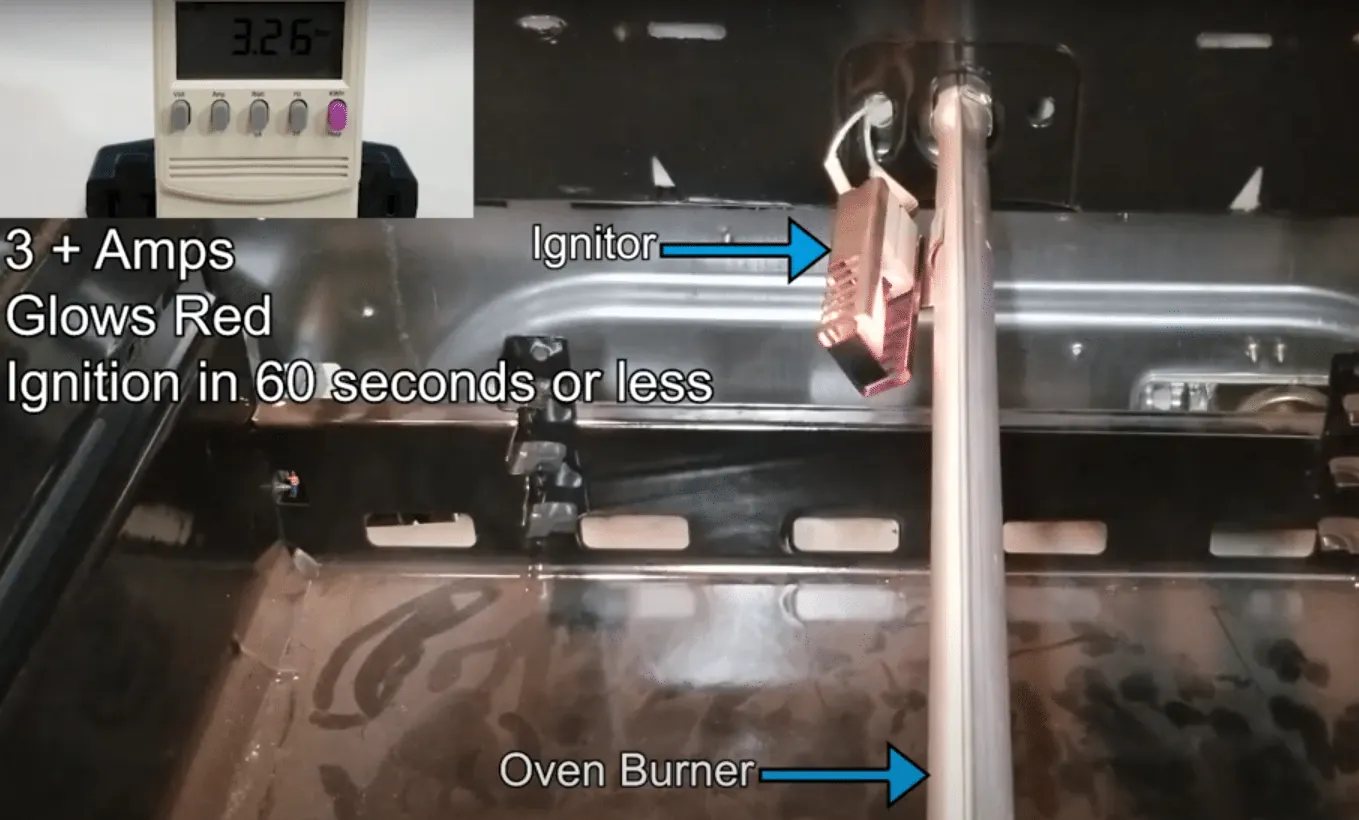
A faulty igniter is the most common reason for an oven igniter not working, accounting for the vast majority of instances where a gas range fails to produce heat. You can often confirm this by observing the igniter during a start cycle; if it fails to glow bright orange or takes significantly longer than sixty seconds to do so, the part has likely reached the end of its lifespan. If you’re unsure about your specific appliance’s operation, check the user manual provided by the manufacturer for the expected ignition sequence.
Why your oven igniter stopped working
| Cause | How common | How to confirm it | Fix it yourself? |
|---|---|---|---|
| Failed igniter | Very common | No orange glow | Yes with care |
| Tripped breaker | Common | Check electrical panel | Yes |
| Loose connection | Occasional | Inspect wire terminals | Yes with care |
| Gas supply issue | Rare | Check other burners | No |
| Faulty control board | Rare | Check error codes | No |
| Blocked gas port | Rare | Visual inspection | Yes |
If your oven fails to heat, check the igniter first. A healthy igniter glows bright orange for roughly thirty seconds before the gas valve clicks open. If it remains dark or merely flickers, the part is dead. Most homeowners replace this for a modest cost instead of paying a technician.
Don’t mistake a tripped breaker for a broken appliance. If your display is dark, check the panel before calling for service. A single tripped switch often kills the oven while leaving the stovetop lights functional.
If the oven heats inconsistently, check for a loose terminal block at the back. Vibration over years can loosen these connections, causing intermittent power. If you see charred plastic or melted wire insulation, stop immediately. This indicates a high-resistance short that requires a professional electrician to prevent a fire. Only attempt repairs if you can confirm the main power is fully disconnected.
Safety: Inside a mains-powered machine, the parts behind the outer cover can hold a dangerous electrical charge even after it has been unplugged — that’s why they sit behind a cover. Opening the housing, or testing or replacing anything behind it, is a job for a qualified technician, never a home repair.
The igniter has failed
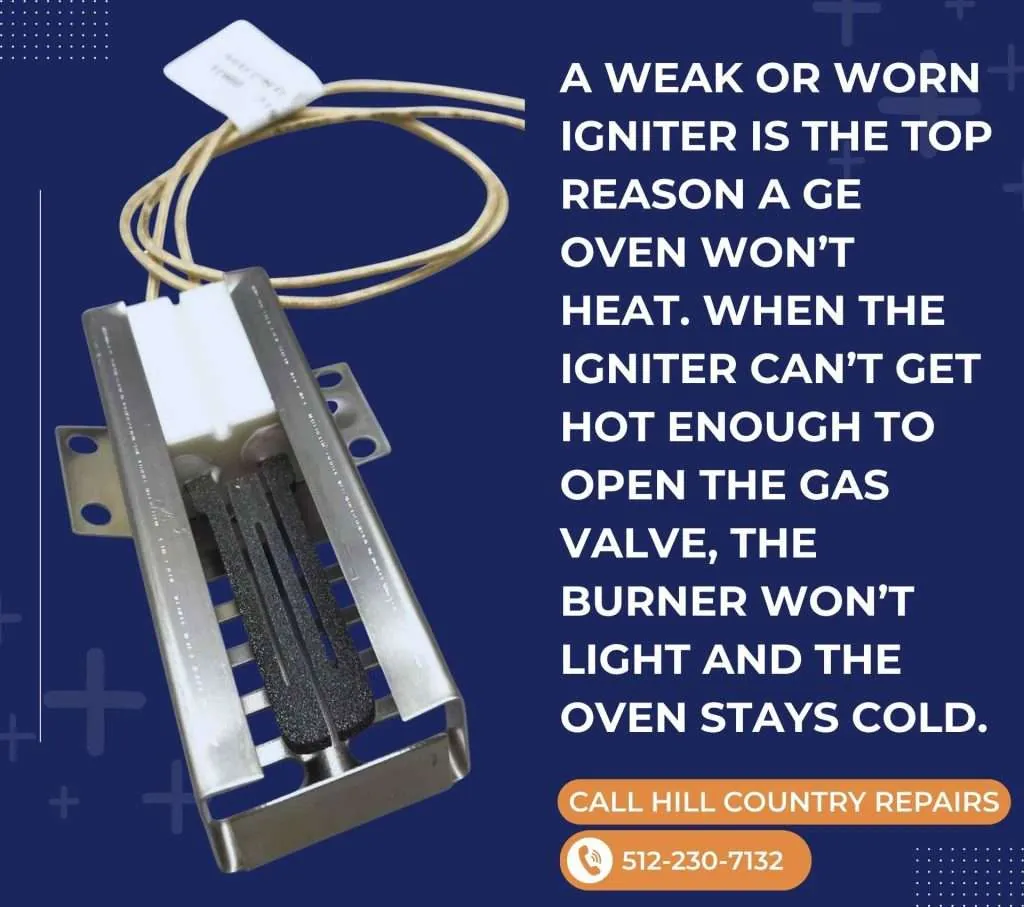
An oven igniter works by drawing electrical current to heat a ceramic element until it reaches a specific temperature, which then signals the gas valve to open. When the element degrades, it can’t pull enough amperage to open the safety valve, meaning no gas flows to the burner.
You can confirm this by turning the oven to a bake setting and watching the igniter through the oven floor or back panel. A healthy igniter glows bright orange within a minute and triggers the gas release shortly after. If the igniter stays dark or only turns a dull red, it’s no longer pulling the necessary current to operate.
Replacing this part involves removing the oven racks and the bottom panel to access the igniter assembly. You must ensure the oven is completely disconnected from the power supply before touching any components. If you notice the igniter is cracked or the wire insulation is brittle, these are clear signs of physical failure.
Oven igniters aren’t universal; you must verify the exact part number using your appliance’s model number and the manufacturer’s parts diagram to ensure compatibility. If you aren’t comfortable working with delicate internal components, contact a certified appliance repair technician. A failed igniter is a common mechanical issue, and replacing it restores the oven to normal function without needing to replace the entire stove.
Electrical power supply issues
If your oven doesn’t show any signs of life, such as lights on the control panel or a ticking sound from the ignition circuit, the problem may be an interrupted power supply. Gas ovens require electricity to power the control board and the igniter, even if the fuel source is natural gas or propane.
You can tell this apart from an igniter failure because a broken igniter usually still allows the oven light or the clock display to function normally. If the entire unit is dark, check your home’s main electrical service panel to see if the circuit breaker for the kitchen has tripped.
Resetting a tripped breaker is a simple task that involves flipping the switch to the off position and then back to on. If the breaker trips again immediately after you attempt to turn the oven on, don’t force it to stay in the on position. This indicates a short circuit within the appliance’s wiring, which presents a significant fire risk.
According to the Consumer Product Safety Commission, overloaded circuits and faulty wiring are primary causes of home fires, so you should leave this work to a licensed electrician. If the breaker stays on but the oven remains unresponsive, the fault likely lies within the internal wiring harness or the main control board.
Loose wire connections
Sometimes the igniter functions correctly, but the electrical signal fails to reach the gas valve due to a loose or corroded wire connection. This occurs because constant thermal expansion and contraction during heating cycles slowly vibrates terminals out of place. You can identify this issue if you hear the oven attempting to ignite but no gas flow follows, or if the igniter glows but the flame never appears.
Inspect the wiring terminals leading to the igniter and the gas valve for signs of burning, melting, or loose spade connectors. A common mistake is assuming the igniter is dead when the fault is merely a high-resistance connection. If you see discoloration or heat damage on the plastic housing, the terminal has likely lost its spring tension. In these cases, tightening is only a temporary fix; the connector will eventually fail again.
If you find a loose wire, ensure the power is completely disconnected before touching any components. Use needle-nose pliers to gently tighten the terminal connector so it fits snugly onto the post. If the connector slides off with almost no resistance, it’s too loose to carry the necessary current. Never attempt to solder or modify factory wiring, as this creates a significant fire hazard.
If the wire is charred or the plastic housing is melted, don’t attempt a repair. These signs indicate the wire gauge has been compromised by heat, which requires a professional replacement of the harness. This simple check can save you the cost of a service call when the only issue is a physical connection that has migrated over time.
Less likely causes
Gas supply interruption often stems from a tripped seismic shut-off valve rather than a closed main line. Check your basement or exterior meter for a small lever or button that may have engaged during recent vibrations. If the lever is horizontal, rotate it to the vertical position to restore flow.
A faulty safety valve typically reveals itself through a persistent, faint clicking sound that never transitions into a hiss of gas. If the igniter glows for more than ninety seconds without ignition, stop immediately. Attempting to force the valve open can cause a dangerous gas leak.
Blocked burner ports should be cleared using a soft brush or by following the manufacturer’s specific cleaning instructions.
What a fix involves
Fixing an oven igniter involves a balance of time, patience, and the right replacement part. Replacing an igniter is usually a moderate task that takes about an hour if you have the correct tools, such as a screwdriver and a nut driver.
The cost of a replacement part is generally low, often less than the price of a basic kitchen appliance, depending on the specific model. You can find the exact part number by checking the sticker on the back of the stove or inside the oven door frame.
If the issue is a simple wire connection, the cost is essentially zero because you only need to use your own time to reseat the terminal. However, if the control board is the culprit, the cost increases significantly, and this typically requires a professional to perform the work.
Before buying any parts, always check the manufacturer’s website for the official service manual. This ensures you’re ordering the correct component for your specific serial number, as parts can vary significantly between different production years of the same model.
Related guides
- How Much Does a Pizza Oven Cost: Price Ranges Explained in 2026
- Best Brands of Pizza Ovens: Ooni, Gozney, and Alfa Reviewed
- How Do I Defrost Food in the Oven Safely and Quickly in 2026
Frequently Asked Questions
Can I use my oven if the igniter is broken?
No, you can’t safely use the oven if the igniter is broken because gas may accumulate inside the oven cavity without lighting. This creates a risk of a flash fire or explosion when you eventually manage to ignite the gas. Always keep the gas shut-off valve closed until you have confirmed that the ignition system is working perfectly.
Is it safe to replace the igniter myself?
Yes, it’s safe for a homeowner to replace an igniter as long as you unplug the appliance from the wall outlet first. You must avoid touching any internal wiring or the gas valve assembly if you aren’t experienced with home appliance repair. If you feel unsure at any point, contact a licensed technician to handle the installation to ensure the safety of your home.
How long does it take for an igniter to glow?
A working igniter typically takes between 30 and 60 seconds to reach a bright orange glow after you turn the oven on. If your igniter takes longer than 90 seconds to glow, it’s likely weak and needs to be replaced. Always observe the igniter from a safe distance and never place your face near the oven burner while testing it.
What happens if I smell gas near the oven?
If you smell gas, you must evacuate the area immediately and turn off the main gas supply to the home if you can do so safely. Don’t turn any electrical switches on or off, and don’t use a phone inside the house. Once you’re in a safe location, call your local gas utility company or emergency services to report the leak.
Does it matter which igniter I buy?
Yes, you must buy the exact igniter specified by the manufacturer for your oven’s model number to ensure it works correctly. Using a generic part that doesn’t have the correct amperage rating can cause the gas valve to fail or prevent the burner from lighting at all. Check the documentation that came with your oven or the official manufacturer website to find the correct part number.
How often should an oven igniter be replaced?
An oven igniter lasts for a variable period depending on how often you use the oven. There’s no set schedule for replacement, so you only need to change it when it stops glowing or fails to trigger the gas valve. If your oven is older, you may find that other components are also nearing the end of their service life.
Conclusion
If you aren’t comfortable handling gas lines or electrical components, don’t hesitate to contact a professional technician for help. They’ve got the right tools to get your appliance running safely again. It’s always better to be cautious, so you’ll be back to baking your favorite meals in no time.
