
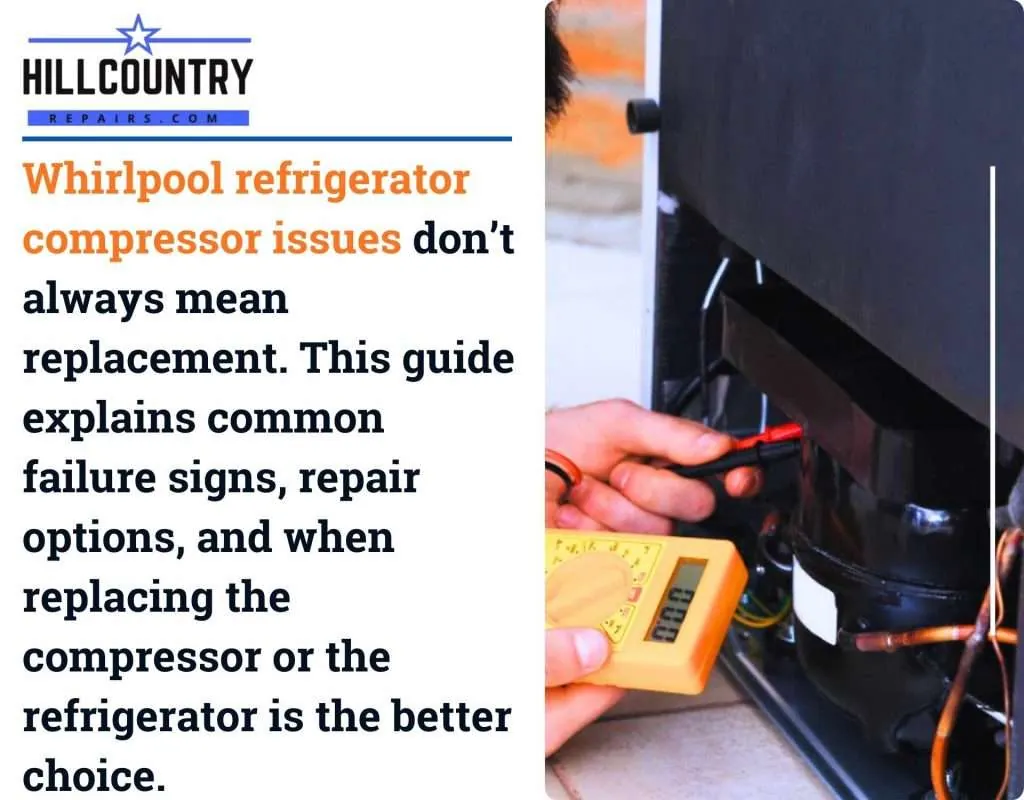
If you own a kitchen appliance that has suddenly stopped cooling or started making an unusual racket, you’re likely looking for help with common whirlpool refrigerator problems to get your unit back in working order. Troubleshooting these machines often involves checking power supplies, airflow, and specific mechanical components like the compressor or evaporator fan. Repair costs for these appliances vary significantly depending on the nature of the issue and whether you require professional intervention. For minor part replacements like a thermostat or a start relay, you might spend between $150 and $450. If the repair requires a major component like a compressor or a sealed system recharge, costs typically range from $600 to $1,400.
Key Takeaways
- Check the power supply and circuit breaker before assuming a major mechanical failure has occurred.
- Clear all debris and dust from the condenser coils to prevent overheating and cooling failure.
- Ensure the refrigerator doors are sealing correctly to maintain internal temperatures and prevent ice buildup.
- Listen for specific sounds, such as clicking or grinding, to help isolate the faulty component.
- Verify the temperature settings on the control panel to ensure they haven’t been accidentally adjusted.
Is Your Refrigerator Not Cooling?
When your unit stops maintaining the proper temperature, the first step is to inspect the condenser coils. These coils are responsible for dissipating heat, and if they become clogged with dust, pet hair, or debris, the refrigerator will struggle to cool. Locate the coils either at the bottom behind the kick plate or on the back of the unit. Use a vacuum attachment or a long-handled brush to clean them thoroughly.
Pro Tip: Always unplug your refrigerator before attempting to clean the coils or inspect the internal wiring to avoid the risk of electrical shock.
Another common culprit is the evaporator fan motor. If you hear the compressor running but don’t feel air circulating inside the freezer or fresh food compartment, the fan may be broken or obstructed by ice. You can test this by manually pressing the door switch to see if the fan starts spinning. If it remains silent, the motor likely requires a replacement.
How To Fix Water Leaks
Water pooling at the bottom of your refrigerator or leaking onto your kitchen floor is usually caused by a clogged defrost drain. During the automatic defrost cycle, melted frost travels through a drain tube into a pan at the bottom of the unit. If this tube becomes blocked by food particles or ice, the water overflows.
| Component | Common Issue | Typical Solution |
|---|---|---|
| Drain Tube | Blockage | Flush with hot water or wire |
| Water Filter | Cracked housing | Replace filter cartridge |
| Inlet Valve | Mineral buildup | Install new water valve |
| Door Gasket | Poor seal | Clean or replace seal |
You can clear a blockage by using a small, flexible brush or a mixture of warm water and baking soda to flush the drain line. Ensure the water is draining freely into the pan located near the compressor.
Why Is The Ice Maker Failing?
A malfunctioning ice maker is one of the most frequent whirlpool refrigerator problems reported by homeowners. Start by verifying that the water supply line isn’t kinked or frozen. If the line is clear, check the water inlet valve. This valve opens to allow water to flow into the ice mold. If the valve is faulty or receives insufficient water pressure, the ice maker will fail to cycle.
Troubleshooting Ice Maker Steps
- Confirm the freezer temperature is set between 0 and 5 degrees Fahrenheit.
- Check that the water line is connected and the shut-off valve is fully open.
- Inspect the ice mold for any stuck cubes or obstructions.
- Reset the ice maker by toggling the power switch or using the control panel reset function.
- Test the electrical continuity of the water inlet valve using a multimeter.
Addressing Excessive Refrigerator Noise

If your unit is making a loud buzzing, clicking, or rattling sound, it’s helpful to identify where the noise originates. A rattling sound often suggests that the unit isn’t level. Use a carpenter’s level to ensure the refrigerator sits flat on the floor; otherwise, adjust the leveling legs at the front of the base.
A constant clicking noise often points to a failing compressor start relay. This component sends a pulse of electricity to the compressor to get it moving. When it wears out, you’ll hear the compressor attempt to start, fail, and then click. If the compressor is hot to the touch and the interior is warming up, the relay is the most probable point of failure.
Managing Unusual Frost Buildup
Excessive ice or frost in the freezer compartment usually indicates a problem with the door seal. If the gasket is cracked, torn, or simply not sitting flush against the frame, warm, moist air enters the freezer every time the door is closed. This moisture freezes on the evaporator coils, eventually leading to a thick layer of frost that blocks airflow.
Warning: Don’t use sharp tools, such as knives or ice picks, to scrape ice off the evaporator coils, as this can easily puncture the refrigerant lines and cause a permanent, expensive leak.
According to the United States Environmental Protection Agency, if a refrigerant leak occurs, the unit must be serviced by a certified professional to handle the chemical coolants safely and legally. Always inspect your door gaskets for cracks and clean them with mild soap and water to ensure a tight, airtight seal.
Analyzing Electrical Control Issues
Modern refrigerators rely on complex control boards to manage cooling cycles, defrost timers, and temperature sensors. If the display panel is unresponsive or the refrigerator behaves erratically, such as cycling on and off too frequently, the main control board might be malfunctioning.
Before assuming the board is bad, check the thermistors. These sensors monitor the temperature and send data to the control board. If a thermistor is faulty, the board may receive an incorrect signal, causing the refrigerator to stay too cold or stop cooling entirely. You can verify the resistance of these sensors with a multimeter; if the reading doesn’t change as the temperature changes, the sensor requires replacement.
Comparing Whirlpool Refrigerator Repair Options
When deciding between a DIY repair and hiring a professional, consider the complexity of the task and the availability of replacement parts.
| Repair Type | Difficulty | Estimated Cost | Professional Needed? |
|---|---|---|---|
| Clean Coils | Low | $0 – $10 | No |
| Replace Gasket | Low | $50 – $150 | No |
| Change Fan Motor | Medium | $100 – $300 | Optional |
| Compressor Work | High | $600 – $1,400 | Yes |
Always cross-reference your specific model number, usually found on a sticker inside the refrigerator door, before purchasing any replacement parts to ensure compatibility.
Understanding Refrigerator Cycles
It’s normal for a refrigerator to run for long periods, especially if the ambient temperature is high or if the doors are opened frequently. However, if the appliance runs constantly without stopping, it may be struggling to maintain temperature. Check the air vents inside the unit; if they’re blocked by food containers, the cold air can’t circulate properly, forcing the compressor to work overtime.
Additionally, ensure that the refrigerator has adequate clearance from the walls. Most manufacturers recommend at least one to two inches of space on all sides to allow for proper airflow. If the unit is pushed too tightly into a cabinet or against a wall, the heat generated by the condenser will be trapped, leading to reduced efficiency and potential hardware failure over time.
Frequently Asked Questions
Why is my refrigerator leaking water inside?
Water inside the fresh food compartment is almost always caused by a clogged defrost drain. The drain hole, located at the back of the interior, can become blocked by food particles or ice. You can usually clear this by flushing the hole with warm water using a turkey baster or by carefully using a piece of flexible wire to push through the blockage.
How do I reset my Whirlpool refrigerator?
Most Whirlpool units can be reset by unplugging the refrigerator for five to ten minutes, which allows the control board to clear its current state. If your model has a specific “Reset” button on the control panel, press and hold it for three to five seconds. For ice maker issues, you can often reset the ice maker by toggling its power switch off and on.
Is it worth repairing an old refrigerator?
If the repair cost is less than 50 percent of the price of a new, comparable refrigerator, it’s generally worth fixing. However, if the compressor is failing or the sealed system has a leak, the high cost of labor and specialized parts often makes replacement a more economical choice in the long run. Always check if your appliance is still covered under a manufacturer warranty.
Why is my refrigerator making a loud humming noise?
A loud humming or buzzing sound is typically caused by the condenser fan motor or the evaporator fan motor. If the fan blades are hitting an obstruction, such as ice or a piece of debris, they will make a grinding noise. If the motor itself is failing, it will produce a constant, strained hum. Inspecting the fan area for physical obstructions should be your first step.
How often should I clean my condenser coils?
For most households, cleaning the condenser coils once every six to twelve months is sufficient to maintain peak performance. If you have pets that shed frequently or if the refrigerator is located in a high-traffic area, you may need to clean them every three to four months. Keeping the coils free of dust prevents the compressor from overheating and extends the lifespan of the refrigerator.
Conclusion
Identifying the root cause of your appliance issues is the most important step in saving both time and money. By methodically checking the seals, coils, and fans, you can often resolve these common whirlpool refrigerator problems without needing a service technician. If you have confirmed that a specific part is broken, locate your model number and order the exact replacement part to ensure a successful repair.
