
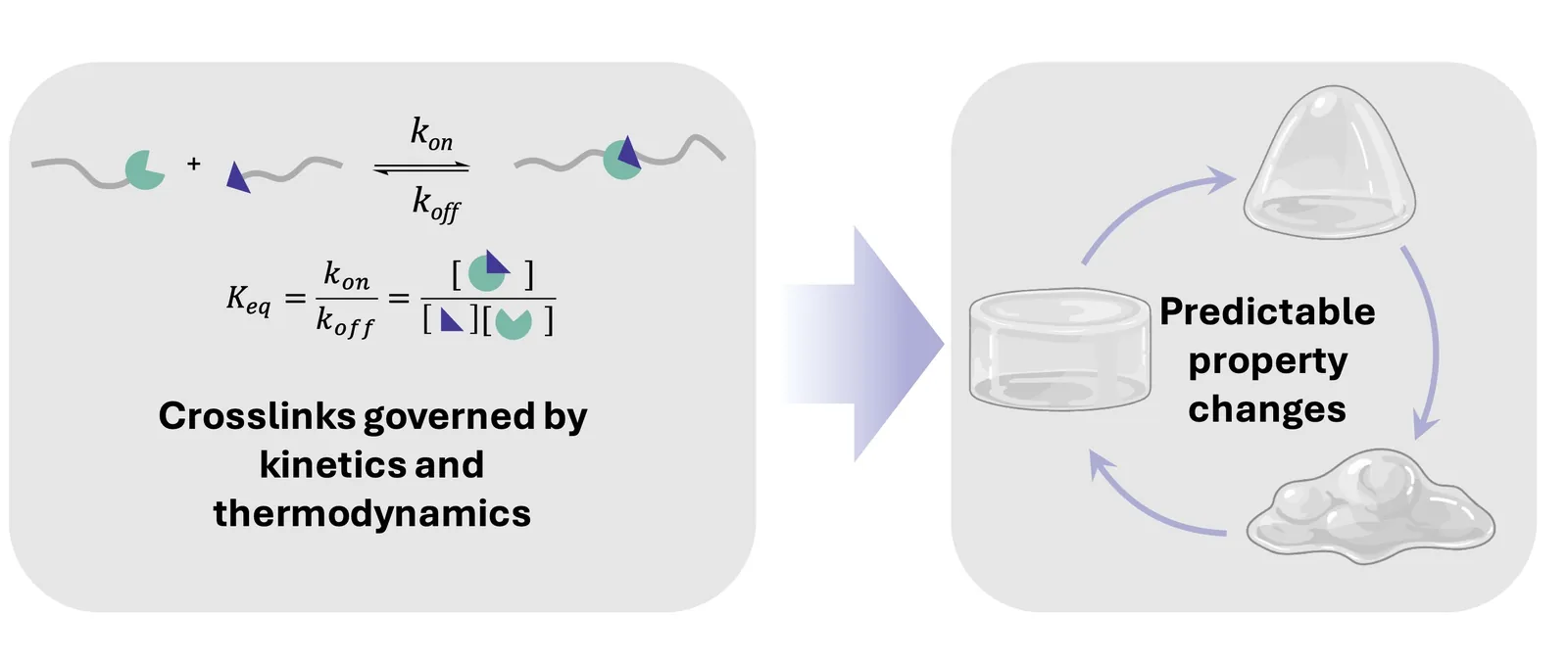
Chemical crosslinking changes material properties by creating covalent bonds between individual polymer chains, effectively transforming a collection of independent molecules into a single, three-dimensional network. This structural modification fundamentally alters how a substance behaves under stress, heat, and chemical exposure, turning soft, thermoplastic materials into rigid, thermosetting, or elastomeric structures. By restricting the movement of polymer chains, crosslinking prevents the material from melting or flowing, creating a stable, interconnected architecture that serves as the backbone for high-performance plastics, rubber products, and advanced medical hydrogels.
Key Takeaways
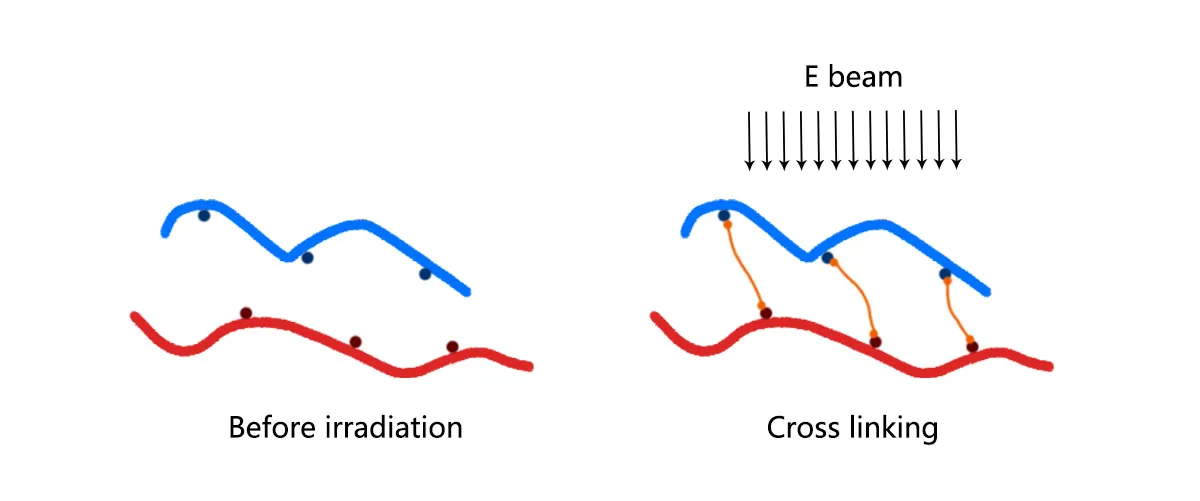
- Crosslinking increases the tensile strength of a polymer by preventing chain slippage under load.
- Thermal stability improves significantly because the network structure resists melting at high temperatures.
- Chemical resistance is enhanced as the tight, interconnected structure prevents solvents from penetrating the material.
- Elasticity and memory are improved, allowing the material to return to its original shape after deformation.
- Processing becomes more complex, as crosslinked materials generally can’t be remelted and reshaped like standard thermoplastics.
How Chemical Crosslinking Changes Material Properties
The primary effect of crosslinking is the transition from a linear or branched molecular structure to a network configuration. In a standard thermoplastic, long polymer chains are held together only by weak intermolecular forces. When you introduce chemical crosslinking, you forge permanent covalent bonds between these chains. This acts like a structural “anchor,” preventing the chains from sliding past one another.
This transformation shifts the material from a state where it can flow when heated to a state where it may degrade or char before it ever reaches a molten state. The mechanical integrity of the material is directly proportional to the crosslink density, which is the number of junctions formed per unit volume.
Why Do Engineers Use Crosslinking?
Engineers utilize this process to overcome the inherent limitations of raw polymers. Without crosslinking, many common plastics would soften, deform, or dissolve when exposed to everyday environmental stressors. By tailoring the crosslink density, manufacturers can produce materials that are exceptionally durable, chemically inert, and thermally stable.
This is critical in industries such as aerospace, automotive manufacturing, and biomedical engineering, where components must maintain their shape and function despite extreme conditions. The material performance is essentially locked into a specific state, providing a predictable and reliable response to external forces throughout the product lifecycle.
| Property | Non-Crosslinked (Thermoplastic) | Crosslinked (Thermoset/Elastomer) |
|---|---|---|
| Melting Behavior | Melts and flows | Doesn’t melt; chars |
| Chemical Solubility | Soluble in many solvents | Swells but remains intact |
| Creep Resistance | Low; deforms under load | High; resists permanent deformation |
| Elastic Recovery | Poor; prone to plastic flow | Excellent; returns to shape |
Does Crosslinking Improve Heat Resistance?
Yes, crosslinking is one of the most effective ways to boost the thermal operating range of a polymer. Because the covalent bonds are significantly stronger than the van der Waals forces in linear polymers, the material remains solid at temperatures that would typically cause a standard plastic to soften or drip.
This is why crosslinked polyethylene, or PEX, is the industry standard for plumbing pipes that must carry hot water without failing. The ASTM International standards for plastic piping provide detailed testing benchmarks for these materials to ensure they maintain structural integrity under continuous thermal stress.
Methods for Inducing Crosslinking
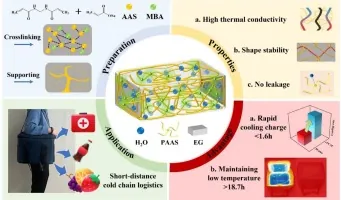
There are several industrial methods to achieve this structural change, each suited to different applications and materials. The choice depends on the desired crosslink density and the manufacturing process.
- Peroxide Crosslinking: Uses organic peroxides to initiate radical reactions that link carbon chains.
- Radiation Crosslinking: Utilizes high-energy electron beams or gamma radiation to trigger bond formation.
- Silane Grafting: Involves moisture-triggered reactions to create siloxane bridges between polymer chains.
- Vulcanization: A specific sulfur-based method used primarily for natural and synthetic rubbers.
Impact on Mechanical Strength
When polymer chains are locked into a network, the material’s resistance to external force changes dramatically. The tensile modulus, or the stiffness of the material, typically increases as crosslink density rises. However, there’s a trade-off: as the network becomes too dense, the material may become brittle and lose its elongation-at-break properties.
Finding the “sweet spot” is essential for engineering applications where a balance between flexibility and rigid strength is required. In applications like heavy-duty tires or industrial gaskets, high crosslink density provides the necessary structural reinforcement to withstand high-pressure environments without failing.
Chemical Resistance and Barrier Properties
Crosslinked polymers are far more resistant to aggressive chemicals than their linear counterparts. In a non-crosslinked material, solvent molecules can easily wedge themselves between the chains, causing the material to swell, dissolve, or lose its structural integrity.
Because the crosslinked network acts as a rigid, interconnected cage, solvent molecules have a much harder time penetrating the matrix. This makes crosslinked materials ideal for fuel lines, chemical storage tanks, and protective coatings where environmental stability is a non-negotiable requirement for safety and performance.
| Method | Best Application | Primary Advantage |
|---|---|---|
| Peroxide | High-temperature wiring | Excellent thermal stability |
| Radiation | Thin-film packaging | Clean, additive-free process |
| Silane | Plumbing and tubing | Allows post-extrusion processing |
Pro Tip: Managing Crosslink Density
Pro Tip: When designing parts, remember that increasing crosslink density improves chemical and heat resistance, but it also increases the likelihood of brittle failure; always perform impact testing to ensure the material remains tough enough for the intended service environment.
Can Crosslinked Materials Be Recycled?
One of the major drawbacks of crosslinking is the difficulty of recycling. Because the covalent bonds are permanent and the material doesn’t melt, it can’t be simply shredded and re-extruded like standard plastic bottles or containers. This creates a significant challenge for the circular economy.
While some companies are developing chemical recycling techniques to break these bonds down into monomers, most crosslinked waste currently ends up in landfills or is used for energy recovery through incineration. This makes material selection a critical decision for designers focusing on long-term sustainability.
Troubleshooting Common Issues
- Incomplete Curing: Often caused by insufficient heat or improper catalyst ratios; check your curing temperature profile.
- Material Brittleness: Usually indicates excessive crosslinking; reduce the initiator concentration to improve ductility.
- Surface Tacking: Often occurs when oxygen inhibits surface crosslinking; consider curing in an inert nitrogen atmosphere.
- Dimensional Distortion: Can result from uneven crosslinking rates; ensure uniform heat distribution during the production cycle.
Related guides
Frequently Asked Questions
Does crosslinking make plastic harder?
Yes, generally speaking, crosslinking increases the hardness and rigidity of a polymer. By creating a three-dimensional network, the material resists deformation and indentation better than its non-crosslinked counterpart. However, the exact increase in hardness depends on the density of the crosslinks; a very high density can lead to a glassy, brittle state, while a lower density may result in a tough, rubbery consistency.
Is PEX pipe considered a crosslinked material?
Yes, PEX stands for crosslinked polyethylene. The process of crosslinking the polyethylene chains significantly improves the material’s ability to withstand high temperatures and pressures, which is why it’s used extensively in residential and commercial plumbing systems. It offers better creep resistance and long-term durability compared to standard high-density polyethylene, making it a safer and more reliable choice for hot water distribution.
How do I measure the degree of crosslinking?
The degree of crosslinking is typically measured using solvent swelling tests or dynamic mechanical analysis. In a swelling test, the material is immersed in a compatible solvent; the amount of liquid absorbed is inversely proportional to the crosslink density. Alternatively, dynamic mechanical analysis measures the storage modulus at high temperatures; a higher rubbery plateau modulus indicates a higher degree of crosslinking within the polymer network.
Can I reverse the crosslinking process?
In most commercial polymers, crosslinking is an irreversible chemical reaction. Because the covalent bonds are permanently formed, you can’t simply melt the material to break them. While advanced chemical recycling methods exist to break these bonds at a molecular level, these are rarely available for consumer-grade plastics and are generally reserved for specialized industrial applications where high-value components can be recovered from the waste stream.
Why does crosslinking improve rubber performance?
Crosslinking, commonly known in the rubber industry as vulcanization, prevents the long, tangled rubber molecules from sliding past each other. Without these links, raw rubber would be sticky, soft, and easily deformed. By adding sulfur crosslinks, the material gains its characteristic “elastic memory,” allowing it to stretch significantly and then snap back to its original shape without undergoing permanent, non-recoverable deformation.
Conclusion
Understanding how these molecular connections function is the key to mastering material science in modern manufacturing. Whether you’re working with industrial elastomers or high-performance thermoplastics, the ability to manipulate the network architecture allows for the creation of components that are tailor-made for their specific environment. As you move forward, start by identifying the specific mechanical and thermal requirements of your application, and then consult technical data sheets for common polymers to see how different crosslinking methods could satisfy those needs.
