
Yes, you can make desserts in a slow cooker by using the gentle, moist heat to steam puddings, cakes, or fruit-based treats. Most recipes work best when you place a heat-safe dish inside the insert and use a water bath, which prevents the edges from drying out or burning. You must adjust your cooking times based on your specific appliance’s wattage and the type of dessert, as models vary significantly in how quickly they reach a simmer.
Who uses this cooking method
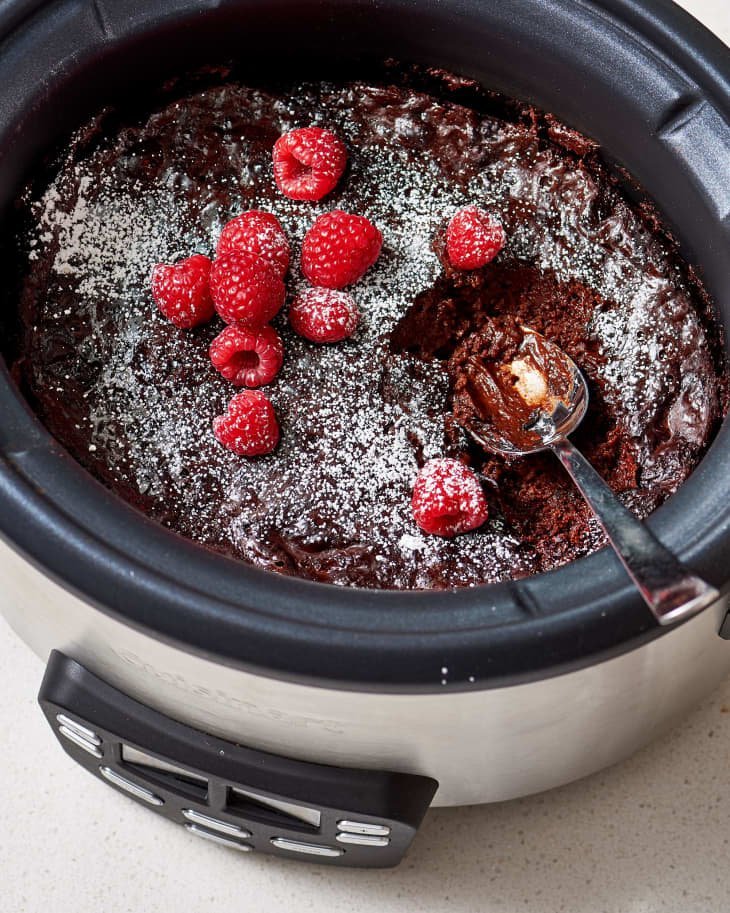
Home cooks often turn to this method when they need to keep an oven free for a main course or when they want to prepare a dessert that stays warm for hours. This technique is perfect for someone who already owns a standard 4-to-6-quart slow cooker and wants to expand their repertoire beyond soups and stews. It isn’t for anyone who expects a crispy crust or a caramelized top, as the environment remains too humid for browning.
If you’re looking for rapid results, this isn’t the right choice for you. The process is inherently slow and requires patience. This guide assumes you’re using a standard, programmable slow cooker with a removable ceramic insert. If you have a multi-cooker that includes a pressure setting, ignore the pressure-cook functions for these recipes, as the high heat and steam pressure will ruin the delicate texture of most baked goods. You need to focus on the “low” or “slow” temperature settings to ensure the center sets before the outside turns tough.
Things that impact your results
The size and shape of your slow cooker influence how evenly heat moves through your dessert. Larger units have more surface area, which can lead to faster evaporation if you don’t seal the lid tightly. If you notice your dessert is drying out, check if your lid has a tight fit or if you need to add a tea towel under the lid to catch excess condensation.
Another factor is the type of dish you use inside the appliance. Metal tins often conduct heat faster than glass or ceramic dishes. If you use a metal cake pan, check for doneness 30 minutes earlier than the recipe suggests. Using a ceramic dish provides more even, gentle heat but takes longer to reach the center of a thick batter.
The amount of water you add to the base also matters. A water bath acts as a buffer, keeping the temperature steady at roughly 212°F. If you skip the water bath, the bottom of your dessert will likely burn before the top is even cooked. Always ensure the water level reaches about halfway up the sides of your internal dish.
Finally, the temperature setting you choose determines the final texture. “Low” is almost always better for desserts, as it prevents the edges from becoming rubbery. “High” settings often lead to uneven cooking, where the edges are overdone while the middle remains liquid. You should always check the safe minimum internal temperatures if your dessert contains eggs or dairy, ensuring the center reaches 160°F.
Can I make desserts in a slow cooker? Preparation Tips
- Select a heat-safe mold or ramekin that fits inside your slow cooker while leaving at least one inch of space around the sides.
- Grease the inside of your dish with butter or a non-stick spray to prevent sticking.
- Prepare your batter or fruit mixture according to your chosen recipe, ensuring it’s no more than two-thirds full in the dish.
- Cover the dish tightly with aluminum foil to prevent water droplets from falling into your dessert.
- Place the dish into the center of the slow cooker insert.
- Carefully pour hot water into the slow cooker until it reaches halfway up the sides of your dish.
- Place the lid on the slow cooker and set it to “low” for the time specified in your recipe.
- Check for doneness by inserting a wooden skewer into the center; it should come out clean or with only a few moist crumbs.
- Turn off the heat and let the dessert sit in the water bath for 15 minutes before removing it.
The most important judgment call is knowing when to stop. If you leave the dessert in too long, the texture will become dense and heavy. Always start checking for doneness 30 minutes before the recipe’s end time, especially if you’re using a high-wattage modern model.
Variations for common sweets
| Dessert Type | Cooking Method | Typical Time (Low) | What to Watch For |
|---|---|---|---|
| Bread Pudding | Water bath | 3 to 4 hours | Firm, set center |
| Fruit Crumble | No water | 2 to 3 hours | Bubbly fruit juices |
| Steamed Cake | Water bath | 4 to 5 hours | Skewer clean test |
| Rice Pudding | No water | 3 to 4 hours | Creamy, thick texture |
| Poached Pears | Submerged | 2 to 3 hours | Tender, translucent flesh |
When preparing bread pudding, the water bath acts as a thermal buffer. It prevents the edges from drying out before the center reaches the necessary 165°F. If your custard remains liquid after four hours, your water level is likely too low. Ensure the water reaches halfway up the sides of your baking dish.
For fruit crumbles, the biggest mistake is overcrowding the vessel. Excess fruit creates a soup rather than a crisp topping. If you use frozen fruit, increase your cooking time by 45 minutes to account for the initial thaw. You’ll know it’s finished when the juices thicken and coat the back of a spoon.
Steamed cakes require a tight seal. Every time you lift the lid to check the skewer, you lose vital steam pressure. This drops the internal temperature and ruins the rise. Only test the cake once you have reached the four-hour mark. If the skewer comes out with wet batter, seal the lid immediately and wait another 30 minutes.
Rice pudding relies on starch release. If the texture feels grainy, the rice hasn’t absorbed enough liquid. Add a half-cup of warm milk and continue cooking for 20 minutes.
Poached pears should be fully submerged to avoid oxidation. If the fruit turns brown, it was exposed to air too early. Use a parchment paper circle cut to the size of your pot to keep the pears pressed beneath the poaching liquid. If the flesh resists the fork, add 15 minutes.
What separates good from poor results
Consistent moisture levels
Experienced cooks know that condensation is the enemy of a good texture. They always place a clean tea towel under the lid before closing it. This prevents water from dripping back onto the surface of a cake or pudding, which would otherwise lead to a soggy top. If you don’t use this trick, you’ll likely end up with a dessert that looks finished on the sides but has a wet, unappealing layer on top.
Proper heat management
The difference between a light, airy cake and a dense, rubbery block is the heat setting. Never use the “high” setting for delicate egg-based desserts. High heat causes the proteins to tighten too quickly, leading to a curdled or tough texture. If your recipe calls for a specific time, remember that these times assume a 1,000-watt slow cooker. If your appliance is older or has lower power, you might need to add 60 to 90 minutes to the total duration.
Troubleshooting common errors
| What you notice | What it means | What to do first | How to stop it |
|---|---|---|---|
| Burnt edges | Heat too high | Reduce to low | Use water bath |
| Watery top | Condensation buildup | Use tea towel | Cover dish tightly |
| Underdone center | Short cook time | Add 30 minutes | Check with skewer |
| Rubbery texture | Overcooked | Remove immediately | Check early |
| Sticking to dish | Not enough grease | Let cool longer | Grease dish well |
If your edges burn while the center remains raw, your slow cooker is likely running too hot. Place an oven thermometer inside to verify the temperature. If it reads 25 degrees higher than your dial, adjust your setting downward.
Watery tops often result from trapped steam. If you see beads of moisture, place a clean tea towel between the lid and the dish to absorb excess vapor. Always ensure the lid is sealed tight before the dish enters the slow cooker.
The most common mistake is opening the slow cooker lid too frequently. Every time you peek, you lose roughly 15 degrees of ambient heat. This forces the dish to cook unevenly. Only check the center with a skewer once the timer hits the final ten-minute mark.
If the dish sticks, you likely greased the pan while it was cold. Apply your fat or oil while the dish is at room temperature to ensure an even coating. If you’re using parchment paper, ensure it overlaps the sides by at least two inches for easy removal. When in doubt, always err on the side of undercooking; you can return a dish to the oven, but you can’t fix a rubbery, overcooked texture.
Rules for safe preparation
You must follow basic food safety guidelines to avoid illness, especially when working with eggs or dairy. The USDA advises that any dish containing eggs must reach an internal temperature of 160°F to be considered safe for consumption. If you’re preparing a dessert that contains raw ingredients, treat the preparation area, your hands, and your utensils with the same care as you would for raw meat.
If you’re unsure about the safety of your specific appliance, check the manufacturer’s manual for the maximum heat capacity of the ceramic insert. Never use a glass dish that isn’t labeled “oven-safe” or “heat-resistant,” as the prolonged heat can cause standard glass to shatter. If you have any doubt about the integrity of your dish or the safety of your recipe, don’t proceed. Always ensure your slow cooker is placed on a flat, heat-proof surface away from the edge of your counter to prevent accidental spills of hot water.
Costs and considerations
The primary cost here is time, as slow cooker desserts require three to five hours of unattended cooking. While the electricity usage is relatively low compared to an oven, the “cost” of a failed attempt is the loss of ingredients and the effort spent waiting.
To minimize risk, start with simple recipes like fruit crumbles before attempting complex cakes. These fruit-based desserts are forgiving because they lack the delicate structure of a sponge. If your dessert doesn’t turn out, compare the texture to your expectations. A dense texture usually means you need to add more leavening or reduce the cooking time next time.
A common mistake is lifting the lid to check progress. This delay can ruin the rise of a cake. If you’re unsure if the dessert is finished, use the toothpick rule: if it comes out wet, add 30 minutes. If it comes out with a few moist crumbs, it’s ready.
You must also account for the “carry-over” heat. Because the ceramic insert retains thermal energy, your dessert will continue to cook for 15 minutes after you switch the device off. If you’re baking a custard or a pudding, remove the insert from the base immediately. Leaving it inside will turn a creamy texture into a curdled mess. If you’re baking a cake, keep it in the base to ensure the edges set firmly.
Storing and keeping it right
Once the dessert is cooked, remove it from the water bath and let it cool completely on a wire rack. Avoid placing it directly into the refrigerator while still warm, as the trapped steam will create condensation that ruins the delicate texture.
If you plan to store it, keep it in an airtight container in the refrigerator for up to three days. Use glass or ceramic containers rather than plastic to prevent flavor absorption from other items in your fridge.
When reheating, use a microwave at 50% power for 30-second bursts until it’s steaming hot throughout. Don’t attempt to rush this process on high power, as the center will remain cold while the edges become rubbery or scorched.
If the dessert seems dry after storage, add a teaspoon of milk or water to the dish before warming to restore some moisture. If you notice a sour smell or visible mold, discard the batch immediately; these desserts are high in dairy and eggs, making them prime targets for rapid bacterial growth.
The decision rule is simple: if you intend to eat it within 24 hours, room temperature in a cool, dark pantry is acceptable. If you need to keep it longer, the refrigerator is mandatory. Never leave the dish out for more than two hours after the initial cooling period, as the danger zone for foodborne illness begins once the internal temperature drops below 140 degrees Fahrenheit.
When to avoid this method
Don’t use this method if you need a crispy topping, such as a toasted meringue or a caramelized sugar crust. The humid environment prevents any type of dry-heat browning. If your recipe requires a crust to be golden and crunchy, you must bake it in a conventional oven.
Additionally, if your recipe calls for delicate ingredients that don’t handle long, moist heat well, stick to traditional baking methods. For example, avoid this technique for puff pastry or delicate lace cookies. The constant steam will cause the pastry layers to collapse and the sugar in the cookies to dissolve into a sticky, unappealing mess.
A common mistake is assuming that a quick blast of high heat at the end will save the texture. This rarely works. Once the internal structure of a delicate dough has been compromised by moisture, the fat will leak out, leaving you with a greasy, dense result rather than a light, flaky one.
Use this decision rule to stay safe: if the primary goal of your recipe is structural integrity through dehydration, choose a dry-heat method. If the goal is tenderness and moisture retention, this method is appropriate. If you’re unsure, check the fat content of your dough. Recipes with a high butter-to-flour ratio, like shortbread, will almost always fail in a humid environment because the butter melts before the structure can set, resulting in a puddle rather than a cookie.
Frequently asked questions
Can I open the lid to check?
No, avoid opening the lid frequently because it releases steam and drops the internal temperature.
Is it safe to leave it unattended?
Yes, it’s generally safe to leave a modern slow cooker unattended for the duration of a recipe. Ensure the device is on a stable, non-flammable surface and that you have followed all safety instructions provided in your user manual.
Why is my cake still liquid?
Your dessert is still liquid because the internal temperature hasn’t reached the point where the starches or proteins set. This usually happens if you used a high-wattage setting or if your appliance has a slow heat-up time; add 45 minutes and check again.
Can I use a metal pan?
Yes, you can use a metal pan, but it will conduct heat faster than ceramic or glass. Check your dessert for doneness at least 30 minutes earlier than the recipe suggests to avoid overcooking.
Does the water bath matter?
Yes, the water bath is essential for even cooking and preventing the bottom from burning. It maintains a consistent, gentle temperature around the dish, which is necessary for delicate items like custards or sponge cakes.
How do I stop it from drying out?
You can stop it from drying out by tightly covering your dish with aluminum foil and placing a clean tea towel under the slow cooker lid. This keeps the moisture inside the dish rather than letting it evaporate or drip onto the surface.
Desserts slow, in short
Before you begin, verify your slow cooker is clean and the heating element functions correctly. If you notice fraying on the power cord or damage to the ceramic insert, don’t use the appliance. Start by testing a simple bread pudding; you’ll know you have succeeded when the center is firm to the touch.
Related guides