
A furnace that starts, runs briefly, and shuts off before reaching the set temperature is short cycling, usually caused by a dirty air filter. If the filter is clean, check the thermostat’s batteries, location, and exposure to drafts. Only inspect accessible areas like settings, the door, or the breaker. Never open the housing or touch internal parts, as capacitors can hold a lethal charge even when the power is off.
Furnace short cycling causes
| Cause | How common | How to confirm it | Fix it yourself? |
|---|---|---|---|
| Dirty air filter | Most of the time | Hold filter to light; no light passes through | Yes |
| Thermostat problem | In a small number of cases | Wrong settings, dead batteries, or bad location | Yes |
| Flame sensor dirty | Occasionally | Burners light then shut off within seconds | Yes with care |
| Blocked vents or registers | Occasionally | Some rooms stay cold while furnace stops early | Yes |
| Oversized furnace | Rarely | Short cycling started right after a new install | No |
| Control board fault | Rarely | Furnace repeats the same shut-off pattern daily | No |
A dirty filter blocks airflow, so heat builds up inside the furnace and the high-limit switch shuts the burners down to protect the system. The blower keeps running, the house never warms, and the cycle repeats. Pull the filter out and look at the size printed on its frame before you buy a replacement.
Slide the new filter in with the airflow arrow pointing the way the old one faced, usually toward the blower. This takes a few minutes and costs only what a new filter costs. If the filter was already clean, look at the thermostat next.
Safety: Inside a mains-powered machine, the parts behind the outer cover can hold a dangerous electrical charge even after it has been unplugged — that’s why they sit behind a cover. Opening the housing, or testing or replacing anything behind it, is a job for a qualified technician, never a home repair.
Thermostat settings and placement
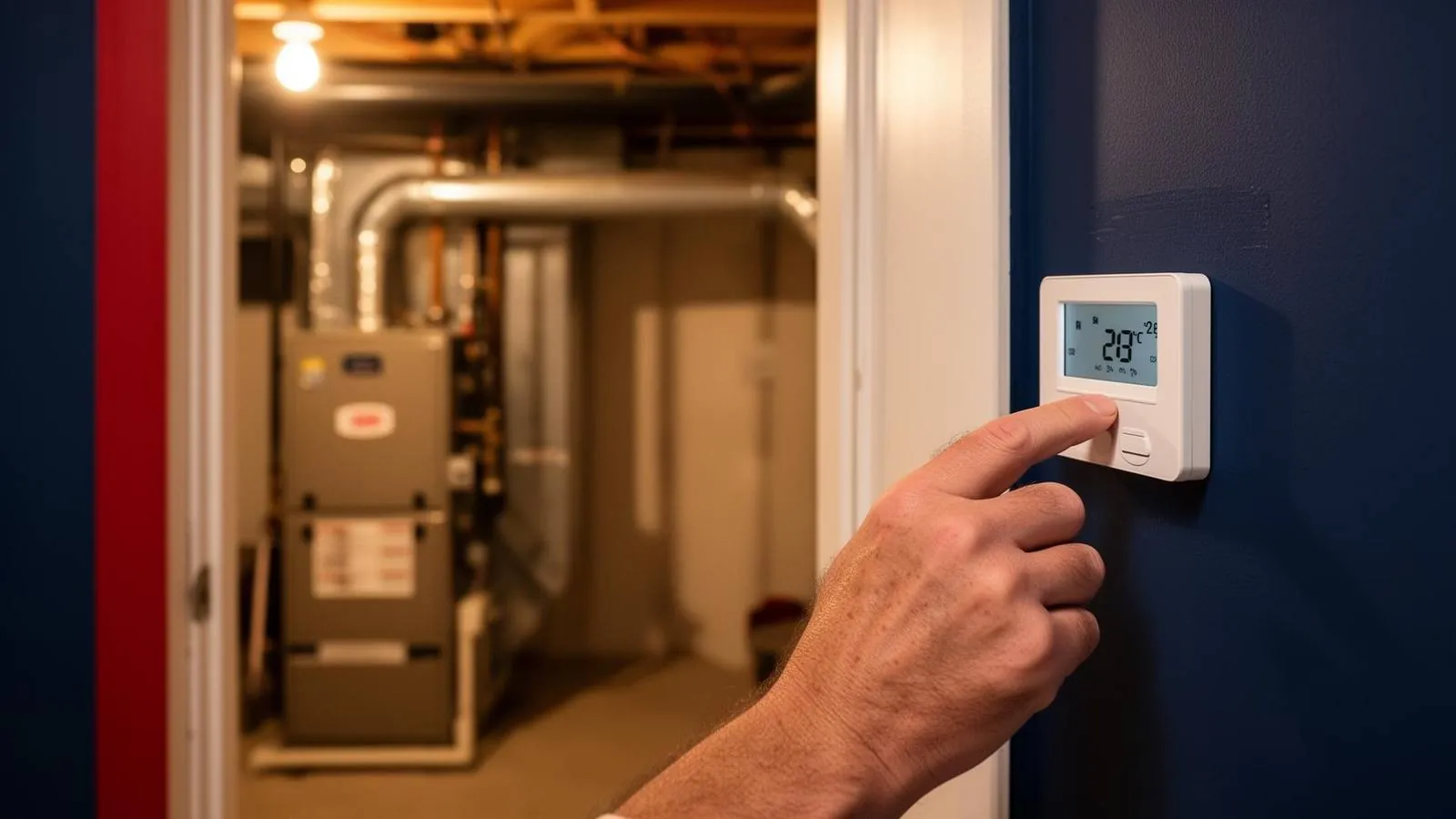
This cause is different from a dirty filter because the furnace may be healthy while the thermostat gives it the wrong instructions. Check that the system is set to heat, not fan or cool, and that the temperature is set above the current room temperature. Replace the batteries if the display is dim or blank.
A thermostat in direct sunlight, above a supply vent, or near a drafty door reads the wrong temperature and tells the furnace to stop early. Move it only if you’re comfortable turning off the power at the breaker first; otherwise call a technician. If the thermostat checks out, the flame sensor may be the issue.
Dirty flame sensor
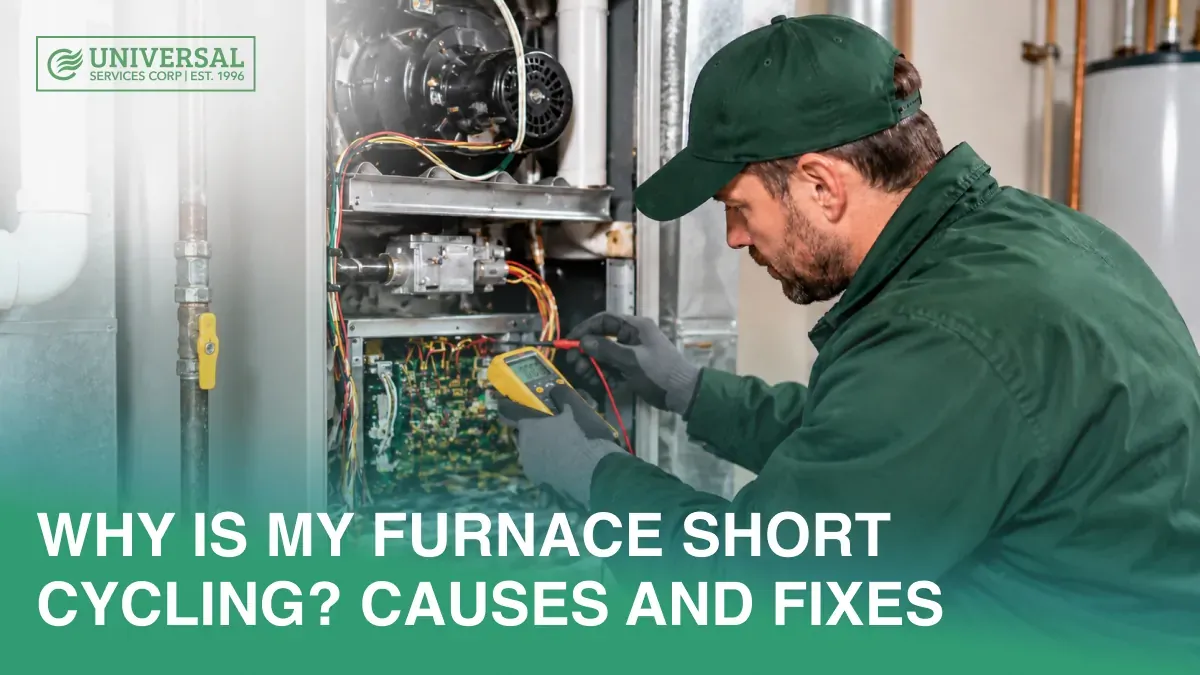
The flame sensor is a small metal rod that proves the burners lit. When it’s coated in residue, it can’t sense the flame, so the control board shuts the gas off for safety and the furnace cycles again. You can confirm this by watching the start-up: the burners ignite, then shut off within seconds while the blower keeps running.
Turn off power at the breaker, remove the sensor, and clean it gently with fine steel wool or a dollar bill — never sandpaper, which can scratch the coating. Reinstall it, restore power, and watch a full cycle. If the sensor is clean but the shut-off still happens, the problem is likely deeper in the controls.
Blocked vents and registers
This cause shows up when some rooms stay cold while the furnace shuts off early. A filter problem affects the whole house at once.
Walk through each room and make sure supply and return registers are open. Check that they aren’t blocked by furniture, rugs, or curtains.
People often close vents in unused guest rooms to save money on heating. That actually raises static pressure inside the ductwork. The blower pushes harder against closed dampers until the high-limit switch trips.
Leave every register fully open, even in rooms you rarely use. Keep at least a foot of clear space in front of each one.
Pay special attention to return grilles hidden behind sofas or beds. Blocking a single large return starves the furnace faster than closing three supply vents.
Open every register and check the clearance around them. This costs nothing and takes a few minutes.
If airflow looks fine and the short cycling continues, the remaining causes are rare and need a professional.
The less likely causes
An oversized furnace heats the house too fast and satisfies the thermostat before the cycle finishes. This usually starts right after a new installation. The air gets warm in five minutes, but the walls stay cold. You feel drafts again an hour later because the heat never soaked into the rooms.
A cracked heat exchanger can trip safety switches and shut the furnace down. This is a serious issue that needs immediate attention. The crack lets exhaust gases mix with the air blowing through your vents. If you smell something sharp or metallic near the registers, turn the system off at the breaker.
A faulty control board repeats the same shut-off pattern day after day. It can’t be diagnosed without proper tools. Homeowners often replace the flame sensor first because it costs less. That mistake leaves the real problem untouched while the furnace keeps failing mid-cycle.
If any of these sound like what you’re seeing, stop and call a licensed heating technician. Never open the furnace housing or test internal electrical parts yourself. That work carries real risk and can void your warranty.
What fixing a furnace involves

A filter change takes a few minutes and costs no more than a new filter. Thermostat batteries and vent clearing take about the same time and cost nothing. Cleaning a flame sensor takes roughly the same as a filter change, but only if you’re comfortable turning off the breaker and handling a small part. Anything past that — control boards, heat exchangers, or sizing problems — needs a licensed technician, and that cost depends on the part and your local rates.
Ask for a written quote before work begins, and compare it to the age of your furnace: if your unit is already old and the repair approaches the cost of a new system, replacement may make more sense. Check your furnace’s documentation or the manufacturer’s official page for the recommended service schedule and warranty details before you decide.
Related guides
- 5 Best Cycling Shorts for Long Distance Rides Reviewed in 2026
- Hot Tub Wont Heat: 3 Simple Fixes to Try Now in 2026
- Verizon Fios On Demand Not Working: 5 Proven Fixes to Try
Frequently asked questions
Can I keep running my furnace while it short cycles?
No. Running it this way strains the blower, the igniter, and the heat exchanger, and a small problem can become a costly one. Turn it off at the thermostat and check the filter first.
Why does my furnace shut off before the house is warm?
Most of the time it’s a dirty filter tripping the high-limit switch. Other times it’s a thermostat in a bad spot, a dirty flame sensor, or blocked registers.
How long does a filter fix take?
About five minutes, assuming you already have the correct size filter on hand. If you need to buy one, add the time for a trip to the store.
Is it safe to clean the flame sensor myself?
Yes with care, if you turn the power off at the breaker first and never use sandpaper. If you aren’t comfortable with that, call a technician.
What happens if I ignore short cycling?
Your energy bills go up, parts wear out faster, and the furnace can fail completely when you need it most. A cracked heat exchanger can also create a safety hazard.
Does it matter where my thermostat is located?
Yes. A thermostat in sunlight, above a vent, or near a draft reads the wrong room temperature and tells the furnace to stop too early.
Conclusion
If you have worked through the filter, thermostat, vents, and flame sensor and the furnace still short cycles, stop and call a licensed heating technician. The issue is likely inside the controls or the heat exchanger, and that isn’t a do-it-yourself repair.
