
People wrap baked potatoes in foil primarily to trap steam, which softens the skin and keeps the potato moist while it cooks. This method creates a steamed texture rather than a crisp, roasted one, and it helps the potato stay hot for a longer period after it leaves the oven.
The result you get depends on your oven temperature, the size of the potato, and whether you prefer a crunchy or soft exterior. Choosing the right method means balancing these factors to match your personal taste.
Why people wrap potatoes in foil
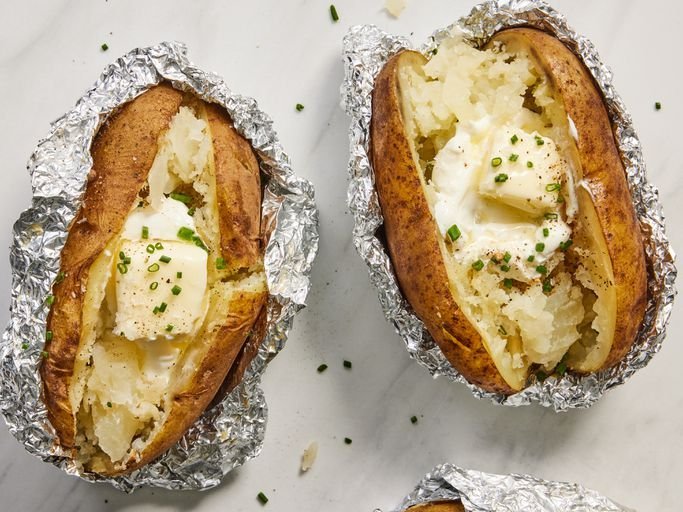
Home cooks who want a soft, tender skin often reach for aluminum foil as their primary tool. These users typically prepare potatoes for large crowds where keeping the food warm until serving is a logistical priority. If you’re preparing a quick weeknight dinner for two, using foil might result in a texture that feels “boiled” rather than baked.
Conversely, those who value a crispy, crackling skin should avoid foil entirely. This audience usually has the patience to wait for the natural moisture to evaporate from the skin during the roasting process. The assumption here is that you’re using a standard gas or electric oven rather than a microwave or an air fryer, as these appliances react differently to metal shielding. If you’re looking for a classic baked potato with a bite, skip the foil. If you’re preparing potatoes for a buffet or a long-distance picnic, the foil is your best friend for temperature retention.
Factors that change your results
The thickness of the foil you choose determines how much heat reaches the potato skin. Standard household foil is thin enough to allow some radiant heat through, while heavy-duty versions act as a significant barrier. You can check the thickness by feeling the weight of the roll; if it tears easily, it’s standard grade and will cook faster.
Oven calibration is another major factor that changes the outcome. If your oven runs hot, foil can actually cause the potato to overcook and turn mushy before the center is fully tender. Use an oven thermometer to verify your actual temperature, as many home units fluctuate by twenty degrees or more.
The size of the potato is the most common mistake people overlook. A large russet potato requires significantly more time than a small one, and wrapping a huge potato in thick foil often leads to a raw center.
Moisture content varies by the variety of potato you buy. Waxy potatoes, like red or gold varieties, hold their shape well but don’t benefit as much from the steaming effect of foil. Starchy, floury potatoes like Russets are the best candidates for this method because their internal structure absorbs the trapped steam, creating a fluffy texture.
Finally, the resting time after the oven is where most people lose the battle for quality. If you leave the potato in the foil for more than ten minutes after pulling it from the oven, the residual heat will continue to steam the skin until it becomes soggy. Open the foil immediately to let excess moisture escape if you want to avoid a wet, limp exterior.
Steps for a perfect bake
- Scrub the potato under cool running water to remove dirt and debris.
- Dry the skin thoroughly with a paper towel; a wet skin will steam even without foil.
- Poke the potato five or six times with a fork to allow internal steam to escape safely.
- Rub the skin lightly with a neutral oil, such as canola or vegetable oil.
- Place the potato directly on the center oven rack if you want a crispy skin.
- Wrap the potato in a single sheet of foil if you prefer a soft, steamed skin.
- Set the oven to 400 degrees Fahrenheit and bake for 45 to 60 minutes.
- Test for doneness by inserting a knife into the thickest part; it should slide in with zero resistance.
- Remove the potato from the oven and carefully unwrap the foil to prevent further steaming.
The judgment call that separates a professional result from a home-cooked one is the final texture check. A properly baked potato should feel firm but yield slightly to gentle pressure. If the potato feels spongy, it has been cooked too long in the foil. If it feels hard, add ten minutes of heat. Note that using foil to cook potatoes for long periods can lead to bacterial growth if the potato isn’t kept at a safe temperature, so follow FoodSafety.gov’s chart for proper handling.
Comparison of baking methods
Your chosen method changes the final texture and the time required to finish. Use this table to decide which approach fits your meal plan.
| Method | Texture | Time Required | Best Used For |
|---|---|---|---|
| Foil-wrapped | Very soft | 60 minutes | Buffet service |
| Bare rack | Crispy skin | 50 minutes | Dinner plates |
| Salt-crust | Crunchy/Salty | 70 minutes | Gourmet sides |
| Microwave | Steamed/Dense | 8 minutes | Quick lunches |
| Air fryer | Very crispy | 40 minutes | Small portions |
Foil-wrapped baking traps steam, which prevents the surface from drying out. This is the optimal choice for bulk cooking where items must sit under heat lamps for an hour or more. If you prefer a dry, crackling finish, use the bare rack method. This allows air to circulate fully around the item, ensuring the skin renders properly.
The salt-crust method is more involved but creates a moisture barrier that intensifies natural flavors. Use this for thick cuts of meat or root vegetables that benefit from a slow, even heat. If your ingredients are delicate or thin, avoid this technique, as the salt will over-cure the exterior before the center finishes.
Microwaving remains the fastest option, but it lacks the thermal energy to brown proteins. Reserve this for reheating leftovers or softening vegetables for a quick stir-fry. If you’re cooking for more than two people, the air fryer will fail you due to limited basket capacity. In that case, revert to the bare rack method to ensure consistent heat distribution across the entire batch.
What makes a good potato
Prep and placement
The key to a good result is ensuring even heat distribution. Experienced cooks never crowd the oven, as packing too many potatoes together creates a humid zone that prevents proper browning. Always leave at least two inches of space between each potato on the rack. If you’re using a baking sheet, use a wire rack inside it to allow air to circulate underneath the potato. This simple adjustment prevents the bottom of the potato from becoming soggy while the top remains hard.
Monitoring the process
You must monitor the internal temperature rather than relying solely on a timer. Use a digital probe thermometer to check the center of the potato; it’s ready when the internal temperature reaches 205 degrees Fahrenheit. Beginners often rely on the “timer-only” method, which leads to uneven results because every potato has a different density. If you don’t have a thermometer, the “knife test” is the only reliable way to ensure the center is cooked through without overdoing the exterior.
Troubleshooting common issues
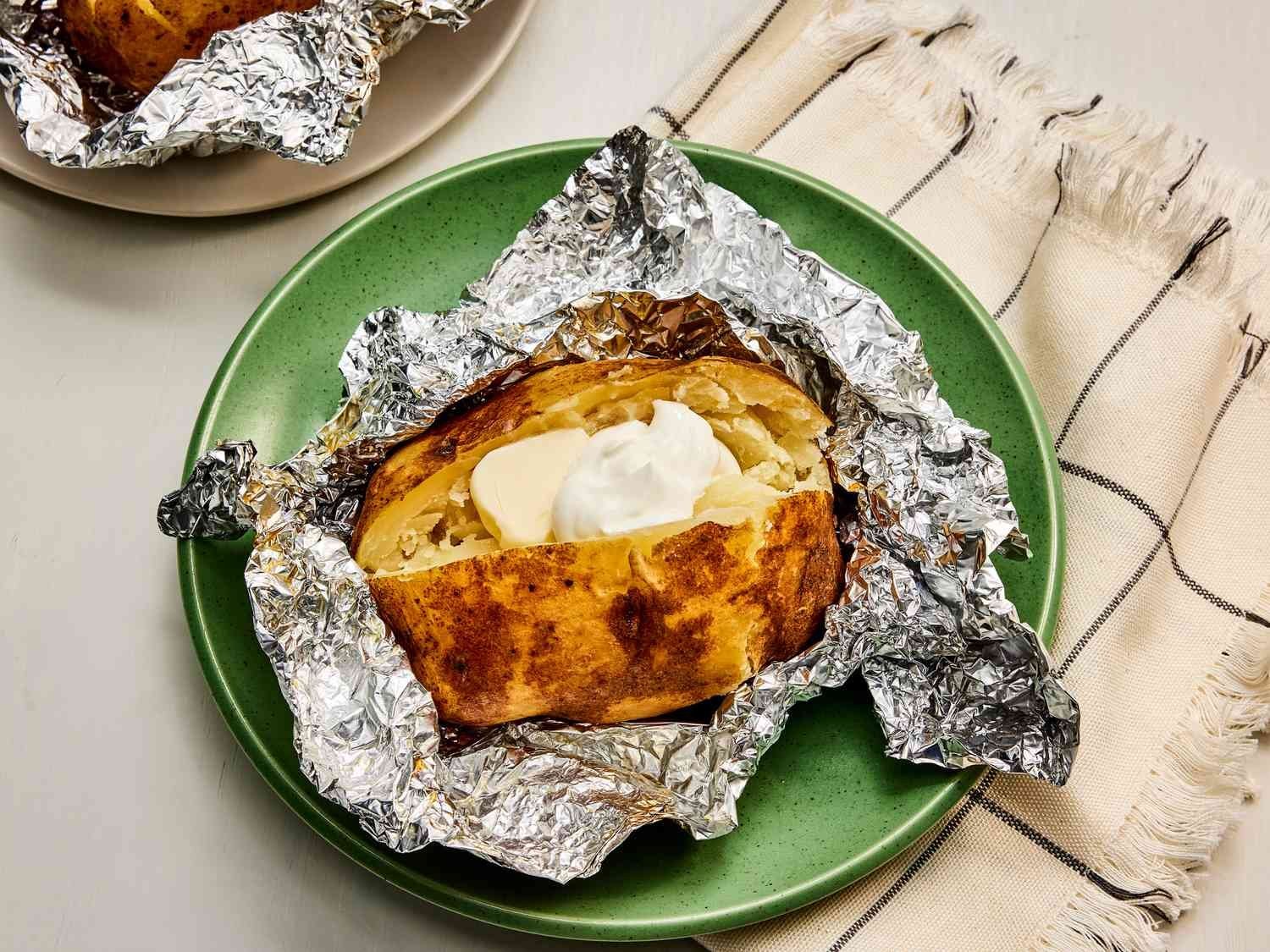
If you notice your results aren’t consistent, check this list for the most likely cause.
| What you notice | What it usually means | What to do first | How to stop it |
|---|---|---|---|
| Soggy skin | Too much steam | Unwrap immediately | Use less foil |
| Raw center | Potato too large | Turn heat down | Reduce potato size |
| Burnt bottom | Rack too low | Move rack up | Use a baking sheet |
| Hard skin | Low oven heat | Increase temperature | Use an oven thermometer |
| Mushy texture | Overcooked | Reduce time | Check with a knife |
Rules for safe cooking
The primary safety concern when baking potatoes is the risk of Clostridium botulinum, a bacteria that thrives in anaerobic (oxygen-free) environments. According to the United States Department of Agriculture, potatoes wrapped in foil and left at room temperature create the perfect conditions for these toxins to grow.
If you wrap a potato in foil, you must serve it immediately or keep it in an oven set above 140 degrees Fahrenheit. The mistake people make is leaving foil-wrapped spuds on the counter to cool before refrigerating them. This creates a dangerous incubation period where the internal temperature drops through the “danger zone” of 40 to 140 degrees while the foil continues to block oxygen.
Never store a foil-wrapped potato in the refrigerator, as the lack of oxygen inside the foil creates a major safety risk. If you aren’t eating the potato right away, unwrap it completely before cooling it down.
Use this simple decision rule: If the potato is coming out of the oven to be eaten now, foil is fine. If the potato is destined for the refrigerator for later use, remove the foil the moment it leaves the heat. If you can’t remember how long a foil-wrapped potato has been sitting out, discard it. Botulism toxins are odorless and tasteless, meaning you can’t rely on your senses to detect a spoiled batch. When in doubt, throw it out to avoid a foodborne illness that can cause severe neurological damage.
Understanding the costs
The cost of this method is measured in time and energy rather than money. Using foil adds pennies to the cost of your meal, but it increases the time the oven must run because foil acts as an insulator.
If you’re watching your energy bill, baking without foil is more efficient because the potato reaches the target internal temperature faster.
The real cost is the loss of the crispy skin, which is the most prized part of a well-baked potato. Foil traps steam, turning a potentially crunchy exterior into a soggy, limp layer. If you value texture over convenience, the “cost” of using foil is a lower-quality dining experience.
You can determine your preference with a simple rule: if you want a soft, steamed skin for mashing or stuffing, use the foil. If you prefer a crisp, crackling crust, leave the potato bare. The most common mistake is wrapping the potato while it’s still damp from washing. This guarantees a steamed texture regardless of your oven settings. Always pat the skin completely dry with a paper towel before it enters the heat. This small step ensures the skin dehydrates properly, resulting in a superior, restaurant-quality finish.
Maintaining your equipment
After you finish baking, clean your oven racks to remove any oil or residue that dripped during the process. Scrub them in a sink with hot, soapy water and a scouring pad. If you notice smoke during your next cook, that’s the sign your oven needs a deep clean. Smoke indicates that carbonized food particles are burning off, which can impart a bitter, metallic flavor to your next meal.
To keep your results consistent, calibrate your oven regularly using a dedicated oven thermometer. Don’t rely on the built-in display, as internal sensors often drift by 15 to 25 degrees over time. Place the thermometer in the center of the middle rack and wait for the oven to cycle through three heat-up periods before recording the reading.
If you find your oven temperature is consistently off, look for the “offset” or “calibration” setting in your user manual to adjust it. A common mistake is adjusting the dial based on a single reading. Instead, take the average of three separate tests to avoid overcorrecting. If your oven is consistently 20 degrees cooler than the set point, apply a positive 20-degree offset. If the variance is greater than 50 degrees, the issue is likely a faulty thermostat or heating element, not a calibration error.
When to avoid foil
Foil is the wrong choice if you want to achieve a restaurant-style crust. In these cases, use a light coating of oil and a dusting of sea salt directly on the skin. This draws out moisture, allowing the skin to crisp rather than steam.
If you’re cooking in a convection oven or an air fryer, foil can block the airflow that makes these appliances effective, leading to uneven cooking. In these situations, place the potato directly on the basket or rack.
The most common mistake is wrapping potatoes to “speed up” the process. This traps steam, resulting in a gummy, waterlogged interior that lacks the fluffy texture of a properly baked spud.
If you’re dealing with a large batch of potatoes for a professional catering event, consider using a commercial warming cabinet instead of relying on foil to maintain heat. Foil creates a greenhouse effect that softens the crust within fifteen minutes. If you must transport them, use an insulated dry-box lined with towels. This preserves the heat while allowing enough ventilation to keep the skin dry and crisp until service.
Frequently asked questions
Can I wrap potatoes in foil the night before?
No, you should never wrap potatoes in foil before cooking, as this creates a food safety hazard. Keeping a raw potato in a sealed, oxygen-free environment encourages the growth of harmful bacteria. Always wrap your potatoes in foil immediately before placing them into the oven to ensure they’re safe to eat.
How long does a foil-wrapped potato stay hot?
A foil-wrapped potato stays hot for about 30 to 45 minutes if kept in a warm, insulated container. The foil acts as a thermal barrier, but it will eventually lose heat to the room. If you need them to stay hot longer, place the wrapped potatoes in an insulated cooler without ice.
Is it safe to microwave a potato in foil?
No, you must never put metal foil into a microwave. The metal reflects the microwave energy, which causes sparks and can permanently damage your appliance or start a fire. If you’re using a microwave, use a microwave-safe dish or a paper towel to cover the potato instead.
Why do some chefs say never use foil?
Chefs avoid foil because it traps moisture and prevents the skin from crisping. A true baked potato is prized for its dry, light, and airy interior combined with a crunchy, salty skin. Foil turns the potato into a steamed product, which creates a denser, wetter texture that most culinary experts consider inferior.
Does foil make the potato cook faster?
No, foil actually slows down the cooking process because it acts as an insulator. While it traps steam to soften the skin, the physical barrier of the metal prevents the direct heat of the oven from penetrating the potato quickly. You should expect to add 10 to 15 minutes of cooking time.
What is the best potato for baking?
Russet potatoes are the best choice for baking because of their high starch content. This starch structure absorbs moisture efficiently, resulting in a fluffy, light texture that’s ideal for absorbing butter and toppings. Waxy potatoes, like red or Yukon Gold, are better suited for boiling or roasting in pieces.
People wrap, in short
Start your next batch by preheating your oven to 400 degrees Fahrenheit and testing the internal temperature after 45 minutes. You’ll know the potato is perfect when the skin is dry and the center is soft. If you experience a “wet” or “mushy” texture, stop using the foil and try baking the potato directly on the rack for your next meal.