
Amontons’ Law, also known as Gay-Lussac’s Law, describes the direct relationship between the pressure and the absolute temperature of a gas when its volume remains constant. Simply put, if you heat up a gas held in a fixed container, its pressure will increase proportionally. This principle is fundamental to understanding how gases behave in everything from industrial boilers to the tires on your car, providing a predictable mathematical framework for thermodynamic systems.
Key Takeaways
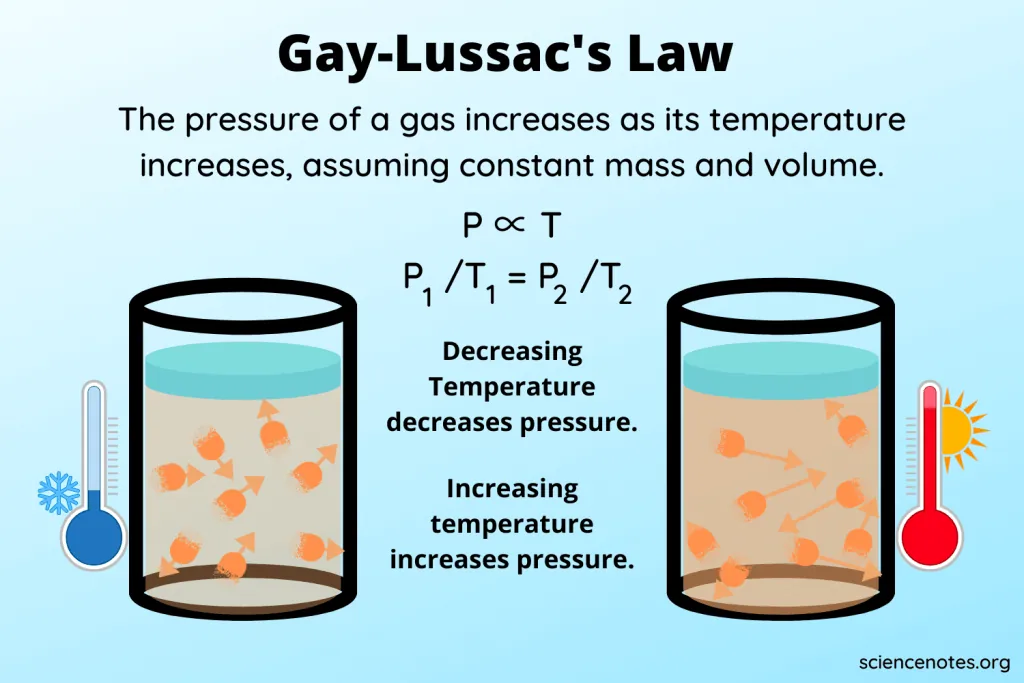
- Direct Proportion: As temperature rises, pressure rises; as temperature falls, pressure falls, assuming volume is static.
- Absolute Temperature: Calculations must always use the Kelvin scale rather than Celsius or Fahrenheit for accuracy.
- Constant Volume: This law only holds true if the gas container can’t expand or contract during heating or cooling.
- Practical Safety: Understanding this relationship prevents dangerous tank ruptures by accounting for thermal expansion.
- Predictable Modeling: Engineers use this law to calculate how much pressure a vessel will experience under specific thermal loads.
Understanding Amontons Law Pressure Temperature Relationship
At its core, the law is defined by the formula P/T = k, where P represents pressure, T represents temperature in Kelvin, and k is a constant. When you compare two different states of the same gas, the equation becomes P1/T1 = P2/T2. This means that if you double the absolute temperature, you effectively double the pressure exerted by the gas molecules against the walls of their container.
The movement of gas particles is essentially kinetic energy. When you add heat, these particles speed up, colliding with the walls of the vessel more frequently and with greater force. Because the volume is fixed, the particles have no room to spread out, resulting in a measurable increase in pressure. This is a fundamental gas law taught in introductory physics to establish the baseline behavior of ideal gases.
Why Use Kelvin Instead of Celsius?
Using Celsius or Fahrenheit for these calculations leads to significant errors because these scales have arbitrary zeros. The gas laws rely on the concept of absolute zero—the theoretical temperature where molecular motion effectively ceases. Kelvin is an absolute scale, meaning zero Kelvin is the point where there’s no kinetic energy.
- Kelvin Conversion: To convert Celsius to Kelvin, simply add 273.15 to your Celsius value.
- Mathematical Necessity: Because the relationship between pressure and temperature is a ratio, a zero or negative value on a Celsius scale would mathematically break the equation.
- Scientific Precision: Using Kelvin ensures that the ratio holds true across the entire range of potential temperatures.
Practical Examples of the Law in Action
To see this law in real-world scenarios, consider the following applications:
- Automobile Tires: On a hot summer day, the air inside your tires heats up, causing the pressure to rise even if no air was added.
- Pressure Cookers: By heating water in a sealed pot, the steam can’t escape, forcing the pressure to rise and significantly reducing cooking times.
- Aerosol Cans: Most pressurized cans carry a warning to keep them away from heat because the internal pressure can exceed the structural integrity of the metal.
- Gas Cylinders: Industrial oxygen or nitrogen tanks are rated for specific pressures, and storage facilities must monitor room temperature to avoid exceeding those limits.
Comparison of Ideal vs Real Gases
While Amontons’ Law is highly accurate for most gases under standard conditions, it’s technically an approximation for “ideal” gases. Real gases deviate slightly due to intermolecular forces and particle volume.
| Feature | Ideal Gas Behavior | Real Gas Behavior |
|---|---|---|
| Particle Volume | Considered zero | Occupies actual space |
| Intermolecular Forces | None exist | Weak attractions present |
| Law Accuracy | Perfect mathematical fit | High at low pressure |
| Deviation | None | Increases at high pressure |
Step-by-Step Calculation Method
When solving for a missing variable, follow this logical sequence to ensure you arrive at the correct result.
- Identify Knowns: List P1, T1, and either P2 or T2.
- Convert Units: Always ensure your temperature is in Kelvin.
- Rearrange Formula: Use the formula P2 = (P1 * T2) / T1 to find the final pressure.
- Solve: Perform the multiplication and division.
- Verify: Check if the pressure change matches the direction of the temperature change.
Warning: Never attempt to calculate pressure changes using Celsius, as the resulting ratios will be incorrect and could lead to dangerous misjudgments regarding the structural safety of pressurized containers.
Factors Affecting Gas Pressure
Beyond temperature, other factors influence the behavior of gases. It’s vital to isolate these variables when conducting experiments or making safety assessments.
- Mole Count: Adding more gas molecules (n) increases pressure if volume and temperature remain constant.
- Volume Changes: If the container is flexible, like a balloon, the volume will change to keep pressure constant, which is a different gas law entirely.
- Gas Purity: Contaminants in a gas mixture can change how the gas responds to heat, though this effect is usually negligible in basic applications.
- Container Material: The elasticity of the vessel wall can influence the effective volume, potentially invalidating the “constant volume” assumption.
Troubleshooting Pressure Issues
If you notice unexpected pressure fluctuations in a system, check these common sources of error.
| Potential Cause | Impact on Pressure | Action to Take |
|---|---|---|
| Temperature Spike | Increases pressure | Provide ventilation or cooling |
| Gas Leak | Decreases pressure | Inspect seals and valves |
| Volume Expansion | Decreases pressure | Check for structural deformation |
| Gauge Calibration | False reading | Recalibrate or replace sensor |
Safety Protocols for Pressurized Systems
Managing pressurized gases requires strict adherence to safety standards to prevent mechanical failure or injury.
- Storage: Keep tanks in a cool, shaded area away from direct sunlight or heat sources.
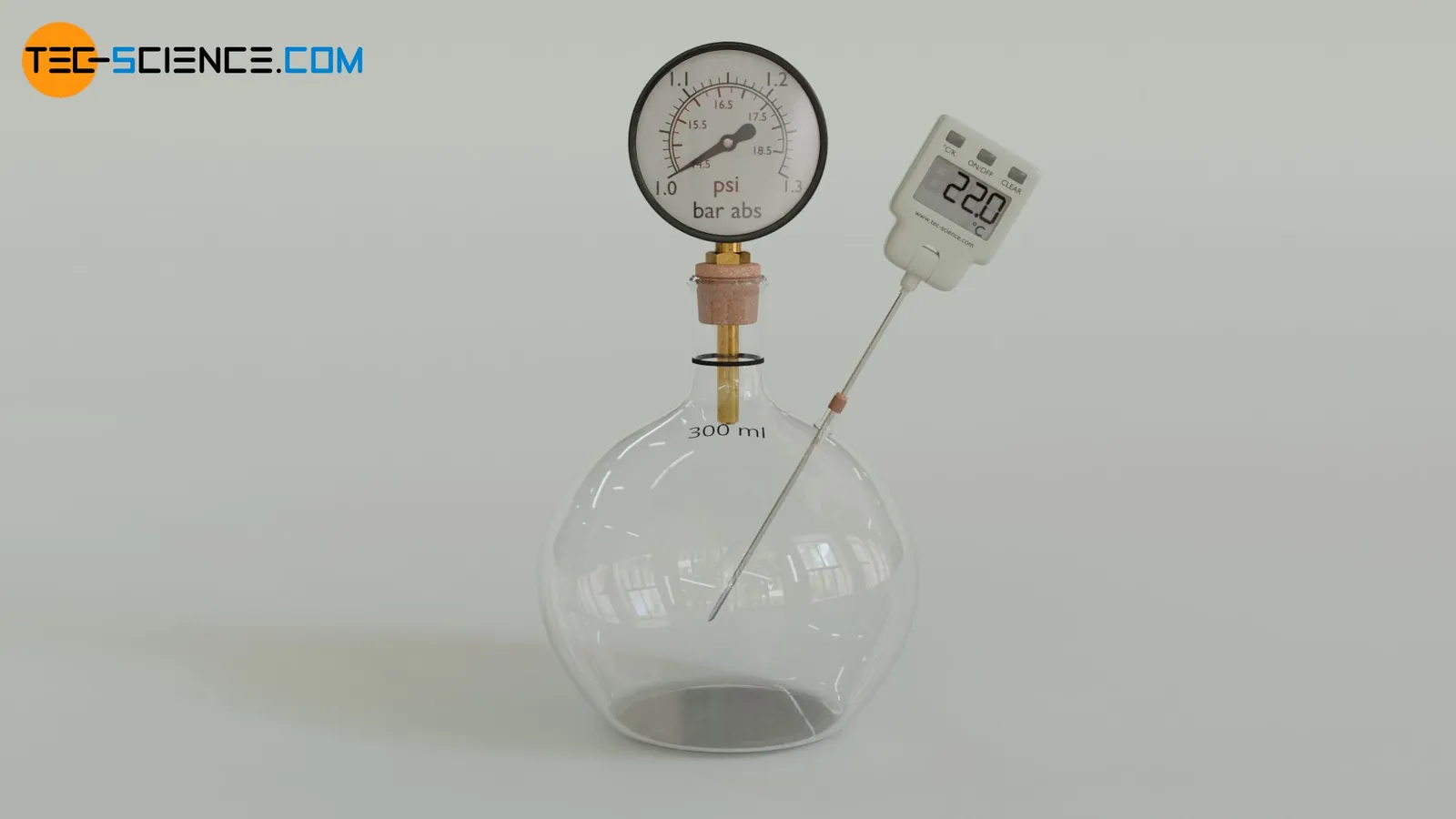
- Monitoring: Use high-quality, calibrated gauges to monitor internal pressure regularly.
- Pressure Relief: Always install a pressure relief valve that automatically vents gas if limits are exceeded.
- Inspection: Periodically check tanks for signs of corrosion, dents, or structural fatigue.
Pro Tip: When calculating pressure for industrial applications, always add a 10-15% safety buffer to your results to account for potential measurement inaccuracies or ambient temperature fluctuations in the environment.
Frequently Asked Questions
Does the gas type affect the result?
For the purpose of Amontons’ Law, the specific identity of the gas is generally irrelevant. The law assumes an “ideal gas,” which treats all gas molecules as point masses that don’t attract one another. While real gases like oxygen or carbon dioxide have slightly different properties, they behave so similarly to the ideal model that the math remains accurate for almost all practical, non-laboratory purposes.
What happens if the volume changes?
If the volume is allowed to change, the system no longer follows Amontons’ Law exclusively. You would then need to use the Combined Gas Law, which accounts for pressure, temperature, and volume simultaneously. If you heat a gas and allow the container to expand, the pressure might stay the same or even decrease, depending on how much the volume increases relative to the temperature rise.
Is the law linear?
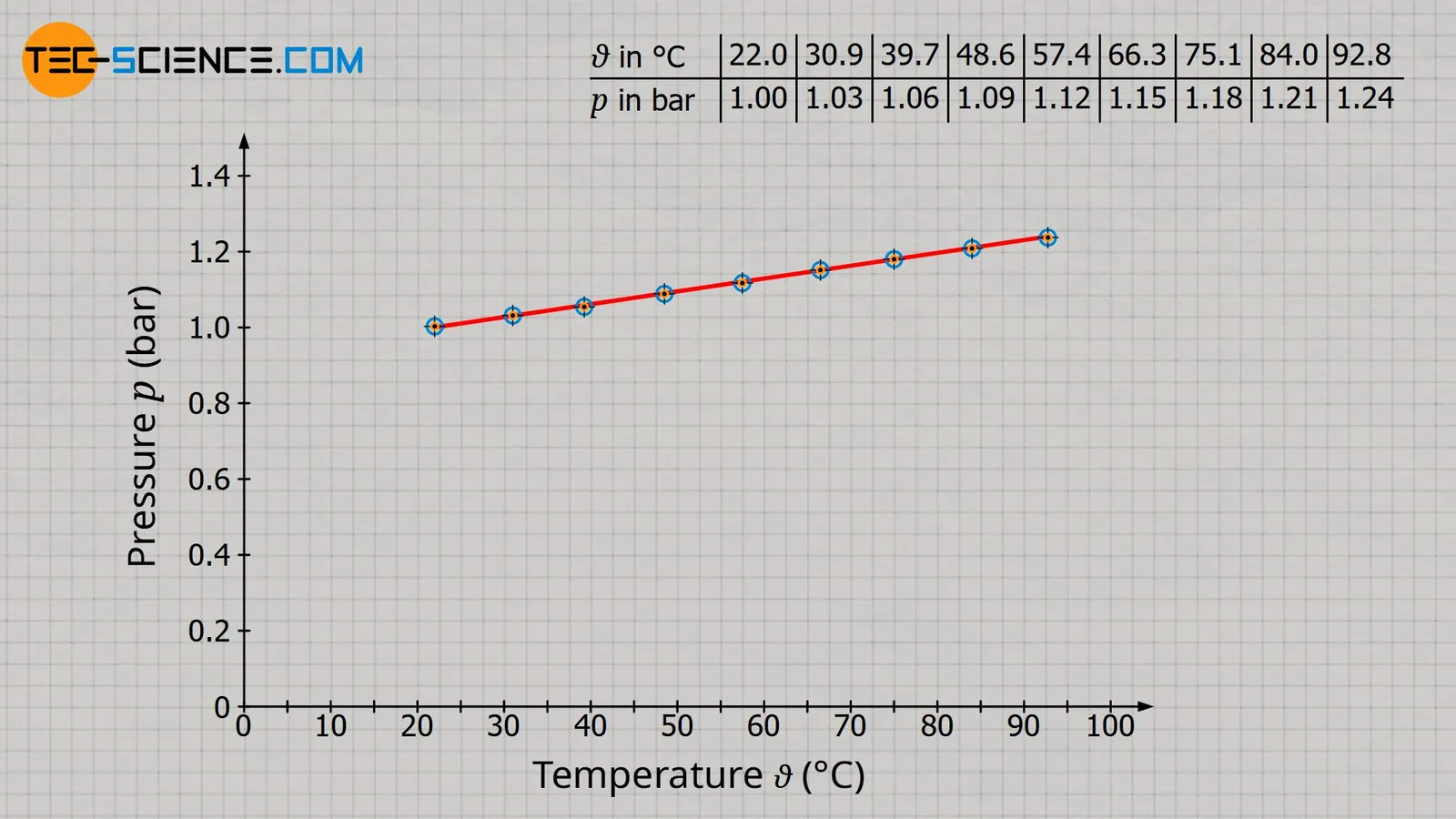
Yes, the relationship is perfectly linear when using the Kelvin scale. If you plot pressure on the y-axis and temperature on the x-axis, the result is a straight line passing through the origin (0,0). This linearity is what makes the law so useful for engineering; you can predict the state of a system at any temperature point by simply drawing a line through your known data points.
Can this law explain explosions?
It explains the mechanism behind certain types of physical explosions, specifically those involving boiling liquid expanding vapor explosions. If a sealed container is subjected to extreme heat, the internal pressure increases according to this law until it exceeds the tensile strength of the container material. Once the material fails, the sudden release of high-pressure gas causes a rapid, violent expansion that can result in an explosion.
How do I handle negative Celsius values?
You must convert the negative Celsius value to Kelvin. For example, -20 degrees Celsius is 253.15 Kelvin. Because the Kelvin scale never reaches zero (in a physical state) or negative numbers, it avoids the mathematical impossibility of having a negative pressure or a division-by-zero error. Always perform your conversion before plugging any numbers into your pressure-temperature equation to ensure your results remain physically meaningful and mathematically sound.
Conclusion
To further your mastery of thermodynamics, start by measuring the pressure of a bicycle tire before and after a ride in the sun. Use a digital gauge to record the cold pressure, calculate the expected pressure increase based on the temperature rise of the rubber, and then verify your hypothesis with a second measurement to see how closely your real-world observations align with the theoretical model.
