
Acoustic vibration is the movement of particles in a medium, such as air or water, that creates sound waves. This physical oscillation occurs when an object vibrates and pushes against surrounding molecules, creating alternating zones of high and low pressure. These pressure changes travel outward from the source, eventually reaching a listener’s ear or a sensor to be interpreted as sound.
How acoustic vibration works
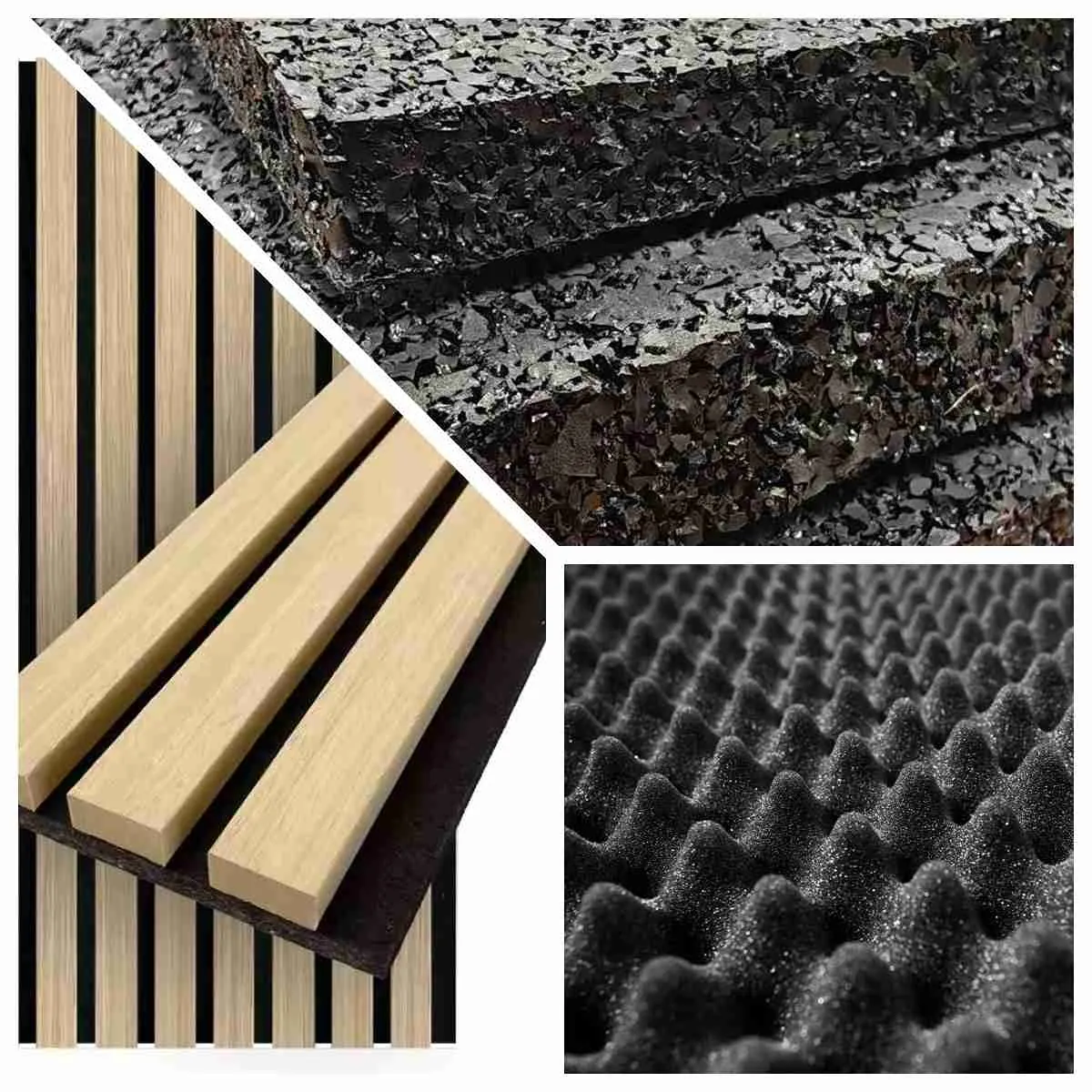
The process begins when an object moves back and forth, displacing the air or material directly next to it. These molecules hit their neighbors, passing the energy forward while the particles themselves only move a tiny distance from their resting point. This chain reaction forms a longitudinal wave that travels through the medium at a speed determined by the density and elasticity of the material.
If you’re standing near a speaker, the air pressure fluctuates rapidly as the cone moves. The frequency of these vibrations, measured in Hertz (Hz), determines the pitch of the sound you perceive. Higher frequencies mean more rapid oscillations per second, while lower frequencies represent slower cycles. According to the Occupational Safety and Health Administration, sound pressure levels are measured in decibels, which quantify the intensity of these waves against the threshold of human hearing.
Key facts about sound energy
- Sound requires a physical medium like air, water, or metal to travel; it can’t move through a vacuum.
- The speed of sound in dry air at 68°F (20°C) is approximately 1,125 feet per second.
- Low-frequency sounds have longer wavelengths and can travel further around obstacles than high-frequency sounds.
- Amplitude refers to the height of the wave, which correlates directly to the perceived loudness of the sound.
- Constructive interference happens when two waves overlap to create a louder sound, while destructive interference cancels them out.
Why sound waves behave differently
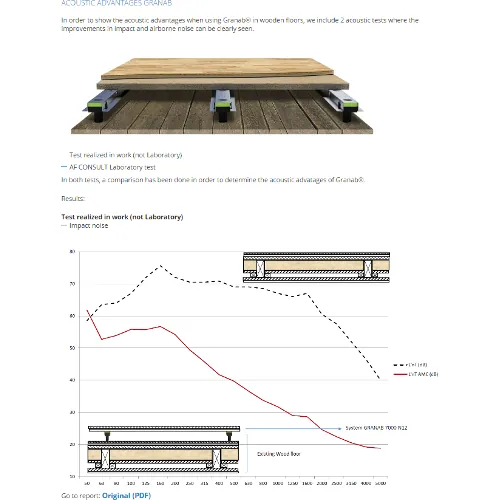
The behavior of acoustic energy depends heavily on the medium it travels through and the obstacles in its path. Sound travels about four times faster in water than in air because water is significantly less compressible than air, allowing for more efficient energy transfer between molecules. This allows the energy to transfer between particles much more efficiently than in a gaseous state where molecules are spaced further apart.
When a sound wave hits a hard surface, it reflects, which is why you hear an echo in an empty room. If the surface is soft or porous, the material absorbs the energy, converting the vibration into a tiny amount of heat.
If you’re trying to block noise, choose dense materials like mass-loaded vinyl; if you want to stop echoes, use soft materials like acoustic foam. The density of the barrier determines how much energy passes through versus how much is reflected back.
Variables in sound propagation
| Variable | How it changes | Effect on sound |
|---|---|---|
| Temperature | Increases with warmth | Sound travels faster in hot air |
| Density | Increases with pressure | Waves move faster in solid objects |
| Humidity | Higher water content | Sound travels slightly faster |
| Obstacles | Hard surfaces | Causes reflection and echoes |
| Porosity | Soft materials | Absorbs energy and reduces noise |
Air temperature is the most volatile variable. Sound speeds up by approximately 0.6 meters per second for every degree Celsius increase. If you’re mixing audio outdoors, expect your high-frequency response to shift as the sun sets and the air cools.
The ratio of a medium’s stiffness to its density dictates the speed and efficiency of sound propagation. Sound travels roughly 17 times faster through steel than through air because the molecular bonds are tighter. Use this to your advantage when isolating rooms; if you need to block low-frequency vibrations, mass is your only reliable tool.
Don’t confuse porosity with density. A dense concrete wall reflects sound, while a porous foam panel traps it. If you hear a persistent flutter echo in a small studio, cover at least 20 percent of your parallel wall surfaces with porous acoustic treatment to kill the reflection.
How to measure acoustic output
- Place a calibrated sound level meter at the exact distance from the source you wish to test.
- Set the meter to the “A-weighting” scale if you want to replicate how the human ear perceives loudness.
- Ensure no reflective surfaces are within 3 feet of the microphone to avoid inaccurate readings from echoes.
- Run your sound source at the volume you intend to use for your regular daily activity.
- Check the digital display for the decibel (dB) reading and record the value over a 30-second average.
- Compare your result against standard safety guidelines to see if the level is within a safe range.
Mistakes that ruin acoustic performance
Placing speakers directly on hard floors creates unwanted structure-borne vibration that muddies the sound. Use isolation pads or heavy rubber feet to decouple the cabinet from the floor. This simple addition prevents energy from traveling through the structure, tightening your bass response immediately.
Ignoring room corners allows low frequencies to build up, creating a “boomy” or distorted experience. Place bass traps in these junctions to absorb the pressure. If you lack space, move your listening chair at least three feet away from the back wall to avoid the worst standing waves.
Using thin, lightweight foam panels won’t block noise, as sound waves pass through them easily. If you need true isolation, you must add mass. Install a second layer of drywall with a damping compound between the sheets to stop sound transmission.
Leaving large gaps under doors allows sound to leak, defeating the purpose of expensive soundproofing. Install a heavy-duty automatic door bottom that seals against the threshold when closed. A gap as small as a quarter-inch can reduce your overall sound isolation by more than 50 percent.
Frequently asked questions
Does acoustic vibration cause structural damage?
Acoustic vibration only causes structural damage if the sound pressure level is extremely high and matches the resonant frequency of the object. For most household audio systems, this isn’t a risk. If you’re operating heavy industrial machinery, consult a structural engineer to ensure the vibrations remain within safe limits for your building’s foundation.
How do I stop acoustic vibration in my walls?
You stop acoustic vibration by adding mass and decoupling the wall structure from the sound source. Adding a second layer of drywall with a damping compound in between is a common method. If the noise is structural, you might need to install resilient channels to separate the wall surface from the studs, which breaks the path for the vibration.
Can acoustic vibration kill plants?
There’s no evidence that acoustic vibration at normal levels kills plants, though some research suggests sound can affect plant growth patterns. Most plants don’t have sensory systems to interpret sound waves, so they remain unaffected by music or background noise. You don’t need to worry about the volume of your home audio system affecting your indoor garden.
Why does the floor shake when the bass plays?
The floor shakes because low-frequency acoustic vibrations transfer energy directly into the structure of your home. Bass waves have high energy and long wavelengths that vibrate large surfaces like floors and walls. If this bothers you, place your subwoofer on an isolation pad to decouple it from the floor and prevent the energy from traveling into the building frame.
Is acoustic vibration the same as ultrasonic?
Acoustic vibration refers to the entire range of sound, while ultrasonic vibration specifically describes frequencies above 20,000 Hz. Humans can’t hear ultrasonic sounds because they’re too fast for our eardrums to vibrate in response. Everything in the audible range is acoustic, but only the very high-frequency portion is classified as ultrasonic.
How long does an echo last in a room?
An echo lasts for a duration determined by the room’s volume and the amount of sound-absorbing material on the walls. In a small, furnished room, echoes are usually absorbed in less than 0.5 seconds. In large, concrete spaces like cathedrals or gymnasiums, the sound can bounce for several seconds before the energy dissipates completely.
Does the shape of a room change sound?
The shape of a room changes sound by creating standing waves, which are areas where certain frequencies become much louder or quieter. Rectangular rooms with parallel walls often suffer from these issues because waves bounce back and forth between the same two surfaces. Using diffusers or angled wall panels can help break up these patterns and create a more balanced sound.
Conclusion
Sound energy is a fundamental part of our environment, constantly moving around us through the air and solid objects. By understanding how these waves interact with different materials and spaces, you can better control the noise in your home or improve the quality of your audio setup. Always consider the density and placement of your materials to get the best results for your specific environment.
