
Spinning in foosball is strictly limited to one full rotation of the rod per touch. You can’t just spin it wildly or keep going; the rule exists to keep the game fair and playable. This guide covers how to spot the violation, what happens when it occurs, and how to handle the ball correctly so your team stays in the clear.
What this actually is
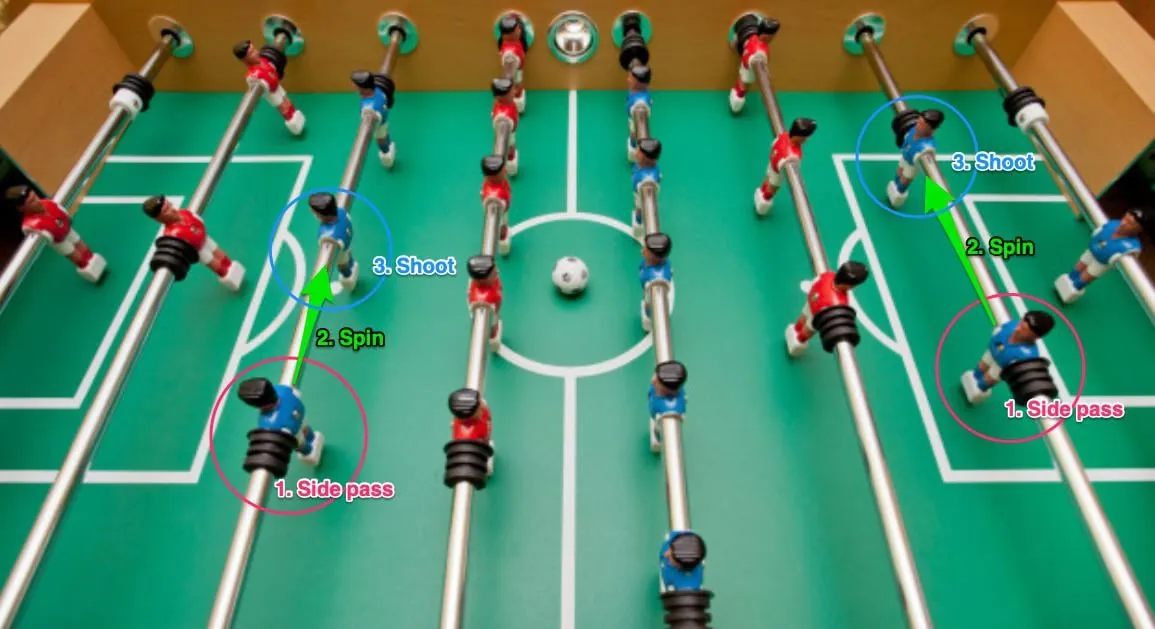
Foosball spinning rules define how much a player can turn their rods during play. The core limit is one complete revolution for each time the rod touches the ball. This isn’t about speed or power; it’s about control. When a rod spins too far, it becomes hard to predict where the ball goes next. That unpredictability ruins the flow of the game for everyone else.
Many players think they can spin freely as long as they don’t hit the table. That’s wrong. The rule applies to every touch, whether you’re shooting, passing, or defending. The goal is to stop aggressive, chaotic movements that make the game unsafe or unfair. It keeps the sport skill-based rather than strength-based. This limit helps you play smarter and avoid penalties.
A common mistake is assuming a partial spin counts as nothing. Referees watch the wrist, not just the hand. You must reset your grip immediately after each shot. Don’t wind up for a power move. Keep your wrists loose but firm. This prevents accidental over-rotation.
Also, remember that blocking shots requires minimal movement. A stiff rod stops the ball without needing to twist. Use this to your advantage. Defensive players often lose points by trying to counter-spin aggressively. Instead, anchor your rod against the incoming force. Let the ball deflect off your static figures. This conserves energy and maintains position.
Finally, practice in slow motion first. Build muscle memory for precise, short rotations. Speed comes later. Until then, prioritize accuracy over distance. Your opponents will appreciate the fair play.
The basic method
Playing with proper rod control takes practice. Here is how to stay within the legal limits while keeping your shots effective.
- Keep your hands relaxed on the handles. Tight grips force you to jerk the rod, which often leads to over-spinning.
- Focus on pushing and pulling the rod forward and back. Use short, controlled motions instead of wide swings.
- Limit your wrist movement. Let your forearm do the work. This gives you better stability and less chance of accidental spins.
- Watch the ball closely. Anticipate where it will land so you don’t have to react with sudden, large movements.
- Practice stopping the rod instantly after contact. A quick halt prevents any follow-through that might exceed the single rotation limit.
- Listen to the referee or your opponent. If they call a foul, check your last move immediately.
- Adjust your grip if you feel yourself slipping. A secure hold helps you maintain precise control over the rod’s angle.
The real judgment call here is knowing when to stop. Many players instinctively want to add extra spin for power, but that costs them the point. Good players accept the limit and focus on placement instead. They know that a controlled shot beats a wild one every time.
Key numbers and settings at a glance
Knowing the exact limits helps you adjust your style quickly. Here are the main scenarios you’ll face during a match.
| Situation | What to use | How long | What to watch for |
|---|---|---|---|
| Standard shot | One full rotation | Immediate | Rod must stop after 360 degrees |
| Defensive block | Minimal rotation | Instant | No spinning allowed; just slide the rod |
| Passing play | Half rotation max | Quick | Ensure clean contact without extra turns |
| Referee warning | Stop all spinning | Until reset | Any further spin results in a foul |
| Casual play | Agree on strictness | Varies | Consistency matters more than rules |
These numbers aren’t suggestions; they’re the baseline for fair play. If you ignore them, the game breaks down. Stick to these limits to keep things moving smoothly.
What separates good results from bad ones
Experienced players don’t fight the spinning rules; they work within them. They prepare by warming up their wrists and checking their rod tension before the game starts. Loose rods are harder to control and more likely to spin too far. Tight rods feel stiff but offer better precision. Finding that middle ground is key.
The order of operations matters too. Good players push the rod first, then snap it slightly for power. Beginners often pull back hard, causing the rod to whip forward uncontrollably. This whip effect is what causes most fouls. By leading with the push, you keep the motion linear and predictable.
Another detail is what they leave alone. Pros don’t try to add side spin with their hands. They let the ball’s momentum and the rod’s angle do the work. Trying to manipulate the ball with extra hand twists usually leads to a foul. Instead, they focus on positioning their men perfectly before the touch. This patience pays off in consistent returns and fewer penalties.
Common problems and quick fixes
Sometimes things go wrong even when you’re trying your best. Here is how to handle the most common issues.
| What you notice | What it usually means | What to do first |
|---|---|---|
| Rod spins past 360 degrees | Too much force on release | Slow down your follow-through |
| Ball sticks to plastic men | Humidity or worn surface | Wipe men with dry cloth; check humidity |
| Opponent claims foul unfairly | Disagreement on rotation | Ask for neutral third-party view |
| Rod feels loose or wobbly | Hardware needs adjustment | Tighten nuts or replace bearings |
| Frequent stops in gameplay | Miscommunication on rules | Clarify rules before restarting play |
If the ball sticks, it’s often a surface issue. A quick wipe with a dry cloth can fix it. If the rod feels loose, tighten the hardware. These small fixes keep the game flowing without unnecessary interruptions.
Foosball spinning rules to know
Official foosball governing bodies set the standards for competitive play. The International Table Soccer Federation (ITSF) outlines these rules clearly. This rule is enforced to prevent dangerous or unfair advantages.
In casual home games, rules can vary. Most groups agree to the ITSF standard because it’s widely accepted. However, some house rules allow for slight variations, like permitting two rotations for defensive blocks. Always check with your opponents before starting. If you’re unsure, stick to the one-rotation limit to be safe.
For official tournaments, referees enforce these rules strictly. Knowing these limits helps you avoid costly mistakes. The ITSF website provides detailed guidelines for those who want to dive deeper into official regulations.
Keeping it working afterwards
After a game, wipe down the rods and men with a dry cloth to remove sweat and dust. This prevents buildup that causes sticking or uneven movement. Focus on the rod shafts where grime accumulates fastest. Use a microfiber cloth for best results.
Check the nuts and bolts periodically. Loose hardware leads to wobbling, which makes control harder. Tighten them if you feel any play in the handles. Don’t overtighten, as this can strip the threads. A simple quarter-turn often suffices.
Store the table in a dry place. High humidity warps wood and affects plastic men. If you aren’t playing for a while, cover the table to protect it from dust. Use a breathable cover, not plastic, to avoid trapping moisture. Regular maintenance ensures your rods stay smooth and responsive. This way, you won’t have to worry about mechanical issues affecting your spin control later. Inspect the bearings annually for wear.
When to use a different approach
Spinning rules apply to standard rod soccer. But some variants, like pinball-style tables, don’t use rods at all. In those cases, you shoot balls directly with your fingers. The spinning rules don’t exist there because there are no rotating rods.
Also, if you’re playing with damaged equipment, the rules might feel irrelevant. A broken rod that spins freely is a hazard. In such cases, stop playing and repair the table first. Don’t try to adapt your style to faulty gear. Fixing the problem is always the right move.
Finally, if you’re teaching beginners, simplify the rules. Strict enforcement can frustrate new players. Focus on fun and basic control first. Introduce the one-rotation limit once they understand the basics. This approach builds confidence before adding complexity.
Consider the cost of ignoring these distinctions. If you force rod mechanics onto a pinball table, you risk damaging the mechanism. The plastic components aren’t designed for rotational torque. You’ll hear a crack or feel a sudden resistance. That sound means you have already caused harm. Repair costs often exceed the price of a new game unit.
Similarly, continuing play with a loose rod invites injury. The ball may fly unpredictably toward an opponent’s face. Or it might jam inside the cabinet, requiring professional service. Both outcomes waste time and money. Always inspect the hardware before every session. Check for wobble in the handles. Look for cracks in the base.
For instructors, patience yields better results than rigidity. Beginners struggle with timing more than rules. Let them miss shots without penalty. Correct their grip only when safety is at stake. Once they consistently hit the target, explain the rotation cap. Then add defensive strategies. This sequence prevents burnout and keeps the table intact.
Related guides
- Best Foosball Tables Under 500: Top 5 Picks in 2026
- Foosball Resources: Where to Find Tactics and Gear in 2026
Frequently asked questions
Can I spin the rod more than once?
No. You’re allowed only one full rotation per touch. Spinning twice or more is a foul. The referee will call it immediately. Stick to one turn to stay in the game.
Why does my rod spin too easily?
Your rod might be too loose. Check the nuts on the ends. Tightening them adds resistance and improves control. A tighter rod is easier to manage during fast plays.
How long does a foul last?
A foul results in an immediate turnover. The other team gets possession. There’s no time penalty, just a loss of control. Play resumes with their kickoff or free kick.
Is it safe to spin the rod fast?
Yes, if you stay within one rotation. Fast spins are fine as long as you stop cleanly. Over-spinning risks hitting the table or the other player. Control is safer than speed.
What happens if I miss the ball while spinning?
It’s still a touch if the rod moves. If you swing and miss, it counts as a wasted move. You don’t get a redo. Aim carefully before committing to the spin.
Conclusion
So next time you’re at the table, keep an eye on those rod rotations. If a spin looks too wild, call it out politely to keep things fair. Playing by the rules makes the game more fun for everyone involved, so let’s keep the match moving smoothly.