
Deciding between a tankless vs tank water heater is a fundamental home improvement choice that balances immediate comfort with long-term utility expenses. A traditional tank system typically costs between $600 and $1,800 to purchase and install, whereas a high-efficiency tankless unit generally ranges from $1,500 to $4,500 depending on the fuel source and necessary plumbing modifications. Understanding these differences requires looking at how each system manages energy, footprint, and the delivery of hot water to your fixtures.
Key Takeaways
- Tankless units offer unlimited hot water but require higher upfront capital investment for installation.
- Traditional tanks are cheaper initially and simpler to repair but suffer from standby heat loss.
- Gas-powered tankless units often provide higher flow rates than electric models for larger homes.
- Annual maintenance, such as descaling, is critical for the longevity of tankless heat exchangers.
- Check your home’s electrical service capacity before choosing an electric tankless unit to avoid costly panel upgrades.
How Do These Systems Actually Work?
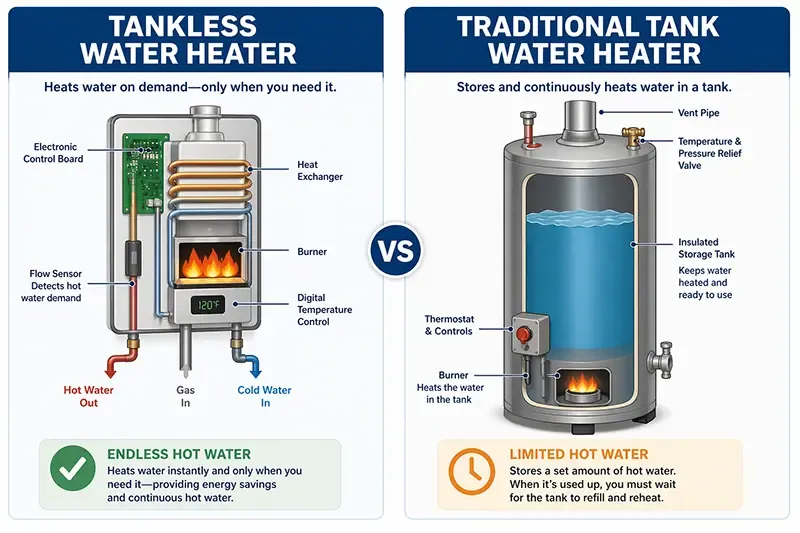
A traditional tank water heater operates by keeping a large volume of water—usually between 30 and 80 gallons—constantly heated to a set temperature. This is known as standby heat loss, where the system burns fuel or uses electricity even when you aren’t using hot water. Conversely, a tankless unit—often called an on-demand heater—uses high-powered burners or electric elements to heat water only as it passes through the unit.
Traditional Tank Components
- Storage Tank: An insulated steel cylinder holding the water supply.
- Dip Tube: Directs cold water to the bottom of the tank to be heated.
- Thermostat: Regulates the temperature of the water inside the tank.
- Pressure Relief Valve: A critical safety component that prevents over-pressurization.
Tankless System Components
- Heat Exchanger: The core copper or stainless steel component that transfers heat to the water.
- Flow Sensor: Detects when a faucet is turned on to trigger the heating process.
- Control Board: Manages the firing rate of the burners or electric coils.
- Exhaust Venting: Necessary for gas-fired units to remove combustion gases safely.
Comparing Costs and Efficiency Levels
When evaluating the financial impact, consider both the purchase price and the operational efficiency. According to the U.S. Department of Energy, tankless units can be 24% to 34% more energy-efficient for homes that use 41 gallons or less of hot water daily.
| Feature | Traditional Tank | Tankless (On-Demand) |
|---|---|---|
| Initial Cost | $600 – $1,800 | $1,500 – $4,500 |
| Lifespan | 8 – 12 years | 15 – 25 years |
| Maintenance | Annual flushing | Annual descaling |
| Efficiency | Lower (Standby loss) | Higher (On-demand) |
Is Your Home Ready for Tankless?
Transitioning from a tank to a tankless system isn’t always a simple swap. If you’re upgrading from a standard electric tank to an electric tankless unit, you may need a significant electrical service upgrade. Most electric tankless heaters require high-amperage dedicated circuits that older homes simply can’t support without a new electrical panel.
For gas-fired units, the primary concern is the venting system. Tankless units usually require specialized stainless-steel venting because the exhaust gases are cooler and more acidic than those from a traditional tank. If your current chimney isn’t compatible, you’ll need to install new PVC or polypropylene venting, which adds to the total labor cost.
Longevity and Maintenance Requirements
A major selling point for tankless units is their extended lifespan. While a standard tank typically fails due to internal corrosion after roughly a decade, a tankless unit can last over two decades if maintained correctly. The primary enemy of a tankless unit is hard water buildup. Mineral deposits inside the heat exchanger can restrict flow and reduce heating efficiency.
Pro Tip: Schedule an annual descaling service using a food-grade vinegar solution to dissolve scale buildup; this simple step can prevent premature failure of the heat exchanger and keep your system running at peak capacity.
Installation and Space Considerations
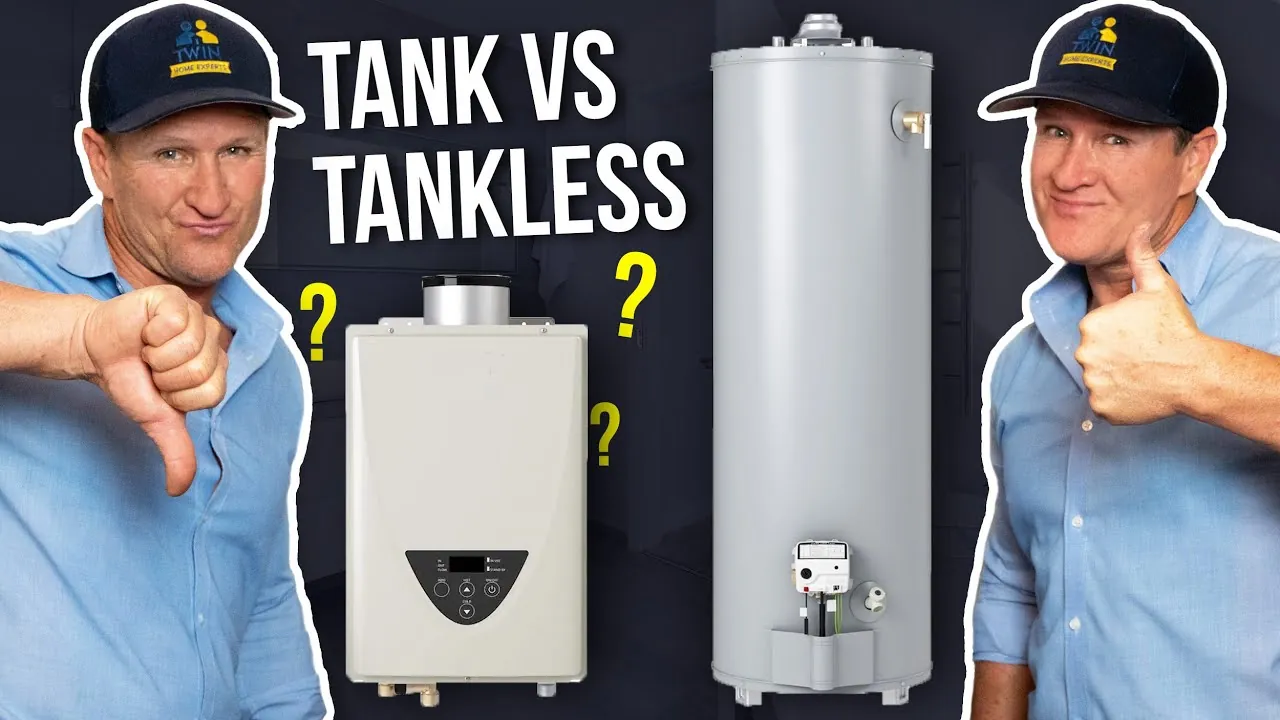
Space is often the deciding factor for urban homeowners. A traditional tank occupies a large footprint in a basement or utility closet. A tankless unit is about the size of a carry-on suitcase and mounts directly to the wall. This allows you to reclaim valuable square footage, which is particularly beneficial in smaller homes or apartments.
However, consider the plumbing infrastructure. Tankless units require larger gas lines in some cases to handle the high BTU output needed to heat water instantly. If your current gas line is undersized, you may face additional costs to run new piping from your gas meter to the unit.
Performance During High Demand
One of the most common frustrations with traditional tanks is the “cold shower” effect when the tank runs out of hot water. A tankless unit eliminates this by providing a continuous supply. However, keep in mind that tankless units have a maximum flow rate. If you’re running the dishwasher, the washing machine, and taking a shower simultaneously, the unit might struggle to keep up if it’s undersized for your household’s peak demand.
Which Brands Should You Consider?
The market is saturated with options, but sticking to established manufacturers ensures you can find parts and service technicians years down the road. These brands are widely recognized for their reliability and support networks:
- Rinnai: A market leader in gas-fired tankless technology.
- Navien: Known for high-efficiency condensing tankless models.
- Bradford White: A trusted name for high-quality traditional tank units.
- A.O. Smith: Offers a wide range of both tank and tankless solutions.
- Stiebel Eltron: A popular choice for high-performance electric tankless units.
What Are the Environmental Benefits?
Beyond direct utility savings, tankless units have a smaller environmental footprint. Because they don’t require a massive steel tank that eventually ends up in a landfill, they’re often considered the greener alternative. Furthermore, because they don’t heat water that isn’t being used, they reduce the overall energy demand of your household, which contributes to lower greenhouse gas emissions over the life of the product.
Managing Potential Troubleshooting Issues
Even the best systems encounter problems. Knowing the basics of troubleshooting can save you a service call.
| Symptom | Potential Cause | Potential Fix |
|---|---|---|
| No hot water | Power/Gas disconnected | Check breakers or gas valve |
| Inconsistent temp | Unit undersized | Reduce flow rate at faucets |
| Error code display | Sensor fault | Consult manual for reset |
| Low water flow | Scaled heat exchanger | Flush system with vinegar |
Warning: Always shut off the power or gas supply to the water heater before attempting any internal inspection or maintenance to prevent injury or equipment damage.
Evaluating Your Specific Needs
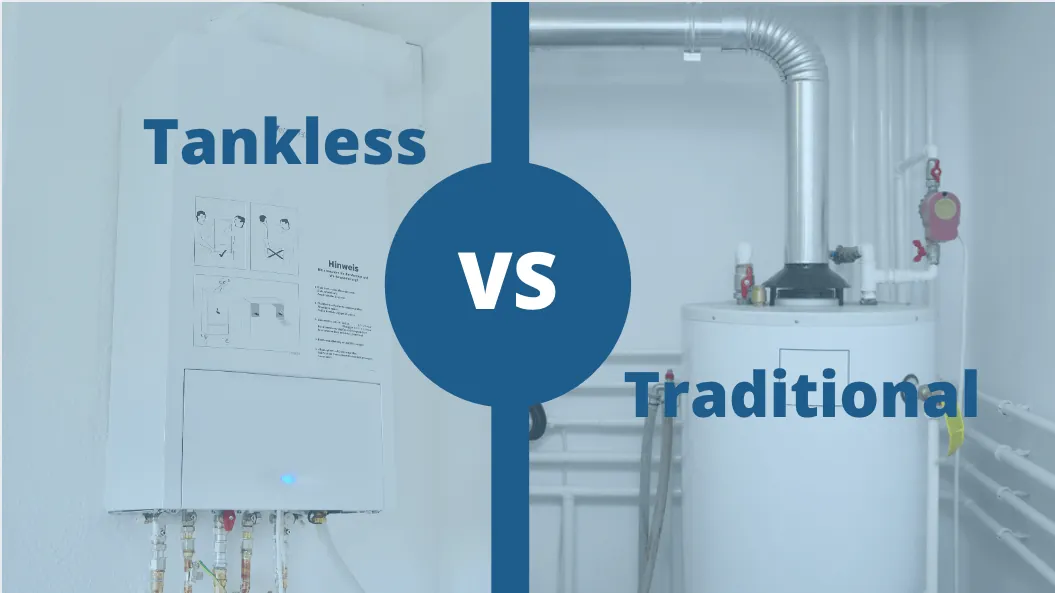
Before choosing a model, audit your home’s usage. Do you have a large family that showers in the morning? Do you have multiple bathrooms? If your household has high simultaneous demand, you might need to install two smaller tankless units in parallel or stick with a high-capacity traditional tank.
If you live alone or have a small household, a single tankless unit will likely provide all the hot water you could ever need while saving you money on utility bills every month.
Related guides
- Best Hot Tub Water Monitoring Systems: Our Top 10 Picks in 2026
- 6 Best Frog Leap Pool System Reviews for Clean Balanced Water in 2026
- Best Smart Water Bottles in 2026
Frequently Asked Questions
Can I install a tankless heater myself?
While technically possible for someone with advanced plumbing and electrical skills, it’s generally discouraged. Improper installation can void your warranty, lead to dangerous gas leaks, or cause carbon monoxide issues due to faulty venting. Most manufacturers require installation by a licensed professional to honor the warranty, and local building codes often mandate permits for water heater replacements.
Does a tankless heater provide instant water?
No, it does not. A tankless unit still has to move water through the pipes to your faucet, just like a tank unit. The “instant” in “on-demand” refers to the fact that it doesn’t run out of hot water, not that the hot water appears at your tap instantly. To get truly instant hot water, you need to install a recirculating pump system.
What size tankless unit do I need?
You must calculate your “temperature rise,” which is the difference between your incoming groundwater temperature and your desired output temperature. A professional will look at your peak flow rate—the total gallons per minute used by all your fixtures running at the same time. This calculation ensures the unit has enough power to heat the water sufficiently during the coldest months of the year.
Do tankless heaters work with hard water?
Yes, but they require more diligent maintenance. Hard water contains minerals like calcium and magnesium that create scale. In a tankless unit, this scale builds up on the heat exchanger, acting as an insulator and forcing the unit to work harder. If you have hard water, you should install a water softener or commit to a more frequent descaling schedule to preserve the unit’s efficiency.
Is an electric tankless heater worth it?
Electric tankless heaters are highly efficient but are often limited by the electrical capacity of the home. They’re best suited for smaller homes, point-of-use applications, or homes with very high-amperage electrical panels. If your home has a 100-amp service, it’s rarely a practical choice. Gas-fired units are generally more powerful and better suited for whole-home applications in colder climates.
How often should I replace my tank?
The average life of a traditional storage tank is 8 to 12 years. You can often tell it’s reaching the end of its life if you notice signs of rust-colored water, leaking around the base, or if it takes significantly longer to heat up than it did when it was new. If you see these signs, it’s time to start planning for a replacement.
Conclusion
The decision between these two technologies hinges on balancing your immediate budget against your long-term goals for efficiency and home convenience. If you prioritize low upfront costs and simple maintenance, a traditional tank remains a reliable choice. However, for those looking to maximize space and energy savings, a tankless system is worth the investment. To move forward, contact a licensed plumber to assess your home’s current gas and electrical capacity today.