
To hang things in a cubicle safely, start by matching your item’s weight to panel-grip pins or over-the-wall steel brackets within 5 minutes. Fabric walls hold light paper with straight pins, while heavy whiteboards need hooks that bite directly into the inner fiberboard. This method suits office workers wanting a tidy, personalized desk without ripping fabric.
Supplies to hang things in your cubicle
 Photo: www.rosiinc.com on Google
- Cubicle panel clips with downward-pointing steel needles (rated for up to 2 pounds).
- Over-the-panel metal hooks with adjustable widths (between 1.5 and 3.5 inches) for heavy coats.
- Standard pushpins or T-pins (1.5 inches long) for plain sheets of paper.
- A soft measuring tape (standard 60-inch tailor’s tape).
- A small pencil for marking fabric seams.
- Lightweight picture frames with acrylic fronts instead of heavy glass.
Pushpins work fine as substitutes for clips on single photos, but standard office tape will fail on textured fabric and leave a sticky mess behind. If your panel frames contain internal electrical wiring, contact your building facilities team before driving any deep fasteners.
Step-by-step
- Measure the thickness of your cubicle wall across the top metal cap using your tape measure.
- Check the panel core by pressing a finger gently into the fabric; foam cores yield easily, while hardboard panels feel solid right under the cloth.
- Position your cubicle clip against the fabric at your chosen eye level, usually 48 to 54 inches from the floor.
- Push the metal pins of the clip straight down at a 45-degree angle until the plastic back rests flush against the fabric surface. Careful: Pushing pins straight inward at a 90-degree angle bends the metal points and tears the fabric threads without catching the backing board.
- Hang your lightweight decor, keeping the load under 1.5 pounds per pair of clips.
- Fit an over-the-wall bracket over the top rim if you need to mount a whiteboard weighing 5 pounds or more, tightening the rear thumbscrew until snug. Tip: Slide a scrap piece of paper under the bracket feet so you don’t scratch the painted metal frame during setup.
- Test the mount by applying light downward pressure with two fingers before letting go of your item.
Mounting choices for office setups
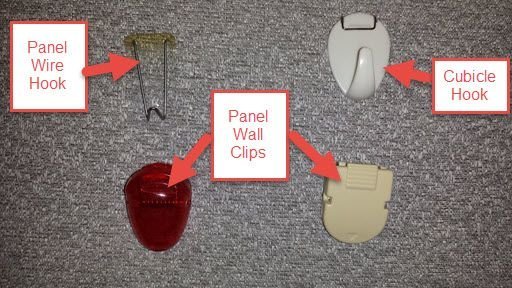 Photo: workspacebliss.com on Google
Pick your mounting hardware based on the weight of the decor and the wall structure at your desk.
| Wall build and item weight | Time and gear needed | Core difference | Watch point |
|---|---|---|---|
| Fabric over tackable board, under 1 lb | 2 minutes; 2 pushpins | Pins angle downward into fiber core | Fabric sag around pin points |
| Fabric over steel plate, 1 to 4 lbs | 10 seconds; 2 neodymium magnets | No wall punctures required | Magnetic slide along smooth paint |
| Top rail hanging, 5 to 15 lbs | 3 minutes; 1 adjustable top bracket | Weight rests on metal frame rail | Thumbscrew denting top channel |
| Hard laminate panel, under 2 lbs | 5 minutes; adhesive picture strips | Uses surface grip instead of pins | Adhesive bond failing in cold air |
It’s safer to start small with one test hook and a light frame than to overload a bracket on your first try and tear the panel cloth.
How to tell you did it right
A solid installation leaves the wall fabric smooth, and the hung item sits flat against the partition without tilting forward. A failed installation shows pulled fabric threads, tilted frames, or brackets that wobble when you touch them. Slumping occurs when pins grip only the loose surface cloth instead of pushing deeper into the rigid backing board. You stop this slipping by inserting pins at an angle between 30 and 45 degrees, keeping individual items under their rated limits, and using two hooks rather than one for wide frames. If your panel feels rock-hard directly beneath thin fabric, don’t force needles into it; this varies by model — check the label inside the doorframe or base track to identify the panel model.
Wall limits and workspace clear-down
Building managers control office modifications to protect life safety gear and shared commercial assets. The Occupational Safety and Health Administration workspace guidelines require open exit routes, meaning hung items can’t stick out into shared hallways or block emergency equipment. When you move out, pull clips out upward at the exact angle they entered. Smooth the fabric with your thumb to close needle marks. Top-mount steel brackets last indefinitely without service, but adhesive strips require fresh replacement every time you shift your desk layout.
Other ways to do it
 Photo: cubiclebydesign.com on Google
Magnetic hooks for metal frames
Steel-framed partitions let you mount magnetic hooks without puncturing fabric. You gain zero wall damage, though strong magnets cost more than basic pins and slide down if you exceed 3 pounds.
Overhead partition wire hangers
Thin picture wire loops over top partition caps to drop frames down to desk height. This takes about 5 minutes to adjust, costs very little, and protects your fabric completely from heavy loads.
Adhesive picture-hanging strips
Double-sided foam strips stick cleanly to hard laminate or glass dividers. They install in 3 minutes without tools, but they won’t hold on fuzzy fabric partitions and need slow, careful removal to avoid paint peel.
Frequently asked questions
Can push pins go into cubicle walls?
Yes, push pins enter most fabric cubicle walls easily. They work well for paper notes, calendars, and single photos, but they can’t carry framed art or heavy whiteboards without pulling out of the backing material.
How much weight can a cubicle clip hold?
Most standard plastic cubicle clips hold between 1 and 2 pounds each. If you hang an object wider than 12 inches, use two clips spaced apart to balance the load evenly across the fabric panel.
Do adhesive strips stick to cubicle fabric?
No, adhesive strips don’t grip fabric partitions reliably. The woven fabric fibers pull loose from the glue quickly, causing your artwork to drop and leaving sticky residue behind on the panel.
Can you hang a heavy mirror in a cubicle?
Yes, but you must use top-mounting brackets that rest on the metal partition frame. Mirrors weighing 10 pounds or more will rip fabric if you rely only on panel pins or standard clips.
How do you hang things without damaging cubicle walls?
Use metal partition hooks that fit over the top trim of the wall. These hooks transfer all the weight to the steel rail, leaving the side fabric completely free of holes, tears, or glue marks.
Why do my cubicle clips keep falling out?
Clips fall out when pins enter horizontally instead of angled downward. Pushing them down at a 45-degree angle lets the weight of the frame lock the pin points into the backing board beneath the cloth.