
You can solve how to fix springs in a chair by securing unhooked coils back into their mounting clips or resetting the underlying support webbing. Most sagging chairs don’t have broken metal; rather, a loose fastener or stretched base simply let the spring slip out of alignment under normal daily weight.
Why chair springs break or sag
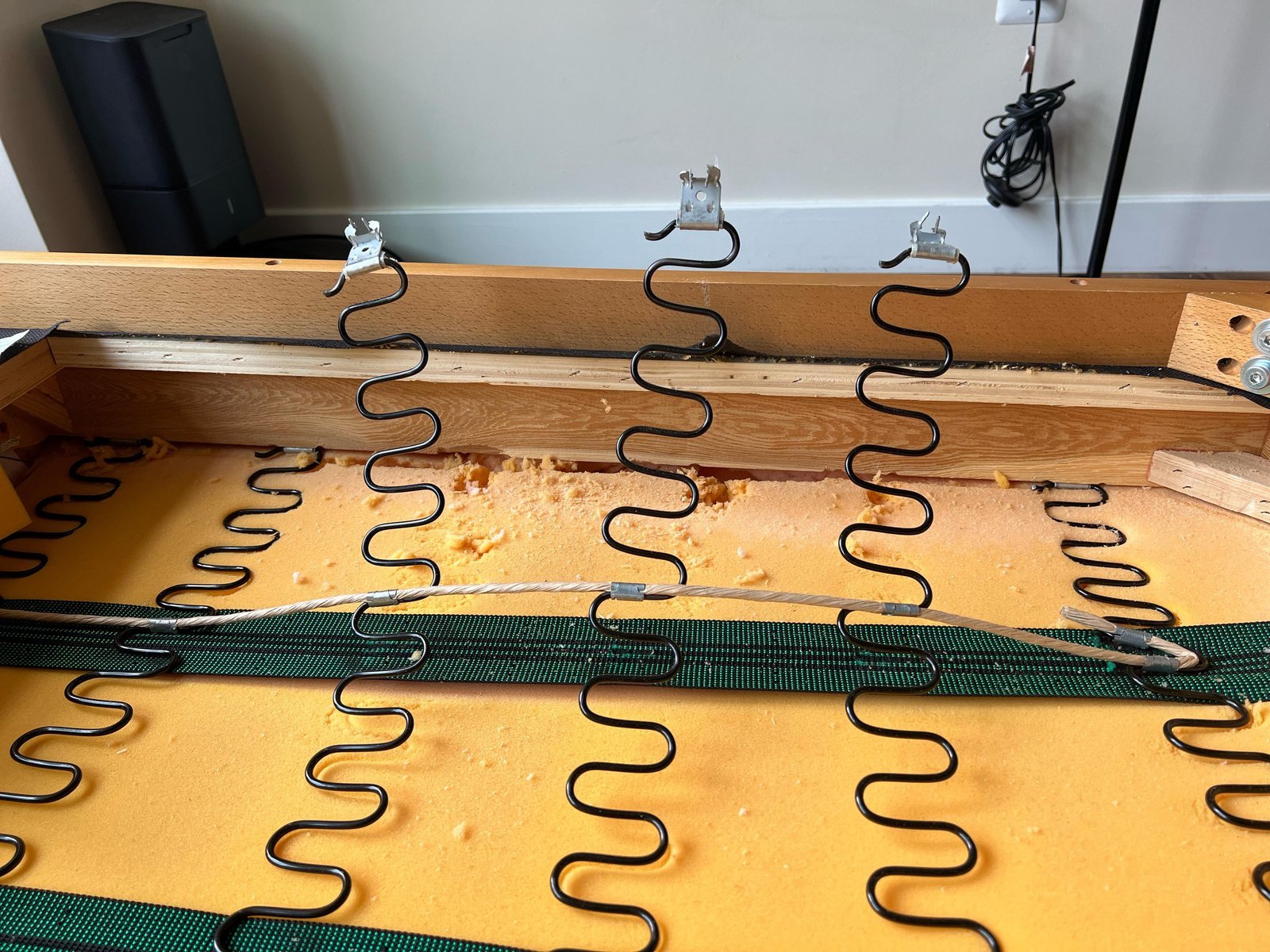 Photo: fornoallegro.com on Google
Chair springs stay functional under continuous tension. When that tension drops, the seat sinks or squeaks loudly. Here are the genuine causes behind the failure:
| Symptom | Most Likely Cause | Primary Risk |
|---|---|---|
| Seat sinks deep in one corner | Broken or detached mounting clip | Frame tear-out |
| Loud metal grinding sound | Loose spring rubbing bare wood | Cut fabric or punctured padding |
| Overall sag across the whole seat | Stretched or torn bottom webbing | Broken coil springs |
| Sharp poke through the cushion | Snapped coil or loose tie-wire | Puncture injury |
Wood dries out over decades, which loosens the screws holding steel clips to the frame. In other cases, natural jute webbing under the coils rots from humidity and gives way. Heavy impact from someone dropping into the seat can also shear plastic-coated clips instantly.
Reattach loose ends to the frame
This fix is for seats where a spring simply slipped out of its clip or a single screw pulled free. Turn the chair upside down and peel back the dust cover staples with a flat screwdriver. If the spring wire is intact, slide it back into the metal clip using locking pliers. When a mounting screw has stripped the wood hole, don’t reuse that exact spot. Move the clip half an inch to clean hardwood, drill a pilot hole, and sink an inch-and-a-quarter wood screw with a washer. You’ll know it worked when the spring sits flat and resists firm palm pressure without shifting sideways.
Reinforce the base with webbing
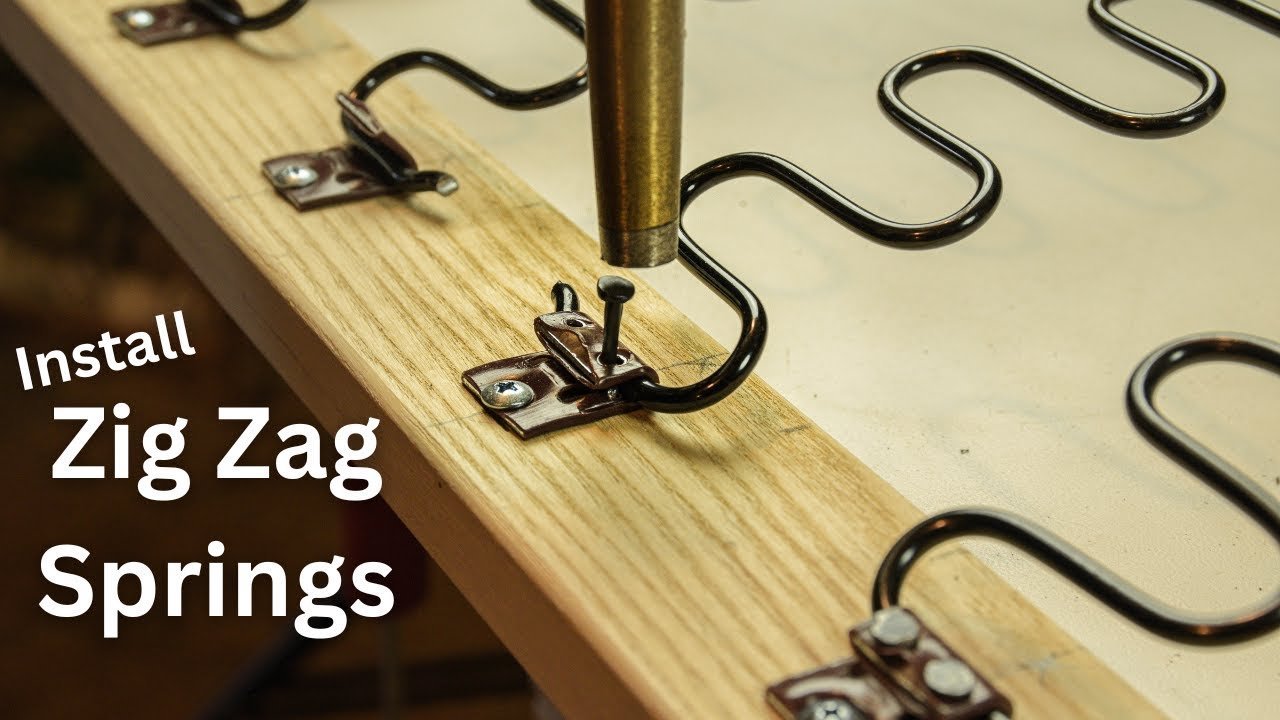 Photo: www.youtube.com on Google
This approach serves chairs with coiled springs that push through the bottom because the original fabric straps tore. Don’t pull the coils out; reinforce them from underneath instead. Stretch 3-inch synthetic upholstery webbing across the bottom rails in an interlaced basket-weave pattern. Fasten each strip with five 3/8-inch heavy-duty staples on one rail, pull it tight with a webbing stretcher tool, and staple the opposite rail. The trade-off is losing some of that vintage cloud-soft bounce in exchange for firm, durable support that lasts. You’ll know it worked when the coils stand upright and the bottom no longer bulges downward.
Support the core with firm foam
For chairs with rusted or badly distorted springs where replacement metal parts aren’t an option, add internal support blocks instead. Cut a piece of high-density upholstery foam to match the inner seat frame dimensions below the springs. Wedge this dense block directly between the lower cross-rails and the spring deck. This stops the springs from traveling past their elastic limit while hiding any mild surface deformation. This isn’t for valuable antique chairs with historic eight-way hand-tied cord systems, as altering their interior layout harms resale value. A successfully installed foam core stops severe bottoming-out when you sit down.
What not to do
- Don’t tie springs together using zip ties or craft wire. Plastic snaps under sitting loads, and thin wire slices through adjacent padding within weeks.
- Don’t bridge broken zig-zag wire using rigid wooden boards directly over the springs. This creates sharp pressure points that wear through the cushion fabric and ruins sitting posture.
- Don’t weld or solder tempered spring steel at home. High heat destroys the metal’s temper, softening the steel so it bends permanently and loses all tension on first use.
- Don’t leave sharp broken wire exposed inside the cavity. Pointed steel ends can tear through top fabrics and cause puncture wounds; safety rules from the Consumer Product Safety Commission govern furniture hazards to prevent sharp edge injuries in the home.
How to stop it happening again
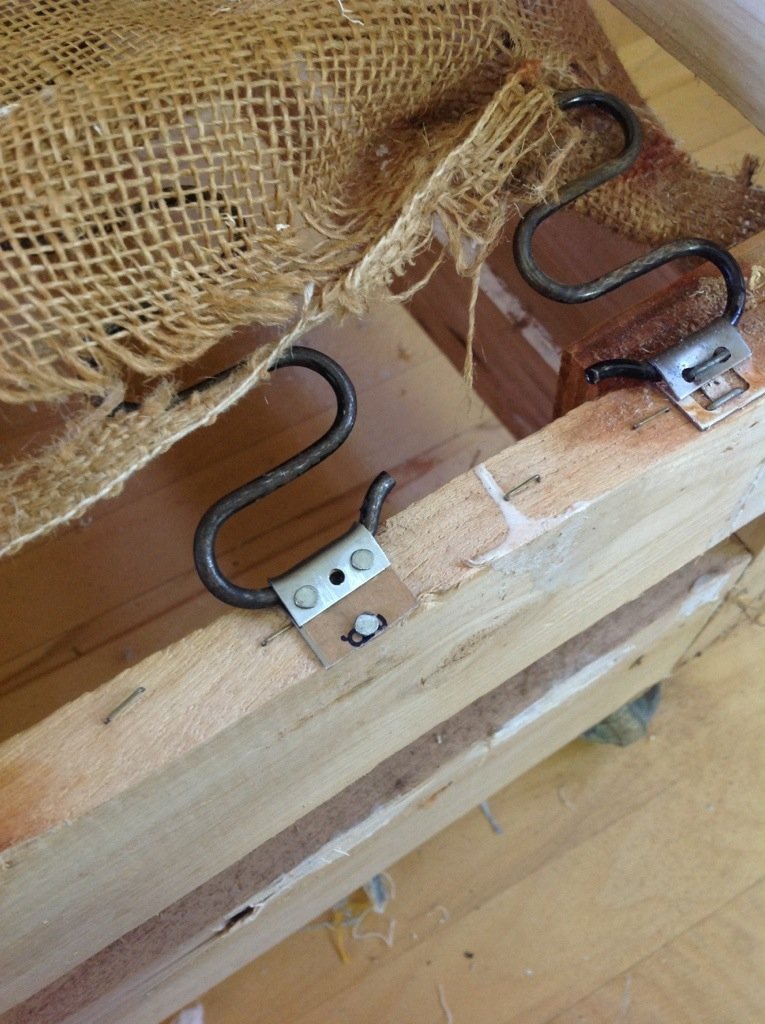 Photo: artisanupholstery.ca on Google
Careful everyday use keeps mechanical seat supports from wearing out early.
| If you’re doing this | Do this instead | Why |
|---|---|---|
| Dropping heavily into the center | Sit down gently with weight controlled | Sudden shock loads snap end clips |
| Kneeling on cushions to reach high | Stand on a step stool | Point loads bend individual coils past their return point |
| Ignoring early squeaks and clicks | Tighten mounting brackets immediately | Loose screws wobble and strip out frame wood |
| Sliding heavy boxes onto the seat | Place heavy objects on the floor | Continuous dead weight stretches steel out of shape |
| Letting kids jump on the furniture | Keep chair surfaces for sitting only | Dynamic impacts tear bottom webbing anchors |
Frequently asked questions
Can you fix a broken chair spring without replacing it?
No, you can’t reliably mend snapped spring steel. Once spring wire breaks, welding or splicing it destroys its flexibility, causing it to snap again under body weight. You must replace the broken spring piece or install a bridge clip to anchor a fresh section of wire.
Why does my chair squeak when I sit down?
Metal rubbing against dry wood or another spring causes the squeaking sound. This happens when the felt insulation pad wears away or the mounting clip screws loosen slightly. Spraying a small burst of dry silicone lubricant on the clip pivot stops the noise without staining fabric.
How long do furniture springs normally last?
Most quality steel chair springs hold up well as they age under normal household use. However, this varies by model — check the label or maker specs for exact build materials. Webbing and clips holding those springs usually fail long before the actual tempered steel wire wears out.
Is it safe to replace coil springs yourself?
Yes, if you wear eye protection and heavy leather work gloves. Springs hold significant tension and can snap back violently toward your face if a gripping tool slips off. If the frame wood is rotted or crumbling, stop work and send the piece to a professional upholsterer.
What happens if you sit on broken springs?
Sitting on broken springs damages the remaining good components by shifting weight unevenly across the frame. The sharp, jagged ends of fractured steel wire will quickly puncture the foam padding, tear the outer decorative upholstery, and potentially cause personal cuts or scratches.
Related guides