
Wrapping the pane tightly in thick blankets and taping it secure is the core method for how to dispose of large glass table top panels safely before taking them to a municipal waste transfer station. The process takes roughly 30 minutes with two people. This approach suits anyone with an intact or cracked glass slab that won’t fit into regular household trash bins.
What you’ll need
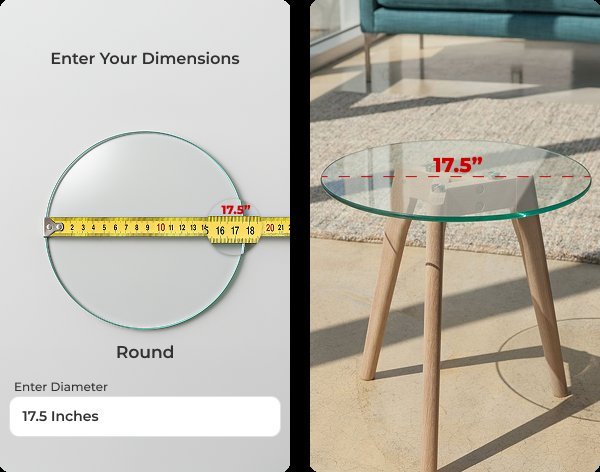 Photo: www.fabglassandmirror.com on Google
- 1 roll of heavy-duty duct tape (at least 2 inches wide)
- 2 thick moving blankets or large corrugated cardboard sheets that fully cover both sides
- 1 pair of leather work gloves (thin garden gloves won’t protect against glass edges)
- 1 pair of safety glasses
- 1 permanent marker for labeling warnings
- 1 roll of plastic stretch wrap to seal loose edges
You can substitute heavy moving blankets with flattened appliance boxes, but you can’t substitute them with thin bed sheets or plastic trash bags because glass corners slice right through them.
Step-by-step
- Put on your leather work gloves and safety glasses before touching the furniture.
- Clear a walking path of at least 4 feet wide from the room to your transport vehicle or curb.
- Apply duct tape across the entire glass surface in an “X” pattern from corner to corner, then add a grid of parallel strips spaced 6 inches apart. Tip: The tape holds shattered pieces together if the panel cracks during lifting.
- Sandwich the pane between two large moving blankets, wrapping the excess fabric over all four edges.
- Wrap heavy-duty duct tape around the blankets horizontally and vertically every 12 inches until the fabric stays completely tight against the glass. Careful: If you pull too hard on an unsupported center point of a thin pane, you can snap it; always support the underside with a helper’s hands.
- Write “HEAVY GLASS – SHARP EDGES” on both sides using your permanent marker in letters at least 3 inches tall.
- Lift the wrapped panel vertically with a second person, keeping the glass on its edge rather than carrying it flat. Careful: Carrying a glass sheet flat causes it to flex in the middle, which can trigger sudden structural failure.
- Slide the pane into your vehicle on its long edge against a flat interior wall, securing it with cargo straps so it can’t tip over. If the glass weighs over 100 pounds or exceeds 6 feet across, hire a professional junk removal crew to prevent severe back or crush injuries.
Handling different glass conditions
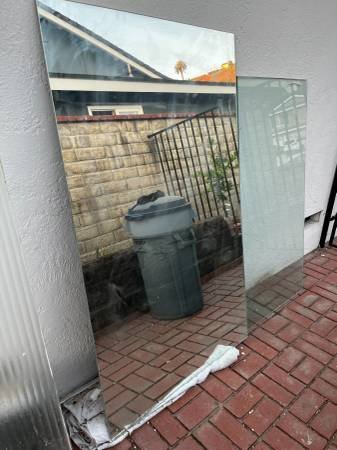 Photo: www.relcoop.com on Google
The condition and material of the slab change your disposal options, costs, and labor.
| Glass Condition | Time or Cost Impact | What Is Different | What to Watch For |
|---|---|---|---|
| Intact tempered glass | Low cost; 30 minutes | Very strong across the face but shatters if edges are bumped | Edge impacts against concrete or doorframes |
| Cracked annealed glass | Medium cost; 45 minutes | Can split into large, razor-sharp shards at any moment | Tape coverage across all fracture lines |
| Chipped heavy patio top | Low cost; 40 minutes | Usually weighs 50 to 90 pounds and features an umbrella hole | Stress cracks spreading outward from the center cutout |
| Already shattered panel | High labor; 60 minutes | Millions of tiny pebbles that spread across floors and grass | Punctures through disposal bags during cleanup |
It’s safer to use extra tape and extra padding on the first try than to risk a panel snapping halfway to your vehicle.
How to tell you did it right
A good wrap leaves no exposed glass edges, keeps the padding tight against the surface, and produces no rattling sounds when lifted. A poor job leaves bare corners, uses loose fabric that slips under your hands, or allows the panel to bow while walking. The most frequent failure is edge chipping during handling. This happens because glass edges chip easily when knocked against doorframes or concrete steps. You prevent this by folding heavy cardboard double-thick over all four corners, taping those corner caps firmly in place, and keeping the pane upright while moving through tight doorways.
Local disposal rules and cleanup
Most municipal recycling programs don’t accept furniture glass in curbside blue bins. This policy exists because table slabs have different melting points than standard container glass, which ruins recycling batches. The US Environmental Protection Agency guidelines on municipal solid waste show that flat glass requires specialized processing outside standard bottle programs. Once you load the pane, vacuum the staging area thoroughly to catch invisible splinters. Pack your gloves and blankets away, and wipe down your shoes before walking inside. If local city rules ban curbside drop-off for construction-grade glass, take the piece directly to a licensed county landfill or public transfer station.
Alternative removal methods
 Photo: rotary7910.org on Google
Donation to reuse centers
If the top has no deep scratches or chips, local building material charities often take it. This method keeps useful material out of landfills and costs nothing, but you must transport the bare pane intact according to their drop-off schedule.
Professional junk haulers
Booking a local junk removal team saves physical effort and removes the risk of cuts entirely. It costs a service fee, but they bring their own lifting gear, wrap the piece themselves, and manage the final dump fees directly.
Online resale or giveaway
Listing the slab on a local classifieds site as “free for pickup” shifts the labor to the buyer. This approach takes anywhere from a few hours to several days, though you trade fast removal for having strangers visit your home.
Frequently asked questions
Can I break a large glass table top to fit in the trash?
No. Breaking a large pane creates thousands of dangerous shards or exploding tempered pellets that can easily cause severe cuts or eye injuries. Most trash collectors will also refuse to pick up bins filled with loose broken glass due to worker safety hazards.
Why won’t my curbside recycling bin take table glass?
Window and table glass melt at higher temperatures than bottle glass. Mixing them ruins the entire recycling furnace load. Because of this chemical difference, municipal processing centers classify furniture tops as non-recyclable bulky waste that belongs in landfills or dedicated transfer stations.
What happens if I drop tempered table glass on its edge?
The entire sheet disintegrates immediately into thousands of dull cubes. Tempered glass contains balanced internal stresses that resist blunt force on its flat face, but a direct impact on an edge or corner releases this stress instantly across the whole panel.
Is it safe to move a glass top alone?
No. Large glass tops are heavy, slick, and awkward to balance without a second person. Trying to carry a pane longer than 4 feet alone increases the chance of dropping it, flexing the sheet until it breaks, or suffering severe wrist and back strain.
How do I know if my table top is tempered glass?
Look for a tiny etched stamp in one of the four corners that says “Tempered” or “Safety Glass.” If there’s no stamp, inspect the glass outside with polarized sunglasses; tempered panels show faint, dark shadow patterns across the surface when viewed under natural sunlight.