
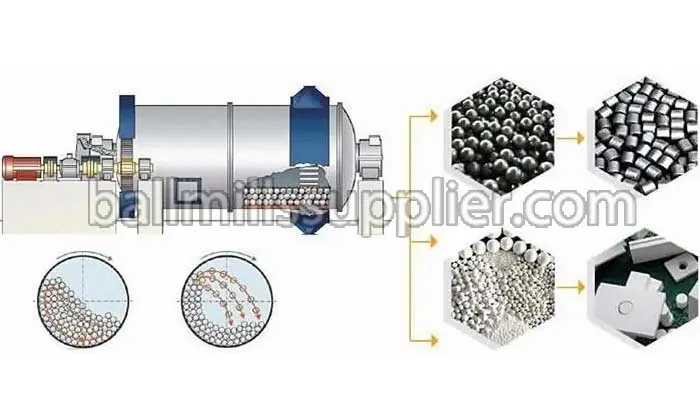
A ball mill operates by rotating a cylindrical vessel filled with grinding media and material, using impact and attrition to reduce particle size while simultaneously blending components. This mechanical process relies on the cascading motion of balls, typically made of steel or ceramic, which crush the feed as the drum spins at a controlled speed.
Key Takeaways
- Select grinding media based on material hardness to prevent contamination and ensure efficient size reduction.
- Maintain optimal rotational speed, usually between 65% and 80% of critical speed, for maximum efficiency.
- Use wet milling with appropriate solvents to control dust and improve slurry homogeneity.
- Monitor jar temperature during extended runs to prevent thermal degradation of sensitive compounds.
- Ensure proper sealing mechanisms are intact to avoid leakage of fine powders or liquids.
- Clean equipment thoroughly between batches to eliminate cross-contamination risks in multi-product facilities.
Basic Operating Principle
The core mechanism involves a hollow cylinder mounted on a rotating frame. As the cylinder turns, friction causes the grinding media to lift along the inner wall. When gravity overcomes centrifugal force, the media cascades down, striking the material below. This impact force breaks larger particles, while the rolling action creates attrition, grinding them into finer powder. The continuous tumbling ensures that all material receives uniform treatment, making it ideal for both grinding and mixing tasks.
Critical Speed and Rotation
Understanding rotational dynamics is essential for effective operation. Critical speed is the point where centrifugal force equals gravitational force, causing media to cling to the wall without falling. Operating above this threshold results in no grinding action.
Most industrial applications run at 65% to 75% of critical speed. This range ensures a healthy cascade of media. If the speed is too low, the media merely slides, producing minimal size reduction. Conversely, excessive speed leads to inefficient energy use and potential equipment damage.
Calculating Optimal RPM
The formula for critical speed depends on the mill diameter and ball size. Operators must adjust the motor settings accordingly. Smaller jars require higher RPMs to achieve the same cascading effect as larger drums. Always consult the manufacturer’s specifications for your specific model, as gear ratios and motor types vary significantly across different brands like Retsch or Fritsch.
Choosing Grinding Media
The selection of balls determines the final product quality and purity. Different materials offer varying levels of hardness and density. Steel balls are common for robust industrial applications but can introduce iron contamination. Ceramic options, such as zirconia or alumina, are inert and suitable for sensitive chemical processes. Glass beads are ideal for soft materials but wear quickly against hard substances.
| Media Material | Density (g/cm³) | Hardness | Best For |
|---|---|---|---|
| Stainless Steel | 7.9 | High | Ores, hard minerals |
| Zirconia | 5.6 | Very High | Ceramics, pigments |
| Alumina | 3.9 | High | Chemicals, coatings |
| Tungsten Carbide | 14.5 | Extreme | Abrasive composites |
Media size also matters. Larger balls provide greater impact energy for coarse grinding, while smaller balls increase the surface area contact for fine micronization. A mix of sizes often yields the best distribution of particle sizes.
Wet vs Dry Milling
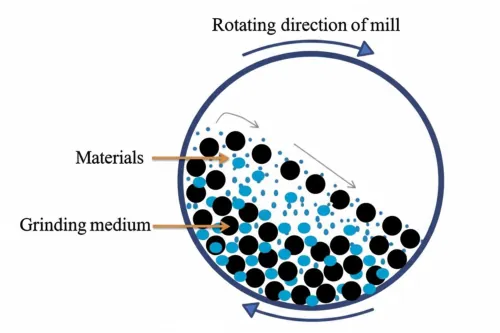
Operators must decide between wet and dry processing based on the material properties and end-use requirements. Dry milling is simpler and avoids solvent recovery steps, but it generates significant dust and heat. Wet milling uses a liquid medium, such as water or ethanol, to suspend particles. This approach reduces dust hazards and helps dissipate heat, preventing thermal decomposition of sensitive compounds.
Advantages of Wet Processing
Wet milling often achieves finer particle sizes because the liquid prevents agglomeration. It also facilitates the mixing of multiple components into a homogeneous slurry. However, it requires downstream drying if a powder is the final product. Choose wet milling when dealing with explosive dusts or materials that degrade under frictional heat.
Loading Ratios and Capacity
Overloading or underloading the mill drastically affects performance. The total volume of media and material should typically occupy 25% to 50% of the jar’s internal volume. A common ratio is 1:1 or 2:1 media-to-material by weight, depending on density. Too much material cushions the impact, reducing grinding efficiency. Too little material leads to excessive media-on-media collision, causing rapid wear without effective size reduction.
Pro Tip: Always leave adequate headspace in the jar to allow for proper cascading. A completely full jar won’t grind effectively and may damage the motor due to excessive load.
How a ball mill works for grinding and mixing
This specific function combines two actions: size reduction and homogenization. As the media tumbles, it not only crushes particles but also stirs the mixture. This dual action is particularly valuable in pharmaceutical and cosmetic industries where active ingredients must be evenly distributed within a base.
The continuous motion ensures that no static zones exist where unmixed material could remain. For effective mixing, ensure the viscosity of the mixture allows for free movement of the media. Highly viscous pastes may require specialized high-energy mills rather than standard ball mills.
Safety Precautions and Hazards
Operating heavy rotating machinery involves inherent risks. Flying debris from broken jars or loose lids can cause injury. Always use safety shields and wear protective eyewear. Dust explosion is a serious concern when milling organic materials or metals like aluminum. Proper ventilation and grounding are mandatory to prevent static buildup. Additionally, noise levels can exceed safe limits, requiring hearing protection for operators working nearby.
| Hazard | Cause | Mitigation Strategy |
|---|---|---|
| Dust Explosion | Fine organic powders | Use wet milling or inert gas |
| Jar Rupture | Over-pressurization | Check seals and pressure relief |
| Thermal Runaway | Friction heat | Monitor temperature intervals |
| Mechanical Failure | Unbalanced load | Verify even media distribution |
Warning: Never open a mill jar immediately after operation if hot solvents were used. Pressurized vapors can eject contents violently. Allow the system to cool to room temperature before handling.
Maintenance and Troubleshooting

Regular maintenance extends equipment life and ensures consistent results. Inspect seals and gaskets for wear after every few cycles. Cracked jars should be discarded immediately to prevent catastrophic failure. Lubricate bearings according to the manufacturer’s schedule. If the mill vibrates excessively, check for uneven media distribution or worn mounting feet. Unusual noises often indicate loose components or damaged gears.
Common Issues and Fixes
If the product remains coarse, check the media size and rotational speed. Increasing the run time may help, but only if the parameters are correct. If contamination appears, inspect the media for chipping or corrosion. Replace worn balls promptly. Keep a log of operating hours to predict when parts need replacement before they fail during a critical batch.
Related guides
Frequently Asked Questions
What is the difference between a ball mill and a rod mill?
Ball mills use spherical media for fine grinding and mixing, relying on impact and attrition. Rod mills use long rods for coarser grinding, primarily using line contact. Ball mills produce finer particles and are better for mixing, while rod mills are suited for primary stage reduction of ores where less fines are desired.
Can I use a ball mill for pyrotechnic compositions?
Milling pyrotechnic mixtures is extremely dangerous due to friction and impact sensitivity. Many compounds can ignite or explode inside the jar. Professional manufacturers use specialized non-sparking media and strict safety protocols. Hobbyists should avoid milling energetic materials entirely and instead use gentle hand-mixing techniques to prevent accidental detonation.
How long does a typical milling cycle take?
Cycle times vary widely from 30 minutes to several days. Soft materials may reach target fineness in an hour, while hard ceramics or alloys may require 24 hours or more. The duration depends on material hardness, desired particle size, media type, and mill energy. Regular sampling helps determine the optimal endpoint.
Why is my sample getting contaminated with iron?
Iron contamination usually comes from stainless steel media or jar wear. If purity is critical, switch to ceramic media like zirconia or alumina. Ensure the jar lining is intact. Even minor scratches in a steel jar can release particles. Using a sacrificial layer of harder material can sometimes mitigate this, but changing media type is the most effective solution.
What is the best way to clean a ball mill jar?
Use a solvent compatible with the previous material and the next batch. For water-soluble residues, warm soapy water works well. For organic compounds, use acetone or ethanol. Ultrasonic cleaning can help remove particles trapped in surface micro-cracks. Always dry the jar thoroughly before storage to prevent corrosion or mold growth.
Conclusion
Mastering these operational parameters allows you to achieve consistent particle sizes and homogeneous mixtures. Start with small test batches to refine your settings before scaling up. Consult your equipment manual for specific limits and always prioritize safety protocols to protect both your product and your personnel.
