
A worn-out torsion spring or a failing opener force setting is usually why a garage door slams shut instead of closing smoothly. It’s generally unsafe to keep using a door that drops rapidly, as the weight can cause severe injury or property damage. You can confirm the cause by pulling the manual release cord while the door is halfway open; if it stays put, the issue is likely the opener, but if it crashes down immediately, the springs have lost their tension.
Why your garage door slams shut
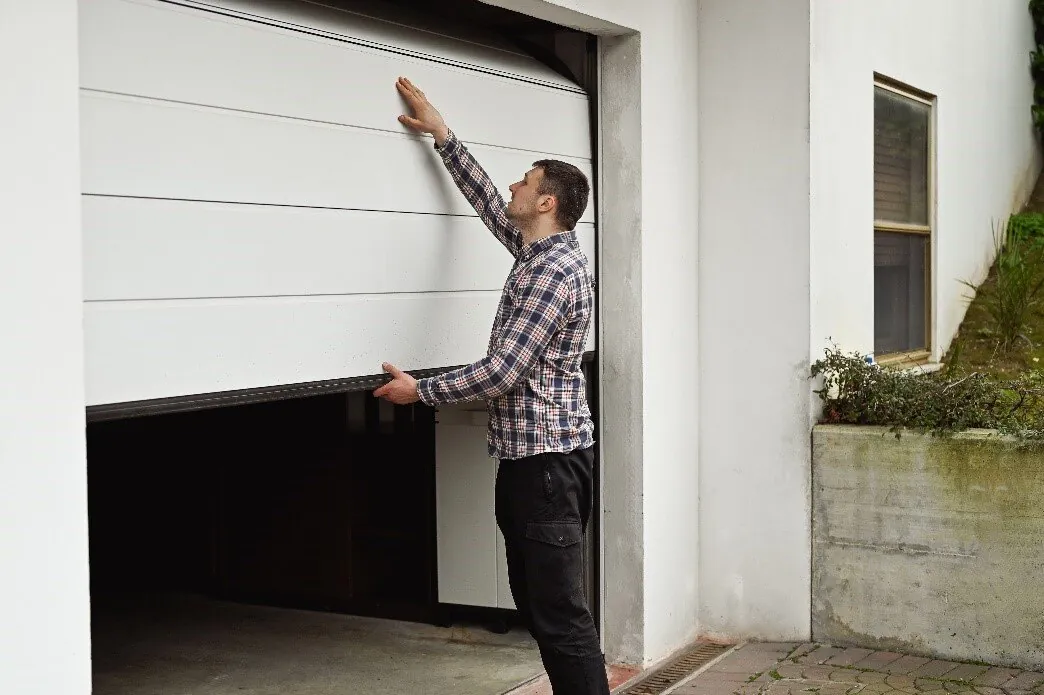
When you notice your door behaving strangely, the movement often points to a specific mechanical failure. A balanced door should stay in place when you stop it manually at any height.
| What you notice | What it usually means | What to do first |
|---|---|---|
| Door falls fast | Broken or weak springs | Call a professional |
| Door stops mid-way | Opener force setting low | Adjust force dial |
| Door reverses suddenly | Obstructed safety sensors | Clean sensor lenses |
| Jerky, loud movement | Dry or dirty tracks | Clean and lubricate |
| Door hangs unevenly | Frayed cable tension | Inspect cable drums |
| Motor runs but stalls | Stripped internal gears | Check gear assembly |
Test your door by disconnecting the automatic opener and lifting it by hand to waist height. If the door drifts more than six inches in either direction, the counterbalance system is failing. A door that feels heavy to lift suggests the springs have lost their tension. If the door feels light and pulls upward, the springs are likely over-tensioned.
Never attempt to adjust torsion springs yourself. These components hold enough energy to cause severe injury if they snap during manipulation. If you see visible gaps in the spring coils or fraying on the steel cables, stop using the door immediately.
Continued operation with these defects will strip the gears inside your motor assembly, turning a simple spring replacement into a full unit overhaul. If the door is level but still binds, check the vertical tracks for loose mounting bolts. Tightening these fasteners often resolves alignment issues before they cause permanent damage.
Weak or Broken Counterbalance Springs
The springs are responsible for carrying the heavy load of your door. When they lose tension or snap, the motor can’t hold the weight, which results in the garage door slamming shut. You can test this by disconnecting the opener using the red manual release cord. If you can’t lift the door easily with one hand, or if it falls when you let go, the springs are clearly failing.
A healthy door should hover steadily at waist height. If it drops immediately, the spring tension is insufficient to counter the weight of the panels. If it flies upward, the springs are wound too tightly, which risks snapping the cable or damaging the opener’s gears.
If you have a torsion spring system, look for a visible gap in the coils above the door header. A gap of more than two inches usually indicates a clean break. If the spring is intact but the door still drops, it has simply lost its “life” over years of cycles.
Never attempt to adjust these springs yourself. They’re under extreme tension and can cause fatal injuries if they release suddenly. Only a trained technician with the correct winding bars should handle these repairs.
Once a professional replaces the springs, the door should feel light and stay at any height you set it. If the door drifts down even an inch after the repair, the tension is still not perfect. Insist on a balance test before the technician leaves, as an unbalanced door will burn out your garage door opener motor within months.
Incorrect Opener Force Settings
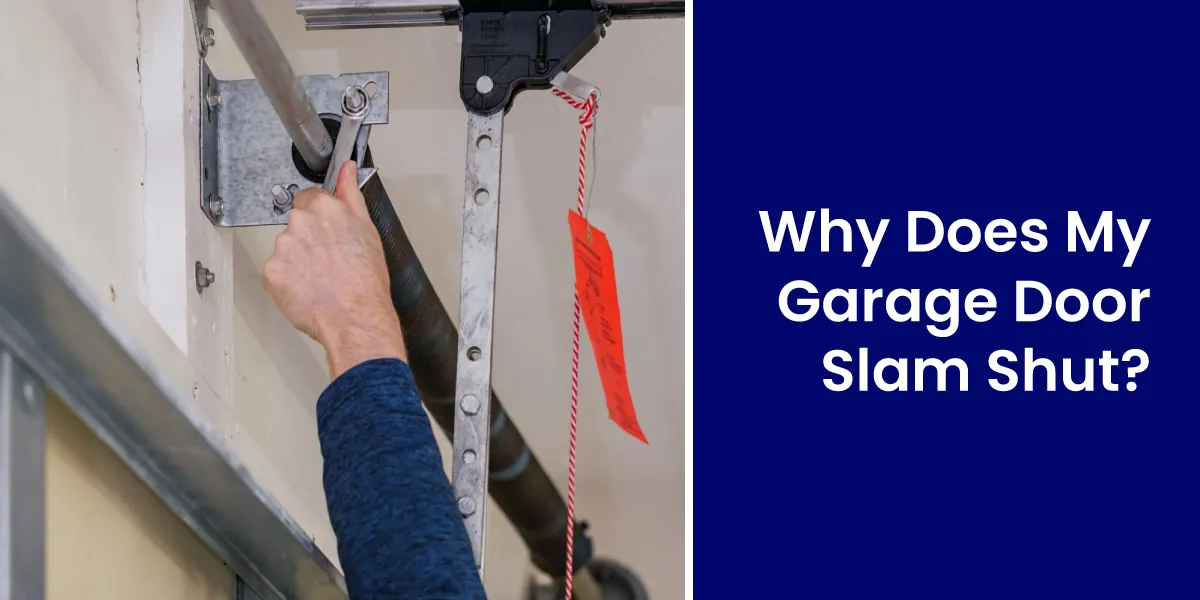
Your garage door opener has force sensitivity settings to prevent it from crushing objects in its path. If this setting is too low, the motor interprets the weight of the door as an obstruction and stops or reverses before it reaches the floor. Conversely, if the force is set too high, the motor may not detect the door hitting the floor, causing it to bounce or slam.
Locate the force dials on the side of your motor housing. Most units feature two dials: one for “Open” force and one for “Close” force. Turn the “Close” force dial clockwise in one-quarter turn increments and test the door. If you turn it too far, the door won’t reverse when it hits an obstruction, creating a severe safety risk.
Test your settings by placing a two-by-four piece of lumber flat on the garage floor in the center of the door path. If the door hits the wood and fails to reverse within two seconds, the force is set dangerously high. You must lower the setting immediately.
Many homeowners mistakenly increase force settings to compensate for a door that’s physically out of balance. If your door feels heavy or drags when operated manually, adjusting the motor force will only mask the issue while accelerating gear wear. If the door slams, don’t increase the force setting; this indicates a mechanical failure in the counterbalance system. In this case, no dial adjustment will fix the problem; you must replace the internal drive gear assembly to restore safe operation.
Misaligned or Dirty Safety Sensors
Sometimes the door slams because the safety sensors, located at the bottom of the tracks, lose their signal. If the sensors are dirty or slightly bumped, they may register a “false” obstruction while the door is closing. The opener then enters a safety mode where it either stops abruptly or reverses and slams back down. This is different from spring failure because the motor is actively pulling the door, rather than the door falling under its own weight.
Check that both sensors are pointing directly at each other. You should see a steady light on both units; if the light is flickering, the connection is weak. Wipe the lenses with a dry cloth to remove dust or spider webs. If the door still acts up, ensure the brackets are tight and haven’t been bumped by a car or a broom.
If the light remains off regardless of your cleaning, the wiring might be pinched or broken along the door frame. Inspect the wire path for staples driven too deeply into the wood, which often causes intermittent signal loss. If you find a break, strip the wire ends and use a standard wire nut to reconnect them.
Distinguish this from a mechanical failure by watching the motor. If the motor hums and the door reverses instantly upon hitting the beam, it’s a sensor issue. If the door falls rapidly after the motor releases, the springs are likely failing. Never attempt to adjust the springs yourself, as they hold enough tension to cause severe injury.
When to Stop and Call for Help
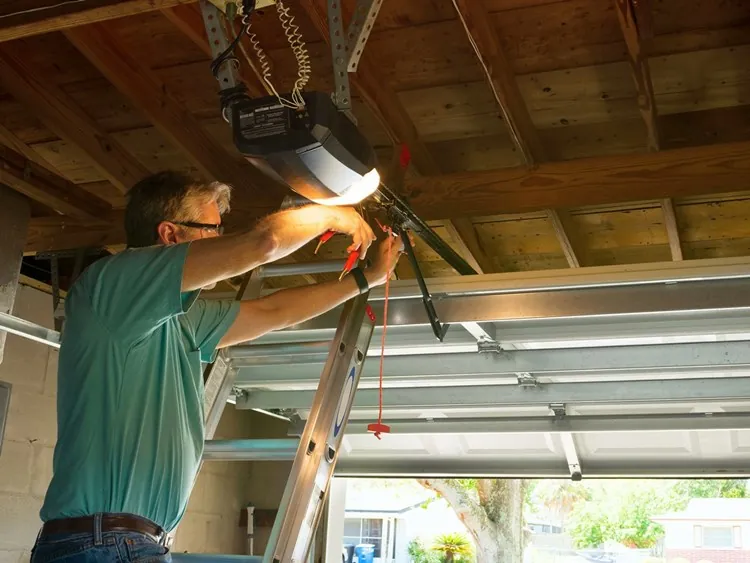
Working on a heavy door system carries significant risks. Stop your repair efforts and contact a qualified garage door technician if you notice the following:
The torsion spring is broken or has a visible gap. This component is under lethal tension; attempting to wind or release it without a specialized winding bar often results in severe injury or property damage.
The cables are frayed, unspooled, or detached. These steel strands hold the entire weight of the door. If they snap while you’re working, they can whip violently, causing deep lacerations or worse.
The bottom bracket is bent or pulling away from the door. This piece is under constant, extreme tension. Don’t loosen the bolts holding it in place, as the bracket can eject with enough force to shatter glass or break bones.
The door tracks are severely bent or twisted. If the rollers bind, the door can jump off its path entirely.
You’re unsure how to adjust the spring tension. If you can’t identify the exact number of turns required for your specific door weight, don’t guess.
If you see these signs, leave the door in its current position and unplug the opener to prevent accidental activation. A professional has the equipment to secure the door safely before making any adjustments. If the door is stuck halfway, don’t force it down by hand, as the lack of counterbalance makes it a falling hazard.
Related guides
- Garage Door Cable Came Off Drum: How to Fix It Safely
- Chamberlain Garage Door Opener Troubleshooting: Easy Fixes
- LiftMaster vs Chamberlain: Which Garage Door Opener Is Best
Frequently asked questions
Can I adjust the garage door springs myself?
No, you should never attempt to adjust or replace garage door springs yourself. These springs are under extreme tension and are designed to lift hundreds of pounds; if they release unexpectedly, they can cause serious injury or death. Only professional technicians with the proper winding bars and safety equipment should perform this task. Always prioritize your physical safety over the cost of a service call.
How do I know if my garage door is balanced?
Your door is balanced if it stays in place when you release it manually at any height. To check this, disconnect the opener using the emergency release cord and move the door to the halfway point. If it stays put, the balance is correct; if it falls or shoots upward, the springs aren’t providing the right amount of counterweight for your specific door model.
Is it safe to use the door if it slams?
No, it isn’t safe to use a garage door that slams shut. A door that falls rapidly is a major safety hazard to anyone or anything standing underneath it, including pets or vehicles. The sudden impact also puts unnecessary stress on the panels, hinges, and the opener motor, which will lead to more expensive repairs if you continue to operate it in this condition.
How long does a garage door spring last?
Most residential garage door springs are rated for a specific number of cycles, which typically lasts for a significant period for a standard household.
What happens if the force setting is too high?
If the force setting is too high, the door won’t reverse when it encounters an obstacle, which creates a dangerous crushing hazard. The motor will keep pushing the door down even if a person or object is in the way. You should always test the auto-reverse feature by placing a small object, like a piece of wood, in the path of the closing door.
Does it matter if the sensors are dirty?
Yes, dirty sensors are a common cause of unexpected door movement or slamming. When the infrared beam is blocked by dirt, dust, or spider webs, the opener thinks an object is in the way and will stop or reverse the door instantly. Keeping the lenses clean ensures the signal remains strong, which prevents the system from triggering unnecessary safety stops during operation.
Conclusion
If you aren’t comfortable handling high-tension springs yourself, it’s best to call a professional technician for help. They’ll ensure the door is balanced and safe to operate again. Don’t wait until someone gets hurt; getting it fixed today will give you peace of mind and keep your home secure.
