
Choosing the right water purification system depends on your home’s specific water quality issues, and the best whole house water filters match your local contaminants with the appropriate technology. These systems connect to your main water line to treat all water entering your home. Identifying your primary water concern is the first step toward selecting the right equipment for your household needs.
Comparison of whole house water filter types
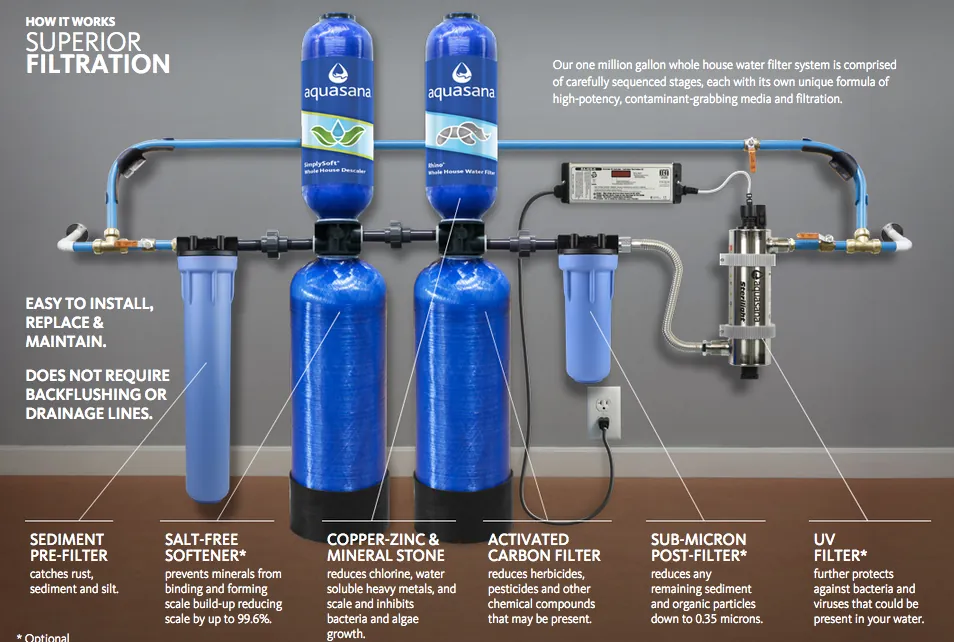
The table below outlines common filtration methods for residential use. Each type excels at removing different contaminants, so it’s important to check your local water report before you buy.
| Filter Type | Primary Use | Example |
|---|---|---|
| Sediment Filter | Large particles | Polypropylene depth filter |
| Activated Carbon | Chlorine and odors | Granular carbon tank |
| Water Softener | Hard water minerals | Ion exchange resin |
| Reverse Osmosis | Dissolved solids | Point-of-entry RO system |
| UV Purifier | Bacteria and viruses | Ultraviolet light chamber |
A sediment filter is your first line of defense. If you see visible grit or sand in your glass, install a 5-micron filter. Anything larger than 20 microns will let fine silt pass through, potentially clogging your downstream carbon stages.
Activated carbon isn’t a catch-all solution. It excels at removing chlorine and organic compounds but fails against heavy metals or fluoride. If your water smells like bleach, prioritize a high-capacity carbon block. If you suspect lead or arsenic, carbon alone is insufficient; you must pair it with a specialized ion-exchange resin or reverse osmosis.
Water softeners are strictly for mineral reduction. Don’t confuse them with purifiers. If your soap doesn’t lather or you see white crust on faucets, you have hard water. A softener replaces calcium and magnesium with sodium. If you’re on a low-sodium diet, install a bypass valve for your kitchen cold-water line to keep drinking water untreated.
UV purifiers require clear water to function. If your sediment levels are high, the light can’t penetrate the debris to kill bacteria. Always place the UV chamber after your final filtration stage to ensure the water is crystal clear before it reaches the light.
Sediment filters
Sediment filters are the first line of defense in a whole house system, designed to capture physical debris like sand, rust, and silt. These filters protect your plumbing fixtures and downstream equipment from becoming clogged or damaged by abrasive particles. They’re ideal for homes supplied by private wells or aging municipal pipes where visible grit is a frequent issue.
They extend the lifespan of more expensive secondary filters by removing large debris first. They prevent premature wear on appliance valves and faucet aerators. They’re relatively inexpensive and easy to replace compared to complex treatment systems.
If your water has visible particles, you should look for a filter with a micron rating between 5 and 20 microns. A 5-micron filter captures smaller particles but will clog faster than a 20-micron filter.
If you notice a sudden drop in water pressure throughout your house, it’s a clear sign that your sediment filter has trapped too much debris and needs a replacement. For example, a standard 10-inch housing using a 5-micron spun polypropylene cartridge is often sufficient for a typical two-bathroom home.
Choose a 20-micron rating if you deal with high-volume water usage or if your well pump struggles to keep up with finer filtration. If you see fine sand settling at the bottom of a glass, stick to the 5-micron option to protect your downstream appliances.
Many homeowners make the mistake of choosing a 1-micron filter for general sediment, which leads to frequent replacements because the filter chokes on larger particles. If you install a gauge before and after the filter housing, you can track the pressure drop precisely. If you lack a gauge, consult your owner’s manual to determine the appropriate replacement frequency based on your specific water usage.
Activated carbon filters
Activated carbon filters specialize in removing chlorine, chloramines, and organic compounds that cause unpleasant tastes and odors. These units use a porous carbon medium to trap chemical contaminants through a process called adsorption. They’re best suited for municipal water users who find the chemical smell or taste of tap water objectionable.
They significantly improve the taste and smell of water throughout the entire house. They reduce exposure to volatile organic compounds (VOCs) that may be present in treated city water. They provide a large surface area for chemical contact, ensuring effective treatment at high flow rates.
If you’re concerned about specific chemicals, check the NSF International product listings to verify that your chosen filter is certified for the removal of those specific contaminants. These filters don’t remove heavy metals or dissolved minerals, so they aren’t a complete solution for well water with high mineral content.
If you have high sediment levels, you must install a sediment pre-filter to prevent the carbon bed from getting plugged by dirt. A common setup involves a 20-inch big blue housing filled with a coconut shell carbon block, which you should replace based on your household water usage as directed by the owner’s manual.
The effectiveness of your filter depends on the contact time between the water and the carbon. If your water pressure exceeds the manufacturer’s recommended flow rate, the water will pass through too quickly for the carbon to adsorb the chemicals. You can test this by filling a one-gallon container and timing how long it takes. If it fills in under 30 seconds, you’re likely pushing water through the filter too fast to achieve full purification.
People often mistake carbon blocks for sediment filters and skip the pre-filter stage. This is a costly error. Once the pores of a carbon block are coated in fine silt, the filter stops working entirely, even if the carbon itself isn’t yet exhausted. If you see your water pressure drop significantly before the six-month mark, your pre-filter is likely clogged and needs immediate replacement.
Water softeners
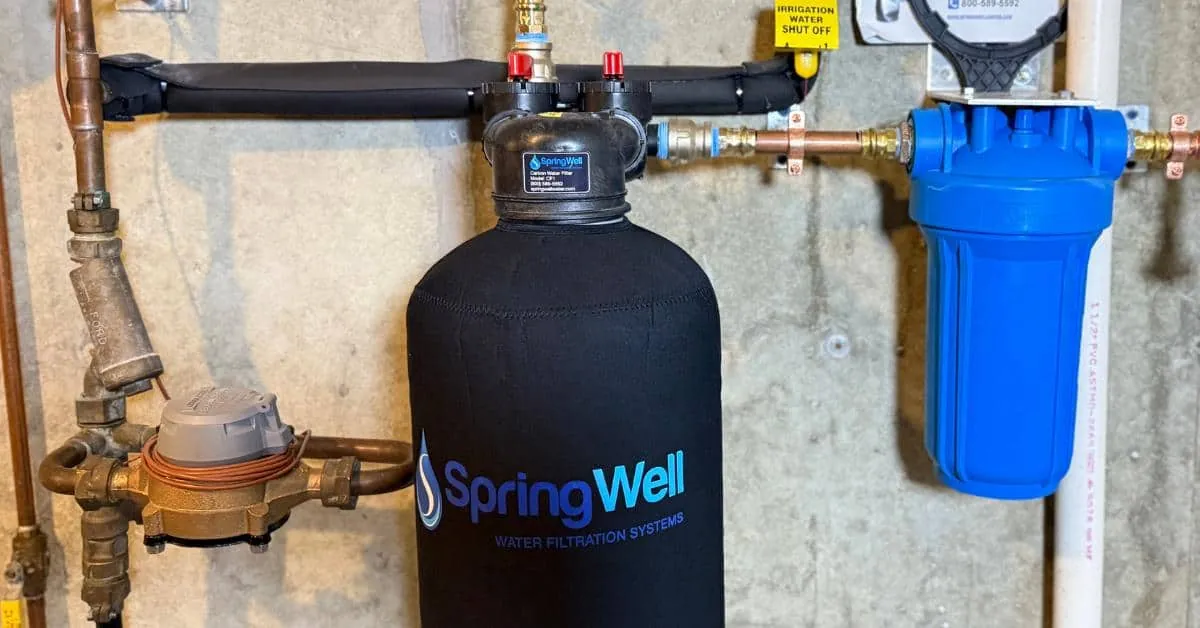
Water softeners use ion exchange resin to replace calcium and magnesium ions with sodium or potassium ions, effectively preventing scale buildup in your pipes and appliances. This process is essential for homes with hard water, which is identified by white crusty deposits on faucets and stiff laundry. These systems require a drain line for the regeneration cycle and a salt tank that needs occasional refilling.
- They prevent scale from forming inside hot water heaters, which improves energy efficiency.
- They stop hard water spots from appearing on glass shower doors and dishes.
- They help soap lather better, which can reduce the amount of detergent you need for cleaning.
Water softeners don’t remove bacteria or chemicals, so they’re often paired with a carbon filter for a comprehensive treatment approach. If you have a private well, you should test your water for iron, as high iron levels can foul the resin beads and make the softener ineffective.
This is a significant investment that requires regular maintenance, including checking salt levels monthly and ensuring the drain line is clear. For a typical family of four, a 48,000-grain capacity unit is usually the standard size to handle the daily water demand effectively.
Ultraviolet purification systems
Ultraviolet (UV) systems use intense light waves to neutralize bacteria, viruses, and protozoa, making them safe for consumption. These systems are critical for homes that rely on well water where biological contamination is a known risk. Unlike chemical treatments, UV light doesn’t change the taste or chemistry of the water.
They provide reliable protection against pathogens without adding chemicals to your supply. They’re highly effective at killing microorganisms that are resistant to chlorine. They require very little maintenance beyond cleaning the quartz sleeve and replacing the UV lamp once per year.
The effectiveness of UV light depends on water clarity, so you must always install a sediment filter upstream to ensure the water is clear enough for the light to penetrate. If the water is cloudy or has high mineral content, the light can’t reach the pathogens, and the system will fail to sanitize the water.
Measure your water’s turbidity before installation. If your turbidity exceeds 1.0 NTU, the light will scatter rather than penetrate, rendering the system useless. A five-micron sediment filter is the minimum requirement to prevent shadows where bacteria can hide.
If your well water contains iron or manganese, these minerals will coat the quartz sleeve in a matter of weeks. This scaling blocks the UV output entirely. If you see brownish staining on your plumbing fixtures, install a water softener or an iron oxidation filter before the UV unit.
The UV lamp must remain on 24 hours a day to maintain protection. You should replace the bulb after 9,000 hours of use, even if the light still appears to be working. While the visible glow remains, the specific germicidal wavelength degrades long before the filament burns out. Failing to track this usage leaves your household vulnerable to unseen microbial spikes.
Additional treatment technologies
Iron filters rely on oxidation media to convert dissolved iron into solid particles. If your water leaves orange or brown stains on fixtures, you likely have iron levels exceeding 0.3 milligrams per liter. These systems require periodic backwashing to flush out trapped sediment. If you skip this maintenance, the media beds harden, rendering the filter useless and forcing a costly replacement of the entire tank.
Reverse osmosis systems employ a semi-permeable membrane to strip out nearly all dissolved solids and contaminants. While standard units serve a single kitchen tap, whole-house versions exist. These large systems are rarely practical; they often produce three to five gallons of wastewater for every gallon of purified water generated. Reserve these systems for specific health concerns like high nitrate or arsenic levels rather than general filtration.
Neutralizers utilize calcite or magnesium oxide to elevate the pH of acidic water. This process is essential if your pH tests below 6.5, as acidic water leaches copper from plumbing. Monitor the media level regularly, as the material dissolves during the treatment process and must be replenished according to the owner’s manual.
Choosing the right system
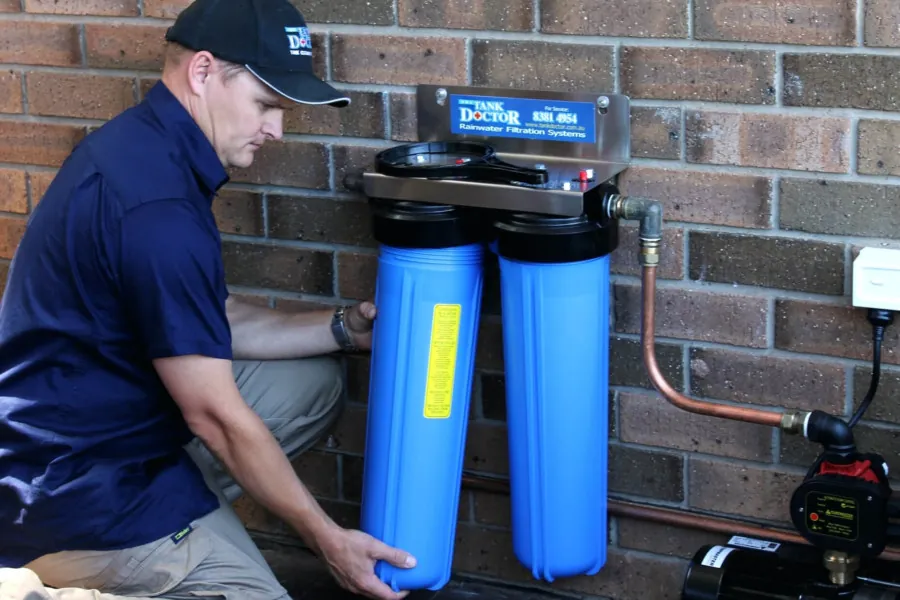
If you’re on a municipal supply, request a water quality report from your local utility company to see which chemicals are present. If you have a private well, you must take a sample to a certified laboratory to test for contaminants.
If your main goal is taste and odor, a carbon filter is the correct choice. If you’re struggling with scale, a water softener is necessary. If your lab results show biological contaminants, you need a UV system. You can often combine these, such as a sediment filter followed by a carbon filter for city water, or a sediment filter followed by a softener and a UV light for well water.
Most systems can be combined, but you must arrange them in the correct order to avoid damaging the equipment. Always place sediment filters first to protect the more delicate media beds. If you’re unsure about the pressure requirements of your home, check your main line pipe size; most systems come in 3/4-inch or 1-inch port sizes to match standard plumbing. Choosing the wrong port size will restrict your flow and cause low water pressure at your fixtures.
Related guides
Frequently asked questions
How long do whole house water filters last?
Filter cartridges typically last 3 to 6 months, while media in tanks lasts 1 to 5 years. Lifespan depends on water volume and contaminant concentration. Monitor your water pressure; a noticeable decrease indicates the filter is reaching capacity and requires a change. Always check the manufacturer’s guidance for your specific model.
Is it safe to install a water filter myself?
You can install a filter with basic plumbing skills, but it requires cutting your main water line and using proper fittings. If you’re uncomfortable working with piping or your home has high water pressure, hire a licensed plumber. Improper installation can lead to leaks, water damage, or a restricted flow.
What happens if I don’t change the filter on time?
If you fail to change a filter, it will eventually become blocked, causing a total loss of water pressure. In some cases, a saturated filter can release trapped contaminants back into the water stream. Always follow the replacement schedule in your user manual rather than waiting for the water to taste bad.
Do these filters remove all contaminants?
No single filter removes every contaminant, which is why a multi-stage approach is often required. A carbon filter removes chemicals, while a softener removes minerals. You must identify the specific pollutants in your water and build a system that targets those threats based on the manufacturer’s removal specifications.
How much water pressure will I lose?
Every filter adds resistance, typically causing a pressure drop of 2 to 10 PSI depending on density. If your home has low water pressure, choose high-flow filters with larger housings to minimize this effect. Always ensure the system is rated for your household flow rate by counting fixtures used at once.
Does it matter if I have hard water?
Hard water significantly impacts filter performance and can lead to premature appliance failure. If your water hardness is high, install a water softener before other stages to prevent scale from coating the media. Testing your water for hardness is the most important step in protecting your whole house filtration system.
Conclusion
Start by testing your water to identify the exact contaminants you need to remove. Once you have your lab results, purchase the appropriate filter stages, starting with a sediment filter to protect the rest of your system. You can expect to see a difference in water quality within a few days of installation.