
You can cook seafood in a slow cooker, but you must use the low setting and limit the time to under 60 minutes to avoid rubbery, overcooked results. Because fish and shellfish have very little connective tissue, they lose moisture and break apart rapidly when exposed to the long, high-heat cycles typical of slow cooking.
The quality of your result depends on the type of seafood you choose, the specific power output of your appliance, and your ability to monitor the internal temperature. Lean white fish requires much less time than hearty, dense shellfish like lobster or large shrimp.
Who this is for and why
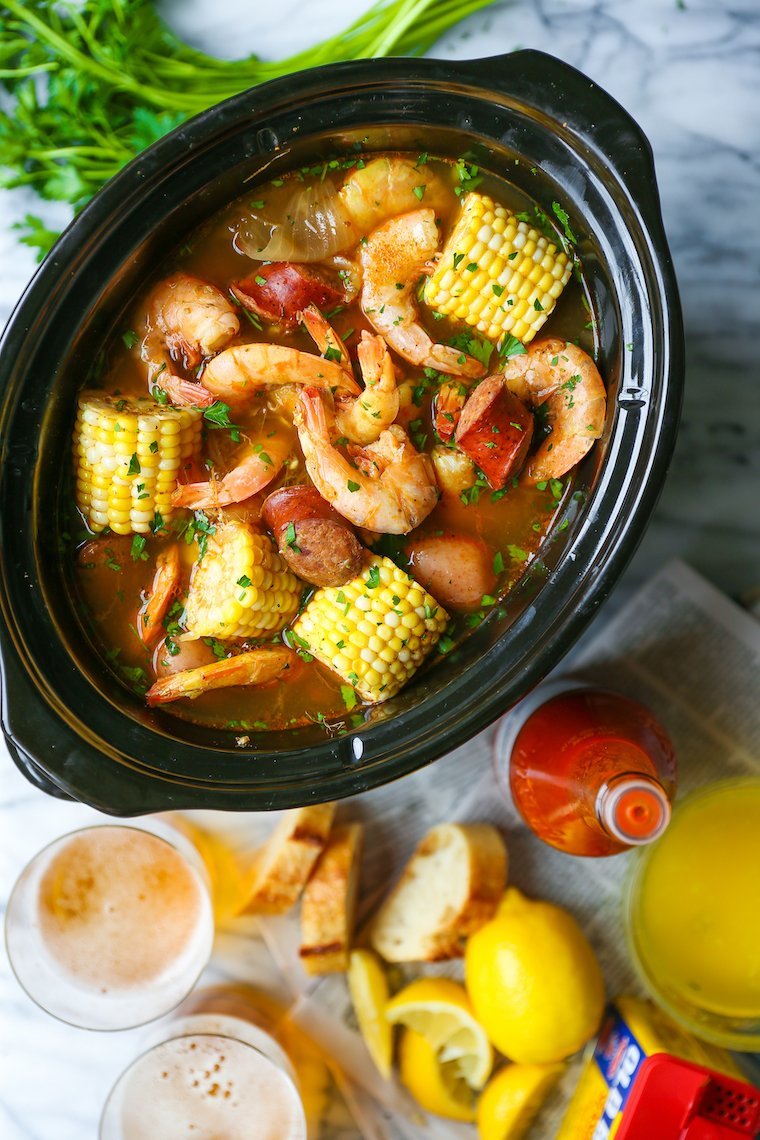
This guide serves home cooks who want to use their slow cooker for fish and shellfish recipes, whether they’re preparing a stew or a gentle poach. If you’re looking for a way to cook frozen fish fillets quickly or hoping to leave a delicate white fish in the machine for an eight-hour workday, this page isn’t for you. That approach will result in a flavorless, disintegrated mush.
The primary assumption here is that you own a standard electric slow cooker with at least a “low” and “high” setting. We assume you have a digital food thermometer, which is the only way to ensure safety without guessing. If you’re trying to replicate high-heat searing or a crispy crust, you should use a stovetop or oven instead. This page provides the precise timing and safety thresholds necessary to turn raw ingredients into a finished meal without destroying the texture. If you don’t have a thermometer, you must rely on visual cues, such as opaque flesh, though this is less accurate for thick cuts.
Factors that decide the cooking outcome
The thickness of the seafood is the most critical factor, as thinner fillets cook significantly faster than thick steaks or whole shellfish. A half-inch thick salmon fillet will reach doneness in twenty minutes, while a two-inch thick piece of halibut may require forty minutes.
The power of your slow cooker also changes the timing, as older models often run hotter than modern digital units. You must test your device with water to see how quickly it reaches a simmer; if your water boils within thirty minutes on the low setting, your machine is likely too aggressive for delicate seafood.
The liquid-to-solid ratio matters because steam cooks the fish faster than dry heat. If you submerge the seafood completely in broth, the temperature will rise evenly; if you place it on a bed of vegetables, the bottom will cook faster than the top. People often make the mistake of adding seafood at the start of a long recipe, which destroys the protein structure.
The cut of the seafood determines the stability of the final dish. Firm fish like swordfish or monkfish hold their shape well, while flaky varieties like cod or flounder will break apart if stirred. You should only stir the contents once, halfway through the process, to ensure even heat distribution.
Can I cook seafood in a slow cooker? Preparation tips
- Prepare your liquid base, such as a broth or wine, and heat it on the low setting for 30 minutes until it’s steaming but not boiling.
- Cut your seafood into uniform pieces, ideally 2-inch cubes, to ensure they cook at the same rate.
- Place the seafood gently into the warm liquid, ensuring the pieces aren’t crowded or stacked.
- Cover the lid tightly; if the lid is loose, you’ll lose heat and need to add 10 minutes to the total time.
- Set a timer for 20 minutes if using thin fillets, or 40 minutes for thick steaks or shellfish.
- Use a digital thermometer to check that the internal temperature reaches 145°F, as specified in the FoodSafety.gov safe minimum internal temperatures.
- Remove the lid and check the texture; the flesh should be opaque and flake easily when pressed with a fork.
- Turn off the appliance immediately, as residual heat will continue to cook the fish even after the power is off.
- Serve the seafood directly from the pot to prevent the pieces from breaking during transfer.
The judgement call that separates a professional result from a poor one is the exact moment of removal. If you wait for the “done” look while the heat is still on, the carry-over heat will push the internal temperature past 150°F, leading to a dry, chalky texture.
Variations at a glance
| The Situation | What to do | What it takes | What to watch for |
|---|---|---|---|
| Thin white fish | Poach in broth | 20 minutes | Flaking texture |
| Thick salmon steaks | Slow poach | 35 minutes | Opaque center |
| Large shrimp | Steam gently | 15 minutes | Pink, curled shape |
| Scallops | Steam in butter | 10 minutes | Opaque, firm flesh |
| Mixed seafood stew | Add last 20m | 20 minutes | Firmness level |
The critical mistake most cooks make is treating all seafood as a uniform protein. If you use the salmon timing for white fish, the delicate fillets will disintegrate into mush. You lose the structural integrity of the fish, which ruins the presentation and texture.
Use this decision rule to adjust your heat: if the flesh is translucent, keep the liquid at a bare simmer. If the seafood is already opaque or dense, you can safely increase the heat to a gentle boil.
For shrimp, the curl tells the story. A loose “C” shape means the shrimp is perfectly cooked. If it tightens into a rigid “O” shape, you have overshot the mark by at least three minutes, resulting in a rubbery bite.
When preparing mixed stews, always layer your additions by density. Start with the thickest pieces and wait until the final five minutes to drop in delicate scallops. This prevents the smaller items from turning into rubber while the larger pieces finish cooking. If you’re unsure about doneness, use a paring knife to check the center of the thickest piece. It should offer no resistance.
Avoiding common preparation errors
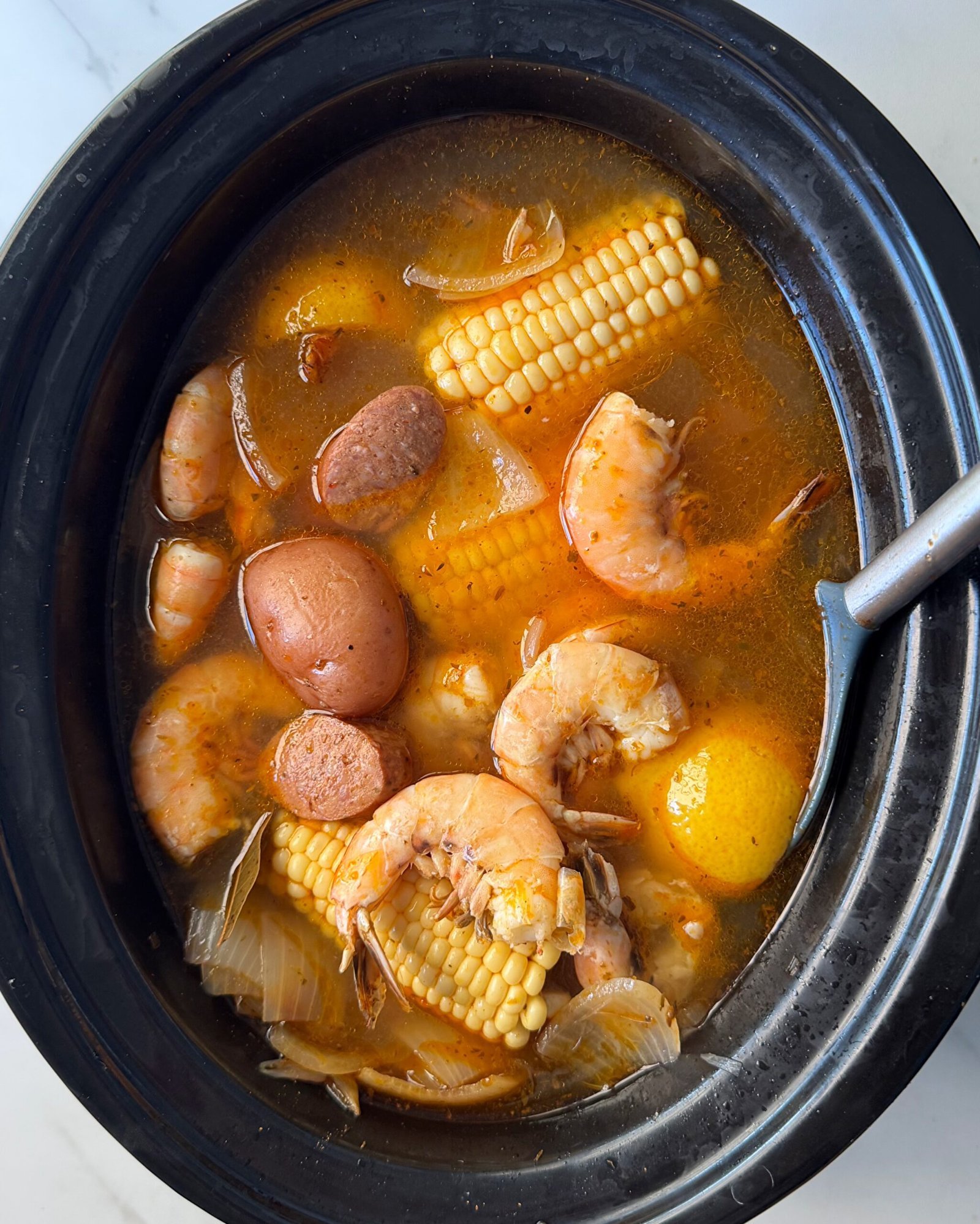
Maintaining proper texture
Many people assume that because a slow cooker is meant for long, unattended cooking, seafood can follow the same rules as beef or pork. This is a mistake that costs you the entire meal, as fish proteins denature and tighten rapidly once they hit 140°F. By the time a standard four-hour cycle finishes, the fish will have lost all its moisture and turned into a fibrous, stringy mass. Always treat seafood as the final addition to a dish that has already been prepared.
Managing heat distribution
The heat in a slow cooker comes from the sides and bottom, creating a gradient that often leaves the top of the fish undercooked while the bottom is overdone. To fix this, ensure the pieces are fully submerged in your poaching liquid. If the fish is too large to submerge, flip the pieces carefully at the halfway point. Avoid lifting the lid repeatedly, as every opening releases heat and extends the cooking time.
Issues and how to fix them
| What you notice | What it usually means | What to do first | How to stop it |
|---|---|---|---|
| Fish is falling apart | Overcooked | Remove immediately | Reduce time 5m |
| Center is raw | Low heat | Increase time 5m | Use smaller pieces |
| Rubbery texture | Too much heat | Check thermostat | Use low setting |
| Milky white liquid | Proteins leaking | Reduce heat | Add more broth |
| Fish tastes bland | Lack of seasoning | Add salt/herbs | Marinate beforehand |
If the fish flakes at the slightest touch, you have crossed the line into overcooking. This happens most often when using thin fillets that cook in under eight minutes. If you see the edges curling, remove the fish from the slow cooker immediately.
A raw center usually stems from uneven thickness. If your fillet is one inch thick on one side and a half-inch on the other, the thin side will dry out before the center hits 145°F. Always trim your fish into uniform rectangles before cooking to ensure consistent heat penetration.
Rubbery textures are the hallmark of “searing” at too high a temperature. Beginners often mistake high heat for better flavor, but this just tightens the muscle fibers into a tough, unchewable state.
The milky white liquid, or albumin, is a protein coagulating on the surface. It signals that the interior is losing moisture rapidly. If you see this, lower your heat by at least 20 percent. Adding a tablespoon of broth or white wine creates a steam environment that keeps the surface hydrated.
Finally, blandness is rarely about the final salt pinch. If the fish tastes flat, you failed to penetrate the flesh. Marinate for at least 30 minutes in an acidic base to carry flavors deep into the protein structure.
The regulations for safety
Food safety guidelines from the USDA define the safe minimum internal temperature for finfish as 145°F. This temperature is necessary to destroy pathogens that can cause foodborne illness. You must verify this temperature with a calibrated food thermometer inserted into the thickest part of the fillet.
If your slow cooker doesn’t maintain a consistent temperature, you risk keeping the food in the “danger zone” between 40°F and 140°F for too long, which encourages bacterial growth.
A common mistake is assuming the “low” setting on a slow cooker is uniform across all devices. In reality, some older models may hover at 160°F, while others struggle to exceed 135°F. If your unit fails to reach 140°F within two hours, you’re creating a breeding ground for pathogens like Salmonella.
Use this simple decision rule: if your thermometer reads below 145°F after the recommended cooking time, don’t attempt to “finish” the fish in the slow cooker. Instead, transfer the fillet to a preheated skillet or oven to reach the safe threshold quickly. This avoids the prolonged exposure to moderate heat that allows toxins to multiply. Relying on visual cues like opacity or flaking is a dangerous error; only the digital reading provides the certainty required to prevent illness.
The true cost of the method
The cost of this method is measured primarily in time and the risk of wasting expensive ingredients. While it’s technically possible to cook seafood this way, it requires your full attention for the final hour. You can’t set it and leave it, which negates the main benefit of using a slow cooker.
If you misjudge the timing by even ten minutes, you risk ruining a high-quality piece of protein. The common mistake is assuming the residual heat won’t continue to cook the fish once the machine is off. This error often results in a dry, rubbery texture that’s impossible to salvage.
Compare the cost of your seafood per pound against the time you spend monitoring the device. If you’re preparing an expensive ingredient, the risk of overcooking is too high. In that case, you’re better off using a traditional poaching pan where you can see the results instantly.
Keeping the result consistent
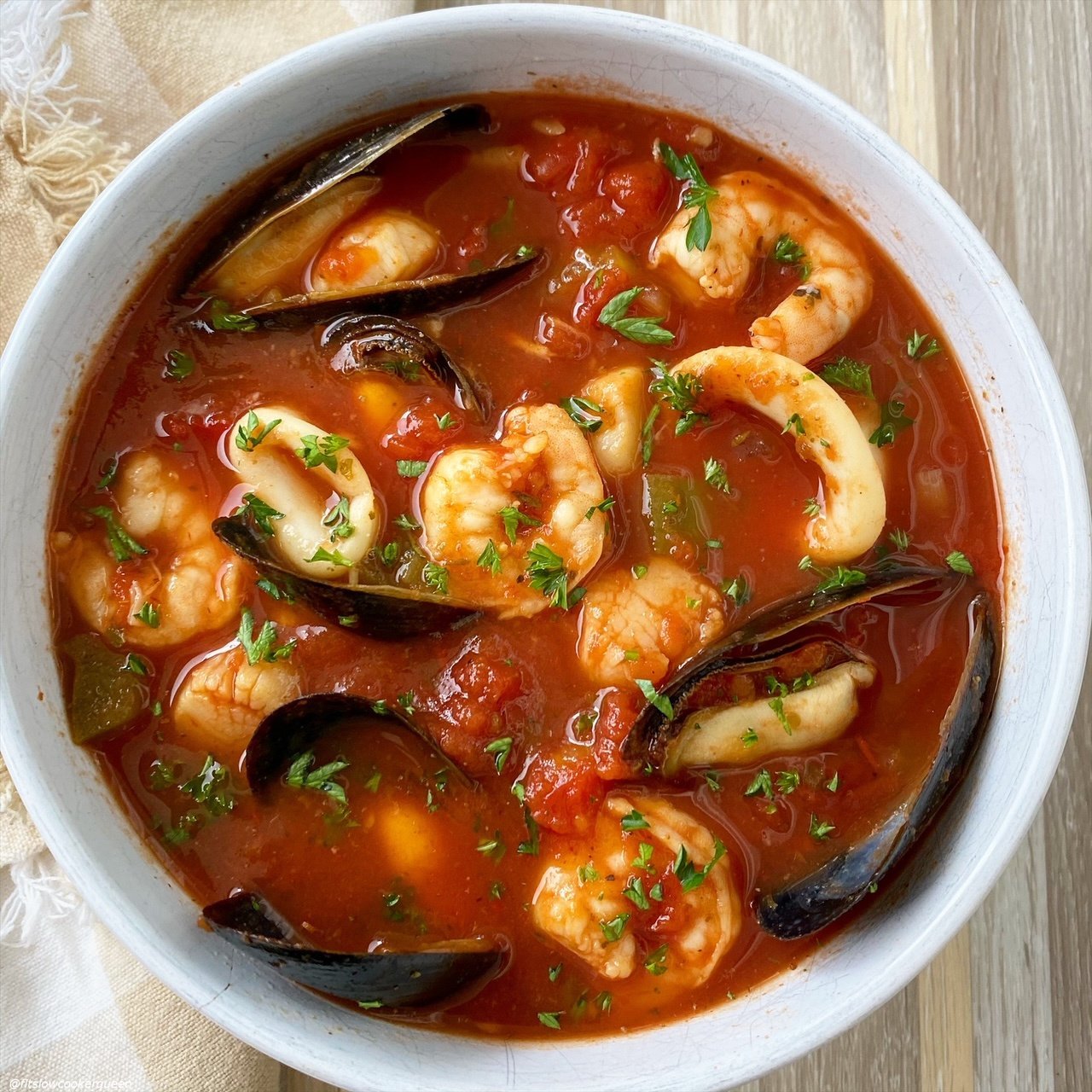
After you have successfully cooked your seafood, you must serve it immediately to preserve the delicate texture. Heat causes proteins to contract; once they cool, they tighten further. Serving within five minutes ensures the fish remains succulent rather than rubbery.
If you have leftovers, store them in an airtight container in the refrigerator for no more than two days. Beyond 48 hours, the risk of bacterial growth increases, and the oils in the fish begin to oxidize, creating an unpleasant “fishy” flavor that no amount of reheating can mask.
Reheat the fish gently in a microwave at 50% power for 60-second intervals until it’s warmed through. Using full power is a common mistake that causes the edges to become tough and leathery while the center remains cold. If the fish looks dry when you take it out of the fridge, add a tablespoon of water or broth before reheating to create a gentle steam effect.
The decision rule is simple: if you’re reheating a delicate white fish like cod, use a steamer basket for three minutes; if reheating a fatty fish like salmon, use the microwave method. Never attempt to “slow cook” the leftovers again. The second heating cycle will destroy any remaining moisture, leaving you with a dry, fibrous meal that lacks the quality of your original effort.
When to avoid this method
Don’t use a slow cooker if you’re preparing expensive, delicate fish like Dover sole or high-grade sashimi-quality tuna. These items require precise, high-heat searing to develop flavor, and the slow cooker will destroy their natural oils and texture. If your recipe calls for a crispy skin or a browned surface, you must use a heavy-bottomed skillet instead. Furthermore, if you’re feeding a group of people and need to ensure perfect consistency across multiple servings, a slow cooker is too unpredictable. In these cases, use an oven-safe dish and bake at 350°F until the internal temperature hits the target, as this provides a more uniform environment for larger quantities.
Can I cook frozen seafood in a slow cooker?
No, you shouldn’t cook frozen seafood in a slow cooker because it releases too much water, which dilutes your sauce and prevents the fish from reaching a safe temperature quickly. Always thaw your fish in the refrigerator overnight and pat it dry before adding it to the pot.
Is it safe to leave seafood in a slow cooker for four hours?
No, leaving seafood in a slow cooker for four hours will result in a texture that’s completely unpalatable and likely overcooked. Seafood is a fast-cooking protein that requires between 15 and 45 minutes of heat, depending on the thickness and the temperature of your liquid base.
What happens if I cook the fish too long?
The fish will become rubbery, dry, and eventually break apart into small, flavorless pieces that lose their structural integrity. Because fish lacks the tough collagen found in red meat, it doesn’t benefit from the long, slow breakdown process that makes beef or pork tender.
How do I know when the fish is done?
The fish is done when it reaches an internal temperature of 145°F and the flesh appears opaque or pearly white throughout. You can also test for doneness by inserting a fork into the thickest part and twisting gently; the fish should flake easily without resistance.
Does the type of slow cooker matter?
Yes, the power output and insulation of your slow cooker significantly change the cooking time. A smaller, 3-quart cooker may heat up faster than a large 6-quart model, so you should monitor the internal temperature closely starting at the 15-minute mark to avoid overcooking.
Why did my fish turn into mush?
Your fish turned into mush because it was cooked for too long or subjected to a temperature that was too high for its delicate structure. Seafood proteins are highly sensitive to heat, and once they cross the threshold of being fully cooked, they begin to lose water and break down rapidly.
Can I use a slow cooker for shellfish?
Yes, you can use a slow cooker for shellfish like shrimp, crab, or lobster, but you must keep the cooking time under 20 minutes to prevent them from becoming tough. Shellfish cook even faster than fish, so monitor the color and texture carefully and remove them as soon as they turn opaque.
To get the best results, start by heating your broth first, then add the seafood and monitor the temperature with a digital thermometer every ten minutes. If the fish reaches 145°F, remove it immediately to stop the cooking process. If you notice the liquid bubbling rapidly, turn your slow cooker off, as this indicates the temperature is too high for delicate proteins.
Related guides