
Yes, a range hood can reduce smoke in the kitchen significantly when it’s installed at the correct height and uses the right amount of airflow for your stove. To work effectively, the hood must capture air pollutants before they spread into your living space.
The efficiency of this process changes based on whether your system vents air outside or recirculates it through filters. It also depends on the width of the hood compared to your cooktop and how often you clean or replace the internal components.
How range hoods reduce kitchen smoke

The primary purpose of a range hood is to improve indoor air quality by removing combustion byproducts and grease particles generated during cooking. Many people assume any fan above the stove will clear the air, but the reality is more nuanced. If your hood vents to the outside, it physically removes smoke and moisture from the home. If it’s a ductless or recirculating model, it merely passes the air through a filter—usually activated charcoal—to trap odors and grease before blowing the air back into the kitchen.
Recirculating systems are common in apartments or older homes where exterior venting isn’t possible. These units don’t remove carbon monoxide or nitrogen dioxide from gas stoves, so they aren’t a replacement for proper ventilation. If you cook often, a ducted system is the standard choice. According to the Environmental Protection Agency’s guide on indoor air quality, proper ventilation is essential for reducing exposure to pollutants created by cooking appliances.
Factors that decide performance
The power of your fan, measured in cubic feet per minute (CFM), dictates how much air the system can move. For a standard residential stove, a general rule is to provide 100 CFM for every 10,000 BTUs of your burner output. If you have a professional-grade range, you’ll need a much higher CFM rating to keep up with the smoke production.
The mounting height is the next critical factor. If the hood is mounted too high, it can’t capture the smoke before it drifts into the room. Most manufacturers recommend a distance of 24 to 30 inches between the cooktop and the hood bottom. If you mount it higher, you must increase the fan power to compensate for the loss of capture area.
The width of the hood also changes the result. A hood that’s narrower than your stove will fail to catch smoke rising from the outer burners. Ideally, the hood should be at least as wide as the cooking surface. If you use a large griddle or multiple burners at once, a wider hood is better.
Filter maintenance is the most common mistake. People often forget to clean grease filters, which leads to reduced airflow and increased noise. Metal mesh filters should be cleaned regularly in hot, soapy water. If you use charcoal filters in a ductless hood, these must be replaced as part of your usual clean, depending on how heavily you cook.
Proper installation and operation
- Measure the width of your stove to ensure the hood covers the entire cooking area.
- Verify the height of your cabinets to maintain the manufacturer’s recommended distance, usually 24–30 inches.
- Install the ductwork with as few bends as possible to keep the airflow smooth and quiet.
- Turn the fan on at least two minutes before you start cooking to establish an airflow pattern.
- Keep the fan running for five to ten minutes after you finish to clear lingering smoke.
- Check the grease filters whenever you notice it; if they look dark or feel sticky, clean them immediately.
- Inspect the exterior vent cap to ensure it opens fully when the fan is running.
The decision to use a high or low setting depends on the heat level. If you’re boiling water, a low setting is usually enough. If you’re searing meat, set the fan to high before the smoke starts to build up.
Performance comparison by system
| Situation | System Type | Air Treatment | What to Watch For |
|---|---|---|---|
| Apartment living | Recirculating | Filters odors | Charcoal filter life |
| New home build | Ducted | Vents outdoors | Duct blockages |
| Heavy searing | High-CFM Ducted | Removes smoke | Fan noise level |
| Light cooking | Low-CFM Ducted | Removes moisture | Filter buildup |
| Gas stove use | Ducted | Vents pollutants | Carbon monoxide levels |
Recirculating systems are common in apartments where exterior venting is prohibited. These units rely on charcoal filters to scrub grease and odors. You must replace these filters every three to six months. If you notice persistent cooking smells in your living area, the carbon media is likely saturated and ineffective.
Ducted systems are the gold standard for high-volume cooking. If you sear steaks or use a wok frequently, look for a blower rated at least 600 CFM. Anything lower will fail to capture smoke before it migrates to your ceiling. However, high-CFM fans often create significant noise. You can mitigate this by installing a remote blower motor on the roof or in the attic.
New home builds often feature complex ductwork. Always verify that the duct diameter matches the range hood outlet size. A common mistake is downsizing the duct to fit narrow wall cavities. This creates backpressure, which forces the motor to work harder, reduces airflow, and significantly increases noise levels.
If you use a gas stove, venting outdoors isn’t a luxury; it’s a safety requirement. Gas combustion releases nitrogen dioxide and carbon monoxide into your home. A recirculating hood can’t remove these gases. If your kitchen layout makes exterior venting impossible, you must install a secondary carbon monoxide detector near the cooking zone to monitor air quality.
Maintaining air quality standards
Cleaning and filter care
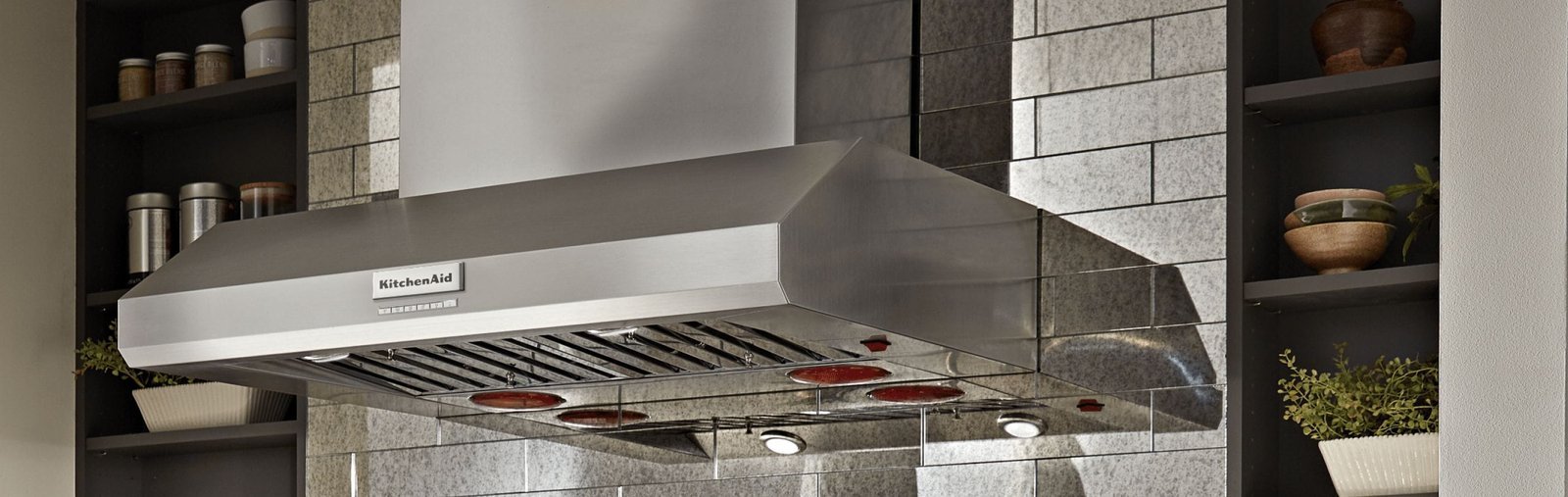
Regular cleaning prevents grease buildup, which is a fire hazard. If the mesh filter is coated in oil, the fan has to work harder, which creates more noise and moves less air. You should aim to clean these filters in the dishwasher or a sink with degreaser regularly. If you notice a drop in suction, check the vent duct for obstructions like bird nests or lint, which can block the airflow entirely.
Managing airflow efficiency
The efficiency of your hood depends on the path of the ductwork. Every 90-degree turn in the pipe reduces the fan’s effectiveness by a significant margin. If your kitchen layout requires many turns, you may need a more powerful motor to maintain the same smoke-clearing ability. Always consult the installation manual for the maximum duct length allowed for your specific model to ensure the system isn’t overworking itself.
Common ventilation problems
| What you notice | What it means | What to do first | How to stop it |
|---|---|---|---|
| Loud rattling | Loose parts | Tighten all screws | Check mounts |
| Weak suction | Clogged filter | Clean mesh filters | Monthly cleaning |
| Smoke spreading | Low fan speed | Turn to high | Start fan early |
| Odors lingering | Old charcoal | Replace filter | Track dates |
| Grease dripping | Saturated filter | Clean immediately | Replace filters |
Rattling often stems from vibration against the cabinet frame. If tightening screws fails, check the motor mounts for worn rubber dampeners. Replacing these is a cheap part and eliminates the metal-on-metal contact causing the noise.
Weak suction is rarely a mechanical failure. Most homeowners mistake a dirty grease filter for a dying motor. Soak these in degreaser for twenty minutes before scrubbing.
Smoke spreading usually happens because the fan is activated too late. Turn the unit on five minutes before you begin searing meat. This establishes a thermal updraft that captures particles before they reach the ceiling.
Odors lingering indicate the charcoal insert has reached its saturation point. These filters can’t be cleaned; they must be replaced regularly. If you fry food daily, replace the charcoal filter every one to two months to prevent grease buildup inside the blower wheel.
Grease dripping is a sign of a fire hazard. If you see droplets, remove the filter and check the interior housing. If the fan blades are coated in sticky residue, use a non-abrasive cleaner. A clean fan prevents the motor from overheating during heavy use.
Understanding ventilation rules
The legal requirements for kitchen ventilation often fall under local building codes rather than federal mandates. Most residential codes require that range hoods vent directly to the outdoors to prevent the buildup of moisture and combustion gases. If you live in a multi-family building, the rules might allow for recirculating systems if exterior venting is structurally impossible. Check your local municipal building department website to see the specific requirements for your area.
If you have a gas stove, the need for proper ventilation is higher due to the emission of nitrogen dioxide. A common mistake is assuming that a high cubic feet per minute (CFM) rating is always better. If your hood exceeds 400 CFM in a tightly sealed home, you may trigger “negative pressure,” which pulls dangerous carbon monoxide back into your living space from water heaters or furnaces.
In this scenario, you must install a makeup air system to balance the pressure. If your kitchen door is difficult to open while the fan is running, your home is likely depressurized.
Never attempt to modify the fan motor yourself if you lack electrical experience, as this can void your warranty and create a fire risk. If the system isn’t working despite clean filters and clear ducts, contact a certified HVAC technician to inspect the motor and electrical connections. Before hiring, verify that the technician is familiar with residential kitchen codes rather than just industrial HVAC systems. A simple motor swap isn’t a substitute for a comprehensive safety inspection. If the unit is over ten years old, a full replacement is often more cost-effective than a repair.
The cost of poor ventilation
The cost of a range hood isn’t just the price of the unit, but the long-term impact on your kitchen. If smoke isn’t removed, grease settles on your cabinets, walls, and ceiling. This sticky film is difficult to remove and can cause permanent staining, leading to expensive painting or cabinet refinishing costs.
A common mistake is assuming that a simple recirculating filter is enough to stop this buildup. These units often trap only the largest particles, leaving fine grease aerosols to settle on your upper cabinetry. Over three years, this residue hardens, requiring abrasive cleaners that strip the finish off wood surfaces. If your cabinets feel tacky to the touch, you’re already losing equity in your kitchen.
Additionally, if you cook frequently and don’t use a hood, you may notice higher humidity levels in your home. This moisture can lead to mold growth on nearby surfaces over several years. A quality hood saves you money by protecting your kitchen surfaces and reducing the time you spend scrubbing grease.
The decision rule is simple: if you sear meat or sauté with oil more than three times a week, you require an externally vented hood with at least 400 CFM. If you only boil water or reheat meals, a recirculating unit will suffice. While a high-end unit might cost more upfront, the lower maintenance costs for your kitchen surfaces make it a practical investment for any home cook.
Keeping your system effective
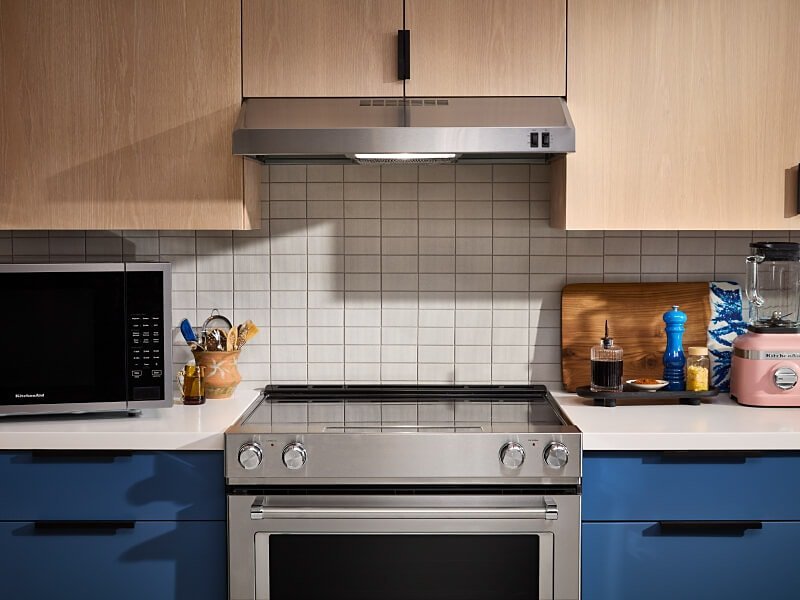
To keep your hood working, you must monitor the airflow and the state of the filters. If you hear a change in the pitch of the motor, it often means the filter is blocked or the fan blades are coated in grease. Most models require a simple check regularly to ensure the blower wheel is clean.
If you have a ducted system, ensure the exterior vent flap isn’t stuck closed by debris or ice. A stuck flap prevents the air from leaving the house, which renders the entire system useless. If you notice smoke isn’t being pulled into the hood even when the fan is on high, test the suction with a piece of paper. If the paper doesn’t stick to the mesh filter, the system has a blockage or the motor is failing.
The most common mistake is waiting for a total failure before cleaning the grease filters. If you cook with high-heat oils or sear meat daily, you must degrease the mesh regularly. Neglecting this creates a fire hazard, as accumulated oil can ignite from a stray spark on the stovetop.
Use this simple decision rule to determine the cause of poor suction. If the paper test fails but you hear the motor running at a high pitch, check the exterior vent first. If the motor sounds sluggish or hums without moving air, the blower wheel is likely seized by grease. For systems that recirculate air, replace the carbon filter regularly regardless of appearance. These filters lose their chemical effectiveness long before they look dirty, leaving odors trapped in your kitchen.
When to look for other solutions
If your kitchen layout makes it impossible to install a ducted hood, or if you live in a space where building codes forbid structural changes, you may need to look at alternatives. A standalone air purifier with a HEPA filter and an activated carbon layer can help capture some smoke particles, though it won’t be as effective as a dedicated vent.
If your primary concern is gas stove emissions, an air purifier isn’t a substitute for proper ventilation. In these cases, you should consider using an induction cooktop, which produces no combustion gases, or ensuring you have windows open during heavy cooking. If you notice that you’re experiencing headaches or respiratory irritation while cooking, stop using the stove and consult a professional to ensure your kitchen ventilation is adequate for your safety.
Can I install a range hood myself?
Yes, you can install a basic under-cabinet range hood yourself if you have the right tools and basic electrical knowledge. You’ll need to wire the unit to your home’s electrical supply and secure it to the cabinet frame, but you must ensure it meets local building codes.
Does a ductless hood actually work?
Yes, a ductless hood works to reduce grease and odors by circulating air through a charcoal filter. It doesn’t remove moisture or combustion byproducts like carbon monoxide, so it’s less effective than a ducted system for heavy cooking.
How often should I replace the filters?
You should replace charcoal filters regularly if you cook daily. Metal mesh filters don’t need replacement, but they should be cleaned regularly to maintain good airflow through the system.
Why is my range hood so loud?
A loud range hood is often caused by a buildup of grease on the fan blades or a loose mounting bracket. Check the fan for debris, clean the grease off the blades, and tighten any loose screws to reduce the vibration and noise.
Can a range hood help with indoor allergies?
Yes, a range hood helps with indoor allergies by removing smoke, dust, and cooking-related particulates from the air. By venting these particles outside, you reduce the amount of allergens circulating in your kitchen and the rest of your home.
Do I need a professional to vent my kitchen?
Yes, you should hire a professional if you need to cut through a wall or roof to install new ductwork. Improper duct installation can lead to water leaks or fire hazards, so it’s safer to have a licensed contractor handle the structural work.
Start by checking your current hood for a buildup of grease on the filters and ensure the fan is running at the correct speed for your heat level. A well-maintained hood should pull smoke directly into the vent without letting it drift into the room. If you notice smoke escaping even when the fan is on high, it’s time to have a professional check your ducting for blockages.