
Stainless steel tension poles, over-the-shower-head organizers, adhesive wall baskets, and suction cup shelves are the best shower caddies for keeping bathroom items tidy. These tools clear clutter from your tub or shower floor, but they differ in how they attach to your walls. Choosing the right one depends on your wall material and whether you prefer permanent or temporary installation.
How to compare shower caddies
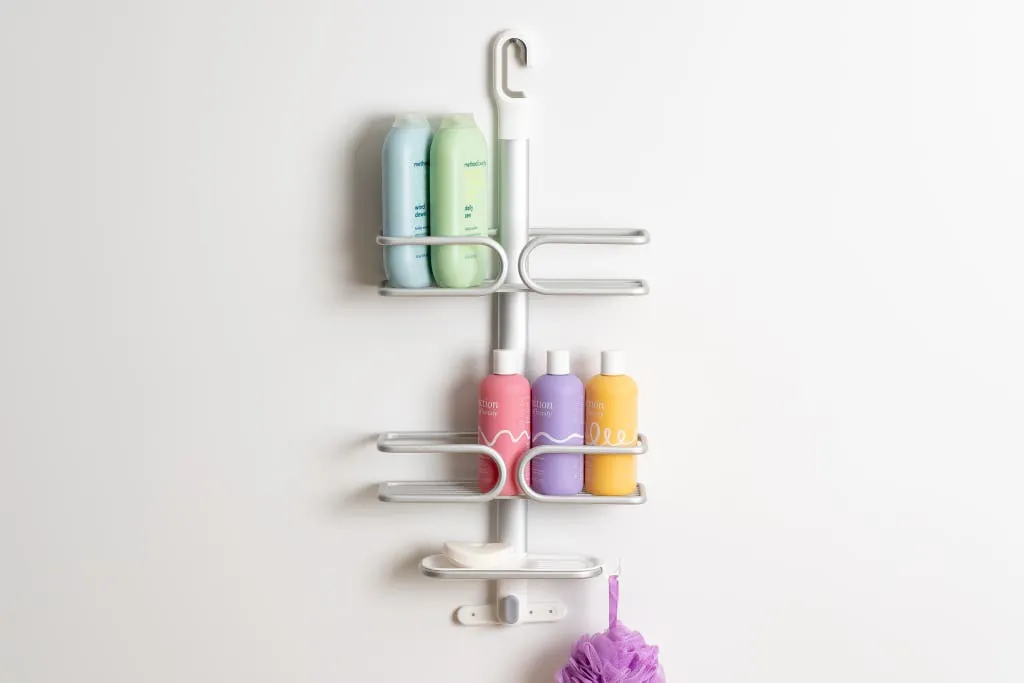
You can choose the right storage type by matching your bathroom layout to the mounting style. The following table helps you compare the common options available for organizing your space.
| Type | Best for | Example |
|---|---|---|
| Tension pole | High ceilings | Corner floor-to-ceiling rod |
| Over-the-head | Standard shower heads | Hanging metal basket |
| Adhesive basket | Smooth flat walls | Stick-on plastic shelf |
| Suction cup | Glass enclosures | Clear acrylic shelf |
| Hanging door | Shower doors | Over-the-glass hook unit |
Tension poles offer the most vertical capacity but require a solid ceiling. If your bathroom has a drop ceiling or crown molding, the pole will slip over time. Avoid these if you have a slight slope in your ceiling, as the lack of a perfectly flat surface ruins the pressure seal.
Adhesive baskets work best on glazed tile. If your walls are porous or feature heavy grout lines, the adhesive will fail within weeks. Test a small patch with masking tape first; if the tape peels away easily, the adhesive won’t hold your shampoo bottles.
Suction cups provide a clean look but only on non-porous surfaces like glass or polished porcelain. If you have textured tile, these will constantly lose their vacuum. Use a dab of clear silicone sealant on the cup edge to create a permanent bond if you refuse to drill holes.
For heavy storage, skip all suction and adhesive options. If your total load exceeds five pounds, choose an over-the-head unit that rests on the plumbing fixture. This keeps weight off the wall entirely, preventing long-term damage to your tile finish.
Tension pole organizers
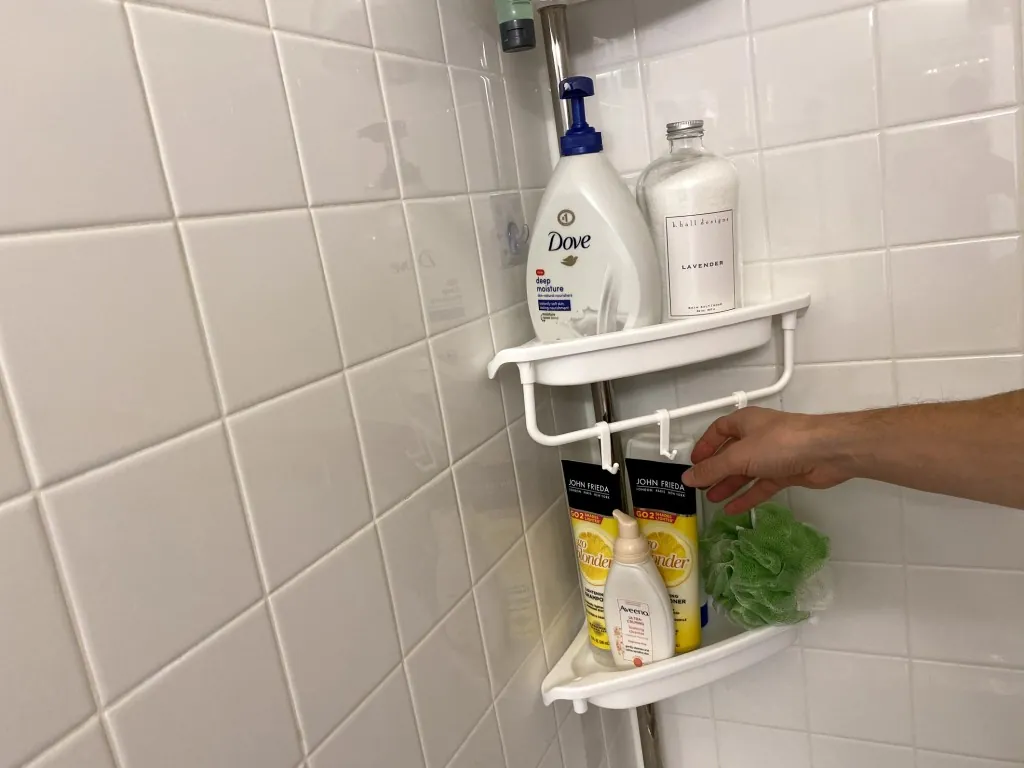
Tension pole organizers are perfect for people who need maximum storage capacity without damaging their wall surfaces. These units use a spring-loaded mechanism to hold the pole firmly between the floor and the ceiling or between the tub rim and the ceiling. They suit bathrooms where you have a corner space that’s currently empty and unused.
- Provides multiple tiers of shelving for large bottles.
- Allows for height adjustments to accommodate tall shampoo containers.
- Keeps the shower area clear by utilizing vertical corner space.
If your ceiling height is 8 feet, ensure the pole model specifically lists that range in its documentation, as some standard units only extend to 7 feet. You should check the product packaging for the exact minimum and maximum height.
A common mistake people make isn’t tightening the tension spring enough, which causes the unit to slip; if the pole feels loose, increase the tension by rotating the locking mechanism. This isn’t for bathrooms with sloped ceilings or where a drop-ceiling tile might break under pressure. For example, you might place a four-tier stainless steel pole in the corner of a standard walk-in shower.
Over-the-shower-head organizers
Over-the-shower-head organizers hang directly from the shower pipe, making them very easy to install without any tools. These are ideal for small bathrooms where you want your soap and shampoo within arm’s reach while you’re washing. They suit renters who can’t drill into the wall or modify the shower area.
- Positions your products exactly where the water flow is controlled.
- Requires zero hardware or adhesive for a secure hold.
- Keeps bottles tilted downward for easier access to the last drops.
Check the diameter of your shower pipe, as most units are built for a standard 0.5-inch to 0.75-inch pipe; if your pipe is thicker, the unit may not fit properly. You should read the manufacturer’s manual to confirm the maximum weight capacity, as overloading the shelves can bend the shower pipe over time.
This isn’t for showers with a very low pipe height, as the caddy might block your head. For instance, a two-tier wire basket hanging from your shower arm keeps your body wash and shampoo at chest level.
Most users fail to account for the “swing” factor. If your shower arm is short, the caddy will inevitably collide with the showerhead itself. Measure the distance from the wall to the center of your showerhead; if that space is less than four inches, you must choose a model with an offset hook to prevent the organizer from tilting forward.
Distinguish between stainless steel and chrome-plated wire. If your bathroom lacks a powerful exhaust fan, chrome will show rust spots quickly. Choose 304-grade stainless steel, which is more cost-effective over time, to avoid the inevitable orange streaks on your tile.
Finally, test the stability of your shower arm before hanging a heavy load. If the pipe rotates or feels loose when you apply slight downward pressure, don’t install a multi-tier unit. A shifting pipe can break the seal behind your wall, leading to a hidden leak that costs hundreds in water damage. If the pipe moves, stick to a single-shelf suction cup model instead.
Adhesive wall baskets
Adhesive wall baskets attach to flat, non-porous surfaces using strong waterproof tape or glue, providing a clean and modern look. These units are best for people who want to organize their products along a flat wall rather than in a corner. They suit bathrooms with smooth, sealed tiles or glass walls where you want a permanent but non-drilling solution.
- Creates a minimalist look by appearing to float on the wall.
- Stays firmly in place even when exposed to constant water spray.
- Allows for flexible placement at any height that suits your needs.
You must clean the wall surface with rubbing alcohol before installation to remove all soap scum and oils, as these prevent the adhesive from bonding. If you have porous or uneven tile, the adhesive won’t hold properly, and you should use a mechanical fastener instead.
This isn’t for people who plan to move the caddy frequently, as the adhesive is designed to be a semi-permanent fixture. For example, you might stick a single-tier shelf 5 feet high on a smooth ceramic wall.
Suction cup shelves
Suction cup shelves are the most temporary option, allowing you to move your storage whenever you need to change your layout. These work by creating a vacuum seal against glass or highly polished tile. They’re ideal for people who need a quick spot for a razor or a small bottle of conditioner.
Installs in seconds without any tools or permanent residue. Works perfectly on glass shower doors or enclosures. Removes easily if you want to deep-clean the wall behind it.
The main limit for these shelves is the surface texture. They won’t work on matte, textured, or porous stone surfaces because air leaks into the seal. To test your surface, press the cup against the tile; if it loses suction within ten seconds, the surface is too porous. In that case, you must switch to a tension-mounted or adhesive-backed shelf.
A common mistake is assuming the shelf can hold bulk items. If you’re storing more than two pounds, the vacuum will inevitably fail. If you hear a sudden popping sound, the weight is already exceeding the seal’s capacity. You should limit these to lightweight plastic items like razors, sponges, or single travel-sized bottles.
If your suction cup keeps falling, clean the cup with warm water to remove hidden dust or soap scum. If the rubber has become stiff or brittle over time, rub a tiny drop of vegetable oil onto the rim of the cup to restore the seal. This trick often buys you several more months of use before the material degrades.
If you’re renting a space, check if your landlord allows adhesive-backed alternatives, as these offer more stability than suction cups. However, if you’re strictly limited to glass or mirror surfaces, suction cups remain the only non-damaging solution.
Always mount them at least six inches away from the showerhead to avoid constant water pressure that can compromise the seal. If you need to store heavy glass bottles or large multi-pack items, skip the suction cups entirely and choose a corner tension pole that anchors securely between the floor and the ceiling.
Other storage options
Hanging door caddies hook over the top of a glass shower door to maximize vertical space. These are ideal for frameless glass enclosures where you can’t drill holes or rely on suction cups. Suction cups often fail within months due to temperature fluctuations in the bathroom, causing your products to crash into the tub. If your glass is thicker than a quarter-inch, check the caddy’s hook width before buying; many standard models won’t fit over heavy-duty safety glass.
Shower curtain rod organizers attach directly to the rod holding your curtain. These work best when your shower lacks wall space or tile ledges for traditional shelving. Because they hang from the rod, they’re built for lightweight items like loofahs, sponges, or travel-sized bottles. Avoid loading them with heavy, full-sized shampoo pumps, as the added weight will cause the curtain rings to drag or the rod to sag over time.
If you have a tension rod, keep the total weight under three pounds to prevent the rod from slipping out of place. For those with permanent, wall-mounted rods, you can safely store slightly heavier items, but always distribute the weight evenly across the rod to prevent the curtain from bunching up.
If you notice the rod bowing in the center, move your heaviest bottles to the ends near the wall brackets. This simple shift prevents the hardware from pulling away from the drywall over time.
Choosing your shower storage
You decide which item is yours by looking at your wall type and your need for permanence. If you have a smooth, flat wall and want a clean look, choose adhesive wall baskets. These rely on high-strength silicone or acrylic tape.
Check your tile surface first; if the tile is porous or heavily textured, the adhesive will fail within weeks. You must clean the area with isopropyl alcohol to strip away soap scum before applying, or the weight of your shampoo will pull the unit down.
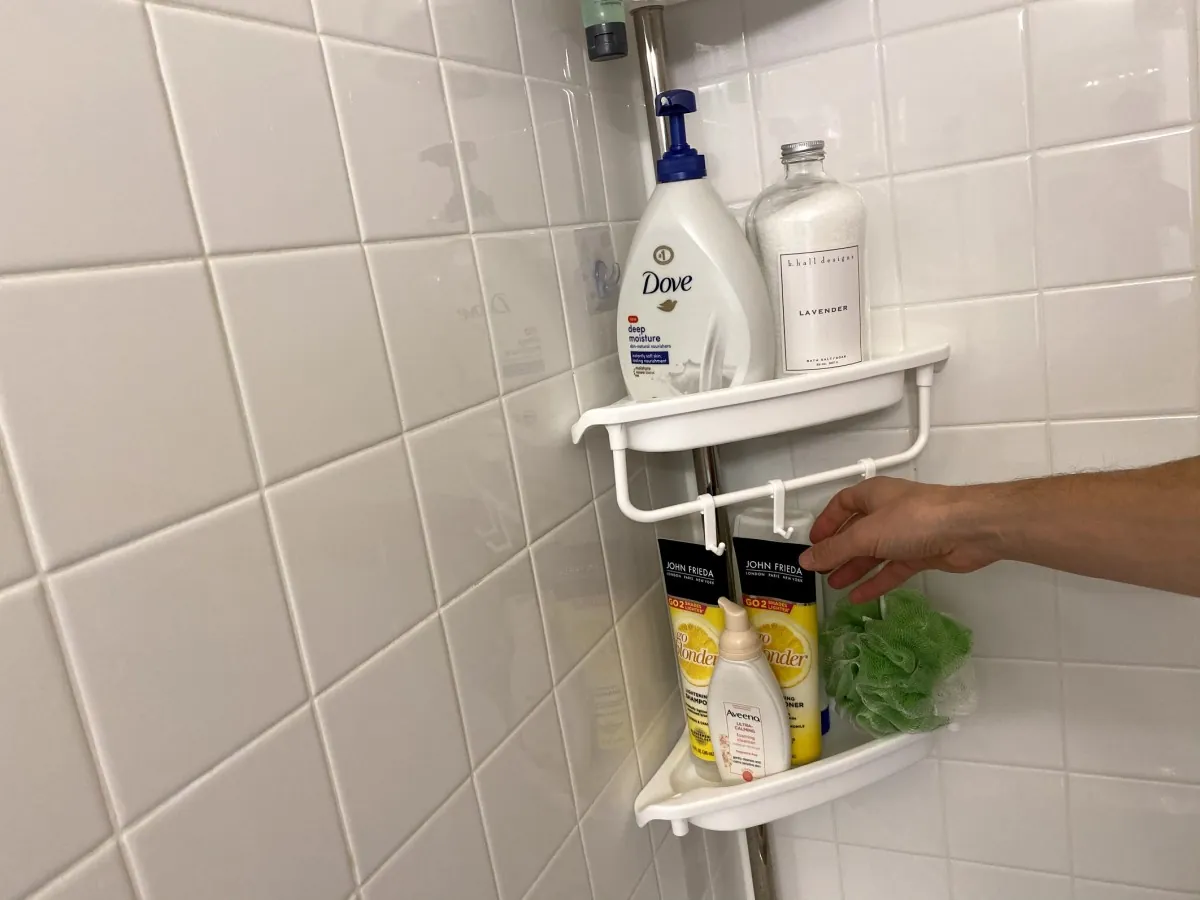
If you have a corner that’s currently empty and you need a lot of space, go with a tension pole. These are ideal for families because they offer four or more tiers of storage. Measure your floor-to-ceiling height accurately before buying. If your ceiling exceeds 96 inches, you’ll likely need an extension kit, as standard models often bow or slip under the pressure of extra height.
If you have a glass enclosure and need something temporary, select a suction cup shelf. These are perfect for renters who can’t drill into tile. However, avoid placing these directly over a grout line, as the uneven surface prevents a vacuum seal.
If you have a standard shower pipe and need a simple, no-tool setup, choose an over-the-head organizer. These hang directly from the showerhead arm. Ensure your pipe has at least three inches of clearance from the wall, or the unit will hang at an awkward angle. You can combine a suction shelf with a tension pole if you need extra space for a razor or a sponge.
Frequently asked questions
Can I install a tension pole on a sloped ceiling?
No, tension poles require a flat, level surface to maintain the pressure needed to stay upright. If your ceiling is sloped, the pole will lose its grip and potentially fall. You should look for wall-mounted or over-the-head units instead if your bathroom architecture doesn’t allow for a vertical, stable fit.
How long do adhesive shower caddies last?
Adhesive caddies can last for several years if the surface is cleaned thoroughly before application and the weight limit is respected. You should check the manufacturer’s specific weight guidelines, as exceeding them will weaken the bond prematurely. If you notice the edges starting to peel, the unit may soon fail.
Is it safe to put heavy bottles in a suction shelf?
No, suction shelves are typically designed for light items like razors or small soaps. Placing heavy bottles in them will break the vacuum seal and cause the shelf to fall. If you have heavy items, use a tension pole or a sturdy wall-mounted unit that uses screws.
What happens if the adhesive damages my wall?
Adhesive damage is rare on smooth, sealed surfaces like ceramic tile, but it can happen on painted walls. Test a small, hidden area with a piece of tape to see if it pulls the finish off before installing. If residue remains, use a plastic scraper or a mild adhesive remover.
Do I need to drill holes for a wall-mounted caddy?
Yes, most high-capacity wall-mounted caddies require drilling into the wall to ensure they can hold significant weight. If you aren’t comfortable using a drill or are a renter, stick to tension poles or over-the-head organizers. Always use a masonry bit for tile and check for pipes before starting.
How often should I clean my shower caddy?
You should wipe down your caddy every two weeks to prevent soap scum and hard water buildup. These deposits can trap moisture against the metal or plastic, leading to rust or mold growth. Use a mild soap and a soft cloth to clean the shelves, then dry them completely.
Conclusion
Start by clearing all your existing bottles and sponges out of the shower to see exactly how much space you have available. Choose the mounting style that fits your wall material, and expect to see a much cleaner shower area within minutes of installation.