
The most versatile and reliable models for relaxing in the bath are bamboo, metal, and plastic best bathtub caddies, which provide stable surfaces for books, drinks, and devices. These items share a common purpose of turning a standard tub into a spa-like space, yet they differ significantly in material durability and water resistance. While wood options offer a classic aesthetic, metal versions resist mold better in damp environments. Your choice depends on whether you value natural style or long-term maintenance ease.
How to compare different bathtub caddies
Selecting the right tray depends on your tub width and the items you need to keep dry. The following table highlights common materials and their primary uses for bath organization.
| Material | Best For | Concrete Example |
|---|---|---|
| Bamboo | Eco-friendly style | Expandable wood tray |
| Stainless Steel | Mold prevention | Rust-proof wire rack |
| Plastic | Easy cleaning | Lightweight slotted caddy |
| Acrylic | Modern aesthetics | Transparent sliding tray |
| Teak | Water resistance | Oiled wood bridge |
Measure the distance between your outer tub rims before buying. If your tub has a flat edge wider than two inches, look for a tray with non-slip silicone pads on the underside. Without these, a heavy tray will slide into the water the moment you lean on it.
Bamboo trays offer a classic look but require maintenance. If you leave them sitting in a damp bathroom, they will warp or grow mildew, so apply a food-grade mineral oil based on your usage and the manufacturer’s recommendations. If you prefer a “set it and forget it” approach, choose stainless steel or acrylic instead.
Weight distribution matters more than you think. A tray carrying a heavy ceramic mug and a thick hardback book needs a rigid center. If the tray bows in the middle, your electronics are at risk. Test the tray by placing a five-pound weight in the center. If it flexes more than a quarter-inch, it’s too flimsy for daily use.
Distinguish between a bridge tray and a caddy. A bridge tray rests on the edges of the tub and is ideal for reading or candles. A caddy hangs over the side or features deep baskets, which is better for holding heavy bottles of shampoo or soap. Use a bridge tray for relaxation and a caddy for storage.
Avoid cheap plastic models with suction cups. These cups lose their grip as soon as the tub surface gets soapy. They will eventually fail, causing your items to tumble into the water. Stick to weighted designs that rely on gravity rather than adhesives.
Bamboo bathtub trays
Bamboo trays are highly favored for their natural appearance and ability to blend with most bathroom decor. They suit those who want a warm, spa-like atmosphere and don’t mind occasional oiling to maintain the wood’s finish.
- They provide a sturdy, non-slip surface for holding heavy hardback books or tablets.
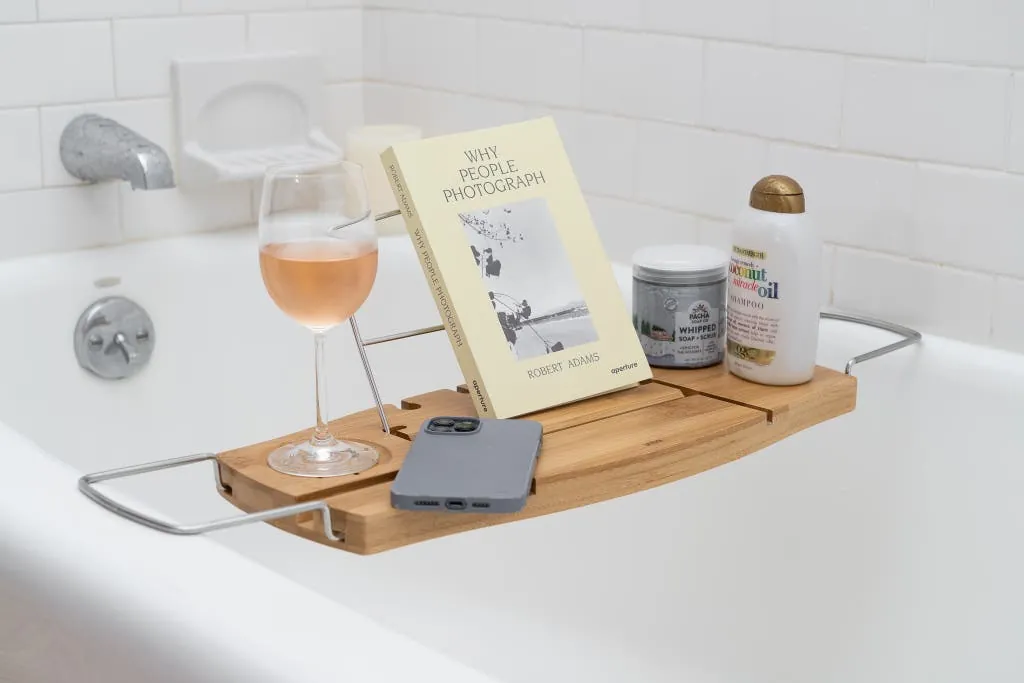
- Most feature built-in slots for wine glasses, which keeps your drink secure and away from the water.
- Many models include adjustable arms that extend to fit tubs between 27 and 43 inches wide.
If you choose a bamboo tray, wipe it down with a dry cloth after every use to prevent water from soaking into the fibers. For example, an expandable bamboo tray with a dedicated book rest allows you to read hands-free while your tablet sits safely in a pre-cut groove.
Stainless steel wire caddies
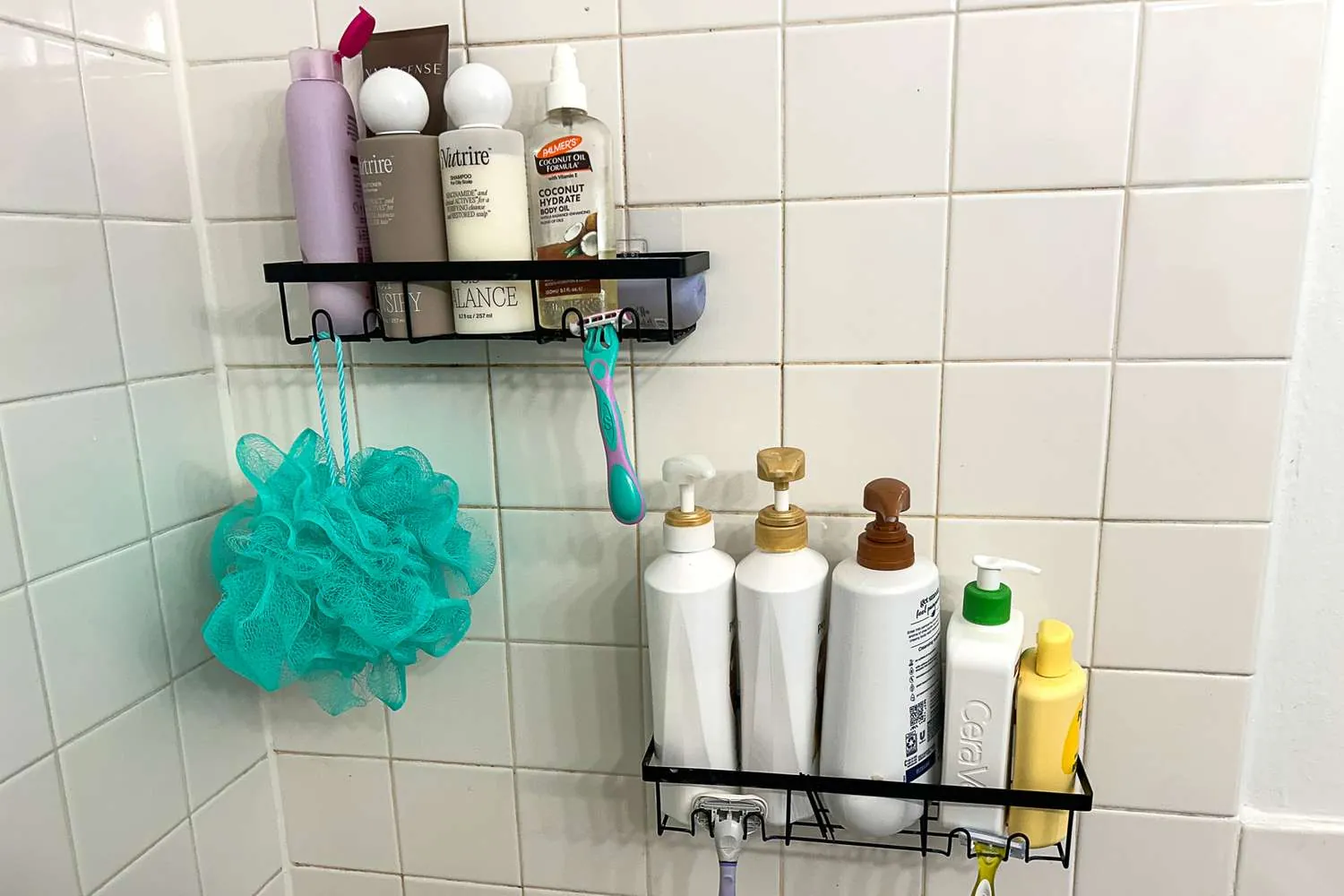
Stainless steel wire caddies are the ideal choice for small bathrooms where humidity levels remain high for long periods. They suit users who prioritize hygiene and low maintenance over the decorative warmth of wood.
The open-wire design allows air to circulate freely, which prevents water from pooling on the surface. Unlike solid shelves that trap moisture against the wall, these racks allow droplets to evaporate instantly. This prevents the slimy buildup that often hides under bottles or soap dishes.
These units are typically lighter than solid wood, making them easy to move or store when not in use. You can easily remove them for deep cleaning or to reconfigure your shower space as your needs change.
They resist rust effectively, provided the metal is high-grade and treated for wet environments. Look specifically for 304-grade stainless steel. This alloy contains enough chromium and nickel to withstand constant exposure to steam and soap residue. If you choose a lower grade, such as 201, you’ll likely see orange oxidation spots within six months.
If your bathroom lacks a powerful exhaust fan, this material is the smartest choice to prevent mildew growth. Without active ventilation, moisture lingers on surfaces for hours. Porous materials like wood or plastic will eventually harbor mold in these conditions, but stainless steel offers no foothold for spores.
For instance, a simple stainless steel wire rack spanning 30 inches is perfect for holding a single soap dish and a loofah without taking up excessive space. When installing, ensure the mounting hardware is also stainless steel. A common mistake is using zinc-plated screws, which will rust and bleed brown streaks down your tile within weeks.
To tell if your caddy is truly high-grade, use a magnet. Genuine 304 stainless steel is non-magnetic or only very weakly magnetic. If a strong magnet sticks firmly to the wire, the manufacturer used a cheaper, ferritic alloy that will eventually succumb to corrosion in your shower.
If you have hard water, you must wipe the wire down weekly. Mineral deposits can build up on the metal surface, creating a rough texture that eventually compromises the protective chromium layer. Use a soft cloth and mild dish soap. Never use steel wool or abrasive scouring pads, as these will scratch the finish and invite rust to take hold in the microscopic grooves.
Plastic and acrylic trays
Plastic and acrylic trays offer a modern, minimalist look and are generally the most affordable options available. They suit busy households where items need to be cleaned quickly or sanitized without special care.
- These materials are completely non-porous, meaning they won’t absorb water or bath oils.
- They often feature integrated drainage holes that allow excess water to flow directly back into the tub.
- You can easily wipe them clean with standard household soap and water.
A significant limit for these trays is their weight capacity, as they may flex or crack under heavy items like large laptops or thick, heavy books. If you’re using a tablet, check the product label for the maximum weight limit, as some plastic models are designed only for light accessories.
Teak wood bridges
Teak wood bridges are premium accessories known for their extreme durability in moisture-rich environments. They suit people who are willing to invest more for a luxury, long-lasting product that naturally repels water.
The high oil content in teak wood makes it naturally resistant to rot and fungal growth. Unlike bamboo or pine, which require chemical sealants to survive daily steam, teak relies on its native silica and rubber-like oils to maintain structural integrity. These units provide a heavy, stable base that stays firmly in place during movement. You’ll find that a bridge weighing at least four pounds is significantly less likely to slide into the tub when bumped by a stray elbow.
They develop a unique silver-gray patina over time, which often enhances the look of the bathroom. If you prefer the original warm, honey-colored grain, apply a light coat of teak oil every six months. If you skip this maintenance, the wood won’t rot, but it will lose its luster.
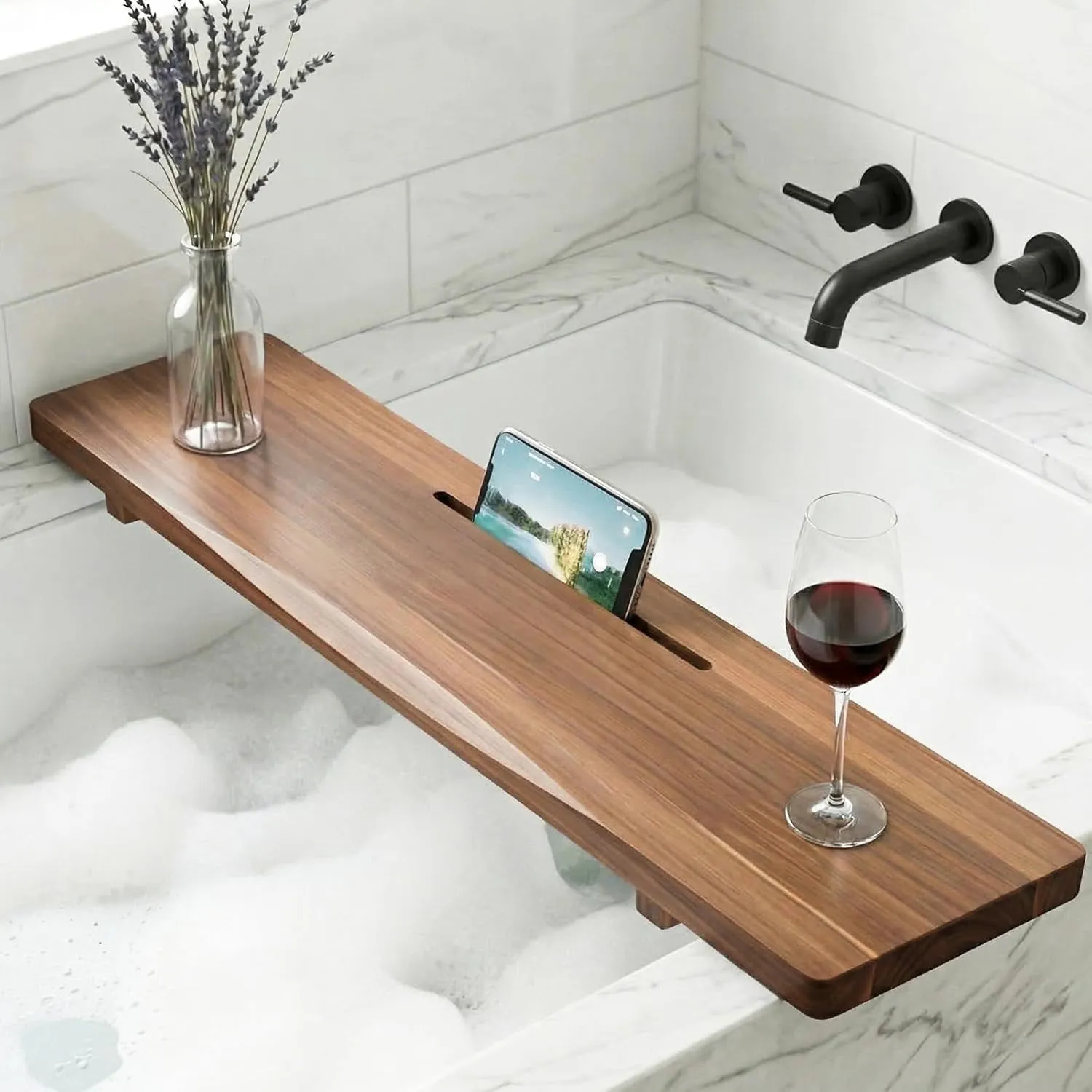
If you want a tray that will look as good in five years as it does today, this is the material to pick. For example, a solid teak bridge measuring 32 inches provides a stable, elegant platform for a candle and a cup of tea during a long soak.
Measure your tub’s outer rim before you commit to a specific length. If your tub has a flat, wide ledge, a standard bridge works perfectly. However, if your tub has a curved or sloped edge, look for a model with adjustable silicone-padded feet. These feet prevent the wood from scratching your porcelain or acrylic finish while providing the necessary grip to keep the bridge level.
A common mistake is leaving the bridge submerged or sitting in a puddle of standing water after a bath. While teak is water-resistant, it isn’t waterproof. Wipe the wood dry with a soft cloth after each use to prevent the oils from leaching out prematurely.
If you notice the wood feeling rough or splintered, a quick sanding with 220-grit paper will return the surface to its original, smooth state. Always choose kiln-dried teak to ensure the wood has reached a stable moisture content before it arrives at your home.
Other bathroom storage solutions
Over-the-door hooks are ideal for heavy robes or damp towels, but they require a door with at least an eighth-inch gap at the top to close properly. If your door fits too tightly, the hook will scrape the frame and prevent the door from latching. Use these only on solid-core doors; hollow-core doors can crack under the weight of wet, heavy textiles.
Suction cup shelves offer an immediate fix for shampoo bottles, but they fail on porous surfaces like natural stone or textured tile. For these materials, use a silicone-based adhesive mount instead. If your suction cups lose grip, clean the tile with rubbing alcohol to remove soap scum, then moisten the cup slightly with water to help it adhere.
Corner shower caddies utilize dead space, yet they often rust within six months if made of low-grade steel. Always choose stainless steel grade 304 or higher to prevent orange streaks on your grout. If you have a fiberglass surround, avoid tension-pole caddies, as the constant outward pressure can cause the wall panels to bow or crack over time.
Floating shelves above the toilet tank turn an empty wall into a functional storage zone for extra rolls or apothecary jars. Mount the shelf at a height that allows easy access to the flush handle, as specified by the manufacturer’s installation guidelines.
If you live in a rental, use heavy-duty adhesive strips rated for high humidity. These hold up to ten pounds and leave no holes behind, saving you from a security deposit deduction. Finally, place your most-used items at eye level.
Choosing your perfect caddy
Deciding which item is yours depends on your storage needs and the time you spend in the bath. If you enjoy reading or watching videos for over an hour, choose an expandable bamboo or acrylic tray with a built-in stand. These models provide the stability needed to keep expensive electronics dry and upright.
If you only need a quick place for a soap bar or a razor, a simple stainless steel wire rack is sufficient. These units prevent the common mistake of storing wet items directly on the tub ledge, which leads to soap scum buildup and rust rings that are difficult to scrub away.
If you have a small tub, measure your interior width carefully before buying. Many trays are too long to sit flush against the tile, leaving them prone to tipping if bumped. Always measure the interior basin at the height where the tray will rest, not the top rim, as most tubs taper inward. If your measurement is within one inch of the tray’s minimum length, choose a model with rubberized grips to prevent sliding.
You can combine these items by using a tray for your entertainment and a wall-mounted suction shelf for your soap. This keeps the tray surface clear for your book or drink, preventing accidental spills when you reach for a razor.
If your bathroom lacks wall space for suction cups, look for a tray with a dedicated side-mounted caddy. This allows you to keep toiletries off the main surface without needing extra hardware. If you live in a rental, avoid heavy stone or metal trays that require permanent mounting. Instead, prioritize lightweight bamboo, which resists moisture and can be easily removed when you move.
If you find your tray slides during use, apply a small strip of silicone tape to the underside of the arms. This creates the necessary friction to hold the unit firmly in place, even on slick acrylic surfaces.
Frequently asked questions
Can I use a wooden tray in a very humid room?
Yes, you can use a wooden tray, but bamboo or teak are the best choices because they handle moisture better than softwoods. Always wipe your tray dry after your bath to prevent water from sitting on the surface, which causes the wood to warp or grow mold.
How long do these trays usually last?
Most trays last a long time with regular cleaning and proper drying after each use. The lifespan depends on the material, as stainless steel and teak wood often last longer than plastic or bamboo in very damp conditions. If you notice cracking in plastic or dark spots on wood, it’s time to inspect the item for structural weakness to ensure it doesn’t break while holding your electronic devices.
Is it safe to keep electronics on a bathtub tray?
It’s safe to keep electronics on a tray if the tray is stable and fits securely across the width of your tub. Always ensure your device is positioned away from the water and that the tray doesn’t wobble when you move, as even the best tray can’t prevent accidental drops.
What happens if the tray is too wide for my tub?
If the tray is too wide, it will sit unevenly on the edges, which makes it dangerous for your items. Most adjustable trays have a range of 27 to 43 inches, so measure your tub’s outer rim from edge to edge before buying. If your tub is unusually narrow or wide, look for a custom-sized bridge or a tray with a non-slip rubber grip that provides extra stability on uneven surfaces.
Does it matter if my tub has a curved edge?
Yes, a curved edge makes it difficult for a standard flat tray to sit securely without sliding. Look for trays that feature rubberized feet or adjustable locking arms, as these provide the grip needed for curved surfaces. If your tub edge is very steep or rounded, test the tray’s stability by pressing down on one side to ensure it doesn’t tip before you place your expensive electronics on it.
How often should I clean the tray?
You should wipe your tray down with a soft, damp cloth after every use to remove soap residue and water spots. A deep clean with mild soap and water once a month keeps the surface free of mineral buildup and prevents bacteria growth. If you use a wooden tray, check the manufacturer’s advice on how often to apply a food-safe mineral oil to keep the wood from drying out or cracking.
Conclusion
Start by measuring the distance between the two outer edges of your bathtub to find the right length for your tray. Once you place the tray across the tub, ensure it’s level and doesn’t slide when you apply slight pressure to the sides. If you notice the tray tilting or failing to stay in place, stop using it immediately and check the rubber grips for wear, or replace the unit if the frame is bent.