
Finding the best basement heaters depends on your space’s size and layout. These units use fans, convection, or infrared technology to warm cooler, humid areas. Prioritize safety features like tip-over protection, and consider portable designs with wheels or wall-mounting options to accommodate concrete floors and varying storage needs.
*As an Amazon Associate, we earn from qualifying purchases. *
1. De’Longhi Oil filled Radiator Heater
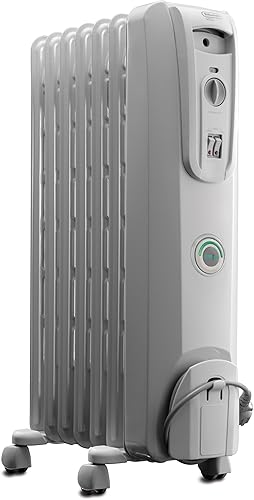
Best for: Quiet, consistent heating in small to medium basement rooms.
This oil-filled unit uses thermal slots to maximize heat flow while keeping the surface temperature low. It’s a great choice because it lacks a fan, which means it won’t stir up the dust often found in basement environments.
Owning this heater feels like having a silent radiator that keeps a steady temperature. It includes an anti-freeze setting that turns the unit on automatically if the room temperature drops below 41°F. It isn’t for users who need instant, high-powered heat, as the oil takes time to warm up before it starts radiating warmth.
| What it gives | What the buyer accepts |
|---|---|
| Silent operation | Slow initial warm-up time |
| No dust circulation | Larger physical footprint |
| Anti-freeze safety mode | Requires floor space |
2. Envi Plug-in Electric Panel Wall Heaters

Best for: Wall-mounted, low-wattage heating in tight basement corners.
The Envi panel heater mounts directly to the wall and uses “Stack Convection” to heat the air without any moving parts. Its slim, two-inch profile is perfect for finished basements where you want to keep the floor clear of clutter.
Because it operates at a low wattage, it’s designed to run 24/7 without tripping breakers. It isn’t for someone trying to heat a massive, uninsulated basement area, as its output is meant for targeted, supplemental warmth.
What goes smoothly:
- Installs in minutes without drills.
- Operates completely silently.
- Safe to touch at 90°F.
- Maintenance-free design.
What you have to accept:
- Not intended as a primary heat source for large rooms.
3. Dr Infrared Heater DR-968 Portable Space Heater
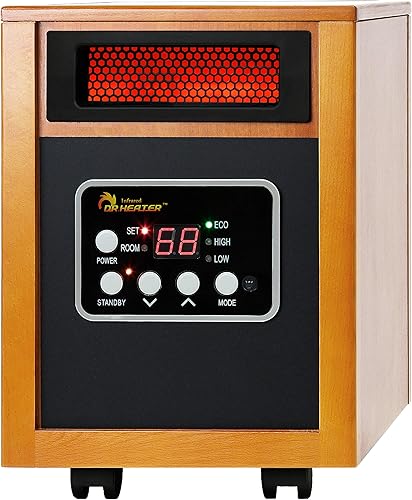
Best for: Heating large basement spaces quickly with dual systems.
This unit combines an infrared quartz tube with a PTC element to push out heat. It’s a powerful option for large rooms and includes a remote control for easy adjustments from across the basement.
The blower is designed to be quiet, but it’s still a fan-forced unit, so you’ll hear a low hum while it runs. It isn’t for someone who needs a truly silent heater, as the high-pressure blower produces 39 dB of noise during operation.
Snapshot:
- Dual heating technology for efficiency.
- Includes a 12-hour shut-off timer.
- Built-in tip-over and overheat protection.
- Mounted on caster wheels for movement.
- Weighs 19 lbs for stability.
4. DREO 42″ Space Heater Large Room

Best for: Large, open-plan basements requiring wide heat distribution.
The DREO tower heater uses a powerful DC motor to push warm air up to 40 feet away. Its oscillation feature covers a wide 120-degree angle, making it one of the most effective ways to heat multiple corners of a large room.
You can adjust the temperature with 1.5°F precision, which helps in maintaining comfort without wasting energy. It isn’t for those who want a compact, hidden heater, as its 42-inch height makes it a prominent feature in any room.
| What it gives | What the buyer accepts |
|---|---|
| Wide 120-degree oscillation | Tall, visible profile |
| Precise digital temperature control | Higher airflow noise on max setting |
| Summer cooling fan mode | Requires standard outlet access |
5. duraflame Freestanding Electric Fireplace Stove Heater with 3D Flame Effect

Best for: Adding visual ambiance and cozy warmth to lounge areas.
This freestanding fireplace stove provides infrared heat for rooms up to 1,000 square feet. It features realistic 3D flames and glowing logs that can operate independently of the heat, providing a nice aesthetic even in warmer months.
The unit is portable, so you can move it to where you’re sitting on the couch. It isn’t for users who want a “smart” heater with Wi-Fi or app connectivity, as this model relies on simple manual dials for control.
Who it fits * People who want a fireplace look without the mess. * Users with medium-sized basement living rooms.
Who should pass * Anyone needing advanced digital scheduling features. * Users looking for a modern, minimalist look.
6. Comfort Zone 5000W Ceiling Mounted Garage Heater

Best for: Workshop areas and unfinished basement storage spaces.
This heater is built from heavy-gauge steel to handle the rougher conditions often found in garages or workshops. It mounts to the ceiling, which is a massive benefit if your basement floor is already crowded with tools or storage.
You’ll need to hard-wire this unit, as it’s a 240V commercial-grade heater. It isn’t for someone looking for a simple “plug-and-play” solution, as it requires proper electrical installation to function safely.
What goes smoothly:
- Ceiling mount saves floor space.
- Adjustable louvers direct heat precisely.
- Robust steel construction for durability.
- Overheat sensor shuts off automatically.
What you have to accept:
- Requires professional hard-wired installation.
- Not portable once mounted.
7. DREO Whole Room Heater

Best for: Even, 360-degree heating in small to medium basement rooms.
This heater distributes air in a circular pattern, which is great for placing in the middle of a room to heat it from all sides. It reaches a comfortable temperature in just two seconds, which is useful when you first walk into a cold basement.
The ECO mode is very effective at reducing electricity consumption by adjusting the heat output. It isn’t for those who need to heat a space larger than 270 square feet, as its 360-degree design is optimized for smaller, contained areas.
Snapshot:
- 360-degree circular air output.
- Ultra-quiet 25 dB operation.
- Precise 1°F temperature adjustments.
- ECO mode for energy savings.
- Includes a 1-12 hour timer.
8. Comfort Zone Electric Baseboard Space Heater with Adjustable Thermostat

Best for: Keeping basement walls and perimeters warm.
This baseboard-style heater is designed to sit low against the wall, mimicking the look of traditional home heating systems. The stay-cool body is a great safety feature if you have children or pets running around the basement.
It’s very quiet and won’t distract you while you work or watch movies. It isn’t for someone who needs rapid, fan-forced heat, as this unit relies on natural convection, which takes longer to circulate air than a blower-style heater.
| What it gives | What the buyer accepts |
|---|---|
| Silent, convection-based heat | Slower heat distribution |
| Stay-cool exterior housing | Low-profile floor placement |
| Tip-over safety switch | Fixed heating direction |
9. ProCom Heating Natural Gas Ventless Infrared Plaque Heater With Base

Best for: Areas where electricity is unavailable or unreliable.
This is a natural gas-powered heater, meaning it doesn’t need a wall outlet to function. It’s incredibly powerful, providing up to 30,000 BTU, which can heat up to 1,200 square feet.
It comes with an oxygen depletion sensor that automatically shuts off the heater if air quality drops. It isn’t for users who are uncomfortable with gas lines or those who prefer a portable electric unit they can move between rooms.
Who it fits * Homes with existing natural gas lines. * Large, unfinished basement spaces.
Who should pass * Anyone without professional gas line access. * Users who prefer simple electric plug-in units.
10. PELONIS Oscillating Ceramic Tower Indoor Space Heater
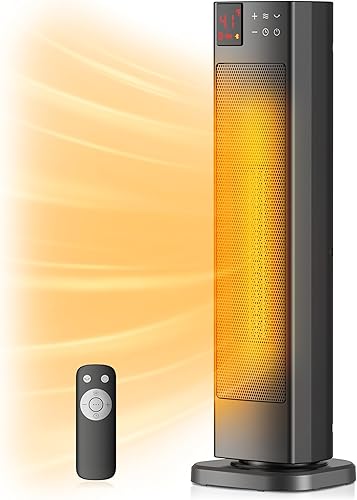
Best for: Users who want a balance of speed, efficiency, and safety.
The PELONIS tower uses ceramic heating technology to warm up a room in as little as three seconds. It’s a very versatile unit that includes an ECO mode to maintain a constant temperature.
The 75-degree oscillation helps push the warm air into the corners of your room. It isn’t for someone who needs a completely silent heater, as the fan will produce some sound while it’s running, even if it’s relatively quiet.
Snapshot:
- Rapid 3-second heat-up time.
- 75-degree wide oscillation.
- ECO mode for energy efficiency.
- 12-hour programmable timer.
- V0 flame retardant materials.
The Decision Filter
Start by asking yourself if your basement is finished or unfinished, as this changes your power requirements entirely. Most people miss this: they forget that heaters with fans are much louder than oil-filled or convection models. If you need heat for a bedroom or home office, prioritize silent operation above all else. If you’re heating a workshop or storage area, focus on durability and ceiling-mount options. Decide if you have a spare electrical outlet or if you need to use a hard-wired solution. Finally, consider if you want the unit to be portable or if you prefer a permanent fixture on your wall.
The Quick Checklist
- Do you have an available, grounded wall outlet near where you need heat?
- Will this heater be used in a space where children or pets play?
- Is the room size within the square footage limits specified by the manufacturer?
- Does the room have enough clearance to keep the heater away from furniture?
- Do you need a unit that works with your existing smart home or app?
- Is the noise level acceptable for the activities you do in that room?
Three Regrets Worth Avoiding
Regret #1: Buying a fan-forced heater for a quiet sleeping or reading area. Fan-forced units produce audible noise during operation, even if the unit is labeled “quiet.” Always check the decibel ratings or opt for oil-filled radiators if silence is your priority.
Regret #2: Choosing a unit that’s too small for the room’s total square footage. A heater working constantly at its maximum setting won’t be energy efficient and often fails to reach the target temperature. Check the room size against the manufacturer’s suggested coverage before you buy.
Regret #3: Ignoring the electrical requirements of high-wattage units. If you’re using a 1500W heater, you can’t share the outlet with other high-draw appliances without risking a tripped breaker. Ensure your basement circuit can handle the load of the heater you select.
If You Want This, Look for That
| If you want… | Look for | Avoid |
|---|---|---|
| Total silence | Oil-filled or convection | Fan-forced blowers |
| Maximum portability | Wheels and handles | Heavy, mounted units |
| Energy savings | ECO mode / Thermostat | Constant high-heat setting |
| Large room heat | Infrared quartz elements | Small ceramic panels |
| Modern aesthetics | Fireplace-style designs | Industrial-looking units |
When two heaters seem identical, look at the warranty length and the brand’s customer service reputation. Once you have made your choice, ensure you place the unit on a flat, stable surface away from any flammable materials.
Final Thoughts
Before you make your final choice, check your basement’s electrical outlets to ensure they can handle the power load safely. It’s a smart move to measure your floor space once more so you don’t buy a unit that’s too bulky. You’ll be much more comfortable once you’ve got the right warmth.