
Most homeowners find that choosing between a chamberlain vs genie motor system comes down to your preference for smart home features versus simple, long-lasting hardware. If you value advanced smartphone integration and quiet operation, Chamberlain is typically the superior choice. If you prefer a budget-friendly, no-nonsense opener that’s easy to service, Genie is often the better value for your garage. Both brands offer reliable performance, but they prioritize different user needs.
How Chamberlain and Genie compare

When you look at these two companies, you’ll notice that their product lines cover similar ground. Chamberlain often pushes for high-tech connectivity, while Genie focuses on mechanical longevity and proprietary drive systems.
| Method | How long | Effort | Cost | Best for |
|---|---|---|---|---|
| Chamberlain | 10-15 years | Low | High | Smart homes |
| Genie | 12-15 years | Medium | Medium | DIY repairs |
| Budget Models | 8-10 years | High | Low | Simple access |
Chamberlain dominates the market for integrated home automation. If your priority is remote monitoring via smartphone apps or syncing with existing smart home hubs, choose them. You pay a premium for the software ecosystem, but setup is largely plug-and-play.
Genie remains the better choice for homeowners who prefer internal repairs. Their drive systems use standardized parts that are easier to source from local hardware stores. If you’re comfortable handling a socket wrench, you can replace a carriage or a limit switch yourself for a modest cost.
Most buyers make the mistake of ignoring the drive type in favor of brand loyalty. If your garage is attached to a bedroom, avoid chain drives regardless of the manufacturer. The vibration and noise will travel through the wall studs. Instead, prioritize a belt-drive model for quiet operation.
If you live in an area with extreme temperature swings, expect the motor lifespan to decrease. In these climates, avoid plastic internal gears. Look for models featuring reinforced metal gear assemblies, which resist the brittleness caused by sub-zero winters. If your door is heavy or made of solid wood, always opt for a three-quarter horsepower motor or higher to prevent premature gear stripping.
Chamberlain smart connectivity
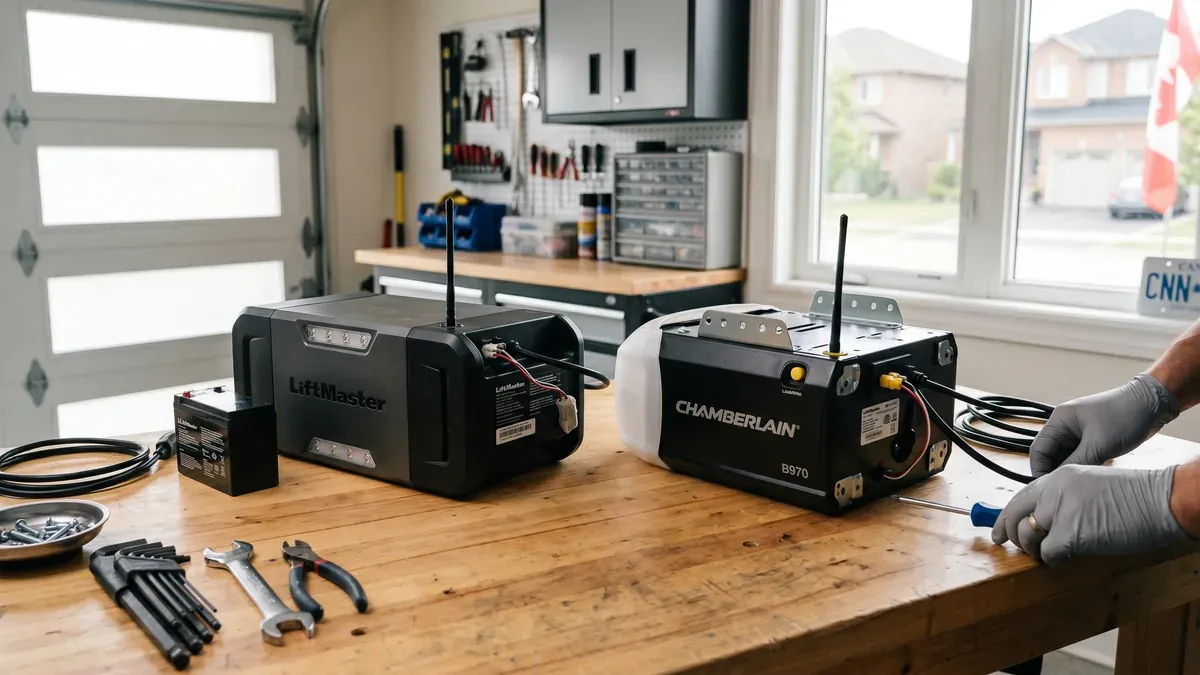
Chamberlain systems focus on the MyQ platform, which allows you to monitor and control your door from anywhere using a phone. You install these units by mounting the rail to the header wall and connecting the motor to the ceiling joists with steel angle iron. Most modern units include built-in Wi-Fi, meaning you don’t need an extra gateway bridge to connect to your home network.
Mount the header bracket at the height specified in your manufacturer’s installation manual, typically just above the high arc of the door. Assemble the rail and attach the motor head using the provided heavy-duty bolts. Connect the safety sensors at the base of the door tracks, ensuring they face each other. Program your remote and sync the MyQ app by following the flashing LED sequence on the motor.
Check your router’s frequency before starting. MyQ devices require a 2.4GHz Wi-Fi band to maintain a stable handshake. If your home network uses a combined 5GHz signal, your phone may fail to pair during the initial setup. Log into your router settings to temporarily disable the 5GHz band if the app can’t locate the motor.
These units are excellent for people who want to track door activity or grant temporary access to guests. However, the reliance on a cloud-based app is a weakness. If your internet goes down, your smart features stop working until the connection returns.
If the door reverses unexpectedly, check the sensor alignment first. A solid green light on both units confirms the path is clear and ready for operation.
Genie mechanical reliability
Genie is famous for using a screw-drive system, which has fewer moving parts than traditional chain or belt drives. This simplicity makes them ideal for owners who prefer to handle their own maintenance. If you hear grinding, you can usually fix it by applying a light coat of lithium grease to the screw drive, which takes about five minutes of work.
- Secure the power head to the ceiling using the pre-drilled mounting straps.
- Attach the screw-drive rail to the header bracket, ensuring it’s perfectly level.
- Align the infrared safety sensors at the floor level to prevent the door from closing on objects.
- Set the open and close limit switches by turning the adjustment dials on the side of the motor.
The screw drive excels in extreme climates where temperature fluctuations cause chains to sag or belts to stretch. If you live in a region with high humidity or freezing winters, this rigid steel-to-steel connection remains consistent. However, avoid using heavy oils or silicone sprays on the rail. These attract dust and grit, which act like sandpaper on the drive carriage and cause premature failure.
The main weakness is that the screw-drive mechanism is louder than belt-drive models. If your garage is directly under a bedroom, the vibrations from the screw drive might be more noticeable than a belt-driven system.
If you feel the vibration through the ceiling, check that the mounting bolts are tightened flush against the joists. If the noise persists after lubrication, the drive carriage is likely worn down. Replace the carriage immediately to prevent the metal screw from stripping the internal threads.
Choosing the right motor
If you’re in a hurry and need a quick, standard installation, a basic Genie unit is often easier to find in stock at local hardware stores. If you’re doing this for the first time, Chamberlain provides better step-by-step mobile instructions that make the wiring process much clearer for beginners. If you want the best possible result regardless of the effort required, a high-end Chamberlain model with a belt drive offers the quietest and most feature-rich experience.
The trade-off here is between advanced software and mechanical simplicity. If you want a setup that talks to your other home devices, you’ll have to deal with more complex app configurations. If you just want the door to open reliably for years without needing software updates, a simpler mechanical unit is the smarter choice.
Always remember that your garage door weight is the primary factor in motor wear. If your door is heavy or unbalanced, even the best motor will fail early. Test this by disconnecting the emergency release and lifting the door by hand. If it doesn’t stay open halfway up on its own, it’s too heavy for a standard 1/2 horsepower motor. You must upgrade to a 3/4 horsepower unit or adjust your springs first.
Most people make the mistake of buying a motor based on brand reputation alone. This costs them hundreds in premature gear replacements. If your door is solid wood or oversized, skip the entry-level models entirely. A motor rated for a lighter door will burn out its internal gears within two years under the constant strain of a heavy load.
Rules for safe operation
Regardless of which brand you choose, the safety of your garage door system depends on strict adherence to installation standards. The Consumer Product Safety Commission mandates that all residential garage door openers must have an automatic reversal system. You must test this feature monthly by placing a 2-by-4 piece of wood on the floor in the path of the door. If the door doesn’t reverse upon hitting the wood, you must adjust the force settings immediately.
If the door hits the wood and continues to push, the sensitivity is set too high. This creates a crush hazard for small children or pets. Lower the force limit dial on the motor unit by one-eighth of a turn until the door reverses reliably.
You should also check the tension of the springs annually. If the door doesn’t stay open halfway on its own, your springs are likely worn out and need professional adjustment. A door that drifts downward indicates the spring has lost its lift capacity, which forces the motor to work harder and shortens its lifespan.
Never attempt to adjust the torsion springs yourself. These components are under high tension and can cause severe injury if they snap or slip. If your springs are failing, contact a licensed garage door technician to handle the replacement safely. If you see visible gaps in the spring coils or rust buildup, assume the metal has lost its integrity and stop using the door until a professional arrives.
Frequently asked questions
Can I install a garage door opener by myself?
Yes, you can install these units if you have basic tools and a helper to hold the motor while you mount it. It usually takes a person with moderate DIY experience about 3 to 5 hours to complete the job. If you aren’t comfortable working with high-voltage electricity or heavy lifting on a ladder, you should hire a professional to ensure the safety sensors are correctly calibrated.
How long does a garage door opener last?
Most openers last for a significant duration with regular maintenance. The exact lifespan varies based on the number of daily cycles and the weight of your door. You can read your owner’s manual to find the specific cycle rating for your model, which tells you how many times the motor is designed to open and close before the internal gears begin to show significant wear.
Is it safe to use an old remote with a new opener?
No, modern openers use rolling-code technology for security, and old remotes won’t sync with new systems. You must use the remotes provided with your new unit to ensure your home remains secure. If you have an older car with built-in buttons, you might need to purchase a separate bridge device to make the car’s buttons compatible with your new opener’s frequency.
What happens if the power goes out?
Every modern opener includes a red emergency release cord that lets you operate the door manually. You should pull this cord to disconnect the motor from the carriage, which allows you to lift the door by hand. Always ensure the door is in the fully closed position before pulling the release cord to prevent the door from falling.
How often should I lubricate the drive rail?
You should lubricate the rail once every 6 months to ensure smooth operation and reduce noise. Use a silicone-based lubricant or white lithium grease, but never use standard oil, as it attracts dust and debris. If you live in a very dusty or salty environment, check the rail every 3 months to see if the existing grease has become gritty or dry.
Conclusion
Ultimately, the right motor depends on how much you rely on your phone versus how often you prefer DIY repairs. Take a moment to check your current mounting hardware and space constraints before you head to the store. You’ll find that either brand won’t let you down once it’s installed.
