
As an Amazon Associate, we earn from qualifying purchases. This post contains affiliate links – if you buy through them, we may earn a commission at no extra cost to you.
There’s no single best wall tent for hunting — the right one depends on how often you hunt, how cold it gets where you go, and whether you need room for gear, a stove, or a group. Some hunters need lightweight speed for backcountry trips, others need thick walls to hold heat through freezing nights. Some carry everything on their back; others drive in and set up a base camp. These tents differ in material, weight, size, and how they handle wind. The POMOLY Chalet 70 Series Wall suits hunters who move often and need a compact hot tent. The Flex-Bow Deluxe Canvas Tent fits those who stay put and demand rugged, long-lasting shelter.
1. POMOLY Camping Hot Tent Cabin Tent

Best for: Hunters who need a lightweight hot tent for short backcountry trips.
This tent is built for hunters who hike in and out quickly, needing warmth without heavy gear. Its 70D ripstop polyester with a 2500mm waterproof rating holds up in rain and wind, while the built-in fireproof ground sheet and included ember mat allow safe stove use inside. The double doors and rain curtains mean you can enter or exit even in downpours without flooding the floor. Two aluminum poles make setup fast, and the packed size fits in a backpack. It’s designed for quick trips and compact packing — ideal for short stays in variable weather.
Good if: You hunt solo or with one other person, need to carry your tent on foot, plan to use a small wood stove, or want a tent that dries quickly after rain. Skip it if: You camp in deep snow for weeks, need to store bulky gear inside, or want a tent that lasts over ten seasons without repairs.
2. Flex-Bow Deluxe Canvas Tent

Best for: Hunters who need a tough, long-lasting shelter for fixed base camps.
This tent is made from Hydra-Shield cotton duck canvas, which is durable, watertight, and breathable. At 14×10 feet with a 6’6” ceiling, it gives room to move, store gear, and run a wood stove without crowding. The Flex-Bow frame keeps it taut in wind, and the large awning shields the door. It’s heavy — so it’s not for hiking. But if you drive to your spot and stay for days, this tent offers spacious, stable shelter.
Good if: You hunt in wet forests or snowy plains, want a tent that lasts over a decade, need space for multiple people and gear, or prefer natural materials that breathe. Skip it if: You carry your gear on your back, need something under 20 pounds, or plan to pack it up every day.
3. OneTigris TEGIMEN Hammock Hot Tent with Stove Jack

Best for: Hammock hunters who need a cold-weather shelter that packs small.
This tent was made for hunters who sleep in hammocks and need warmth without a sleeping bag. At just 6.8 pounds, it folds into a bundle smaller than a water bottle, yet holds three cots or a hammock with room to move. The 70D nylon with 3000mm waterproofing handles snow and ice, and the dual stove jacks let you angle pipes for better heat flow. The snow skirt traps warmth, and the YKK zippers hold up in freezing temps. It’s not designed for standing tall, but it’s perfect if you’re off the ground and need a compact shelter with stove compatibility.
Good if: You use a hammock in winter, need to carry minimal weight, hunt in snowy forests, or want a tent that fits in a small pack. Skip it if: You sleep on cots or the ground, need headroom to walk around, or expect to use it in high winds without guy lines.
4. WildFinder 16.5 Ft Canvas Bell Tent

Best for: Hunters who want a spacious, all-season base camp with low condensation.
Its 55-inch vertical walls and 9.2-foot peak let you stand fully upright and place gear right under the roof — no ducking. The TC cotton roof reduces condensation better than polyester, and the 600D Oxford floor resists tears from boots and gear. Eight mesh windows and a stove jack make it breathable and warm, even in winter. The positioning tool helps set up the large tent correctly, so stakes go in the right spots. It’s not light, but it turns a hunting trip into a home away from home.
Good if: You hunt with a partner or group, need room for a queen bed and stove, want to avoid wet walls from condensation, or plan to use it for fall and winter trips. Skip it if: You hike in, need to pack it in a backpack, or want something lightweight.
5. MC TOMOUNT Canvas Bell Tent with Stove Jack
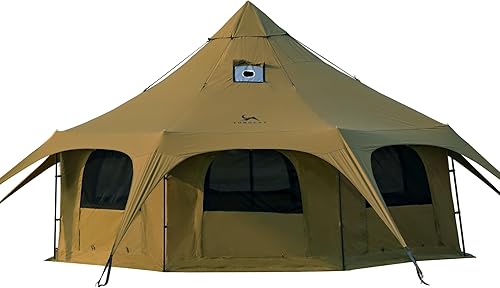
Best for: Hunters who want a large tent with good ventilation and a warranty.
Its 65% polyester and 35% cotton blend gives decent breathability without the weight of pure canvas. At 16.4 feet wide, it fits a group, and the 9.18-foot peak gives standing room. Eight windows and roll-up walls make it cool in summer and warm in winter with a stove. The 12-month warranty means you can reach out if something breaks — a rare offer in this category. It’s heavier than nylon tents but lighter than pure canvas, making it a solid middle ground.
Good if: You hunt with 4–6 people, need room for gear and a stove, want a tent that won’t leak in rain, or value a manufacturer’s warranty. Skip it if: You need the lightest option, want natural cotton fabric, or expect it to last 15+ years without care.
6. 10/13/16/20ft Canvas Bell Tent with Stove Jack & Removable Floor

Best for: Hunters who need a mid-sized, breathable tent for spring and fall hunts.
This tent uses polycotton canvas that breathes well but doesn’t have a PU coating — so it’s not meant for long rainstorms. Its 3-meter diameter fits two to three people comfortably, and the 6.6-foot peak lets you move without crouching. Four roof vents and double-layered windows keep air moving, reducing condensation. The steel center pole and tension regulators make it stable in wind. It’s not the heaviest, but it’s not meant for deep snow — it’s a three-season tent with a stove jack for chilly nights.
Good if: You hunt in mild winters, need a tent that dries fast, want good airflow, or need something between small and huge. Skip it if: You camp in heavy snow, expect full waterproofing in days of rain, or want a floor with a high waterproof rating.
7. KingCamp Camping Tent with Floor 6-8 Person

Best for: Hunters who need a family-sized shelter with smart storage and stove safety.
It’s a cabin-style tent with a TC poly-cotton roof to cut condensation and a 210D Oxford floor that resists water. At 11.2×7.9 feet, it fits six to eight people with room for gear, and the 6.9-foot center height lets adults stand. Two doors and two mesh windows help air flow, and the built-in AC port works with fans in warm weather. The fireproof mat and stove jack make it safe for heating. It’s not the lightest, but it’s designed for groups who want comfort and organization.
Good if: You hunt with a family or crew, need storage pockets and hanging loops, want a tent that’s easy to ventilate, or need a stove-safe shelter for cold mornings. Skip it if: You hunt alone, need to carry it far, or want a tent that packs down small.
8. ShinHye Canvas Bell Tent Yurt Tent 4 Seasons

Best for: Hunters who want a pure cotton canvas tent with a sealed floor and simple setup.
Made from 100% cotton canvas and a PE floor, it relies on natural breathability and a 5000mm waterproof rating — higher than most in this group. The steel center pole and reinforced corners hold up in wind, and the sewn-in groundsheet stops moisture from seeping in. At 28 pounds, it’s lighter than many full canvas tents. The setup is simple: stake it, raise the pole, tighten the ropes. It’s ideal for hunters who want traditional canvas without modern coatings that degrade.
Good if: You prefer natural materials, want high waterproofing without PU, need a tent for family trips, or want something that lasts with proper care. Skip it if: You need a tent under 20 pounds, hunt in heavy snow for weeks, or want a stove jack already sized for your pipe.
9. Guide Gear Base Camp Tent

Best for: Hunters who need a large, four-season shelter with a bathtub floor and strong ventilation.
Its 14-foot diameter and 10-foot center height give plenty of room for a group. The bathtub-style floor adds extra protection against ground moisture, and the stove jack fits a 5.5-inch pipe with a heat shield. Five windows and a vented crown let air flow, which helps in both cold and warm weather. It’s built for extended stays in the field, whether hunting in snow or summer heat. No mention of weight, but the size suggests it’s meant for vehicle access.
Good if: You hunt with a team, need a tent that handles snow and rain, want high ventilation, or need a tent that’s ready for all four seasons. Skip it if: You hike in, need something lightweight, or want a tent that folds small for easy storage.
10. GeRRiT Canvas Wall Tent-w/Stove Jack 4-Season Yurt Tents

Best for: Hunters who need a heavy-duty, all-weather wall tent with reinforced corners.
Made from 300gsm cotton canvas with double-stitched seams and reinforced corners, it’s built for harsh conditions. The 14kg polyvinyl material is tough, and the dual side vents let you use a stove safely while keeping heat in. The design includes a zippered anti-scalding chimney opening and a large floor for gear. It’s not light — you need two or three people to set it up — but it’s meant to survive years of hard use in freezing, windy, or snowy terrain.
Good if: You hunt in extreme cold, need maximum durability, want a tent that lasts over a decade, or need a large, stable shelter for a crew. Skip it if: You hike in, want something lightweight, or need a tent you can set up alone quickly.
Where These Overlap
The WildFinder, MC TOMOUNT, and Guide Gear tents all offer large, bell-style shelters with stove jacks and high ceilings — so if you need room for a group and a wood stove, any of them will work. The key difference is material: WildFinder uses breathable TC cotton to reduce condensation, MC TOMOUNT blends cotton and polyester for balance, and Guide Gear focuses on a bathtub floor and ventilation. If you care most about staying dry from the inside out, choose WildFinder. If you want a warranty and good airflow, go with MC TOMOUNT. If you need maximum floor protection, Guide Gear wins. The Flex-Bow and ShinHye are both pure canvas, but Flex-Bow is heavier and built for long-term use, while ShinHye is lighter and easier to set up. If you want the classic cotton feel with less weight, ShinHye is simpler. The OneTigris and POMOLY are both lightweight hot tents, but OneTigris is for hammock users and packs smaller, while POMOLY is for ground sleepers who need a fireproof floor. The KingCamp and GeRRiT both serve groups, but GeRRiT is heavier and built for extreme weather, while KingCamp adds storage features for comfort.
Still Not Sure?
Will I use this tent more than five times a year?
If you hunt only a few times a season and want something easy to carry, go with the OneTigris or POMOLY. They’re light, quick to set up, and designed for short stays. If you hunt every weekend from October through January, you need something built to last — the Flex-Bow, ShinHye, or GeRRiT are rated for extended use in harsh conditions.
Do I already own a stove, and what size pipe does it need?
Check your stove’s pipe diameter before choosing. The Guide Gear tent fits a 5.5-inch pipe, while the WildFinder and MC TOMOUNT list no specific size — so you’ll need to measure your pipe and confirm it fits the pre-cut opening. The OneTigris and POMOLY have dual jacks, so you can angle the pipe for better heat flow. If your pipe is 4 inches or smaller, most tents will work. If it’s 6 inches or larger, only the GeRRiT or Guide Gear are safe bets. KODIAK CANVAS offers detailed stove jack guides for their tents, which can help you match your equipment.
What will I regret not having if I choose wrong?
If you pick a light tent for winter hunting and your stove melts the floor, you’ll regret not choosing one with a fireproof ground sheet — like the POMOLY or OneTigris. If you pick a small tent for a group and spend nights cramped, you’ll wish you’d chosen the WildFinder or Guide Gear. If you pick a pure canvas tent without knowing it needs to be re-waterproofed after drying, you’ll regret skipping the coated options like MC TOMOUNT. The right tent doesn’t just keep you dry — it keeps you from having to fix a mistake in the field.
Related guides
- 7 Best Wall Vent Caps for Range Hoods: Top Picks Reviewed in 2026
- Are Camping Ovens Safe to Use in Tents? The Safety Verdict in 2026
- 8 Best Adhesive for Shower Shelf Picks for Every Wall Type in 2026
Frequently Asked Questions
What’s the best wall tent for cold weather hunting?
The OneTigris TEGIMEN Hot Tent is best for cold weather because it has a snow skirt, dual stove jacks, and 70D nylon rated for 3000mm waterproofing. It keeps heat in and sheds snow better than lighter fabrics. The GeRRiT 4-Season Canvas Wall Tent is built with heavy-duty 300gsm cotton canvas and reinforced corners for harsh conditions.
Can I use a wood stove safely in any of these tents?
Yes, all listed tents have a stove jack, but safety depends on the floor. The POMOLY Chalet 70 Series Wall, OneTigris TEGIMEN, and GeRRiT 4-Season Canvas Wall Tent include fireproof ground sheets or mats.
Which tent has the best ventilation to reduce condensation?
The WildFinder 16.5 Ft Bell Tent has the best ventilation for reducing condensation, thanks to its 210G breathable TC cotton roof and eight mesh windows. Cotton blends like those in the ShinHye and KingCamp tents also breathe well, but polyester tents like the POMOLY and MC TOMOUNT trap more moisture without airflow.
How do I know if a tent is truly four-season ready?
A true four-season tent has reinforced corners, a bathtub floor, heavy-duty poles, and a stove jack. The GeRRiT, Guide Gear, and Flex-Bow Deluxe Canvas Tent include these. Lightweight models like OneTigris or POMOLY handle cold and snow but aren’t rated for heavy snow loads or prolonged ice storms. Look for “double-stitched,” “bathtub floor,” or “reinforced corners” — not just “stove jack.”
Closing
Hunters who move often often choose a light, stove-ready hot tent like the POMOLY Chalet 70 Series Wall. Those who set up long-term camps prefer a heavy-duty shelter like the Flex-Bow Deluxe Canvas Tent. Pick based on your most common use — don’t try to own one tent for every scenario. Know how often you hunt and how much you carry, then match the tent to that reality.