
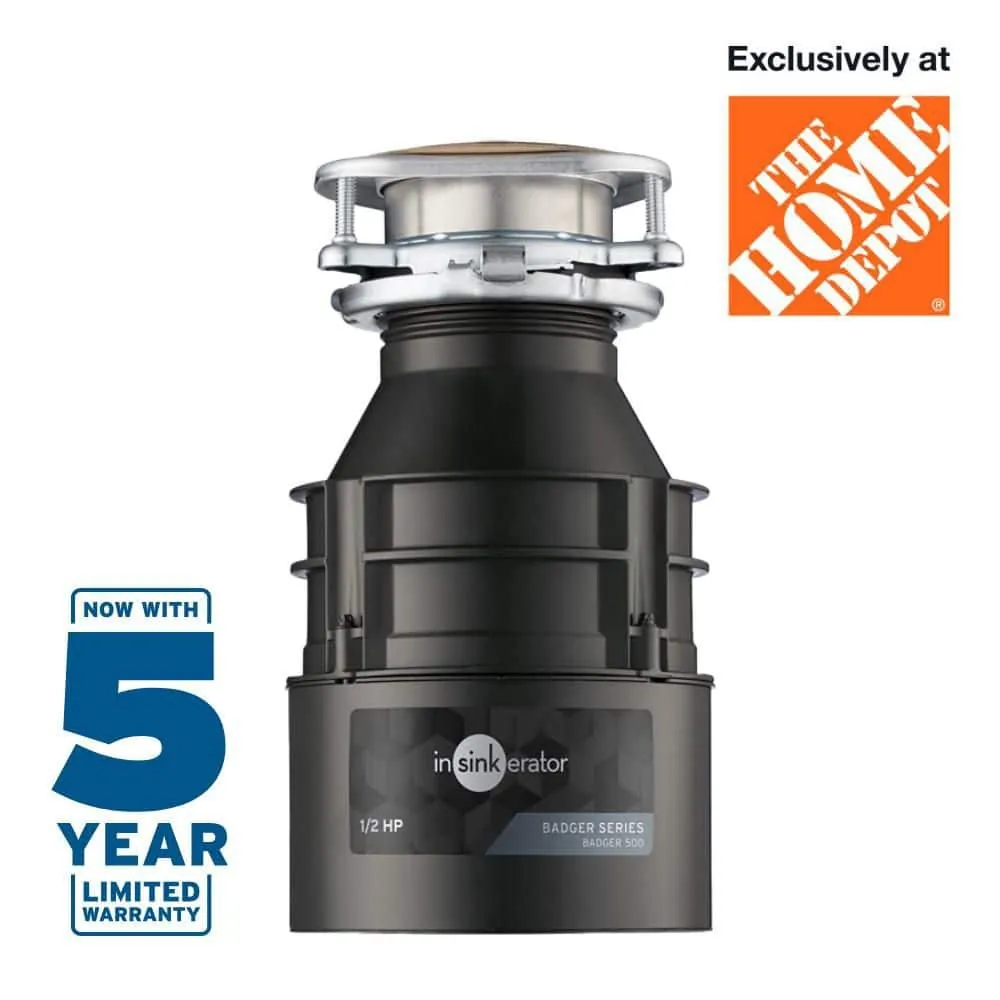
A tripped overload protector is the most common reason you’ll find a badger 500 garbage disposal not working, usually happening after a jam or overheating. You can confirm this by looking for the small red reset button on the bottom of the unit. If the button has popped out, press it back in firmly until it clicks to restore power. If the unit remains silent or hums without spinning, the issue likely involves a physical blockage or an electrical connection that you should check before calling a professional.
Why your Badger disposal stopped working
| Cause | How common | How to confirm it | Fix it yourself? |
|---|---|---|---|
| Tripped overload | Very common | Red button popped out | Yes |
| Food jam | Common | Unit hums, doesn’t turn | Yes |
| Blown fuse | Occasional | No power to switch | Yes |
| Loose wiring | Rare | Jiggle power cord | Yes with care |
| Worn motor | Rare | Burning smell | No |
| Internal leak | Rare | Water under unit | No |
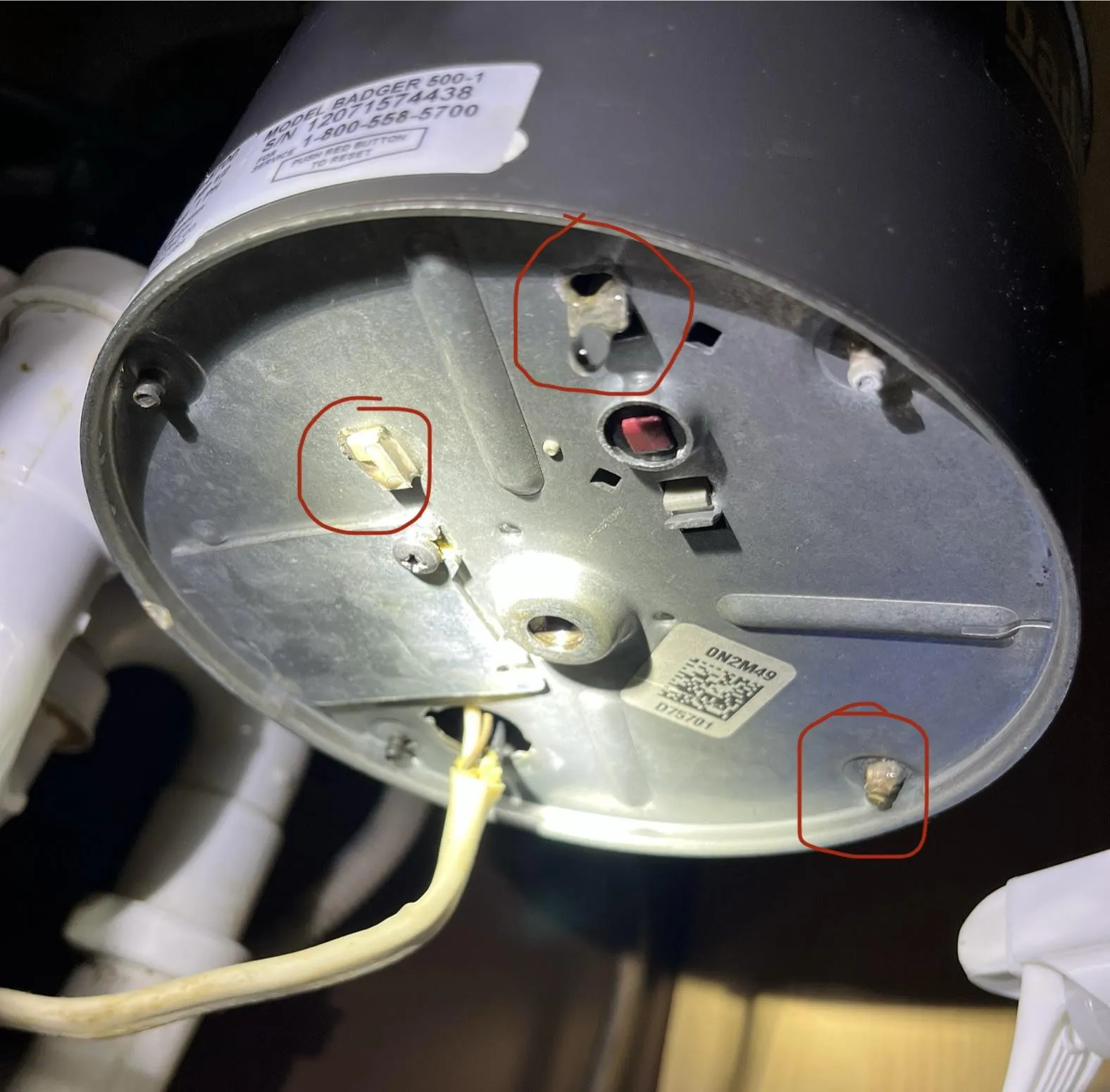
If the unit hums but doesn’t spin, you have a mechanical jam. Use an Allen wrench in the center hole beneath the unit to manually rotate the impellers. If it resists, don’t force it; you risk snapping the internal blades.
A tripped overload protector usually triggers after the unit works too hard on fibrous materials like celery or corn husks. Wait ten minutes for the motor to cool before resetting the button. If it trips again immediately, the motor is likely seizing.
Many people mistake a blown fuse for a broken unit. Check your main breaker panel before calling a plumber. If the switch feels loose or moves without resistance, the breaker has tripped.
Distinguish between a motor failure and a jam by the smell. A sharp, electrical ozone scent indicates the internal windings have burned out. If you smell this, stop immediately to prevent a fire hazard. There’s no repair for a burned-out motor; the entire unit must be replaced.
If the unit leaks, check the mounting flange first. Tightening the three mounting bolts often stops the drip. If the water originates from the housing seams, the internal seals have failed. In this case, replace the unit to avoid water damage to your cabinetry.
Resetting the overload protector
The overload protector acts as a safety switch that cuts power to the motor if it gets too hot or works too hard. When the motor draws too much current, the internal switch trips to prevent damage. You can verify this by checking the bottom of the disposal housing under your sink. If the red button is extended, the internal circuit has opened.
To reset it, press the red button back into the housing. If it stays in, you have successfully cleared the safety trip. If the button pops back out immediately after you try to run the unit, don’t force it. This indicates that the motor is still under too much stress or that a physical obstruction is preventing the blades from turning.
Wait at least ten minutes for the motor to cool before attempting another reset. If you hear a low humming sound but the blades don’t spin, the internal mechanism is jammed. Use a hex wrench in the center hole at the bottom of the unit to manually rotate the impellers. If they don’t move with moderate pressure, stop immediately to avoid stripping the mounting hardware.
If the button resets but the unit still doesn’t run, check your home’s electrical panel. Ensure the circuit breaker for the kitchen outlet hasn’t tripped. If the breaker is fine, the problem might be an internal electrical issue.
Never attempt to open the motor housing or bypass any internal wires, as this voids your warranty and creates a significant shock risk. For any internal electrical failure, contact a professional plumber or electrician who specializes in appliance support. Attempting to bridge the connections yourself often leads to permanent motor burnout, which costs significantly more than a standard service call.
Clearing a physical jam
A physical jam occurs when a hard object or a large amount of fibrous food gets stuck between the shredder plate and the grinding teeth. You can distinguish this from an electrical failure because the unit will typically make a low humming sound when you flip the switch. If you hear a hum, the motor is energized but can’t physically move the blades.
Never put your hands inside the disposal to clear a jam. Instead, use the specialized wrench provided with your unit or a wooden broom handle to manually rotate the shredder plate. Insert the tool into the center hole at the bottom of the unit and move it back and forth to loosen the obstruction. Once the plate spins freely, remove the debris with tongs or pliers.
If the disposal is completely silent when you turn it on, the issue is electrical rather than a physical jam. Check the reset button on the bottom of the housing first; if it has popped out, press it back in before assuming a mechanical failure.
If you have to force the tool to move the blades, stop immediately. You might be damaging the internal grind components. Applying excessive torque often shears the drive coupling, turning a simple jam into a total motor replacement.
If the unit remains stuck after a few minutes of trying, you have reached the limit of what you can safely do. Professional plumbers use heavy-duty extractors to pull out metal objects like silverware or bottle caps. If you can’t dislodge the item with moderate pressure, stop to avoid burning out the motor windings. Overheating the motor during a jam can trip the internal thermal overload protector.
Electrical and motor issues
Electrical problems often stem from loose connections at the wall outlet or the switch itself. If the disposal doesn’t make any sound when the switch is flipped, the unit isn’t receiving electricity. Check the outlet by plugging in a small lamp to see if it turns on. If the lamp works, the issue is likely within the disposal’s power cord or the internal switch.
Before assuming the motor is dead, press the small red reset button located on the bottom of the unit. If the disposal hums but doesn’t spin, a jam is preventing the motor from turning. Leaving it in this state for more than ten seconds will trip the internal thermal overload protector. If the unit remains silent after you press the reset button, there may be an issue with the power supply, the switch, or the motor.
A burning smell or a loud grinding noise suggests that the motor bearings have failed or the internal seals are worn. These symptoms aren’t fixable through simple resets or clearing jams. If you detect a burning odor, turn the unit off at the circuit breaker immediately to prevent a fire hazard.
- Blown house fuse: Check your main electrical panel for a tripped breaker.
- Faulty wall switch: If the outlet works but the unit does not, the switch may be broken.
- Loose power cord: Ensure the plug is pushed firmly into the wall outlet.
- Internal motor failure: If the unit is silent and the power is confirmed, the motor has likely reached the end of its life.
If the disposal vibrates excessively without grinding food, the mounting hardware has likely loosened. Tighten the mounting ring screws to stop the noise before it damages the sink flange.
What a professional repair involves
Fixing a disposal typically involves either clearing a stubborn obstruction or replacing an electrical component. If you can move the blades manually but the unit still fails, a professional will check the internal wiring or the starter switch. Most common repairs are straightforward, but they require the right tools to access the mounting assembly.
The cost of a repair depends on whether the technician needs to replace parts or simply remove a deep obstruction. You can get a clear idea of the cost by asking for a flat-rate quote based on the specific model of your unit.
Always check the official documentation for your model to see if it’s still under warranty before you pay for a service call. If the unit is old and the motor is the problem, a full replacement is often cheaper than a complex repair.
Related guides
- Kitchen Sink Strainer vs Garbage Disposal Flange: The Verdict in 2026
- Best Garbage Disposal Air Switches: How to Choose and Install in 2026
- Best Garbage Disposal Splash Guards: How to Choose the Right Fit in 2026
Frequently Asked Questions
How do I know if my disposal is jammed?
If you hear a hum when you flip the switch but the blades don’t spin, your disposal is jammed. This means the motor is trying to turn but is physically blocked by an object or food waste.
Is it safe to use a plunger in my disposal?
No, you should never use a plunger in a garbage disposal. A plunger can force debris and dirty water back into the dishwasher or sink pipes, which may cause leaks or damage your plumbing system.
How often should I reset my unit?
You should only reset the unit when it stops working after heavy use or a jam. If the red button pops out frequently, it means you’re overloading the motor with too much food at once.
Can I use drain cleaner in my disposal?
No, you should avoid using harsh chemical drain cleaners in a garbage disposal. These chemicals can corrode the metal components and damage the rubber seals, which will lead to leaks and expensive repairs.
What should I do if the disposal leaks?
If the unit leaks from the bottom, you should turn off the power and call a plumber. A leak from the bottom usually means the internal seals have failed, which isn’t a part you can replace yourself.
How long does a typical disposal last?
A garbage disposal typically lasts for a long period with normal household use. The exact lifespan varies based on how often you run the unit and whether you avoid putting hard objects like bones or glass inside.
Does it matter if I run water while using it?
Yes, you must run a steady stream of cold water whenever the disposal is on. The water keeps the food moving through the pipes and prevents the motor from overheating during the grinding process.
Conclusion
If these simple adjustments don’t get your sink running smoothly again, it’s best to contact a licensed plumber. They’ll have the right tools to safely inspect the internal components without damaging your pipes. Don’t hesitate to reach out for help if you’re still feeling uncertain about the repair process.
